Blog · Tips
First Time in Georgia – What You Need to Know Before Your Trip in 2026
 Tips
TipsIn this article
Some links are affiliate links. You pay the same, and we may earn a commission.
Practical first-timer's guide to Georgia: visas, budget, transport, accommodation, connectivity and hidden nuances. Everything you need before and after landing.
Georgia is one of those countries where you can fit mountains, sea, ancient monasteries and a culinary marathon into a single week – spending less than a weekend in Barcelona. Most nationalities can enter visa-free or obtain a visa on arrival – check requirements for your specific passport. The average daily budget for a traveler runs 40-70 $ per person, covering accommodation, food and transport. Here is the practical breakdown.
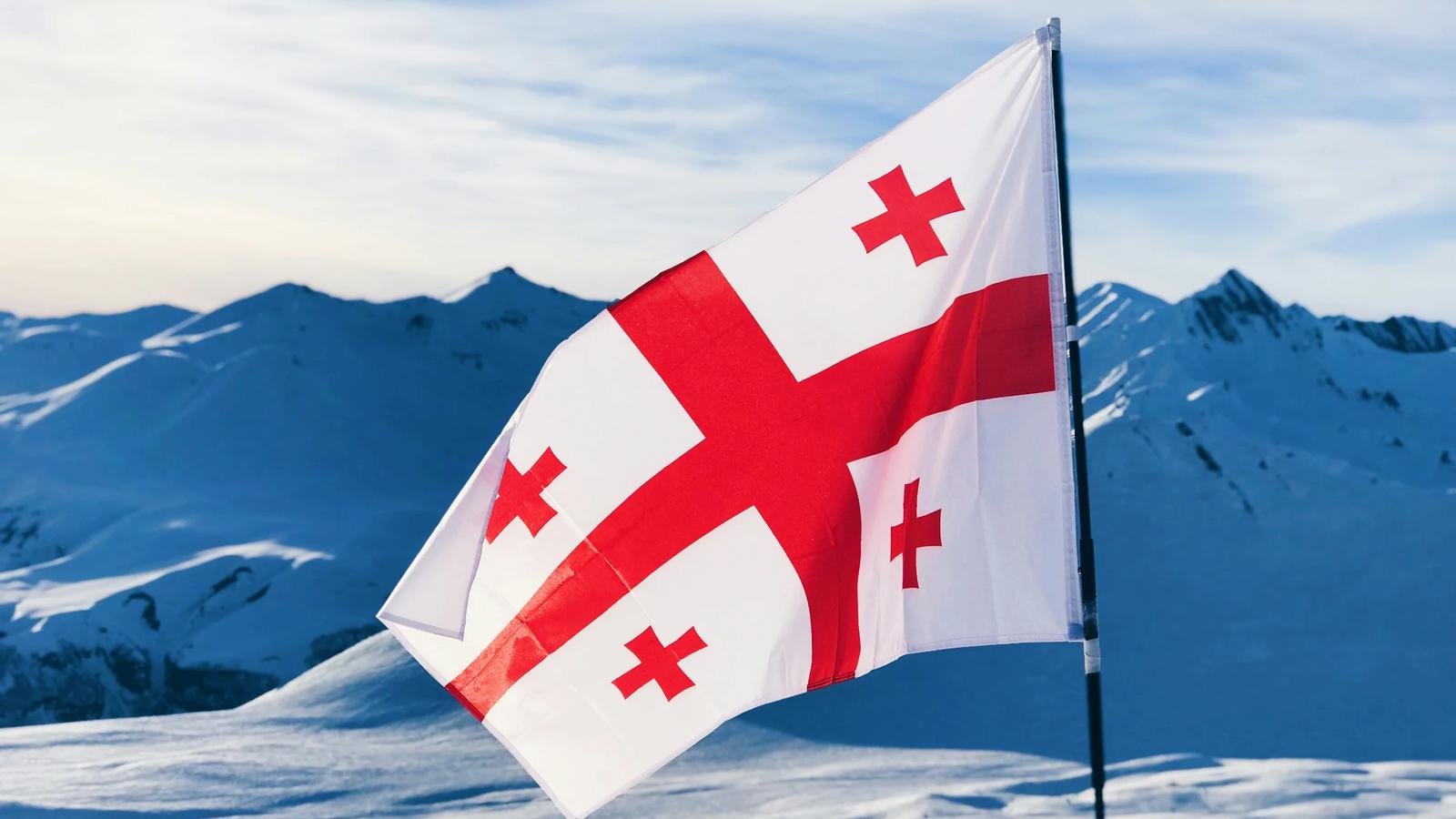
Key takeaways:
- Visa-free entry for many nationalities – citizens of 90+ countries can stay up to 1 year without a visa. Verify requirements for your passport before booking.
- Currency – Georgian lari (GEL). International Visa and Mastercard are widely accepted in cities.
- Three airports: Tbilisi, Kutaisi and Batumi. Budget carriers frequently fly into Kutaisi.
- Language – Georgian. English is understood in tourist areas of Tbilisi, but less so in rural regions.
- Lunch at a cafe – 8-10 $, dinner for two at a good restaurant – 25-40 $.
- A local SIM or eSIM solves internet needs for 3-5 $ per week.
- Best time for a first visit – May – June or September – October: warm, dry, manageable crowds.
Getting There
Tbilisi is the main international hub and the most convenient starting point. Kutaisi handles budget airlines – it is about 3-3.5 hours from Tbilisi by car. Batumi works well if you are heading straight to the coast. International carriers serve all three airports with connections through major European and Middle Eastern hubs.
From Tbilisi airport to the city center: 1-2 $ by bus or 8-12 $ by taxi. Always agree on the fare beforehand or use ride-hailing apps – metered taxis are not universal.
Pre-booked transfers via KiwiTaxi or Welcome Pickups mean a driver will be waiting at arrivals with your name.
Money and Payments
The national currency is the Georgian lari (GEL), trading at roughly 2.6-2.8 GEL per 1 $. Exchange offices are everywhere – rates in central Tbilisi tend to be better than at the airport. Visa and Mastercard work in most shops and restaurants in cities. Carry some cash for markets, rural areas and smaller guesthouses.
| Expense | Price |
|---|---|
Lunch at a cafe | 8-10 $ |
Dinner for two (restaurant) | 25-40 $ |
Cappuccino | 2-3 $ |
Beer (0.5 L) | 2-3 $ |
Water (1.5 L, shop) | 0.5-0.7 $ |
Taxi ride (5 km) | 3-5 $ |
Metro/bus fare | 0.4 $ |
(Updated: February 2026)
Accommodation
Accommodation is one of the most pleasant budget items. A decent studio in central Tbilisi runs 30-50 $ per night, a guesthouse room starts from 15 $. Batumi has similar prices, but expect a 30-50% premium during peak season (July – August).
Book through Trip.com or Booking.com. A useful trick: some hosts do not update prices on platforms – message them directly for potential 10-15% discounts.
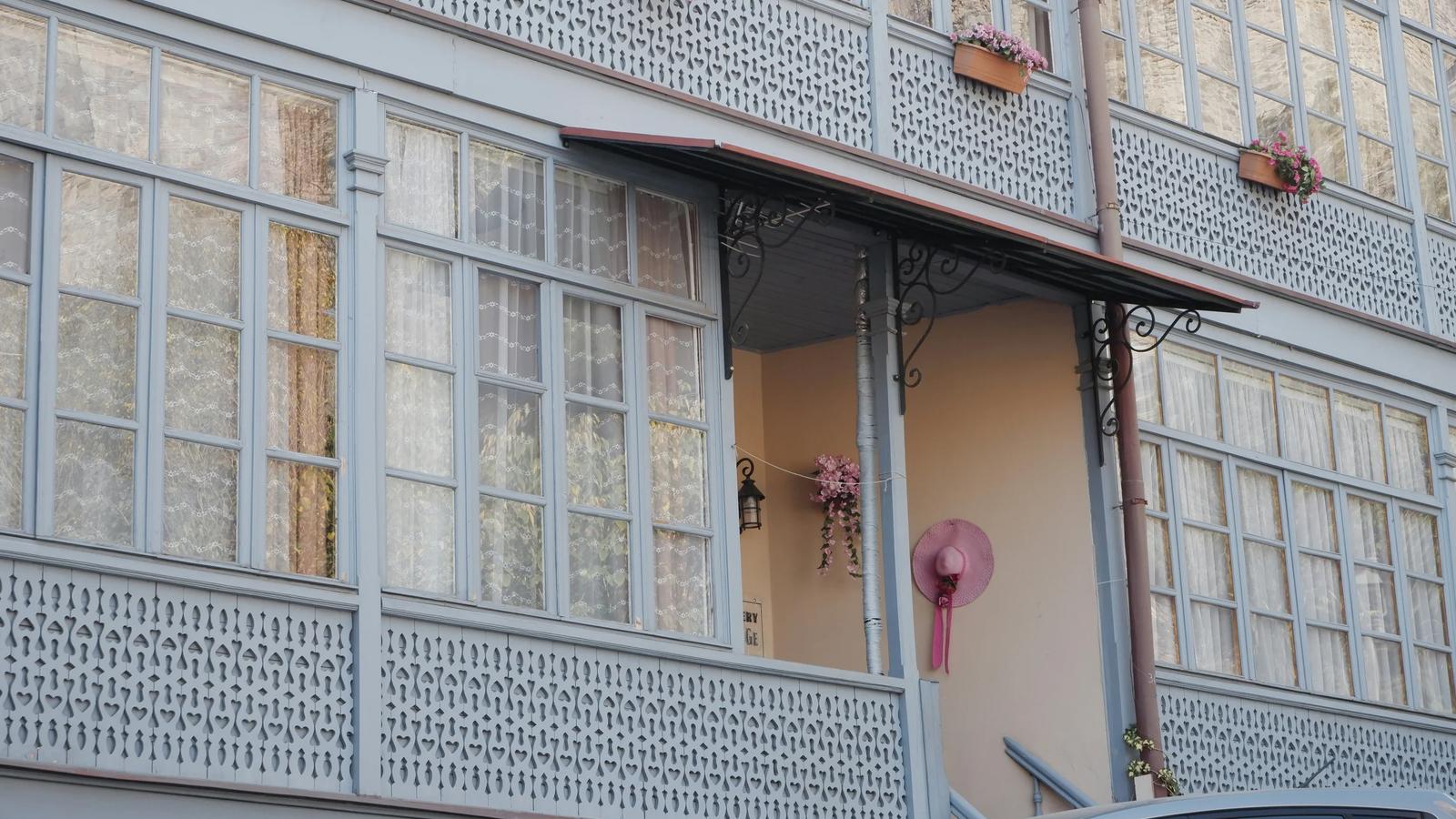
Where to base yourself:
- Tbilisi – for a first visit aiming to see the most in 3-5 days.
- Batumi – for beach time and waterfront walks.
- Stepantsminda (Kazbegi) – for trekking and views of Mount Kazbek.
- Kutaisi – as a base for canyons and caves.
Getting Around
Marshrutkas (minibuses) are the backbone of intercity transport – they depart when full and cost very little. Trains and buses also operate key routes.
Renting a car gives you the most flexibility. Rentals through Localrent or Economybookings start from 25-35 $ per day for an economy vehicle. For details, pitfalls and tips, see our car rental guide for Georgia.
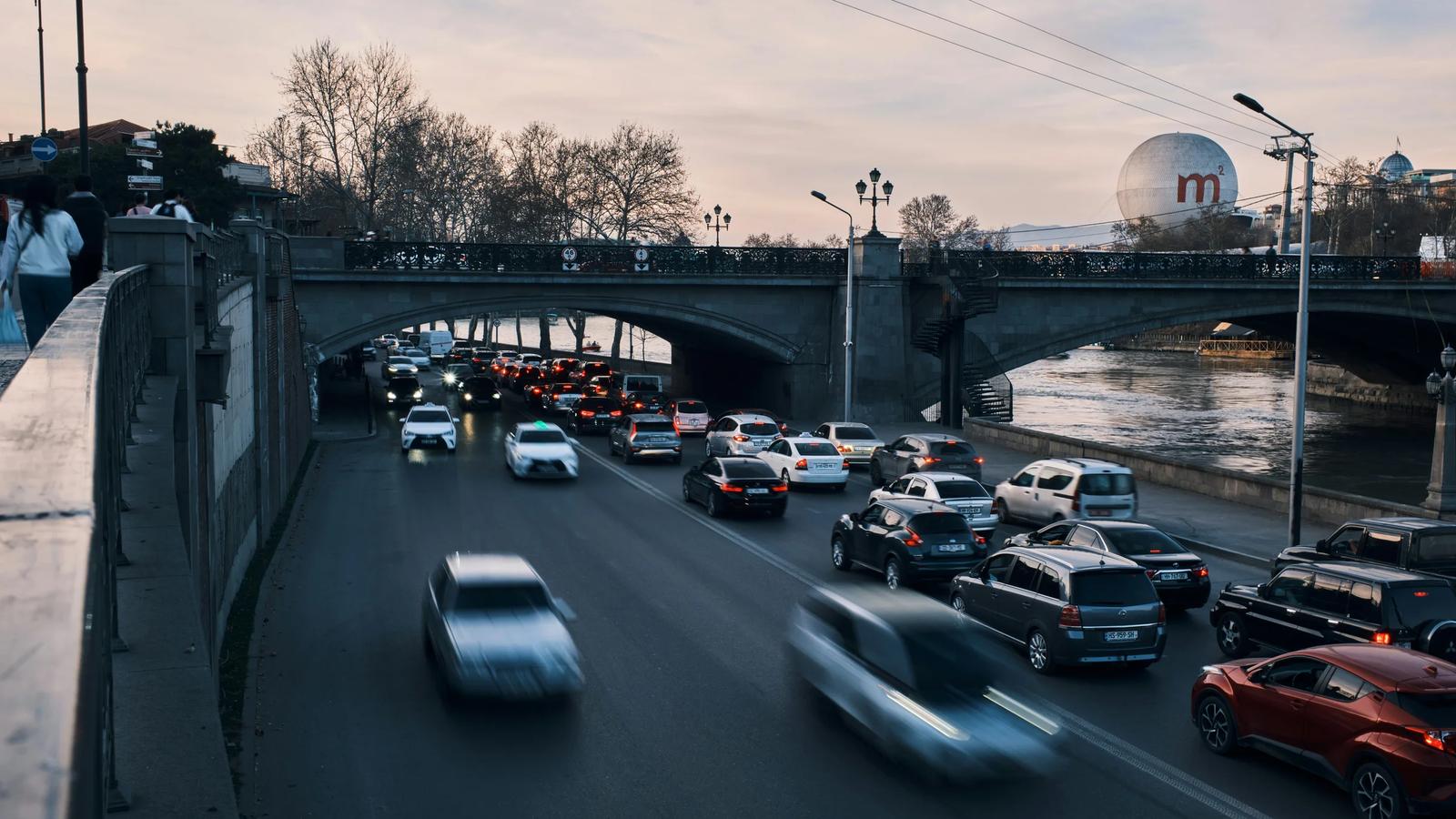
Tbilisi has a metro (2 lines), buses and a cable car. Payment is via a transport card, available at any metro station for about 2 GEL.
Connectivity
Wi-Fi is available in virtually every cafe and guesthouse, but you will need mobile data for navigation and translation apps. Two options:
Local SIM card. Purchased at carrier shops with your passport. A 10-15 GB package costs 3-7 $. Coverage is solid in cities, spotty in mountain areas.
eSIM – more convenient if your phone supports it. Activate before departure through Airalo, Yesim or Saily. More on choosing a provider in our eSIM travel guide.
What to See: 7-10 Day Itinerary
A classic first-timer route:
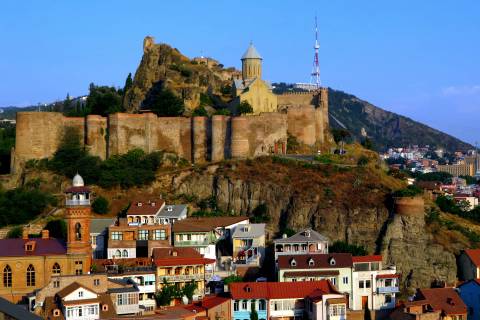
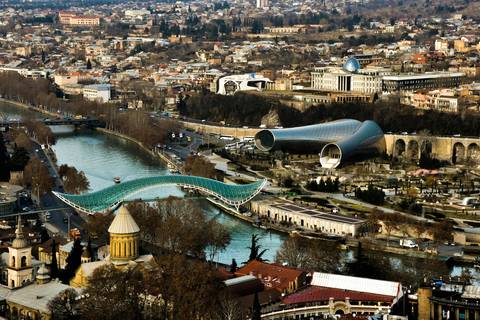
Days 1-3: Tbilisi. Old Tbilisi, the sulfur baths of Abanotubani, Narikala Fortress, Bridge of Peace, Rike Park, Holy Trinity Cathedral (Sameba), Rezo Gabriadze Theater. Ride the funicular to Mtatsminda Mountain. Detailed itinerary in our Tbilisi 1-2-3 day guide.
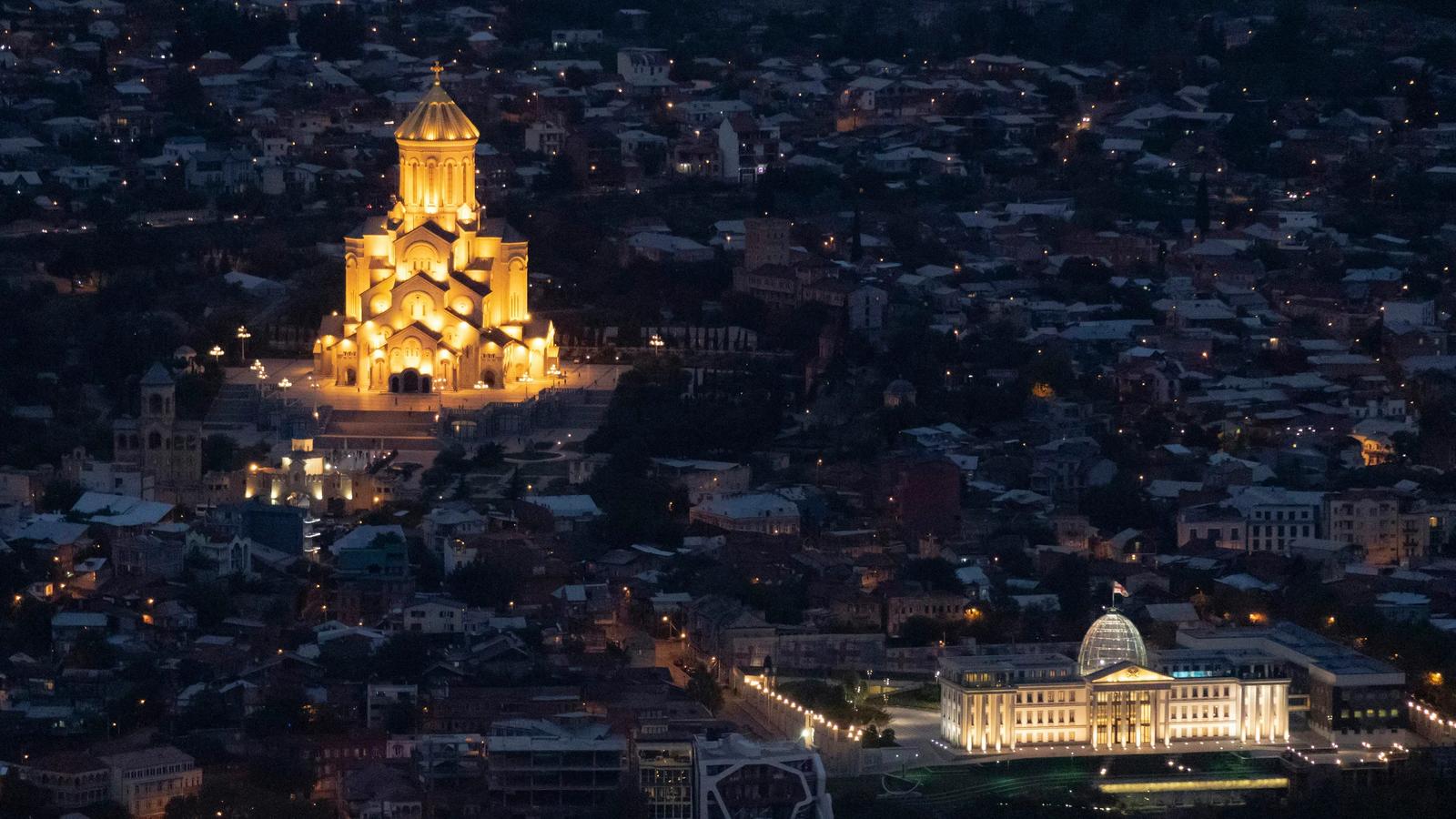
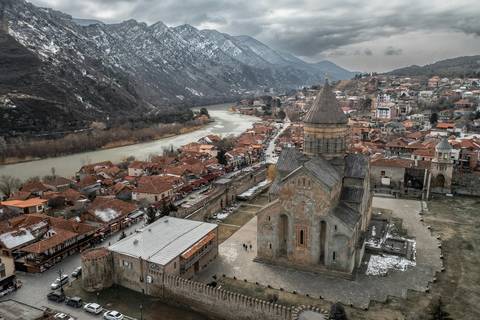
Day 4: Mtskheta. The ancient capital, 20 minutes from Tbilisi. Jvari Monastery with its panorama of the converging rivers and Svetitskhoveli Cathedral.
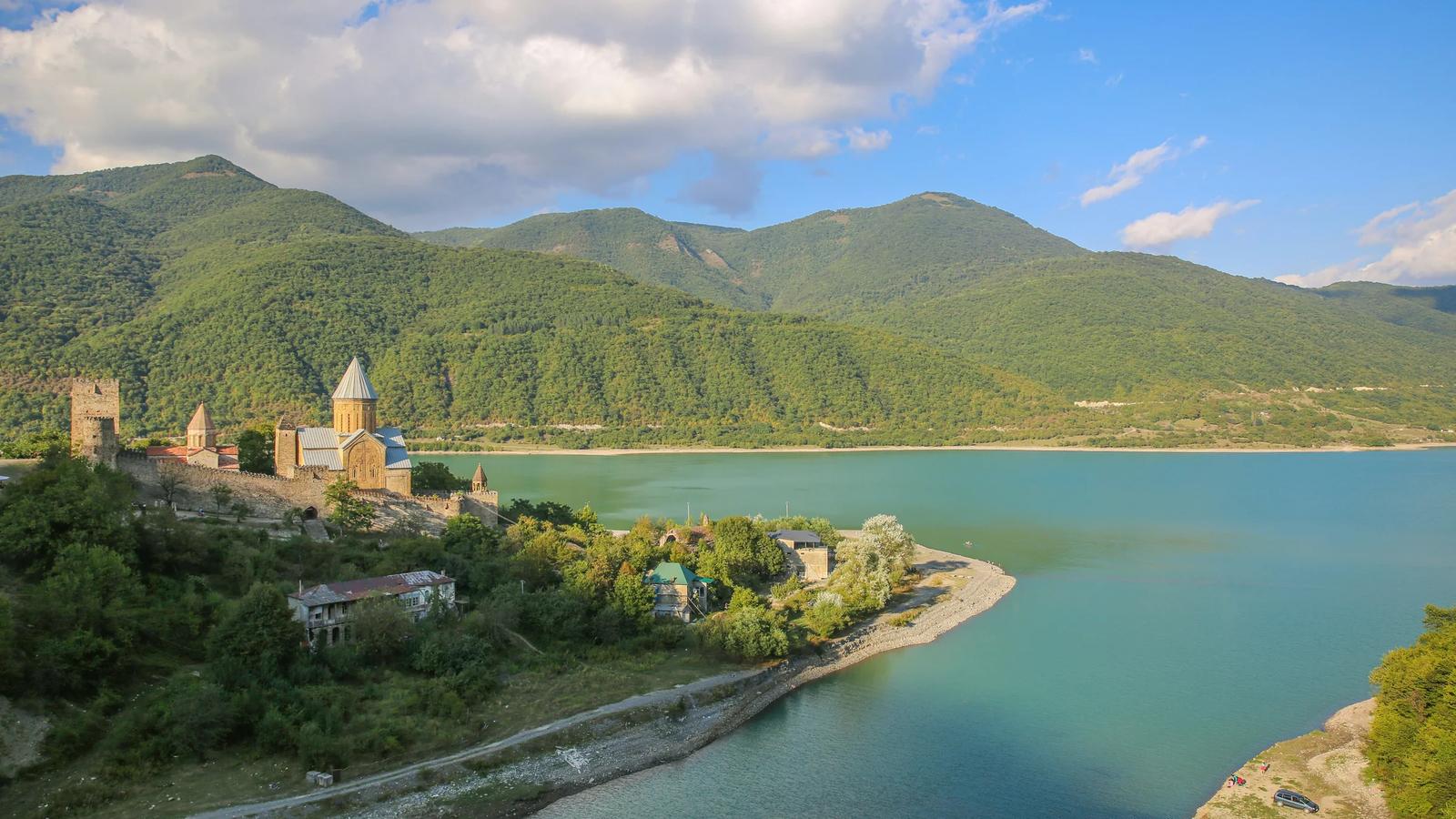
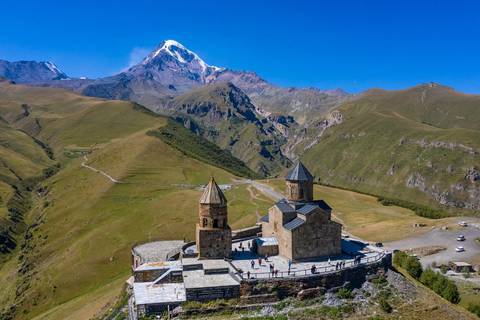
Days 5-6: Stepantsminda (Kazbegi). Travel the Georgian Military Highway past Ananuri Fortress and the Friendship Monument. Trek to Gergeti Trinity Church – one of the defining views of the Caucasus.
Days 7-8: Kutaisi and surroundings. Gelati Monastery, Prometheus Cave, Martvili Canyon.
Days 9-10: Batumi (if time allows). Batumi Boulevard, Batumi Botanical Garden, Piazza Square.
Guided tours can be booked through Viator or Viator.
Food and Wine
Georgian cuisine is reason enough to visit. Must-try dishes: khinkali (1-1.5 $ for a serving of 5), Adjarian khachapuri (3-5 $), shkmeruli, chakhokhbili, pkhali, churchkhela. Portions are generous – two people can share 2-3 dishes comfortably.
Wine starts at 4-6 $ per bottle in shops and 8-15 $ in restaurants. Do not miss the amber (orange) wine made using the traditional qvevri method. For wine tours, head to Kakheti and Sighnaghi.
Safety and Etiquette
Georgia is one of the safest countries in the region. Street crime is minimal and tourists are genuinely respected. A few things to keep in mind:
- Driving. Local driving style is aggressive. Mountain roads feature livestock, unguarded drop-offs and blind-corner overtaking. Exercise maximum caution.
- Tipping. Not mandatory, but 10% at restaurants is appreciated.
- Dress code in churches. Women should cover their heads and shoulders, men should wear long trousers. Scarves are usually available at the entrance.
- Tap water. Safe to drink in Tbilisi, but bottled water is recommended elsewhere if you have a sensitive stomach.
Insurance
Travel insurance is mandatory. A doctor's consultation at a private clinic runs 30-50 $, hospitalization can cost hundreds. A week of coverage through Ekta starts from 7 $ – see our Georgia insurance guide for details.
Frequently Asked Questions
1. Do I need a visa for Georgia? It depends on your nationality. Citizens of over 90 countries, including EU, UK, US, Canada and Australia, can enter visa-free for up to 1 year. Since 1 January 2026 all foreign visitors must also hold health and accident insurance for the whole stay with at least 30,000 GEL coverage. Check your specific passport requirements with the Georgian Ministry of Foreign Affairs before booking.
2. How much money should I budget for a week? 300-500 $ per person covers comfortable accommodation, food, transport and activities. A tighter budget of 200-300 $ works if you cook some meals yourself and use marshrutkas.
3. What is the best season for a first visit? May – June and September – October. Comfortable temperatures (20-28°C), minimal rain and moderate tourist numbers. July – August brings heat in cities and crowds on the coast.
4. Is tap water safe to drink? In Tbilisi, tap water is considered safe. In other cities and mountain villages, stick to bottled water – it costs about 0.5 $ for 1.5 liters.
5. How do I get mobile internet? Buy a local SIM at a carrier shop (3-7 $ for a generous data package) or activate an eSIM before departure. Coverage is reliable in urban areas, less so in remote mountain zones.
Conclusion
Georgia offers an exceptionally low barrier to entry: visa-free access for most nationalities, budget-friendly prices, welcoming locals and striking landscape variety. The most common first-timer mistake is not allowing enough time. Aim for 7-10 days minimum to cover Tbilisi, the mountains and at least one region beyond the capital. Bring cash, comfortable shoes and room in your appetite.
Read also:
- What to See in Tbilisi in 1, 2 and 3 Days
- Car Rental in Georgia – Complete Guide and Hidden Pitfalls
- Travel Insurance for Georgia
- eSIM for Travel: How to Save on Roaming Charges
Places to see in Georgia
You may also like

Tbilisi to Batumi Train: How to Buy Tickets Online for €12 and Skip the Queue
Stadler KISS runs the route in 5 hours from 35 GEL in 2nd class. Where to book online, which class is actually worth it, and why the morning train beats the evening one.
April 26, 2026
Tbilisi Sulfur Baths – Guide to Abanotubani: Prices, Etiquette & Is It Worth It
Public hall for 10 GEL or VIP room for 200? Every Abanotubani bathhouse compared, the kisi scrub explained, real prices and the mistakes guidebooks won't tell you about.
March 15, 2026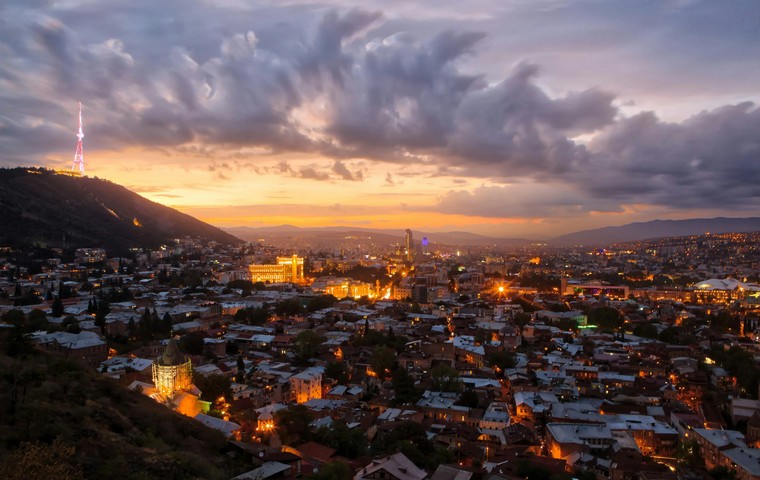
Georgia in June: +27°C, Early Season Prices & What to Really Expect
June is Georgia's sweet spot – warm weather without peak crowds, Batumi sea reaching 23°C, and hotel prices 20–30% below midsummer peaks. Here's the honest picture.
March 20, 2026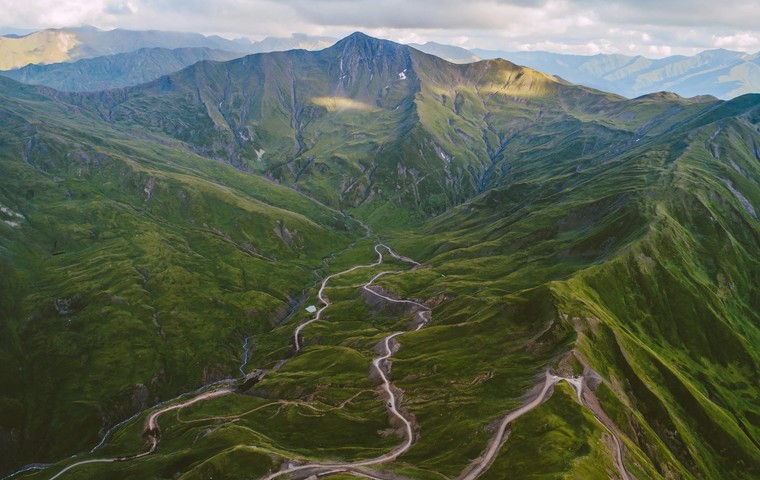
How to Get to Georgia – All Travel Options
Flights, overland crossings, buses, and ferries – a complete guide to reaching Georgia with prices, routes, and practical tips. Updated for 2026.
February 24, 2026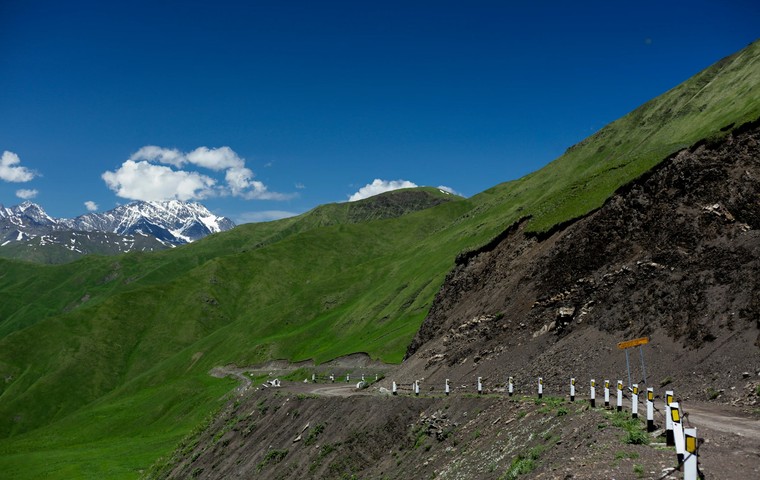
Georgia Road Trip 2026 – 4 Routes from Kazbegi to Svaneti
The best Georgia road trip depends on days available: 3 days covers the Military Highway to Kazbegi, 7 days adds Kakheti and the west, 10+ reach Svaneti. Actual 2026 prices, winter closures, and pitfalls explained.
April 24, 2026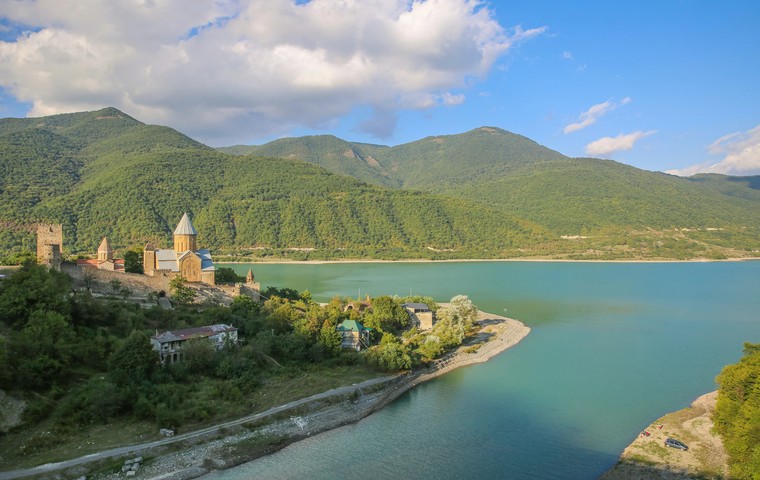
Kutaisi – What to See & Is It Worth Visiting? A Guide to Georgia's Second City
Kutaisi isn't a resort – it's a 3,000-year-old city with UNESCO monasteries, epic canyons 30 minutes away, and prices half of Tbilisi. Here's who should visit and who should skip it.
March 25, 2026