Tickets & prices
Free entry. Open daily 9:00 AM–7:00 PM.
Donations for site maintenance are welcome.
ანანურის ციხე
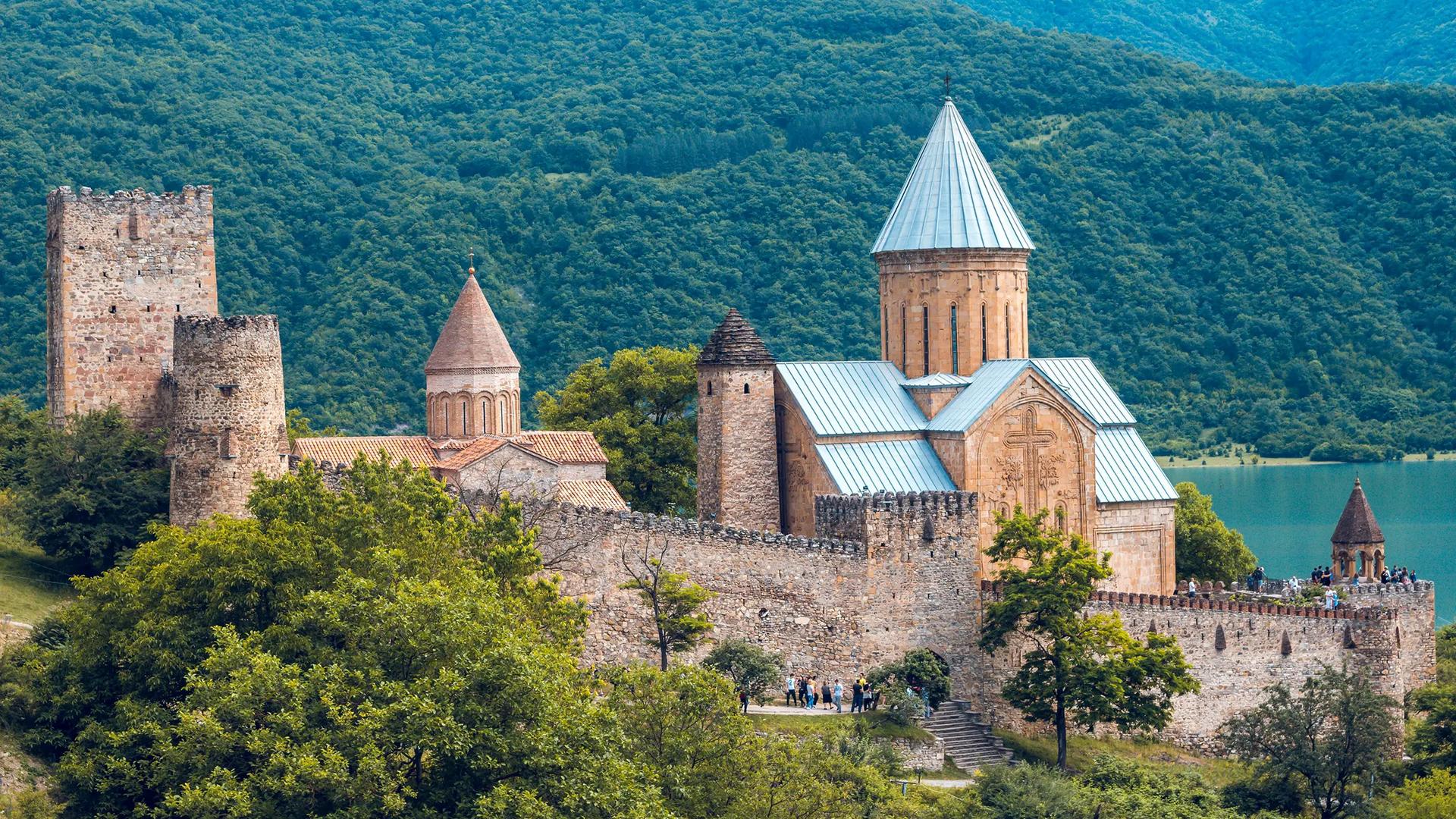
Medieval castle complex from the 13th–17th centuries on the shore of Zhinvali Reservoir
Ananuri Fortress is a fortified castle complex on the banks of the Aragvi River, 72 km north of Tbilisi along the Georgian Military Highway. The complex includes two churches, a watchtower, defensive walls, and a bell tower. Since 2007, Ananuri has been on the tentative list for UNESCO World Heritage status.
The fortress sits beside the Zhinvali Reservoir – the turquoise water against green hills creates one of Georgia's most recognisable landscapes. It is the first major stop on the route from Tbilisi to Kazbegi and Gudauri.
Free entry. Allow 40–60 minutes for a visit. Open daily 9:00 AM–7:00 PM.
The complex occupies a narrow valley between the Aragvi and Vedzatkhevi rivers – a strategic position that controlled the route from Dariali Gorge to Dusheti. Limestone and brick curtain walls with battlements run the full perimeter, linking two citadels. The walls are well preserved – you can walk along the upper tier, though there are no railings or barriers, requiring caution.
The main structure is the Church of the Assumption (Ghvtismshobeli, 1689), featuring carved stone reliefs on its façade and biblical frescoes inside. The smaller Church of the Saviour also retains remnants of wall paintings. Between them stands the bell tower, which offers views of the reservoir and surrounding mountains. The square watchtower (~20 m tall) is the complex's highest point: from the top, the Zhinvali Reservoir stretches to the south and the Aragvi valley extends northward. The ascent is via a narrow stone staircase inside the tower.
At the foot of the fortress, remnants of an old bridge and road are periodically submerged by the reservoir. The site is compact: a full circuit of all structures takes 30–40 minutes, with the tower climb adding another 15–20 minutes.
Age – founded in the 13th century; main structures date to the 16th–17th centuries
UNESCO – on the tentative World Heritage list since 2007
Church of the Assumption – built 1689, carved stone façade and interior frescoes
Watchtower – ~20 m tall, panoramic views over Zhinvali Reservoir
Setting – on the shore of turquoise Zhinvali Reservoir amid green hills
Entry – free admission, open daily 9:00 AM–7:00 PM
Ananuri was founded in the 13th century as the castle and seat of the Eristavis (Dukes) of Aragvi, a feudal dynasty that controlled the region. The fortress held a strategic position on the route from Russia to Georgia through Dariali Gorge. In the 16th–17th centuries, the churches and fortifications were built up. In 1739, forces from the rival Duchy of Ksani, commanded by Shanshe, attacked and burned the fortress, and the Aragvi clan was massacred.
Four years later, local peasants revolted against Shanshe's rule, killed the usurpers, and invited King Teimuraz II to govern directly. In 1746, Teimuraz had to suppress another peasant uprising with help from Kakheti's King Erekle II. The fortress remained in use until the early 19th century, then lost its military significance. Today Ananuri is one of Georgia's best-preserved medieval castles: the walls and towers have stood for centuries without collapse, and the Church of the Assumption retains its carved stonework and fresco fragments.
Free entry. Open daily 9:00 AM–7:00 PM.
Donations for site maintenance are welcome.
Dress code (for churches): Shoulders and knees must be covered. Women should wear a headscarf (available at the entrance). Photography is unrestricted outside; inside churches, no flash.
Safety: Climbing the walls and tower involves steep stone steps with no railings or barriers. Not recommended for those with a fear of heights. Keep children supervised.
On-site:
Souvenir stalls and food vendors at the entrance (churchkhela, khachapuri)
Toilets near the car park (basic condition)
Parking: Free, fits 30–40 cars. Fills quickly in the morning – tour groups arrive 9:00 AM–12:00 PM.
Connectivity: Stable 4G coverage.
Accessibility: Uneven terrain, stone steps throughout. Difficult for people with limited mobility. Not pushchair-friendly.
From Tbilisi (72 km, 1–1.5 hours):
– By rental car via the Georgian Military Highway – free parking
– Shared minibus (marshrutka) from Didube towards Gudauri/Stepantsminda – ask to stop at Ananuri (~5–7 GEL/~$2–3/€2–3)
– Day tour Tbilisi–Kazbegi – Ananuri is almost always included as the first stop
From Gudauri (50 km south, 40–50 minutes):
– Taxi – 40–50 GEL (~$15–19/€14–17)
– Marshrutka towards Tbilisi – ask the driver to stop
On-site:
From the car park to the fortress entrance – 2-minute walk.
Season: Spring (April–May) and autumn (September–October) – comfortable temperatures, lush green hills, fewer tourists. Summer is hot (up to +35°C) but the reservoir adds a cooling effect. Winter is accessible but the landscape is grey.
Time of day: Early morning (before 10:00 AM) or after 4:00 PM – softer light, fewer tour buses. 10:00 AM–2:00 PM is peak tour-group time.
Duration: 40–60 minutes for a full visit including the tower climb.
Avoid: Morning hours in peak season (July–August), when 5–10 tour buses arrive simultaneously.
Practical answers about visiting, routes and time on site.
No, entry is free. Donations are welcome.
40–60 minutes for a full tour including the watchtower climb. Without the tower – 20–30 minutes.
Yes, for the churches: shoulders and knees covered, women should wear a headscarf. Scarves are available at the entrance. No dress code for the walls and tower.
Yes, minibuses from Tbilisi to Gudauri and Stepantsminda pass through Ananuri. Ask the driver to stop (~5–7 GEL/~$2–3 from Tbilisi). Flag down a marshrutka on the highway for the return trip.
The site is engaging for kids (towers, walls, staircases), but the wall walk has no barriers – supervise closely. Not practical for pushchairs.
Not officially prohibited, but the water is cold even in summer and the shore is rocky. There are no designated swimming areas.
Food vendors at the entrance sell khachapuri, churchkhela, and drinks. Full restaurants are in the village of Zhinvali (12 km south) or along the highway towards Gudauri.
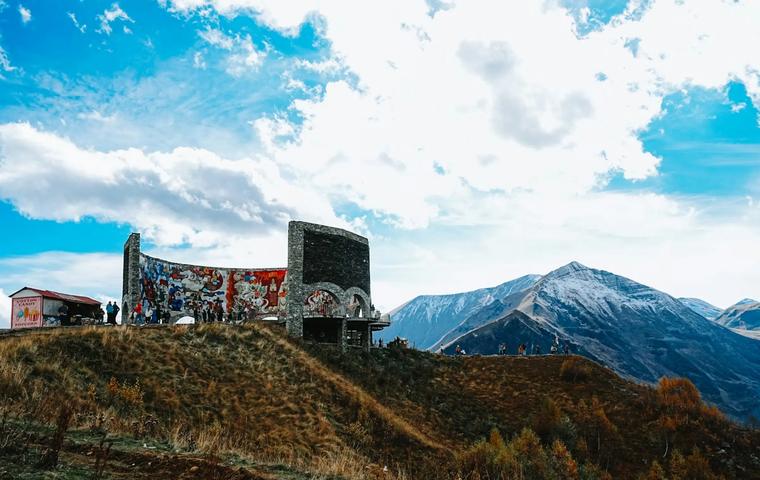
Heading south towards Tbilisi: Jvari Monastery and Svetitskhoveli Cathedral in Mtskheta (45 km). Heading north: the Friendship Monument (50 km) and the Gudauri resort.
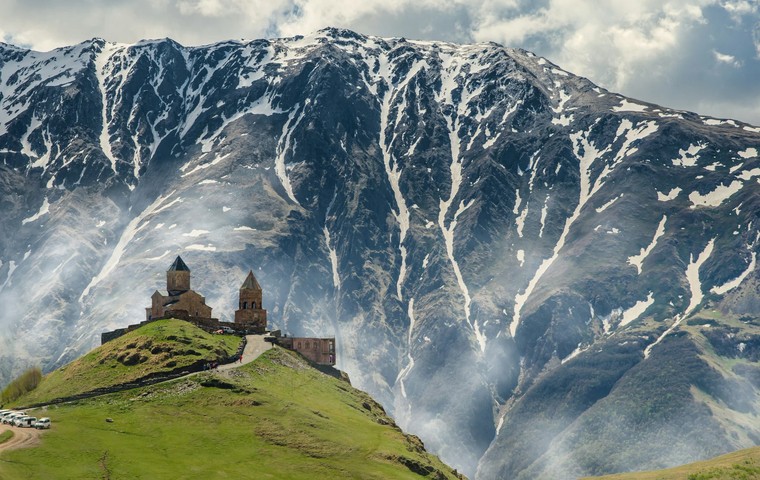
Magti holds signal in Mestia and at Gergeti Church, but goes silent on the Chalaadi trail. Real coverage map for Svaneti and Kazbegi, 2026 prices, and why eSIM isn't a magic fix in the high country.
April 27, 2026
Where to take your family in Georgia – from Batumi's coast to Borjomi's parks and mountain day trips. Mandatory insurance since 2026, family-friendly tours, honest pricing.
March 28, 2026
Tbilisi hits +34 °C, Batumi gets thunderstorms, and mountain snow cleared a week ago. Where to actually go, what it costs in 2026, and what to skip.
April 21, 2026
Kazbegi, Kakheti wine country, Mtskheta, Vardzia – the day trips locals actually recommend, with honest prices, timing and pitfalls most guides skip.
April 21, 2026
The best Georgia road trip depends on days available: 3 days covers the Military Highway to Kazbegi, 7 days adds Kakheti and the west, 10+ reach Svaneti. Actual 2026 prices, winter closures, and pitfalls explained.
April 24, 2026Stepantsminda is more than a church photo. 4 transport options from Tbilisi, verified prices, 1–3 day itineraries, and the practical tips guidebooks skip.
March 26, 2026