Tickets & prices
Free entry. No tickets required.
Parking at the monastery is free.
ჯვრის მონასტერი
6th-century church above the Aragvi–Kura confluence – Georgia's first cross-dome cathedral
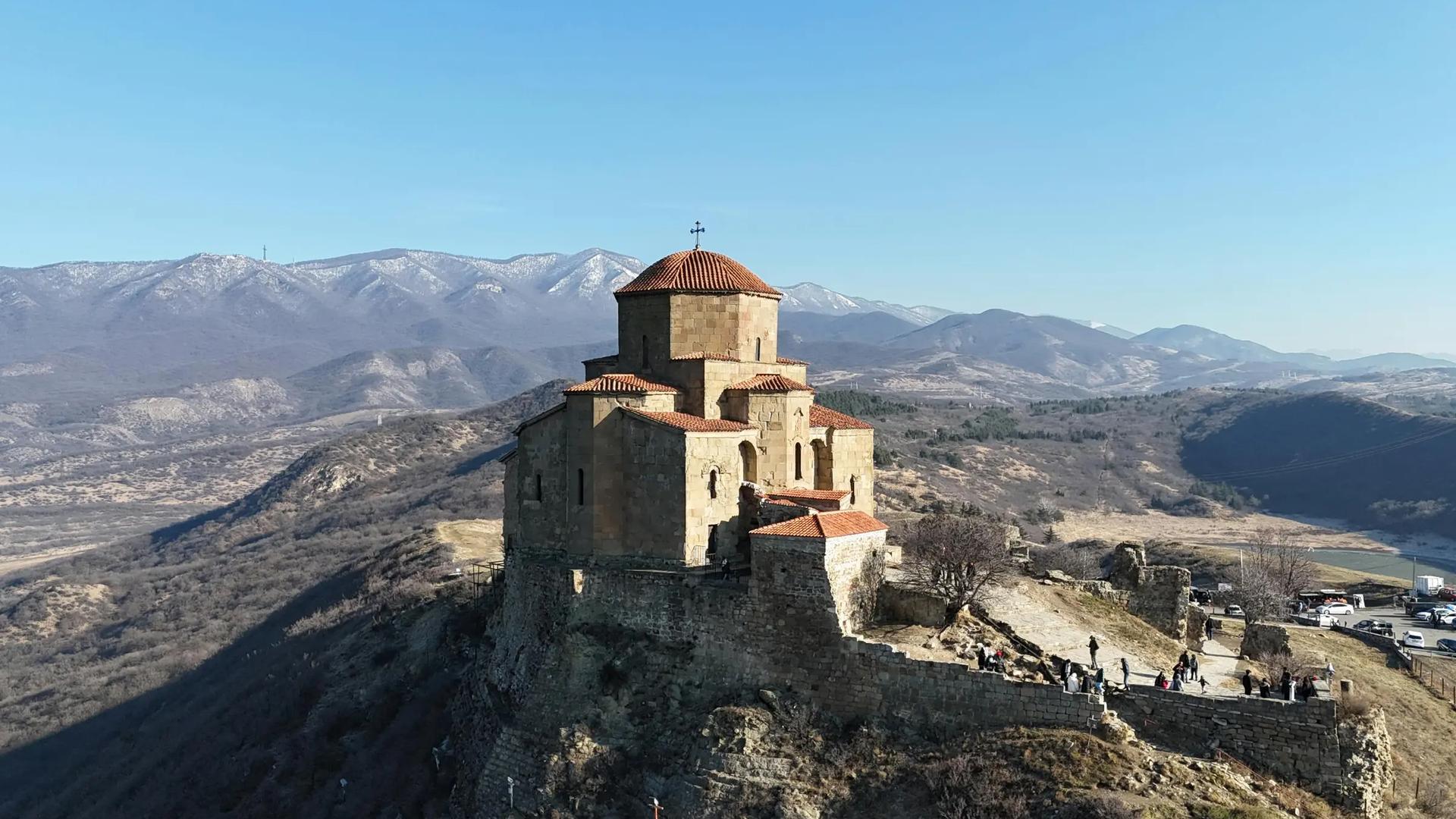
Jvari Monastery (ჯვრის მონასტერი) is a late 6th-century Georgian Orthodox church on top of Jvari Mount (656 m above sea level), 4 km east of Mtskheta. Listed as a UNESCO World Heritage Site since 1994 alongside other monuments of Mtskheta. The name translates as "Monastery of the Cross" – this is where Saint Nino erected a wooden cross in the 4th century, converting Georgia to Christianity.
From Tbilisi, the monastery is 25 km away, a 30–40 minute drive. A shared minibus (marshrutka) from Didube station reaches Mtskheta (2 GEL / ~$0.75, 20–30 min), then a taxi to Jvari costs 20–25 GEL (~$7–9) round trip with waiting time. Walking from Mtskheta is impractical – you need to cross the river and the highway.
Free entry. Allow 40–60 minutes for a visit. The church is open during daylight hours. Suitable for all ages.
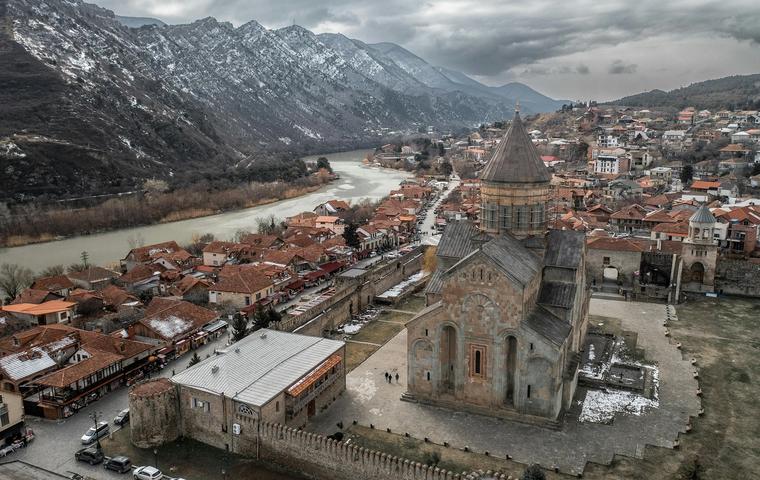
The church sits on a rocky outcrop with a 270° panorama – the confluence of the Aragvi and Mtkvari (Kura) rivers, the town of Mtskheta with Svetitskhoveli Cathedral at its centre, and mountain ridges on the horizon. Two streams – the muddy brown Mtkvari and the lighter Aragvi – merge directly below the hill, and on clear days the boundary between the two waters is distinctly visible. The terrace in front of the church is the main viewpoint; it is almost always windy here.
The church itself is compact: under 25 m tall, with a tetraconch plan (four apses with four niches between them). The dome rests on the walls rather than pillars, supported by three rows of squinches – 32 facets transition into the base of the drum. This creates a sense of unified space that feels larger than its actual dimensions. Inside, the space is dim – light enters through narrow window slits, with candles providing the main illumination. A wooden cross stands on a stone pedestal at the centre – believed to be the base of Saint Nino's original 4th-century cross.
The facades preserve 6th–7th century bas-reliefs depicting the church's builders – Erismtavari Stepanoz I, Demetre, and Adarnase. Inscriptions are carved in Asomtavruli script, one of the oldest Georgian alphabets. Around the church are remnants of medieval fortification walls and gates. On the south side of the main church, a narrow trail leads to Saint Nino's spring.
Age – built between 590 and 605 AD, one of the oldest surviving churches in Georgia
UNESCO – World Heritage Site since 1994 as part of the Historical Monuments of Mtskheta
Architecture – the first cross-dome tetraconch in Georgia, a model for dozens of subsequent churches
Elevation – 656 m above sea level, panoramic views of two rivers merging and the ancient capital
Bas-reliefs – facade carvings depict the church builders with inscriptions in ancient Georgian Asomtavruli script
Saint Nino's Cross – stone pedestal at the church centre, where a 4th-century wooden cross that converted Georgia to Christianity once stood
In the 4th century, Saint Nino erected a wooden cross on the hilltop above the river confluence – on the site of a pagan sanctuary. The cross became a pilgrimage centre. Around 545 AD, the ruler of Kartli, Guaram I, built a small church here. His son, Erismtavari Stepanoz I, constructed the present "Great Church of Jvari" between 590 and 605 AD. The church became the first example of the cross-dome type in Georgian architecture and influenced temple construction across the region. In 914, during the Sajid invasion, the church was damaged by fire but survived.
In the late Middle Ages, the complex was fortified with a stone wall and gate – their remnants are still visible. During the Soviet period, the church was preserved as a national monument, but access was difficult due to a nearby military base. After Georgia gained independence in 1991, the monastery was returned to the church, and monks have lived here again since 1996. In 2004, the World Monuments Fund placed Jvari on its watch list due to erosion from acid rain and wind.
Free entry. No tickets required.
Parking at the monastery is free.
Dress code: covered shoulders and knees. Women should cover their heads (headscarves sometimes available at the entrance). Photography is allowed inside and outside, but no flash inside the church. Tourist access may be limited during services. The terrace in front of the church is almost always windy – bring a jacket.
Drone regulations apply at historical and religious sites in Georgia – check rules in advance.
Minimal infrastructure. No toilets on site – nearest ones in Mtskheta. Souvenir vendors and occasional drink sellers near the parking area. No cafes or shops nearby.
Parking: Free lot at the base, 5–7 minute walk uphill to the church.
Connectivity: Stable 4G coverage.
Accessibility: Paved road for most of the approach, but the final section is on uneven stone path. Difficult for visitors with limited mobility.
From Tbilisi (25 km, 30–40 min):
– Bolt/Maxim taxi – 25–40 GEL (~$9–15 / €8–14) one way
– Car rental – via Tbilisi–Senaki highway, exit at Mtskheta
– Marshrutka to Mtskheta from Didube metro station – 2 GEL (~$0.75), every 20–30 min, then taxi to Jvari
From Mtskheta (4 km):
– Taxi from town centre – 20–25 GEL (~$7–9 / €6–8) round trip with 30–40 min waiting
– Walking is not practical – requires crossing the river and highway, no pedestrian route
As part of a guided tour:
Most day tours from Tbilisi include Jvari + Svetitskhoveli + Samtavro. Group tours from 50–80 GEL (~$18–30 / €17–28) per person.
Season: April–October for comfortable weather. Winter roads can be icy, but the church is accessible year-round.
Time of day: Early morning (before 10:00) – fewest tourists, clear air. Sunset (18:00–19:30 in summer) – best light for photos, golden glow on the facades and panorama.
Duration: 40–60 minutes for the church and photos. With travel from Mtskheta – 1.5–2 hours.
Avoid: Midday in July–August (hot, no shade, tour bus crowds from 11:00 to 15:00). On windy days, the terrace can be cold even in summer.
Practical answers about visiting, routes and time on site.
Entry is free. Parking is free. The only cost is a taxi from Mtskheta – 20–25 GEL (~$7–9 / €6–8) round trip with waiting time.
Take a marshrutka from Tbilisi (Didube metro station) to Mtskheta – 2 GEL, 20–30 min. From Mtskheta to Jvari – taxi only (20–25 GEL round trip). Walking from Mtskheta is not feasible – you'd need to cross the river and highway.
40–60 minutes for the monastery and panorama photos. Including travel from Mtskheta and back – 1.5–2 hours. Combines well with Svetitskhoveli Cathedral and Samtavro Monastery.
Yes – covered shoulders and knees. Women should cover their heads. Headscarves are sometimes available at the entrance. Bring a jacket – the hilltop terrace is windy even in summer.
Yes, photography is allowed everywhere – inside and outside the church. No flash inside. The best panoramic shots are from the terrace in front of the church entrance.
Yes. The walk from the parking area is short (5–7 min) on a paved road. The site is compact. Dress children warmly – the hilltop is exposed and windy.
No. Infrastructure is minimal – just souvenir vendors near the parking lot. Nearest cafes and toilets are in Mtskheta (4 km). Bring water.
Sunset (18:00–19:30 in summer) for golden light on the facades and panorama. Early morning for clear air and an empty terrace. Avoid 11:00–15:00 in season – crowds of tour buses.
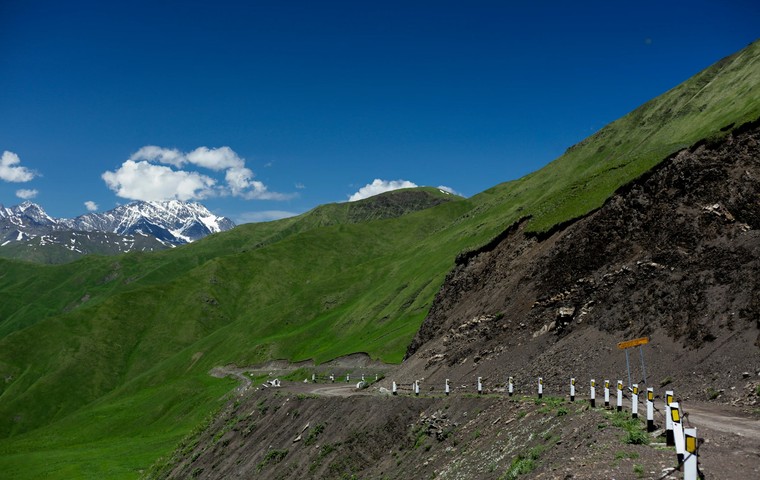
The best Georgia road trip depends on days available: 3 days covers the Military Highway to Kazbegi, 7 days adds Kakheti and the west, 10+ reach Svaneti. Actual 2026 prices, winter closures, and pitfalls explained.
April 24, 2026
Practical first-timer's guide to Georgia: visas, budget, transport, accommodation, connectivity and hidden nuances. Everything you need before and after landing.
February 22, 2026
June is Georgia's sweet spot – warm weather without peak crowds, Batumi sea reaching 23°C, and hotel prices 20–30% below midsummer peaks. Here's the honest picture.
March 20, 2026
Kazbegi, Kakheti wine country, Mtskheta, Vardzia – the day trips locals actually recommend, with honest prices, timing and pitfalls most guides skip.
April 21, 2026
Where to take your family in Georgia – from Batumi's coast to Borjomi's parks and mountain day trips. Mandatory insurance since 2026, family-friendly tours, honest pricing.
March 28, 2026
Georgia in May – a complete guide covering weather in Tbilisi and Batumi, sea temperature, up-to-date prices for accommodation and food, top things to do, and practical travel tips.
February 20, 2026