Hero background

Old Tbilisi

ძველი თბილისი

5th-century historic core – winding streets, sulfur baths, and views over the Kura River

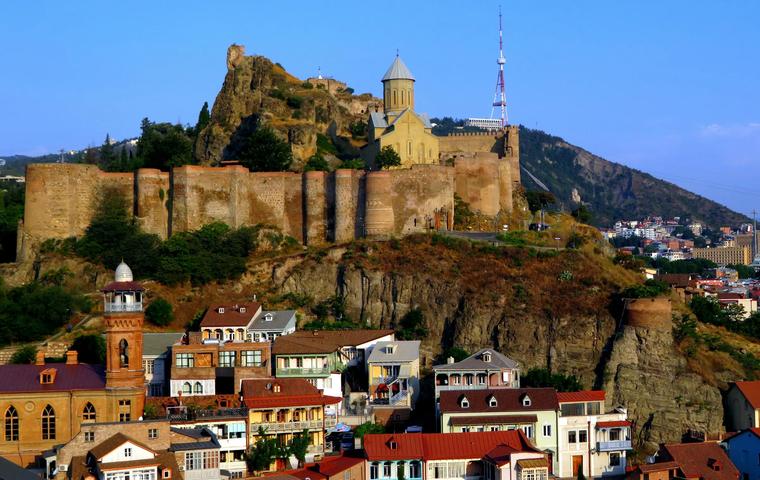
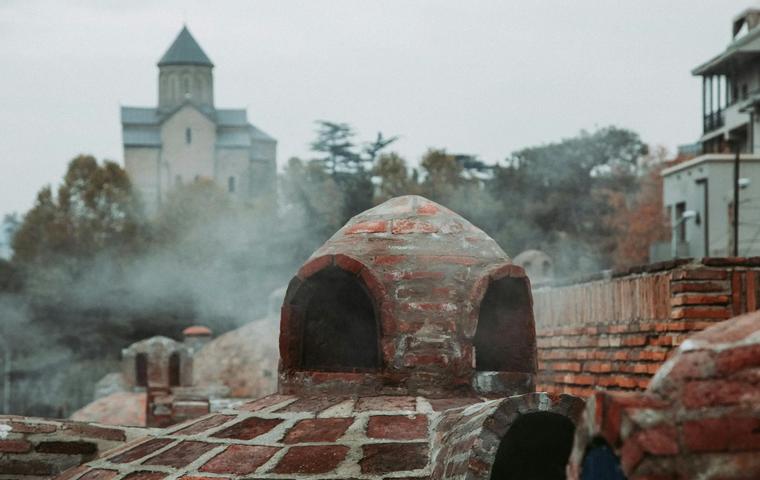
Old Tbilisi (Kala) is the historic heart of Georgia's capital, set on the right bank of the Mtkvari (Kura) River at the foot of Narikala Fortress. The district covers roughly 1.5 km² between Freedom Square to the north and the sulfur springs of Abanotubani to the south. The first fortifications appeared in the 4th century; in the 5th century, King Vakhtang Gorgasali founded the city here, naming it Tbilisi – "warm place" in Georgian – after the natural hot sulfur springs.

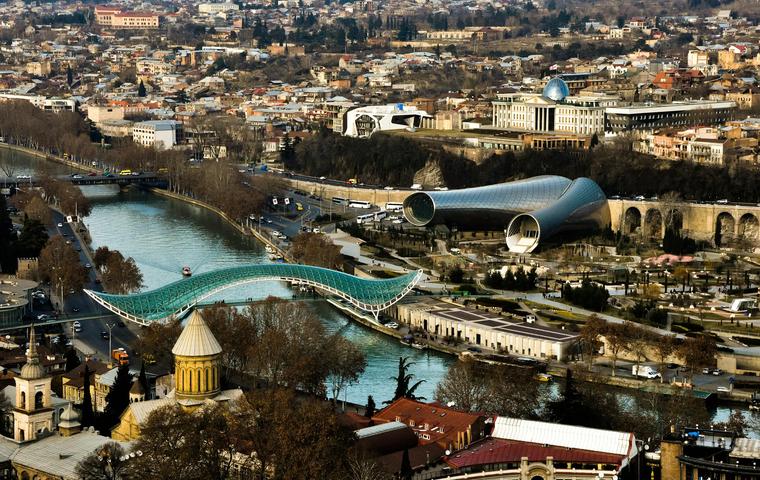
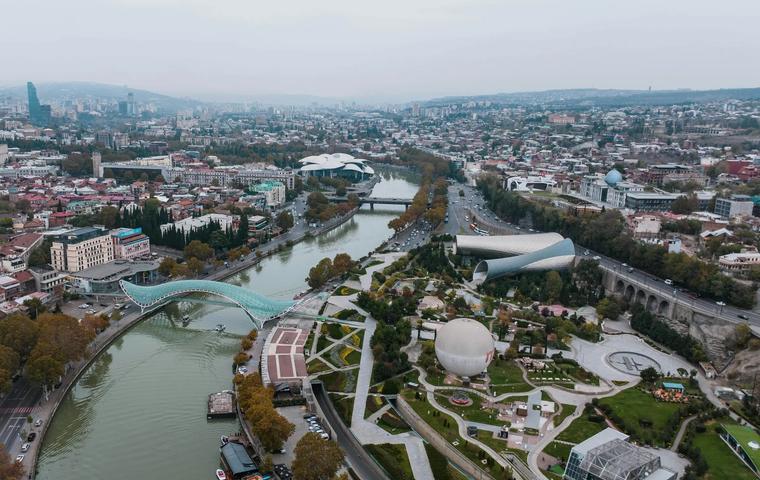
The main entry points are Freedom Square (Rustaveli or Freedom Square metro stations) and Rike Park on the left bank, from where the Bridge of Peace leads directly into the Old Town. The entire district is walkable; allow 3–5 hours for the main sights. The cable car from Rike Park to Narikala takes 2–3 minutes (2.5 GEL / ~$1).

Entry is free and the district is open around the clock. Suitable for all ages, though steep climbs and cobblestone streets require sturdy footwear.

Location

On the Map

About

What's Here

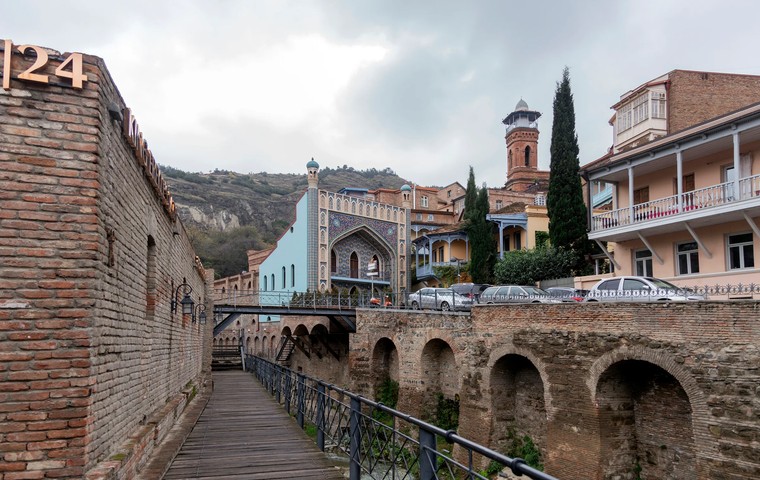
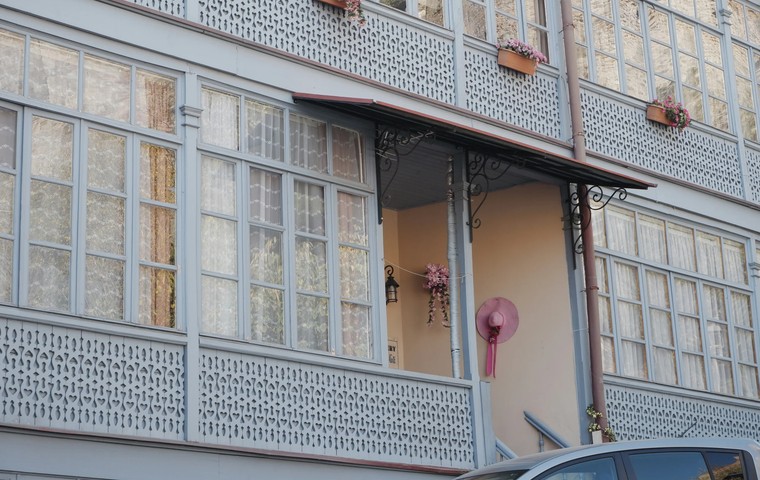
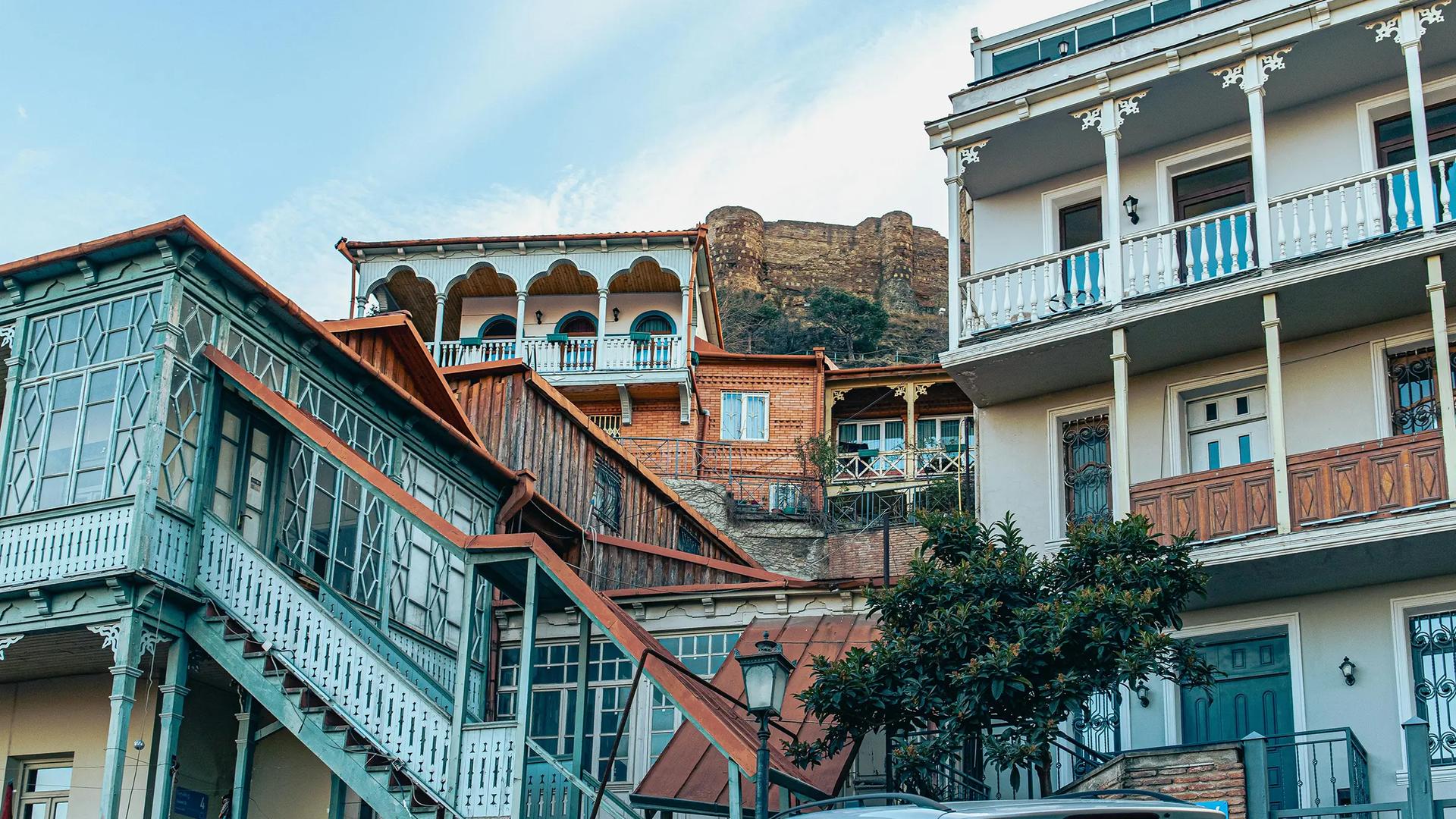
Old Tbilisi is a dense cluster of two- and three-story houses with carved wooden balconies draped in grapevines. Walls of yellow brick and tufa stone are painted in ochre, terracotta, and pale blue. Streets just 2–4 meters wide wind between courtyard houses where fig trees grow and laundry dries overhead. Gorgasali Square (Meidan) sits at the district's crossroads: from here, streets branch toward Abanotubani, Shardeni Street, Sioni Street, and the path up to Narikala. The Jumah Mosque – Tbilisi's only active mosque – stands 100 m from the Orthodox Sioni Cathedral and a synagogue, reflecting centuries of religious coexistence.

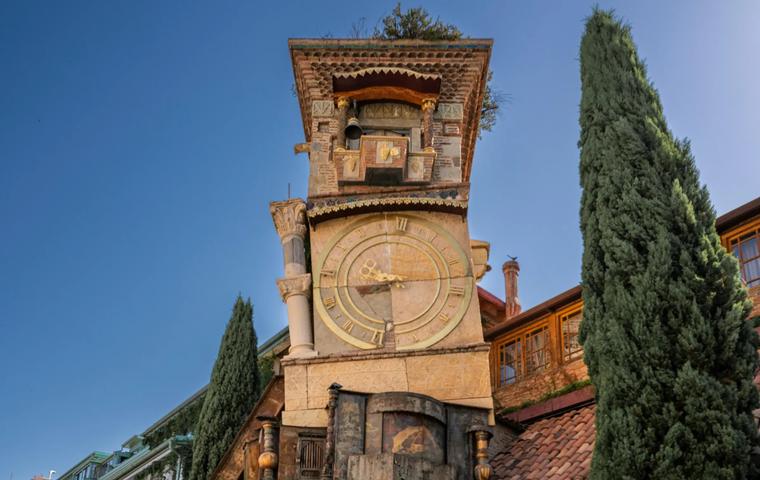
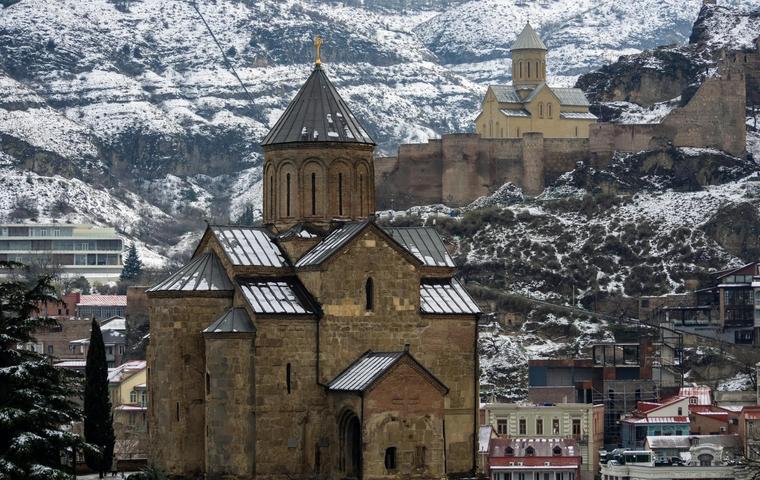
In the upper part of the district, Narikala Fortress and the 20-meter Mother of Georgia (Kartlis Deda) statue are visible from anywhere in the Old Town. Stone steps descend from the fortress past the Jumah Mosque toward Abanotubani. Behind the sulfur baths lies the Leghvtakhevi gorge with a 22-meter waterfall right inside the city. The trail along the stream leads to the Botanical Garden (161 hectares, 4,500 plant species). Shardeni Street is a pedestrian zone lined with galleries, restaurants, and wine bars. Nearby stands the Rezo Gabriadze Theater with its clock tower – every hour, an angel emerges to ring the bell.

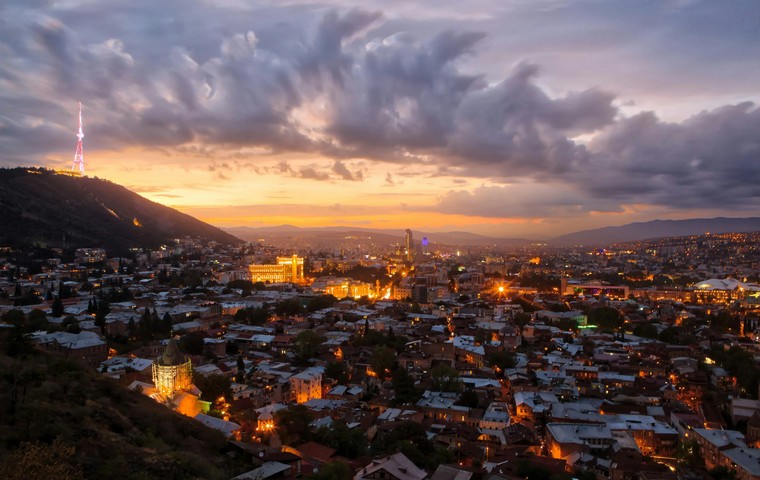
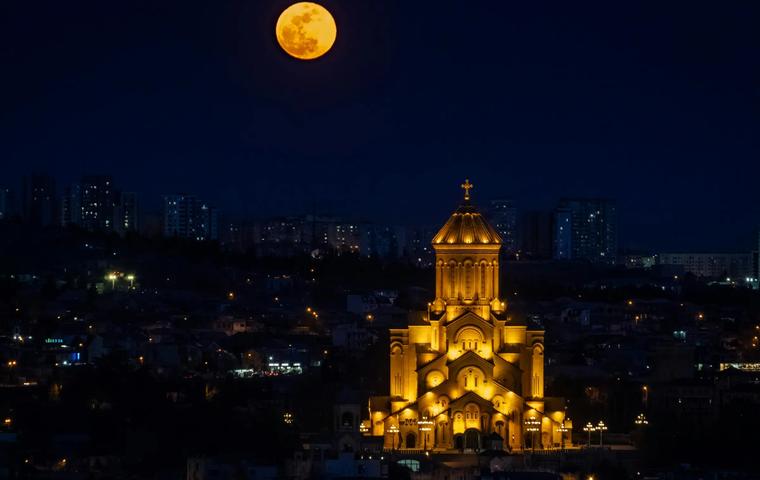
In the evening, the Old Town transforms: the illuminated Bridge of Peace, lit-up Narikala, and restaurant lights along Shardeni. Cafés and restaurants stay open until 23:00–01:00. The Dry Bridge flea market (daily, busiest on weekends) sells antiques, Soviet-era artifacts, silver, and paintings.

Why Visit

The Highlights

Age – the district was founded in the 5th century; some fortifications date to the 4th century. A UNESCO World Heritage candidate since 2007

Sulfur baths – over 10 operating bathhouses in Abanotubani. Water temperature 37–40°C. Public hall from 5–20 GEL/hr ($2–7), private room from 70–120 GEL/hr ($25–45)

Architecture – traditional houses with carved wooden balconies, 19th-century brick and stone construction. A blend of Georgian, Persian, and European styles

Leghvtakhevi waterfall – a 22-meter natural waterfall in a gorge behind the sulfur baths, 200 m from the Old Town center

Multi-faith quarter – within 200 m: Orthodox Sioni Cathedral (6th–13th c.), Jumah Mosque (18th c.), a synagogue, and an Armenian church

Cable car – 500 m from Rike Park to Narikala in 2–3 minutes. Glass cabins seating 8, panoramic views of the river and Old Town rooftops

History

Past & Present

The territory of present-day Old Tbilisi was inhabited long before the city's founding – archaeological finds date to the 4th millennium BCE. In the 4th century CE, a Persian citadel (the future Narikala) stood here. In the 5th century, King Vakhtang I Gorgasali relocated his court from Mtskheta and began building the city around the hot sulfur springs. His son Dachi formally declared Tbilisi the capital of the Kingdom of Iberia in the 6th century. The city changed hands repeatedly: Arabs established the Emirate of Tbilisi in the 7th century; in 1122, King David the Builder liberated the city and ushered in Georgia's "Golden Age." In the 13th–14th centuries, Tbilisi fell under Mongol rule.

In 1795, Persian Shah Agha Mohammad Khan devastated the city almost entirely – most buildings visible in the Old Town today date to the 19th century, rebuilt under the Russian Empire. During the Soviet era the district deteriorated, but the historic core survived. Following Georgia's independence in 1991, restoration began: façades on Shardeni and Erekle II streets were rebuilt, Sioni Cathedral was restored. In 2012, the cable car from Rike Park to Narikala opened, and Old Tbilisi became the country's primary tourist district.

For Visitors

Visitor Information

Tickets & Prices

Entry to the district is free; open 24 hours.

Rike–Narikala cable car: 2.5 GEL (~$1) one way. Payment by Travel Card only (purchase for 2 GEL at metro stations or the cable car station). Operates daily 10:00–00:00.

Sulfur baths (Abanotubani): Public hall: 5–20 GEL/hr (~$2–7) Private room: 70–250 GEL/hr (~$25–90) Kisi scrub (exfoliation): 10–20 GEL Advance booking recommended, especially in high season.

Botanical Garden: 4 GEL (~$1.50). Open 10:00–19:00 (winter until 17:00).

Museums and churches: Sioni Cathedral, Anchiskhati Basilica, Jumah Mosque – free entry. Gabriadze Theater – shows from 30 GEL, tickets online.

Rules & Restrictions

Churches and mosque: covered shoulders and knees required. Women should cover their heads (headscarves available at Sioni Cathedral entrance). Photography in courtyards permitted; inside churches without flash only. Tourist access may be restricted during services.

Sulfur baths: public halls are gender-separated. Private rooms allow mixed groups. Swimsuits not required.

Physical limitations: steep climbs, stone steps, cobblestone streets. Only the lower part (Shardeni, Meidan) is suitable for visitors with limited mobility. Use the cable car to reach Narikala.

Safety: petty theft occurs around Rustaveli Avenue and Freedom Square – take standard precautions. The district is safe in the evening.

On-Site Facilities

On site: Restaurants and cafés on every corner – average meal 25–50 GEL (~$9–18) per person. Free public toilets at Gorgasali Square and the Botanical Garden entrance. Restrooms in restaurants for patrons. Souvenir shops, galleries, wine shops. Dry Bridge flea market – daily, 10:00–18:00.

Transport: Bolt/Maxim taxi across the city 3–15 GEL (~$1–5). Metro: Freedom Square and Avlabari stations (1 GEL per ride). Street parking in the Old Town is extremely limited.

Connectivity: 4G coverage is stable. Free Wi-Fi in most cafés and restaurants. eSIM is a convenient alternative to a local SIM card.

Accessibility: Lower section (Shardeni, Meidan, riverbank) is relatively flat. Upper section (Narikala, Leghvtakhevi) is accessible only by stairs or cable car. Strollers and wheelchairs face difficulty on cobblestones.

Getting There

Transport & Directions

From TBS Airport (17 km, 20–40 min): – Bus #337 to Freedom Square – 1 GEL (~$0.35), runs 7:00–23:00 – Bolt taxi – 15–25 GEL (~$5–9)

By metro: – Freedom Square station (red line) – exit directly onto the square, 2 min to the Old Town – Avlabari station (red line) – exit toward Sameba Cathedral and Metekhi Church, cross the bridge into the Old Town in 5–7 min – Fare: 1 GEL, Travel Card required (2 GEL deposit)

From Rike Park: – Walk across the Bridge of Peace – 3 min – Cable car to Narikala – 2.5 GEL, 2–3 min

From other Tbilisi neighborhoods: – Bolt taxi from anywhere in the city – 3–15 GEL (~$1–5) – City buses to Freedom Square – 1 GEL

Within the district: The entire Old Town is pedestrian. Main route: Freedom Square → Shardeni → Meidan → Abanotubani → Narikala. Distance ~2 km, elevation gain ~120 m to the fortress.

When to go

Best time to visit

Season: April–June and September–October offer comfortable temperatures of 18–25°C for walking. Summer (July–August) is hot, up to 38°C – explore early morning or evening. Winter (December–February) is cool (2–8°C) but uncrowded, with lower accommodation prices.

Time of day: Morning (before 10:00) – empty streets, good light for photography. Sunset (18:00–20:00 in summer) – best light for panoramic views from Narikala. Evening – illuminated bridges and atmospheric restaurants.

Duration: 3–5 hours for the main sights. A full day with sulfur baths, Botanical Garden, and lunch. Two days for a thorough exploration including side streets and markets.

Avoid: Summer weekends (July–August) – peak tourist group volume from 10:00 to 16:00. Rainy days – cobblestones become slippery, the climb to Narikala can be hazardous.

FAQ

Common Questions

At least 3–5 hours for the main sights: Freedom Square, Shardeni, Meidan, Abanotubani, and the climb to Narikala. Add a full day if including sulfur baths, lunch, and the Botanical Garden.

The district is free and open 24/7. Paid attractions: cable car (2.5 GEL / ~$1), sulfur baths (from 5 GEL public hall), Botanical Garden (4 GEL / ~$1.50), Gabriadze Theater shows (from 30 GEL).

Metro to Freedom Square or Avlabari station (1 GEL / ~$0.35). Both stations are 2–7 minutes' walk from the Old Town. Bolt taxi from anywhere in Tbilisi costs 3–15 GEL (~$1–5).

The lower section (Shardeni, Meidan, riverbank) is flat and stroller-friendly. The climb to Narikala involves steep steps – elderly visitors should take the cable car. Kids enjoy the Gabriadze clock tower (angel every hour), the waterfall, and the cable car ride.

Shardeni and Erekle II streets have tourist-oriented restaurants – expect 30–50 GEL ($11–18) per person. Budget options on side streets behind Meidan: khinkali houses from 15 GEL ($5) for a meal. Wine bars offer tastings from 15 GEL ($5) for 4–5 glasses.

Sturdy, non-slip shoes are essential – cobblestones are steep in places. Covered shoulders and knees for entering churches. Headscarves are provided at Sioni Cathedral. In summer, bring water and a hat.

Yes, the Old Town is safe even late at night. Restaurants on Shardeni stay open until 01:00. Take standard precautions: keep valuables close and watch your belongings in crowds.

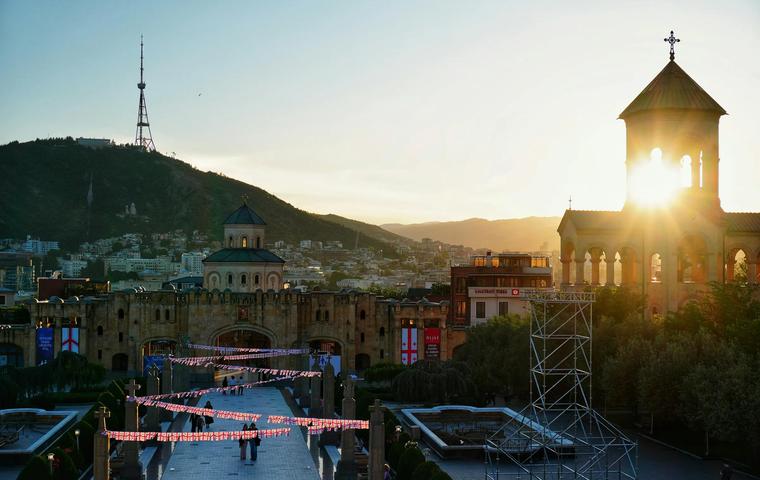
Across the Bridge of PeaceRike Park and Metekhi Church. The funicular to Mtatsminda is a 10-minute walk from Freedom Square. Rustaveli Avenue – the city's main boulevard with theaters and museums.

4G coverage is reliable throughout the district. Free Wi-Fi is available in most cafés. Consider setting up an eSIM before arrival. Google Maps works well for navigation in the Old Town.

Yes. Since January 1, 2026, medical insurance is mandatory for all tourists entering Georgia. Minimum coverage is 30,000 GEL (~$11,000). The policy must be in English or Georgian.

Distance

Travel Time

From Tbilisi by taxi or transfer ~10 min.
From Mtskheta by car ~28 min.
From Telavi by car ~1 h 30 min.
From TBS airport (Tbilisi Airport (TBS)) by car ~19 min.
From KUT airport (Kutaisi Airport (KUT)) by car ~4 h 55 min.
Social

Share