Skip to content
TripLinkHub
Bridge of Peace and Rike Park

Bridge of Peace and Rike Park

მშვიდობის ხიდი

A 2010 steel-and-glass pedestrian bridge linking Old Tbilisi with the modern left bank

About

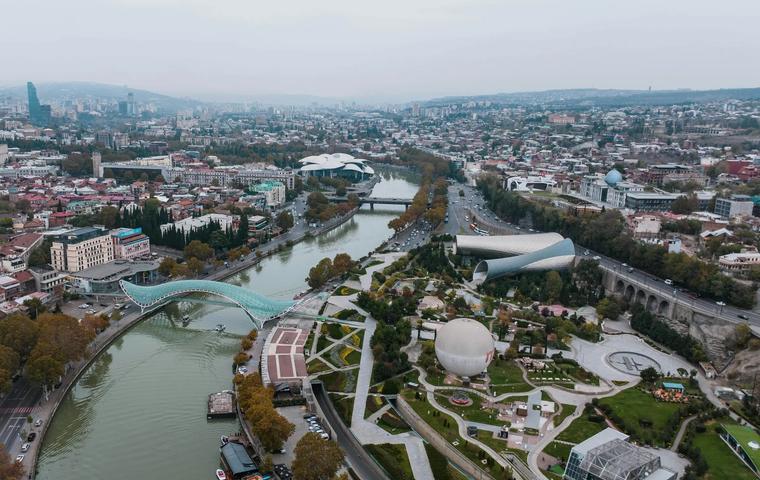
The Bridge of Peace is a 156 m pedestrian bridge spanning the Kura River (Mtkvari), connecting Erekle II Street in Old Tbilisi with Rike Park on the left bank. The steel-tube-and-glass structure was designed by Italian architect Michele De Lucchi. Opened on May 6, 2010, it cost 12.5 million GEL (~$7.5 million) to build. The frame was assembled in Italy and shipped to Tbilisi on 200 trucks.

Rike Park sits on the left bank of the Kura between Metekhi Bridge and Baratashvili Bridge. It houses the lower station of the cable car to Narikala Fortress (2.5 GEL / ~$1 one-way). The park features an amphitheater, playgrounds, a musical fountain, and art installations including a giant piano and chess board. Two metallic tube-shaped structures at the north end are an unfinished concert hall and exhibition center designed by Massimiliano Fuksas.

Allow 30–60 minutes for the bridge and park. Entry is free, open 24/7. Suitable for families and evening walks.

Transport

Travel time

On foot from Tbilisi center32–48 min.3 km
By car from Tbilisi9 min.3 km
From the airport Tbilisi Airport (TBS) · TBS19 min.12 km
On the map

Location

In detail

What's here

The Bridge of Peace has a bow-shaped profile with a wave-like glass canopy on a steel frame. The walkway is 5 m wide at the center and up to 22 m at the supports. The structure rests on four columns on the riverbanks and weighs 500 tons of steel. Under the glass roof, 1,208 LED fixtures illuminate the bridge, while 240 motion sensors in the glass railing panels light up as pedestrians pass. The lighting activates 90 minutes before sunset and runs until 90 minutes after sunrise. Four different light programs cycle every hour, and a Morse code message spelling out the periodic table of elements runs across the parapets – a symbol of life and peace.

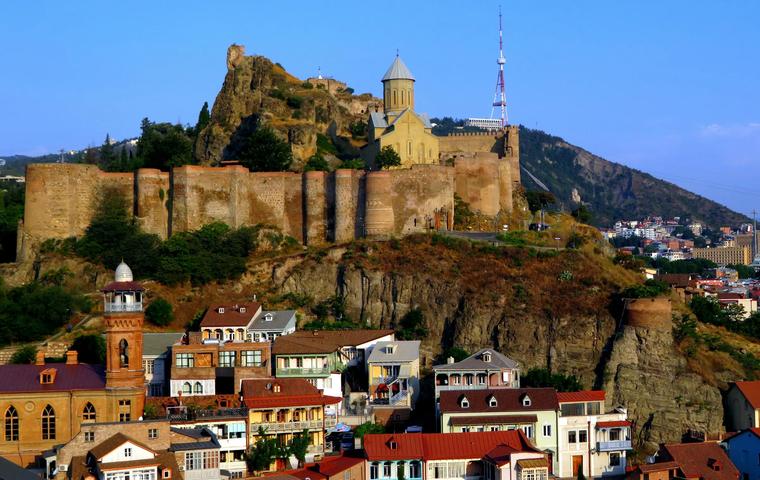
From the bridge, views extend in both directions: south toward Metekhi Church with the statue of King Vakhtang Gorgasali and Narikala Fortress, north toward Baratashvili Bridge and the Presidential Palace. At night, the LED reflections in the Kura create one of Tbilisi's most recognizable views.

Rike Park is a landscaped green space with lawns, pathways, fountains, and flower beds. In summer evenings, the musical fountain runs a light-and-water show. At the park's southern edge, the cable car station sends glass-floor gondolas (8 passengers each) on a 500 m, 2–3 minute ride to Narikala. The park hosts festivals and concerts, including the annual Tbilisoba in October.

Highlights

Why visit

Bridge dimensions – 156 m long, canopy width 12–22 m, steel weight 500 tons

Lighting – 10,000+ LEDs, 4 light programs, Morse code periodic table every hour

Architect – Michele De Lucchi (Italy), lighting by Philippe Martinaud (France)

Construction – 269 days, frame built in Italy and delivered by 200 trucks

Cable car – from Rike Park to Narikala, 2.5 GEL (~$1) one-way, 7 gondolas seating 8

Rike Park – amphitheater, musical fountain, playgrounds, giant chess board and piano

History

Past & present

The idea for the bridge emerged after the 2008 Russo-Georgian conflict. Commissioned by Tbilisi City Hall under President Mikheil Saakashvili, it was designed to symbolize peace and connect the historic center with the new districts on the left bank – at the very crossing where Silk Road caravans once forded the Kura. Construction took 269 days, and the bridge opened on May 6, 2010 – the feast day of Saint George, Georgia's patron saint.

Rike Park was built on the site of a former asphalt lot used as a driving school practice ground. The redevelopment was part of a larger waterfront modernization project. The two futuristic tube-shaped structures – a concert hall and exhibition center by architect Fuksas – were commissioned during the Saakashvili era, but funding dried up after the change of government, and the buildings remain unfinished. The cable car from the park to Narikala opened in 2012.

For visitors

Visitor information

Tickets & prices

Bridge and park entry is free. Open 24/7.

Cable car (Rike – Narikala):

One-way: 2.5 GEL (~$1 / €0.90)

Payment: Metromoney card (2 GEL deposit, available at the station and metro) or contactless bank card

Hours: 10:00 AM – 10:00 PM daily (weather-dependent)

Boat rides:

From the pier near the bridge – 15–20 GEL (~$6–7) for 20 minutes

Rules & restrictions

No special restrictions. Bridge and park are open 24/7. No open food or drink allowed on the cable car – stow items in a backpack. It's windy at the top near the fortress – bring a layer even on warm days.

On-site facilities

In the park:

Free restrooms

Playgrounds for various ages

Benches and lawns

Cafés near the park (average check 20–30 GEL / $8–11)

Nearby:

Restaurants on Shardeni Street – 3 minutes across the bridge

Shops and ATMs at Europe Square

Accessibility: Bridge and park are fully wheelchair and stroller-accessible. Cable car gondolas are in constant motion – boarding requires mobility.

Getting there

Transport & directions

On foot from central Tbilisi:

– From Freedom Square – 10–15 minutes via Erekle II Street

– From Avlabari metro station – 7–10 minutes downhill to the riverbank

Public transport:

– Buses #341, 344, 345 to Europe Square

– Metro: nearest stations Avlabari (7 min walk) and Freedom Square (12 min walk)

By taxi:

– Bolt from anywhere in the center – 3–7 GEL (~$1–3)

On site:

The bridge is pedestrian-only. Street parking available near Europe Square.

When to go

Best time to visit

Time of day: Evening (1 hour before sunset) – best for bridge lighting and the park's musical fountain. Before 10:00 AM – fewest visitors.

Season: Year-round. Summer evenings feature the lit musical fountain. Winter lighting stands out against the dark skyline.

Duration: 30–60 minutes for bridge and park. With a cable car ride and walk around Narikala – 2–3 hours.

Avoid: Summer weekends 12:00–4:00 PM – hot and crowded.

Questions & answersFAQ

Popular questions

Practical answers about visiting, routes and time on site.

Is there an entrance fee for the bridge and park?+

No, both are free and open 24/7.

When do the bridge lights turn on?+

90 minutes before sunset. The lighting runs all night until 90 minutes after sunrise. In summer that's around 7:00 PM, in winter around 4:30 PM.

How do I pay for the cable car?+

You need a Metromoney card (2 GEL / ~$0.75 deposit) or a contactless bank card. Cash is not accepted. Buy the card at the lower station in Rike Park or any metro station.

Is it suitable for children?+

Yes. The park has playgrounds, an interactive fountain (children splash through it in summer), and giant chess. The glass-floor cable car is a hit with kids.

How long should I spend here?+

30–60 minutes for the bridge and park. With a cable car ride to Narikala Fortress and an Old Town walk – 2–3 hours.

What else is nearby?+

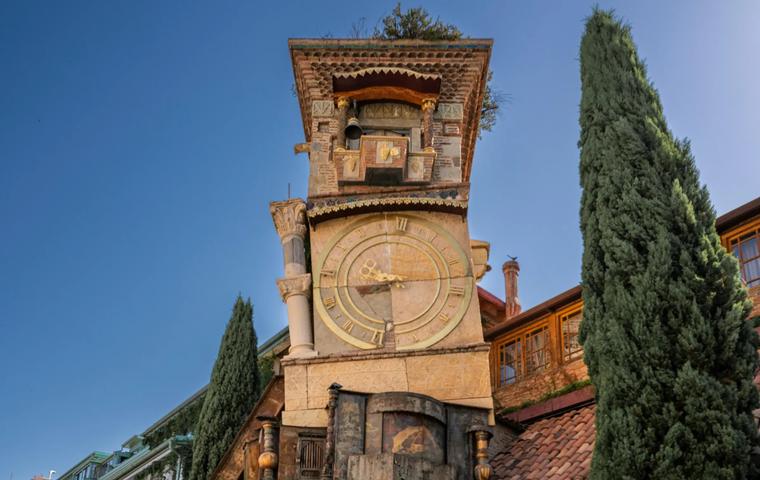
Across the bridge: Shardeni Street restaurants and Gabriadze Theater. South: Metekhi Church and Abanotubani sulfur baths. Via cable car: Narikala Fortress.

Is there Wi-Fi?+

Free Wi-Fi is available in parts of the park. 4G coverage is strong throughout. An eSIM is more convenient for constant connectivity.

Can I take a boat ride?+

Yes, tourist boats depart from the pier near the bridge. Cost is 15–20 GEL (~$6–7) for a 20-minute ride with views of the bridge and Old Town from the water.

Bridge of Peace and Rike Park

Articles about this place

Romantic Weekend in Tbilisi: A Couple's Itinerary
Tours

Romantic Weekend in Tbilisi: A Couple's Itinerary

Sulfur baths for two cost $25, dinner with Georgian wine runs $40, and the sunset from Narikala is priceless. A practical 2–3 day Tbilisi itinerary built for couples.

April 09, 2026
Driving Rules in Georgia: Fines, Speed Cameras, Parking – A No-BS Guide
Transport

Driving Rules in Georgia: Fines, Speed Cameras, Parking – A No-BS Guide

Georgia's BAC limit is 0.03%, a 40+ km/h speeding fine costs 300 GEL, and Tbilisi parking requires a specific app. Here's everything drivers actually need to know.

March 20, 2026
Georgia in June: +27°C, Early Season Prices & What to Really Expect
Tips

Georgia in June: +27°C, Early Season Prices & What to Really Expect

June is Georgia's sweet spot – warm weather without peak crowds, Batumi sea reaching 23°C, and hotel prices 20–30% below midsummer peaks. Here's the honest picture.

March 20, 2026
Most Atmospheric Apartments in Georgia: Best Areas, Views and Prices
Accommodation

Most Atmospheric Apartments in Georgia: Best Areas, Views and Prices

Where to rent atmospheric apartments in Georgia – Tbilisi, Batumi, Kazbegi, Sighnaghi. Prices, neighborhoods, booking tips and hidden rental pitfalls.

February 27, 2026
Tbilisi Sulfur Baths – Guide to Abanotubani: Prices, Etiquette & Is It Worth It
Tours

Tbilisi Sulfur Baths – Guide to Abanotubani: Prices, Etiquette & Is It Worth It

Public hall for 10 GEL or VIP room for 200? Every Abanotubani bathhouse compared, the kisi scrub explained, real prices and the mistakes guidebooks won't tell you about.

March 15, 2026
Georgia With Kids: 7 Destinations, Real Costs & What Guides Don't Tell You
Tips

Georgia With Kids: 7 Destinations, Real Costs & What Guides Don't Tell You

Where to take your family in Georgia – from Batumi's coast to Borjomi's parks and mountain day trips. Mandatory insurance since 2026, family-friendly tours, honest pricing.

March 28, 2026
Tbilisi — everything you need for your trip

Routes, attractions, transport and more

Learn more
Nearby

Nearby attractions