Hero background

Narikala Fortress

ნარიყალა

4th-century defensive citadel on Sololaki Ridge – Tbilisi's top panoramic viewpoint

Narikala Fortress is the oldest structure in Tbilisi, perched on a rocky outcrop of Sololaki Ridge between the Abanotubani sulfur baths and the Botanical Garden. The first fortifications here date to around 364 AD under King Varaz-Bakur. The fortress has two sections – upper and lower – stretching along the ridge at roughly 500 m above the Kura River.

The easiest way up is the cable car from Rike Park – 2 minutes, 2.5 GEL (~$1). On foot from Meidan Square – 15–20 minutes uphill. The cable car runs daily 10:00–22:00 (until midnight on Saturdays in summer).

Admission is free, open 24/7. Allow 40–60 minutes for the fortress itself, or 1.5–2 hours including the walk up and photos. Suitable for all ages but requires sturdy footwear.

Location

On the Map

About

What's Here

Narikala is not a reconstructed castle but atmospheric ruins: massive stone walls with masonry from different eras, half-collapsed towers, and exposed foundations. The lower fortress is partially restored and open for exploration. Just left of the entrance through the quadrangular tower, you can climb a section of restored wall and walk along the perimeter. At the centre of the lower courtyard stands St. Nicholas Church, rebuilt in 1996–1997 on the foundation of a 12th-century temple. Inside are frescoes depicting biblical scenes and episodes from Georgian history. The upper fortress is closed to visitors, though its walls are visible from the path to the Mother of Georgia statue.

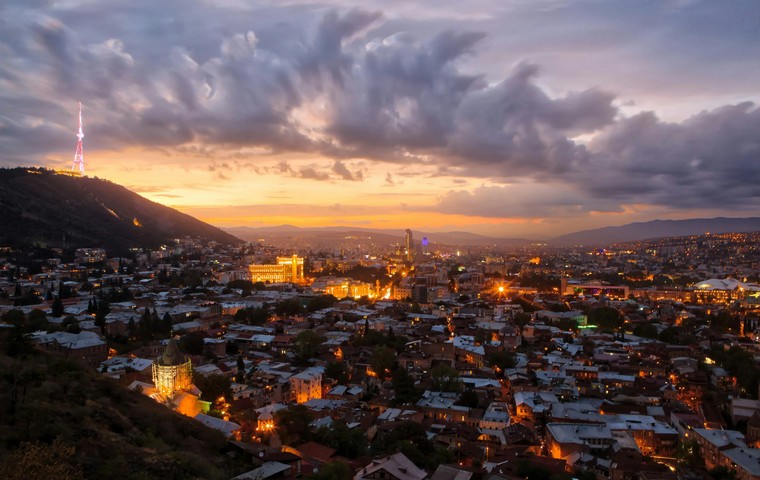
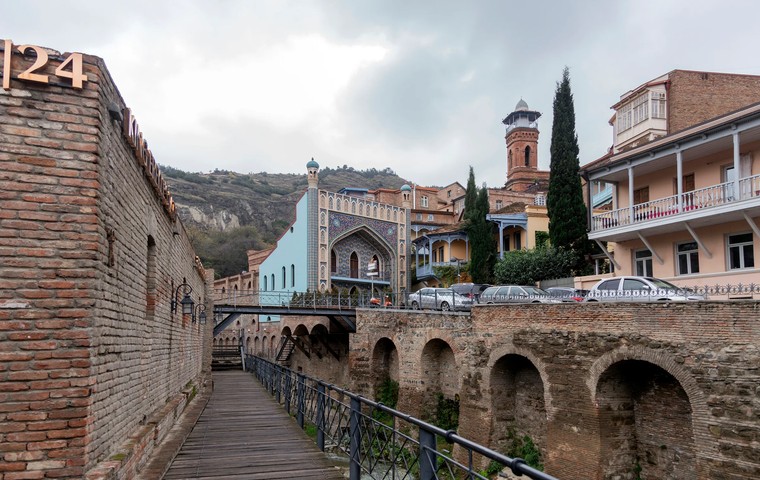
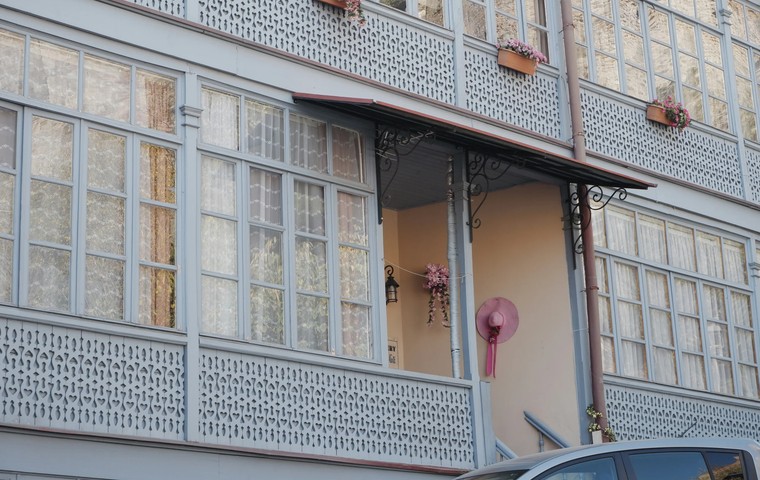
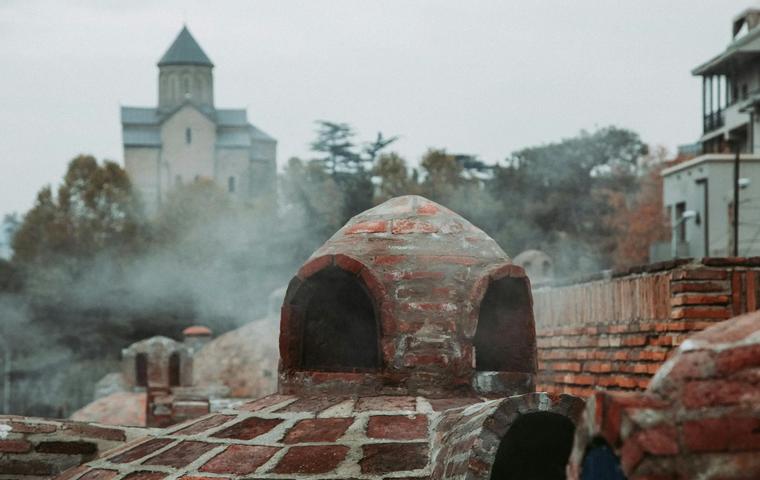
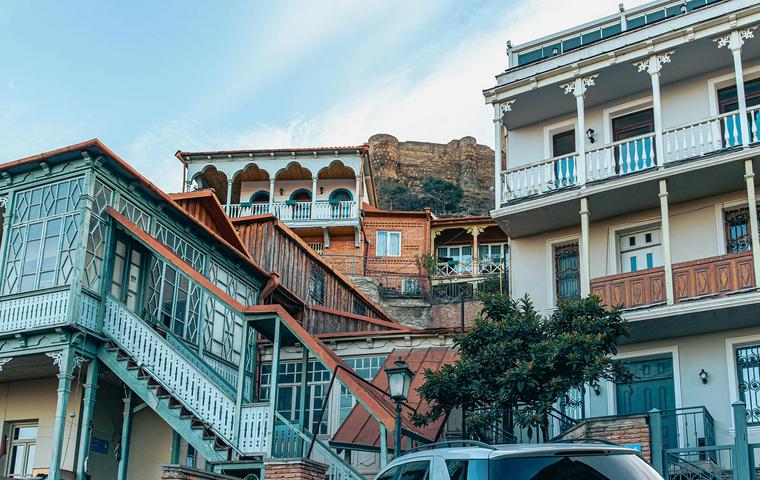
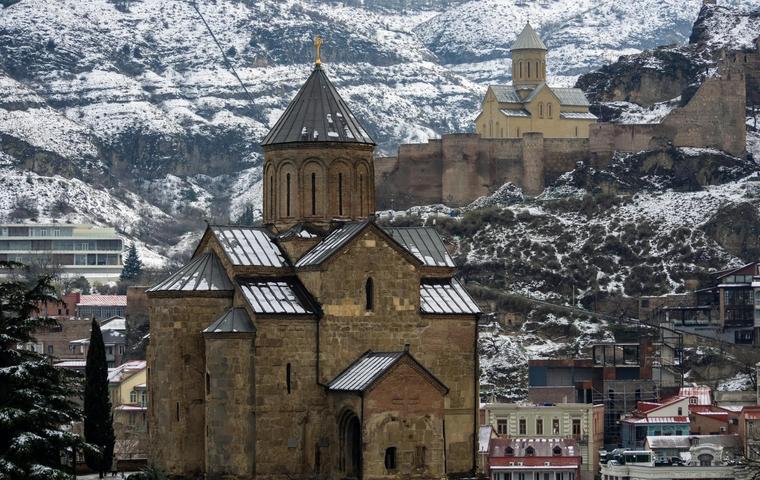
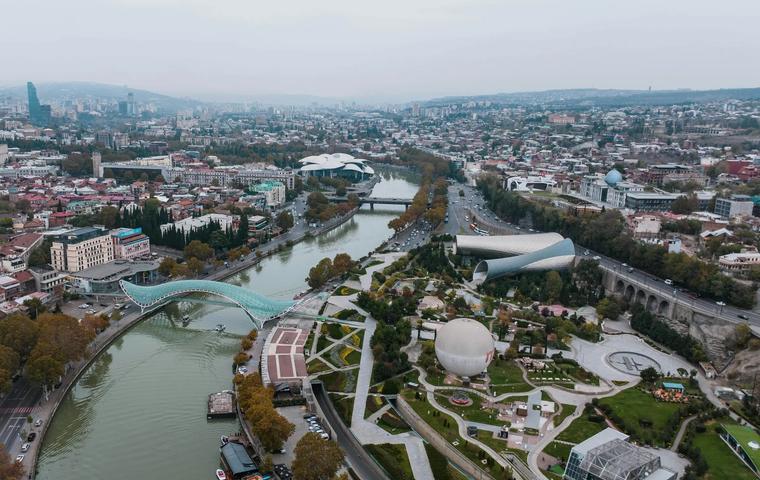
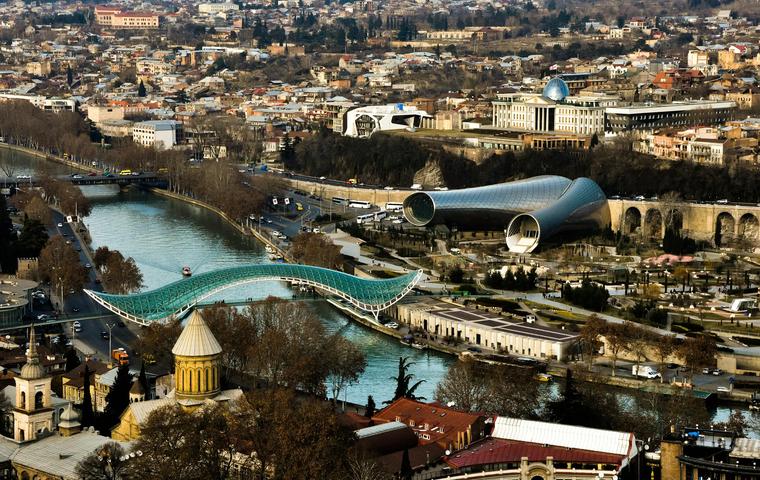
From the lower fortress walls, you get a sweeping panorama: to the north – Old Tbilisi with its tile roofs and carved wooden balconies, the Bridge of Peace, and Metekhi Church on its cliff across the river. To the south – the Botanical Garden gorge with its waterfall. To the west – Mtatsminda Mountain with its TV tower. Below, at the foot of the hill – the brick domes of the sulfur baths and the minaret of the Juma Mosque.

About 500 metres west along the ridge stands the 20-metre aluminium Kartlis Deda (Mother of Georgia) statue, erected in 1958 for the city's 1,500th anniversary. In her right hand she holds a bowl of wine for guests; in her left, a sword for enemies. A viewing platform nearby offers one of the best city views.

Why Visit

The Highlights

Age – first fortifications date to the 4th century AD; walls rebuilt by Arabs (7th–8th c.), Mongols, and Georgian kings

Location – on Sololaki Ridge, roughly 120 m elevation gain from the base, 270° panorama over the city and Kura valley

St. Nicholas Church – rebuilt 1996–1997 on a 12th-century foundation, interior frescoes with biblical and historical scenes

Kartlis Deda – 20-metre Mother of Georgia statue (1958), 500 m from the fortress along the ridge

Cable car – 686 m from Rike Park, 7 gondolas seating 8, glass floors, 2-minute ride

Restoration – major conservation works began in 2024 (budget ~$5M), parts of the site may be fenced off – check before visiting

History

Past & Present

The first fortress on this site was built around 364 AD under King Varaz-Bakur as a Persian citadel controlling the narrow Kura valley. By the late 4th century the Persians captured it, but the kings of Kartli reclaimed it by mid-5th century. In the 7th–8th centuries, Arab emirs of Tbilisi significantly expanded the fortifications and housed their palace inside – Narikala became the administrative heart of their Caucasian territories. King David the Builder (1089–1125) further reinforced the walls. The Mongols gave it the name "Narin Qala" – "Little Fortress."

Most surviving fortifications date to the 16th–17th centuries. In 1827 a powerful earthquake destroyed much of the walls, and an explosion of the Russian garrison's gunpowder magazine completed the devastation. The 12th-century St. Nicholas Church was lost to fire and only rebuilt in 1996–1997. In 2024, a major restoration project began with a budget of roughly $5 million – reinforcing walls, restoring the medieval water cistern, and preserving the historic layers of masonry.

For Visitors

Visitor Information

Tickets & Prices

Fortress admission is free.

Cable car (Rike – Narikala):

One way: 2.5 GEL (~$1 / €0.90)

Payment via Metromoney card (2 GEL refundable deposit, sold at the station and metro) or contactless bank card.

Cash not accepted.

Botanical Garden (entrance from fortress side): 4 GEL (~$1.50).

Rules & Restrictions

No special restrictions. Photography allowed everywhere; inside St. Nicholas Church, no flash. Terrain is uneven: stone paths, steep stairs, some unguarded drop-offs. Sturdy non-slip shoes are essential. Limited shade in summer – bring water and sun protection. Parts of the site may be fenced off due to restoration work (ongoing since 2024). The upper fortress is closed – climbing there is unsafe.

On-Site Facilities

On site:

Small vendors selling souvenirs and churchkhela near the entrance. No cafés or shops inside the fortress – nearest are at Meidan Square and in Abanotubani below.

Toilets: At the upper cable car station. None inside the fortress.

Parking: Vehicle access to the fortress is restricted. Nearest parking at the base, around Meidan area.

Wi-Fi: None. 4G works reliably.

Accessibility: Not suitable for visitors with limited mobility. Steep climb on foot, uneven surfaces and stairs inside. The cable car accommodates wheelchairs, but from the upper station to the fortress there are stairs and a steep descent.

Getting There

Transport & Directions

From central Tbilisi:

– Cable car from Rike Park – 2.5 GEL (~$1), 2 minutes, operates 10:00–22:00 (Saturdays until midnight in summer). Entrance near the Bridge of Peace.

– On foot from Meidan Square (Abanotubani) – 15–20 minutes uphill via Orbiri Street. Steep climb with views over the sulfur bath domes.

– On foot via Betlemi Stairs (off Lado Asatiani St in Sololaki) – 15–20 minutes, scenic route through old neighbourhoods.

– Bolt taxi to the base – 5–10 GEL (~$2–4) from the centre.

On site:

From the upper cable car station to the fortress entrance – 5 minutes downhill via stairs. To the Kartlis Deda statue – 10 minutes along the ridge path. To the Botanical Garden – 15 minutes on foot through the back of the fortress.

When to go

Best time to visit

Season: April–October for comfortable weather. In winter the path can be icy, but the fortress remains open.

Time of day: Sunset (18:00–20:00 in summer) – best light for photos and the city lights starting to glow. Before 10:00 AM – the fortress is nearly empty. At night, the walls and Kartlis Deda statue are illuminated.

Duration: 40–60 minutes for the fortress and church. With the walk up, statue visit, and photos – 1.5–2 hours. Adding the Botanical Garden – 3–4 hours.

Avoid: Weekends and holidays in July–August, 11:00–16:00 – tour groups. In strong wind or rain, the cable car shuts down.

FAQ

Common Questions

Admission is free, open 24/7. The cable car from Rike Park costs 2.5 GEL (~$1) one way. Pay with a Metromoney card or contactless bank card – no cash accepted.

40–60 minutes for the fortress and St. Nicholas Church. With the walk up, Kartlis Deda statue, and photos – 1.5–2 hours. Add the Botanical Garden for a 3–4 hour half-day trip.

Cable car from Rike Park (next to the Bridge of Peace) is the fastest option, running 10:00–22:00 daily. On foot – 15–20 minutes uphill from Meidan Square via a steep path.

Yes, kids usually enjoy the glass-floor cable car and exploring the walls. Keep a close eye on children – there are unguarded drop-offs and steep stairs in places. Strollers cannot be used inside.

Sturdy shoes with non-slip soles are essential. Paths are rocky, stairs are worn and steep in places. Heels and flip-flops are not suitable.

The fortress is open year-round. In rain, the paths become slippery – exercise caution. In strong wind or thunderstorms, the cable car shuts down and you'll need to walk up or wait.

Kartlis Deda statue – 10 min walk along the ridge. Botanical Garden – enter from the fortress side (4 GEL). Juma Mosque – on the way down to Abanotubani. The sulfur baths are at the base, 7 minutes downhill.

Major restoration started in 2024 (budget ~$5M). Parts of the fortress may be behind scaffolding. The cable car operates, but the walkway from the upper station may be partially restricted. Check conditions before your visit.

Distance

Travel Time

From Tbilisi by taxi or transfer ~10 min.
From Mtskheta by car ~29 min.
From Telavi by car ~1 h 30 min.
From TBS airport (Tbilisi Airport (TBS)) by car ~19 min.
From KUT airport (Kutaisi Airport (KUT)) by car ~4 h 55 min.
Social

Share