Tickets & prices
Admission is free.
Important: The main church is under restoration. Access may be limited – check before your visit. Smaller churches and the grounds are usually open.
გელათის მონასტერი
12th-century monastery with Golden Age mosaics – a UNESCO site and royal burial ground
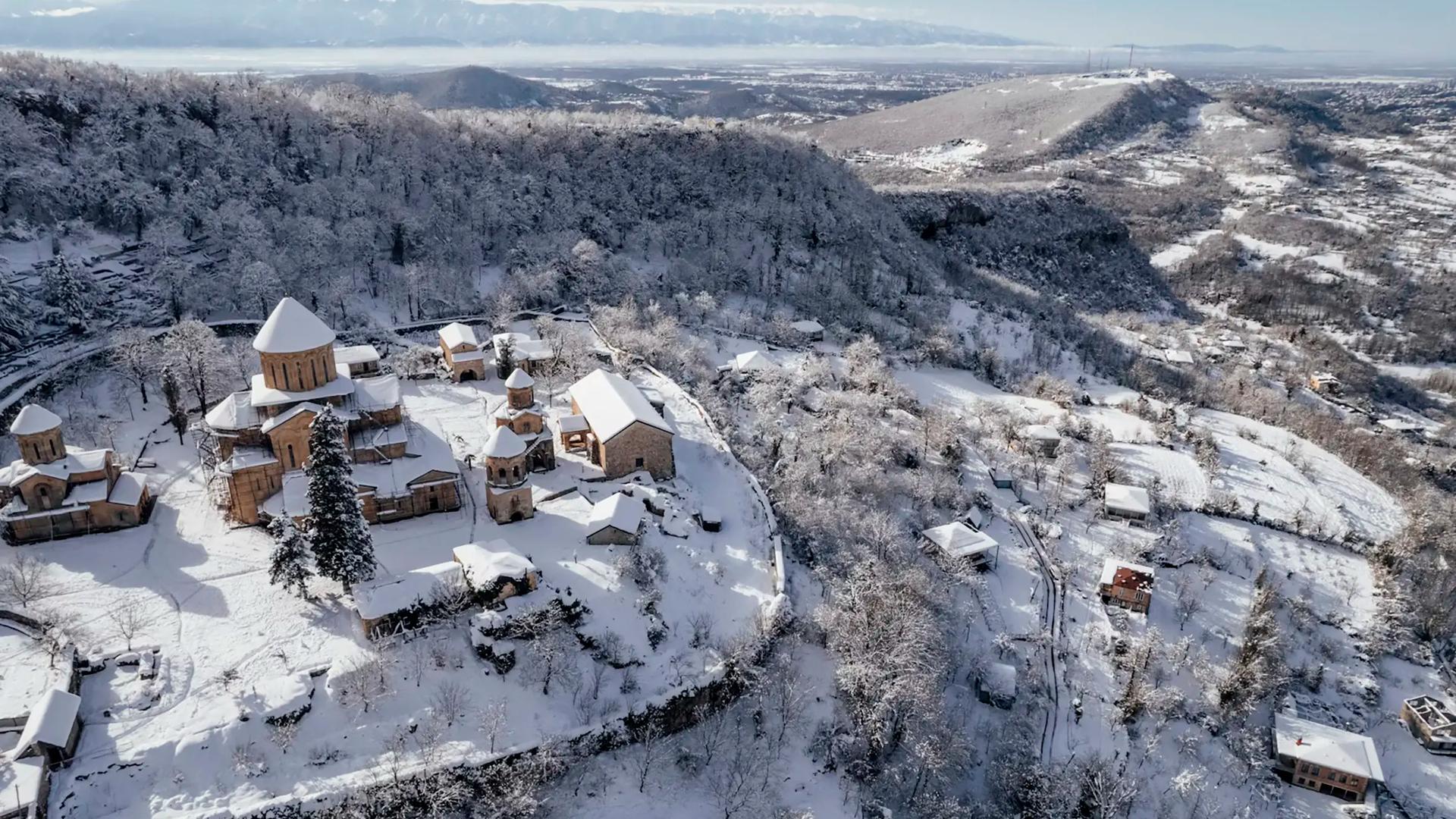
Gelati Monastery is a medieval monastic complex 11 km northeast of Kutaisi, set on a wooded hillside above the Tskaltsitela River gorge. Founded in 1106 by King David IV the Builder as a centre of science and education. UNESCO World Heritage Site. The main treasure is its 12th–18th-century frescoes and mosaics, including a mosaic of the Virgin and Child in the apse of the main church.
From central Kutaisi – 20 minutes by marshrutka #33 (1 GEL, ~$0.35) or 10–15 minutes by taxi (12–15 GEL, ~$4–5). Pairs well with Motsameta Monastery – about a one-hour downhill walk from Gelati.
Important: The main church (Cathedral of the Nativity of the Virgin) is undergoing extended restoration. As of 2025, access is limited – the church is open on weekends and select days. The monastery grounds remain accessible. Check the schedule before visiting.
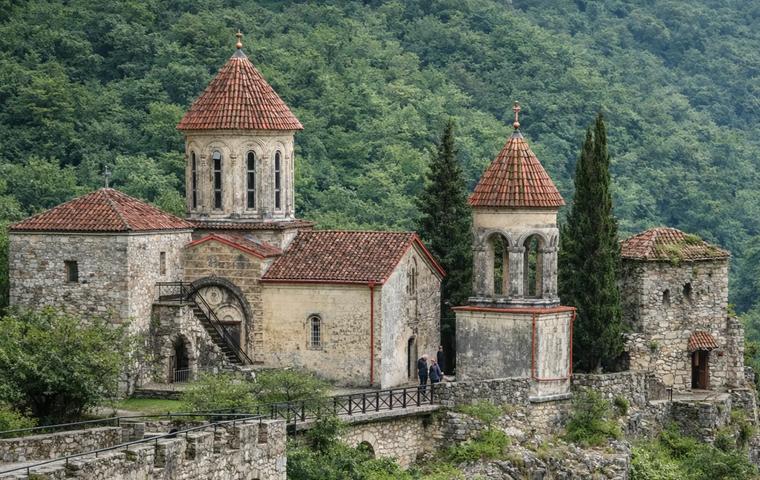
The monastery complex sits on a slope surrounded by deciduous forest. Behind the stone walls: three churches, a bell tower, the Academy building, and service structures. All buildings are stone with domed roofs. From the entrance, views open onto the green Imereti hills and the river gorge.
The main church – Cathedral of the Nativity of the Virgin (1106–1130) – holds a 12th-century mosaic of the Virgin and Child with Archangels Michael and Gabriel in the apse. It is the only fully preserved mosaic from medieval Georgia. Frescoes from the 12th–18th centuries cover the walls: the north side features a row of six figures including David the Builder (holding a model of the church) and Bagrat III. David the Builder's tomb lies at the south gate: the king requested that everyone entering should step on his gravestone – a gesture of humility.
The Church of St. George (13th century) served as a prayer chapel and burial place for Georgian queens. The Church of St. Nicholas (13th century) has an unusual two-storey design with an arched gallery instead of a ground floor. The bell tower – one of Georgia's oldest surviving – stands directly over a spring. The 14th-century Academy building was restored in 2014; it was once the educational hub of all Western Georgia.
12th-century mosaic – Virgin and Child in the main church apse, the only fully preserved medieval mosaic in Georgia
David the Builder's tomb – at the south gate, beneath the Iron Gates of Ganja (a 1138 war trophy)
Gelati Academy – medieval centre of learning that chroniclers called 'a second Jerusalem' and 'a new Athens'
UNESCO status – World Heritage Site since 1994 (retained after Bagrati Cathedral was delisted in 2017)
Frescoes – wall paintings from the 12th–18th centuries depicting Georgian kings and saints
Three churches – Cathedral of the Nativity (12th c.), Church of St. George (13th c.), Church of St. Nicholas (13th c.)
Gelati Monastery was founded in 1106 by King David IV the Builder when Kutaisi served as Georgia's capital. The main Cathedral of the Nativity of the Virgin was completed in 1130 under Demetrius I. David IV made the monastery both a religious and educational institution: the Gelati Academy attracted scholars, philosophers, and theologians from across Georgia and abroad. Its notable alumni included philosopher Ioane Petritsi and theologian Arsen Ikaltoeli. David the Builder was buried at the south gate in 1125, starting a tradition: Gelati became the burial site for Georgian and Imeretian kings.
In 1510, Ottoman Turks set fire to the monastery, but Bagrat III of Imereti restored the complex. In 1922, the Bolsheviks expelled the monks. The churches were reconsecrated in 1988. In 1994, the monastery and Bagrati Cathedral received joint UNESCO World Heritage status. A major roof repair began in 2014 but led to water damage to the frescoes due to a faulty roof. Restoration continues with international specialists under UNESCO oversight.
Admission is free.
Important: The main church is under restoration. Access may be limited – check before your visit. Smaller churches and the grounds are usually open.
Dress code: covered shoulders and knees. Women should wear a headscarf and long skirt (black wraps provided at the entrance). Photography unrestricted outside; no flash inside. Sunday services begin around 10:00 AM with Georgian choral singing – visiting is allowed but be respectful.
Minimal facilities. Toilets near the car park (condition varies; may be closed). No cafés or shops on site. Free parking. 4G mobile signal works. Grounds are generally flat but stone surfaces can be uneven.
From Kutaisi (11 km, 15–20 min):
– Marshrutka #33 from Dinmart supermarket (behind the Drama Theatre) – 1 GEL, departures: 7:30, 11:00, 14:00, 16:00, 18:00. Last return from Gelati – 4:30 PM
– Taxi – 12–15 GEL (~$4–5) one way; 25 GEL (~$9) round trip; 30 GEL (~$11) including Motsameta
From Tbilisi (230 km):
– First to Kutaisi (marshrutka 20 GEL / train 9 GEL), then local transport
– Car rental – free parking at the monastery
Walking from Gelati to Motsameta:
– About 1 hour, mostly downhill along the road or through the forest (following the railway tracks). Signposted.
Season: April–October for comfortable weather and green landscapes. Accessible in winter, but may be damp.
Time of day: Morning (before 11:00 AM) – fewest visitors. Sunday services from ~10:00 AM offer Georgian choral singing.
Duration: 45–60 minutes for the complex. With a walk to Motsameta – 2.5–3 hours.
Avoid: Summer weekends – tour buses arrive in numbers. Saturday afternoon is peak time.
Practical answers about visiting, routes and time on site.
The grounds are open. The main church (Cathedral of the Nativity) is under restoration – access may be limited to weekends. Smaller churches are usually open. Check before visiting.
No, admission is free. On-site tours are not offered – there is almost no signage. Consider booking a guided tour in advance.
Marshrutka #33 from Dinmart supermarket (behind the Drama Theatre) – 1 GEL, 20 minutes. Departures: 7:30, 11:00, 14:00, 16:00, 18:00. Last return – 4:30 PM.
Yes. From Gelati to Motsameta is about one hour, mostly downhill. The route follows the road or forest paths along the railway tracks. Signposted.
Yes. The grounds are flat and safe. Kids may enjoy the Gates of Ganja, David the Builder's tomb, and the hilltop views. Allow 1–1.5 hours with children.
No cafés on site. Nearest restaurants are in Kutaisi. Bring water and snacks.
Since 2026, medical insurance is mandatory for entering Georgia (minimum 30,000 GEL coverage). No special insurance is needed for visiting the monastery.
These are the Gates of Ganja (modern-day Azerbaijan), captured by Demetrius I in 1138 as a war trophy. David the Builder's tombstone lies beneath them.
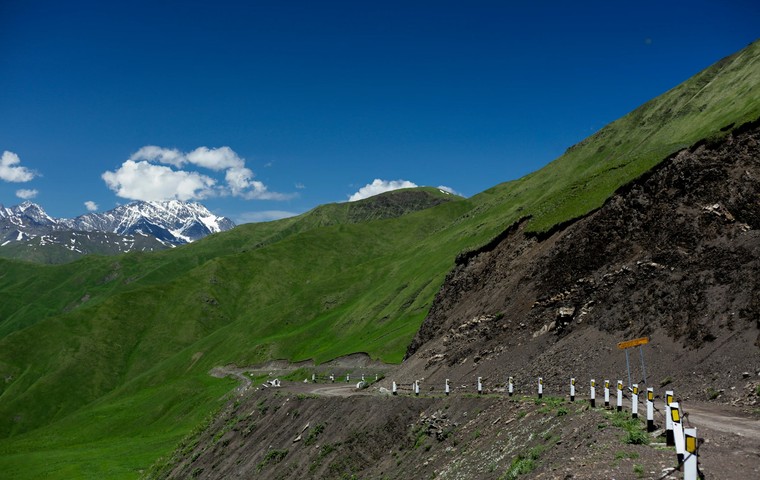
The best Georgia road trip depends on days available: 3 days covers the Military Highway to Kazbegi, 7 days adds Kakheti and the west, 10+ reach Svaneti. Actual 2026 prices, winter closures, and pitfalls explained.
April 24, 2026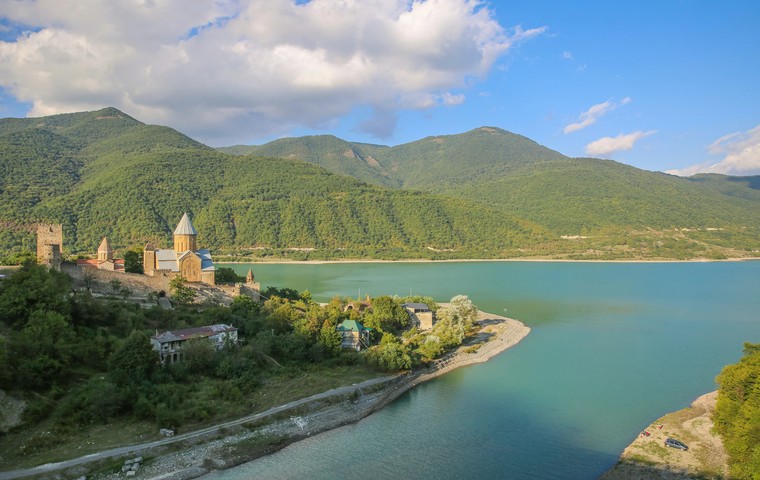
Kutaisi isn't a resort – it's a 3,000-year-old city with UNESCO monasteries, epic canyons 30 minutes away, and prices half of Tbilisi. Here's who should visit and who should skip it.
March 25, 2026
Three-star hotels and small inns in Georgia: where to stay comfortably and affordably. Prices, neighborhoods, city comparisons. Practical guide to budget hotels for those not ready for hostels.
February 25, 2026