Tickets & prices
Admission is free. Donations are welcome.
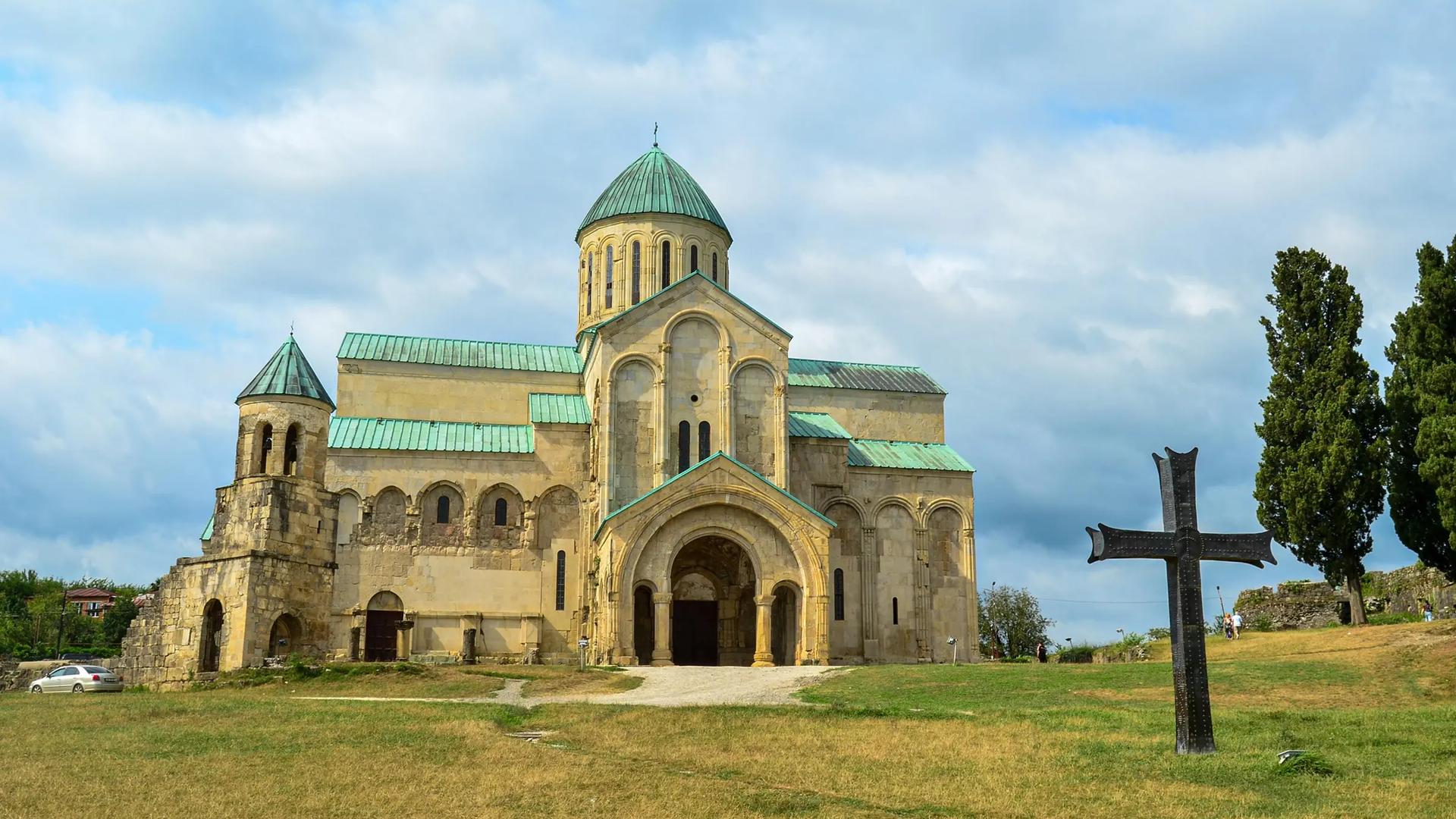
ბაგრატის ტაძარი
11th-century cathedral on Ukimerioni Hill – the architectural symbol of Kutaisi
Bagrati Cathedral (Cathedral of the Dormition) is an 11th-century church standing on Ukimerioni Hill in central Kutaisi. Built in 1003 under King Bagrat III to mark the unification of Georgia. The hill's elevation makes the cathedral visible from virtually anywhere in the city. Adjacent to the temple are ruins of a 6th-century royal palace-citadel.
From the Colchis Fountain in the city centre, it's a 20-minute uphill walk. By taxi – 5 minutes, 3–5 GEL (~$1–2). No direct public transport to the cathedral.
Admission is free. Allow 30–45 minutes for the cathedral and viewpoint. Works well as part of a half-day trip with Gelati Monastery and Motsameta Monastery.
The cathedral sits atop Ukimerioni Hill, surrounded by remnants of fortress walls and palace ruins. The area around the temple is an open platform with city views: the Rioni River valley to the north, Kutaisi's residential quarters to the south and west, green Imereti hills to the east. The panorama covers nearly 360°. Best photo light is in the evening, when the sun bathes the sandstone walls in warm golden tones.
The church is a cross-dome structure with a tall drum and pointed dome resting on four freestanding columns. Walls are built from large hewn sandstone blocks. Facades feature carved decorations and blind arches typical of medieval Georgian architecture. An inscription near the north window contains Arabic numerals – the oldest known example of their use in Georgia. Inside, the interior is relatively modest: a few frescoes and modern icons. The cathedral is active – regular services and weddings take place here.
In the northwest corner stands a three-storey tower with fireplaces on each floor, likely a bishop's residence. The south gate retains traces of a Virgin Mary fresco. The grounds are enclosed by a stone wall that once housed auxiliary buildings and a bell tower.
Age – built in 1003, over 1,000 years old
Location – Ukimerioni Hill with 360° panorama of Kutaisi and the Rioni valley
Architecture – cross-dome structure, dome on four freestanding columns, hewn sandstone blocks
Historic inscription – north window preserves the oldest Arabic numerals found in Georgia (construction date)
UNESCO status – listed in 1994, delisted in 2017 following controversial reconstruction
Reconstruction – restored 2009–2012 with modern elements (stone + steel sections)
Bagrati Cathedral was commissioned by King Bagrat III, who unified Georgia's scattered principalities into a single kingdom. Construction was completed in 1003. The cathedral became a symbol of Georgian unity and served as a centre of religious and public life. In 1089, David IV the Builder – one of Georgia's greatest rulers – was crowned here. For centuries the temple hosted state ceremonies and assemblies.
In the 17th century, the Kutaisi fortress fell to the Ottomans. During one of the battles to reclaim it, the Turks placed gunpowder beneath the cathedral's foundation. The explosion collapsed the dome and drum, though the walls survived. The cathedral stood in ruins for over 300 years. Restoration began in the 1950s and continued in phases until 1994, when the cathedral and Gelati Monastery received joint UNESCO World Heritage status. A major reconstruction in 2009–2012 restored the dome and roof but introduced modern steel elements, leading UNESCO to delist the cathedral in 2017.
Admission is free. Donations are welcome.
Dress code: covered shoulders and knees. Women should cover their heads (scarves available at the entrance). Photography allowed on the grounds; inside the cathedral – no flash. During services, access to the interior may be limited. Active place of worship – please keep quiet.
Minimal facilities. No toilets on site – nearest ones are down in the city. No cafés or shops nearby. Parking: small free lot at the foot of the hill approach road (10–15 cars). 4G mobile signal is stable. The approach road is gradual but may be challenging for visitors with limited mobility.
From Kutaisi city centre (1.5 km, 15–20 min walk):
– On foot from the Colchis Fountain – uphill walk, follow signs
– Taxi via Bolt/Yandex Go – 3–5 GEL (~$1–2), 5 minutes
From Tbilisi (230 km, 3.5–4 hours):
– Shared minibus (marshrutka) from Didube station – 20 GEL (~$7), every 30 min
– Citybus Georgia coach – 25–30 GEL (~$9–11), 3.5 hours, 4 daily departures
– Train to Rioni station – 9 GEL (~$3), 4–5.5 hours, 2 daily departures
– Car rental – 2.5–3 hours via the new Rikoti Highway
From Kutaisi Airport (22 km):
– Taxi – 20–25 GEL (~$7–9)
Season: Year-round. Spring (April–May) and autumn (September–October) offer the most comfortable weather. Summer is hot (up to 35°C); winter is cool but dry.
Time of day: Sunset (6:00–7:30 PM in summer) – best light for photos and panoramas. Mornings – fewest visitors.
Duration: 30–45 minutes for the cathedral and grounds. With the walk from the city centre – 1.5 hours.
Avoid: During Sunday morning services, interior access is limited. Summer weekends may coincide with wedding ceremonies.
Practical answers about visiting, routes and time on site.
No, admission is free. The cathedral is open daily from early morning to evening.
30–45 minutes for the cathedral, grounds, and viewpoint. With the walk from the city centre – about 1.5 hours.
Walk uphill from the Colchis Fountain – 15–20 minutes. The climb is gradual, no special footwear needed. A taxi from the centre costs 3–5 GEL (~$1–2).
Yes. A common half-day route: Bagrati Cathedral → Gelati Monastery (11 km) → Motsameta (1.8 km from Gelati). A round-trip taxi costs 25–30 GEL (~$9–11).
Yes – covered shoulders and knees. Women should cover their heads. Free scarves are available at the entrance.
There is almost no signage on site. Guided tours covering all three sites (Bagrati + Gelati + Motsameta) cost 50–80 GEL (~$18–29) per person for a 3-hour trip.
No cafés on site. The nearest restaurants are in central Kutaisi, 10–15 minutes downhill. Average meal at an Imeretian restaurant – 20–30 GEL (~$7–11) per person.
The 2009–2012 reconstruction added modern steel and new stone elements to the medieval structure. UNESCO considered this a compromise of authenticity and delisted the cathedral in 2017. Gelati Monastery retained its UNESCO status.
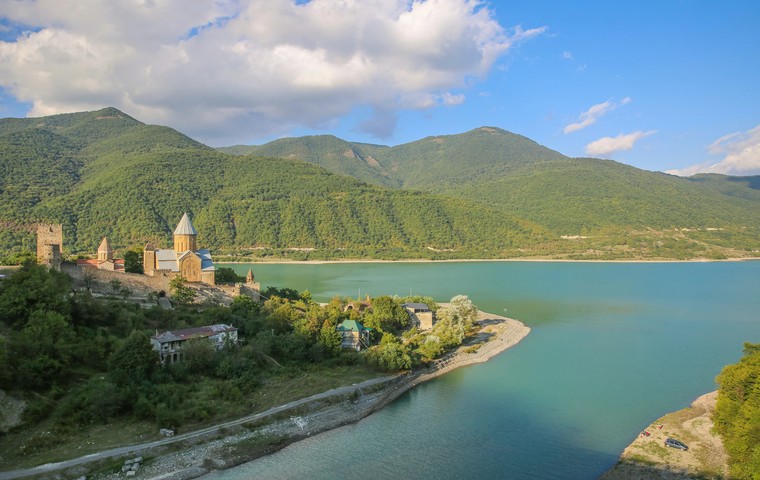
Kutaisi isn't a resort – it's a 3,000-year-old city with UNESCO monasteries, epic canyons 30 minutes away, and prices half of Tbilisi. Here's who should visit and who should skip it.
March 25, 2026
Three-star hotels and small inns in Georgia: where to stay comfortably and affordably. Prices, neighborhoods, city comparisons. Practical guide to budget hotels for those not ready for hostels.
February 25, 2026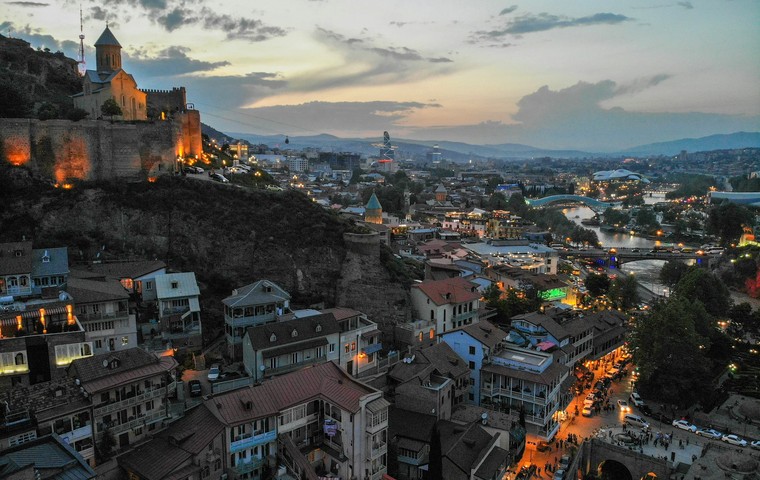
A detailed comparison of Georgia and Turkey for your next vacation: flights, accommodation costs, food, beaches, mountains, culture and practical tips for 2026.
March 06, 2026