In detail
What's here
From the visitor centre, a walking trail leads through Colchic forest – subtropical, humid, with moss-covered trunks and ferns lining the path. Life-sized dinosaur models are placed along the route – a hit with children, though made of polyester. The first stop is the pavilion housing fossilised dinosaur footprints: a stone slab shows clear tracks from both herbivorous and predatory dinosaurs of different epochs. The Sataplia dinosaur tracks differ from European counterparts.
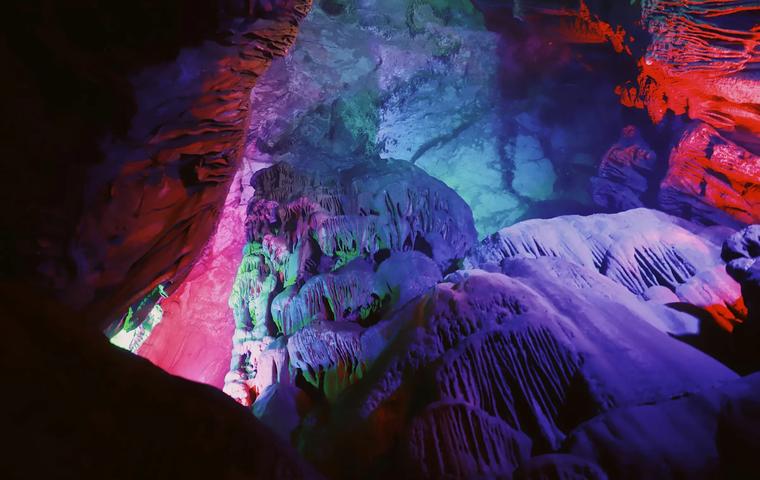
Next comes the karst cave, roughly 400 metres long. It's smaller than Prometheus Cave but has its own highlight: coloured lighting picks out a stalactite shaped like a human heart – the most photographed feature. The cave was discovered in 1925 and is linked to wild bees – the name Sataplia translates as 'place of honey' (sat = honey). Wild bees still inhabit the reserve, and there's an exhibit dedicated to their habitat.
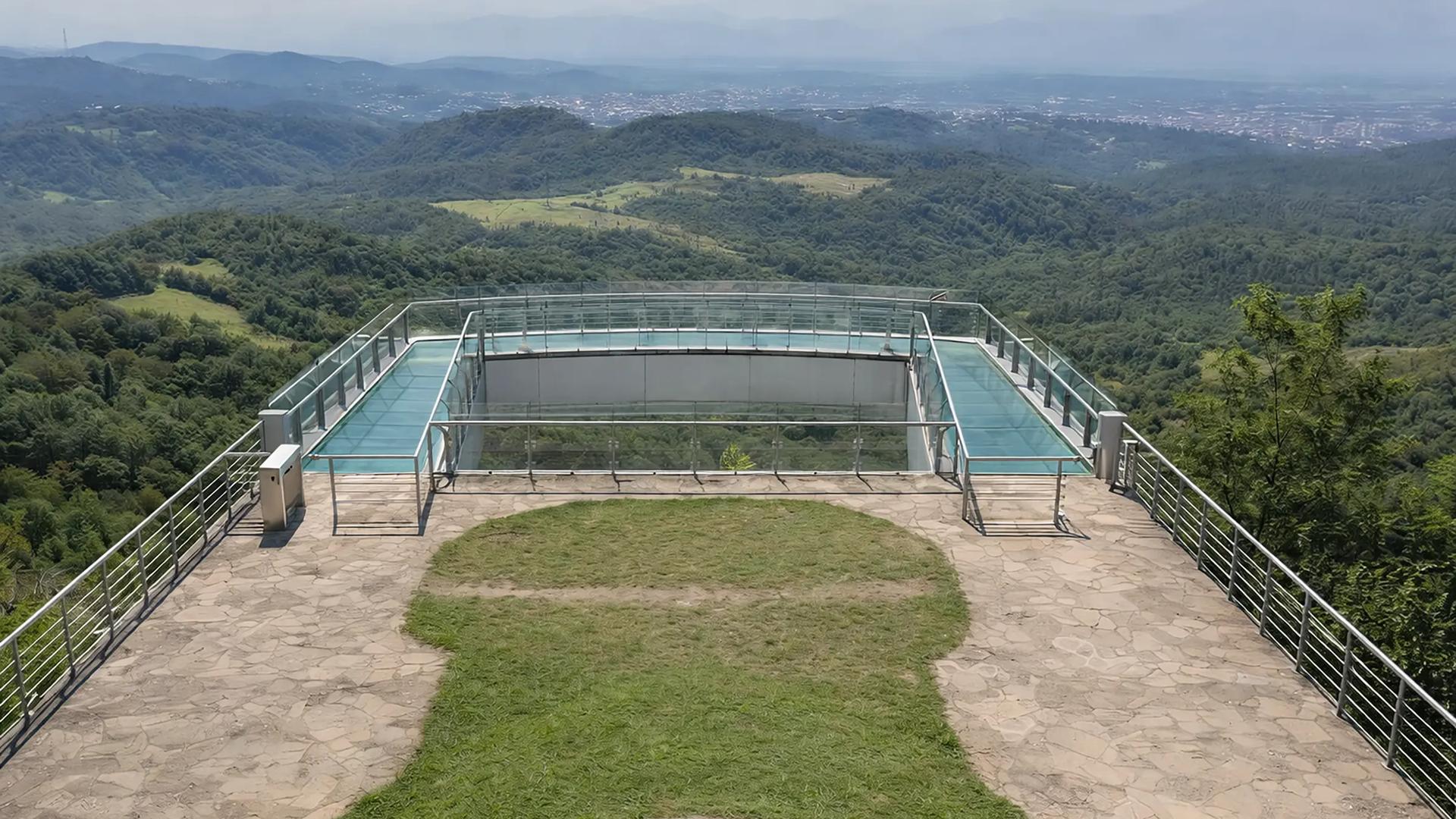
The route ends at a glass panoramic platform cantilevered over a cliff. It offers 360° views across the Imereti Valley – mountain ridges and green foothills stretch to the horizon. In rainy or snowy weather the platform is closed for safety. The entire loop takes 1–1.5 hours on a flat, well-maintained trail suitable for all ages.
History
Past & present
Sataplia Cave was discovered in 1925 by local historian Petre Chabukiani. In 1933, fossilised dinosaur footprints were found on the territory – one of the first such discoveries in the Caucasus. The tracks belong to both herbivorous and predatory species from different geological periods and differ from those found in Europe. The site received reserve status in 1935.
During the Soviet era the reserve was used for scientific research into karst systems. After the USSR collapsed, infrastructure fell into disrepair. Major reconstruction took place in the 2010s: walking trails were built, the glass panoramic platform installed, dinosaur models placed along the route, and a visitor centre with exhibits was created. Today Sataplia is part of the Imereti Caves Protected Areas system alongside Prometheus Cave.
Getting there
Transport & directions
From Kutaisi (10 km, 15–20 min):
– Taxi – 10–15 GEL (~$4–5)
– Round-trip taxi with waiting + Prometheus Cave – 35–50 GEL (~$13–18) for both
– Marshrutka 35 to the end of Javakhishvili St. (0.40 GEL), then marshrutka 45 to Sataplia (leaves when 4+ passengers)
From Tbilisi (240 km, ~3.5 hours):
– By rental car or on an organised tour
– Marshrutka to Kutaisi (15–20 GEL / ~$6–7), then taxi
On site: 3-minute walk from the parking lot to the visitor centre. Everything is on one loop trail.