Hero background

Kobarid Historical Trail

Kobariška zgodovinska pot

A 5 km circular route through WWI monuments and the Soča River gorge

The Kobarid Historical Trail is a 5 km circular walking route connecting key military, archaeological, and natural landmarks around the town of Kobarid. The trail passes through the Italian Charnel House, the ancient settlement of Tonocov Grad (4th–5th century AD), Italian WWI defence lines, Napoleon Bridge over the Soča River, and Kozjak Waterfall.

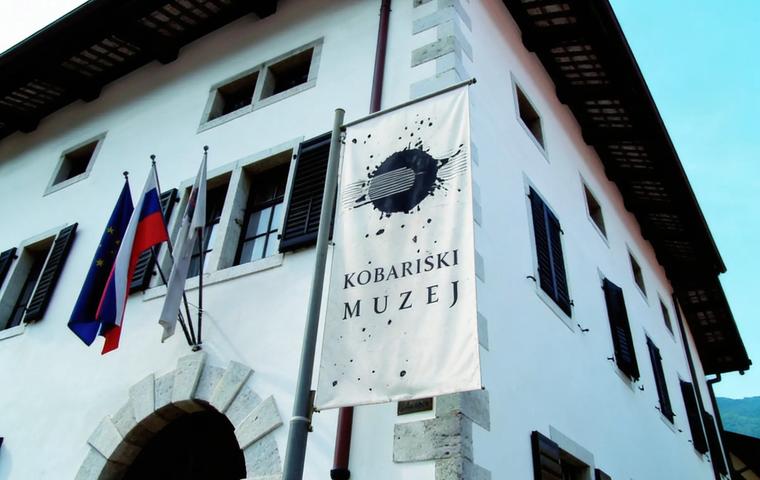
The route starts from the Kobarid Museum in the town centre. The full loop takes 3–5 hours depending on pace and stops. A shorter 3 km version (2–3 hours) skips the forest section and Tonocov Grad.

The trail itself is free. Separate admission applies for the Kobarid Museum (€8) and Kozjak Waterfall (€5). Free route maps are available at the tourist information centre on Kobarid's main square.

Location

On the Map

About

What's Here

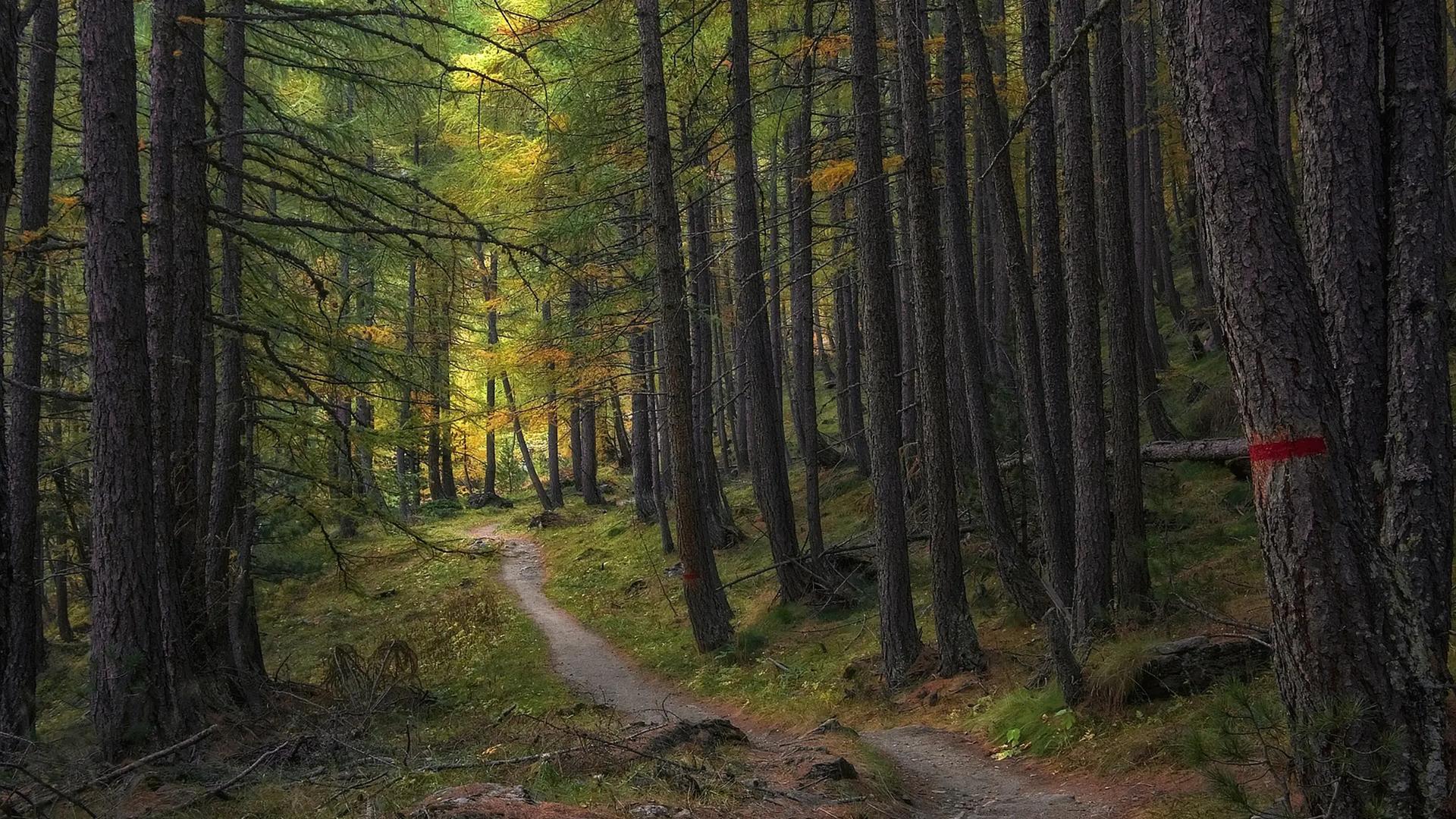
The trail begins at the Kobarid Museum, where it's worth spending 1.5–2 hours before setting out: the exhibition on the Isonzo Front battles provides context for everything you'll encounter on the route. From the museum, the path climbs to the Italian Charnel House on Gradič Hill (309 m) – an octagonal military memorial built in 1938, with panoramic views over the Soča valley and the surrounding Julian Alps. The trail continues through forest to the ruins of Tonocov Grad, a Late Antiquity fortified settlement with remains of three churches and a baptistery from the 4th–5th centuries.

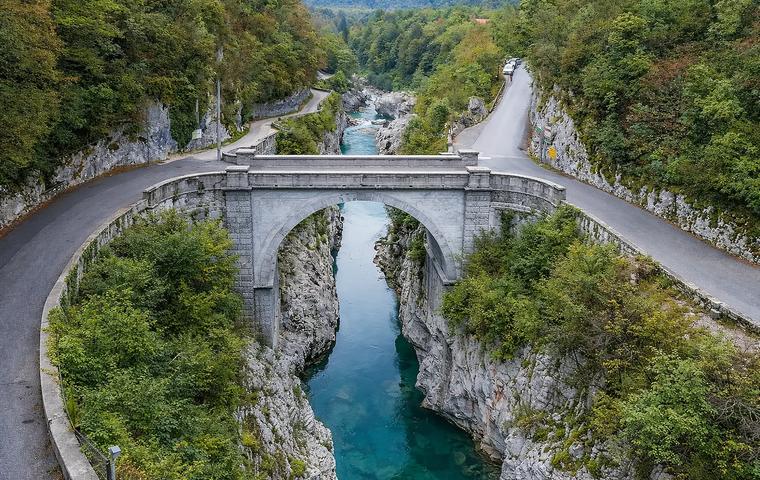
From Tonocov Grad, the route descends to the Soča River through restored Italian WWI trenches. Stone-and-timber fortifications give a tangible sense of mountain trench warfare. This section includes stairs that become slippery when wet. The trail crosses the Kobarid–Bovec road and reaches the Soča River gorge, where the water runs turquoise over limestone bedrock.

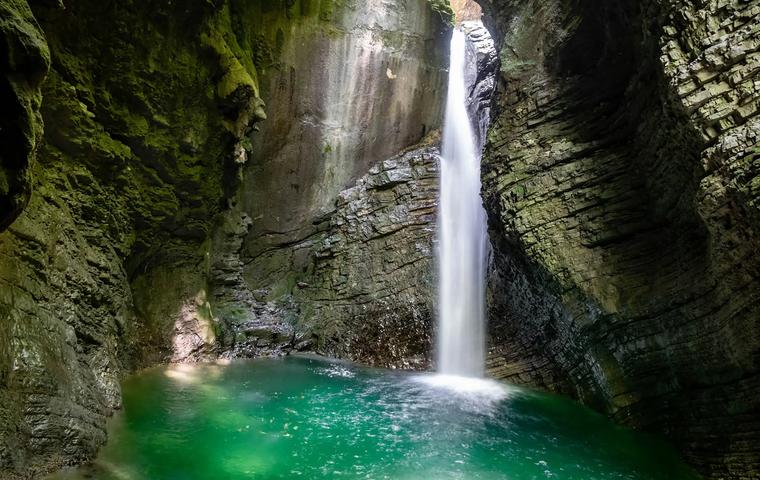
The final stretch leads across a suspension bridge to Kozjak Waterfall – a 15 m cascade plunging into a rounded karst chamber. The return path passes Napoleon Bridge – a 19th-century stone arch over the Soča – and the Planika dairy where local cheese is sold. The loop closes back in Kobarid's centre.

Why Visit

The Highlights

Length – 5 km loop with approximately 300 m elevation gain, moderate difficulty

Key stops – Kobarid Museum, Italian Charnel House, Tonocov Grad, WWI trenches, Soča gorge, Kozjak Waterfall, Napoleon Bridge

Archaeology – Tonocov Grad: settlement spanning from the Copper Age to the Middle Ages, with three churches and a baptistery from the 4th–5th centuries atop a rocky hill

Military history – restored Italian trenches and defence lines from the Isonzo Front (1915–1917), site of 12 battles with approximately 300,000 casualties

Kozjak Waterfall – 15 m drop into a rounded karst pool with emerald-green water, €5 admission

Part of a larger network – the trail forms part of the 500 km Walk of Peace route connecting Isonzo Front memorials from the Alps to the Adriatic

History

Past & Present

The Kobarid area has been inhabited since the Copper Age. The fortified hilltop settlement of Tonocov Grad, overlooking the confluence of the Soča and Nadiža valleys, thrived in the 4th–5th centuries AD and included dwellings, three successive churches, and a baptistery. By the 13th century, Kobarid sat on trade routes between Friuli and Carinthia. Its strategic position proved fateful during World War I: between May 1915 and November 1917, 12 battles were fought on the Isonzo Front here. On 24 October 1917, the Battle of Caporetto (12th Battle of the Isonzo) became one of the Central Powers' greatest breakthroughs. A young officer named Erwin Rommel took part in the operation.

After the war, the area was ceded to Italy. Between 1936 and 1938, the Italian government built an ossuary on Gradič Hill to house the remains of 7,014 Italian soldiers. During 1943–1945, partisan units operated in the forests around Kobarid. After WWII, the territory became part of Yugoslavia and then, from 1991, independent Slovenia. The Kobarid Museum opened in 1990 and received the Council of Europe Museum Prize in 1993. The Historical Trail was established to link the area's key monuments and became part of the Walk of Peace project.

For Visitors

Visitor Information

Tickets & Prices

Historical Trail

Free access. Free route map available at the tourist information centre.

Separate admissions for sites along the trail:

- Kobarid Museum: €8 adult, €6 students/pensioners, €4 schoolchildren, €20 family (~$9/$7/$4/$22 USD)

- Kozjak Waterfall: €5 adult, €12 family (~$5.50/$13 USD)

- Planika dairy museum: check on-site

Guided tours:

- Italian Charnel House: €40 per group (~$44 USD)

- Historical Trail: €40 per hour per group (~$44 USD)

- Maximum 30 people per guide

- Guides available in Slovenian, Italian, English, German, and Croatian

- Advance booking required
Rules & Restrictions

The route follows forest paths with elevation changes – sturdy hiking shoes are essential. Stone stairs on the Tonocov Grad descent become slippery when wet. The trail crosses the Kobarid–Bovec road. The Kozjak Waterfall section can be congested in July–August, with narrow paths and a small viewing platform. Maintain quiet and respectful behaviour at the Italian Charnel House – it is an active military memorial. Dogs are allowed on the trail on a leash but not inside the museum.

On-Site Facilities

On the trail: toilets near Napoleon Bridge and at the Kozjak Waterfall entrance. Planika café and shop at the trail's end. Several restaurants in Kobarid centre – the town is known as Slovenia's culinary capital.

Parking: free at Kobarid Community Centre (200 m from the start), paid at Napoleon Bridge (€1.50/hour, EasyPark app or cash). In peak season, the bridge lot fills by 10:00 AM.

Connectivity: mobile coverage on most of the trail, though signal may drop in the Soča gorge.

Accessibility: the trail is not wheelchair-accessible – climbs, stairs, and narrow paths throughout.

Getting There

Transport & Directions

From Ljubljana (105 km, 1 h 40 min by car):

- By car: take E61 to Nova Gorica, then R102 along the Soča River. An e-vignette is required for motorways. Consider a rental car

- Nomago bus: one daily departure, approximately 3 hours, €14–25. Timetable and tickets at Nomago website

From Bled (80 km, 1 h 30 min by car):

- By car: via Vršič Pass (open May–October) – a scenic drive through the Julian Alps. In winter, detour via Tolmin

- Seasonal bus runs in summer via Vršič Pass

Nearest airport: Ljubljana Jože Pučnik Airport (105 km). No direct bus – transfer in Ljubljana. A pre-booked transfer is the most convenient option

On-site:

The trail starts at the Kobarid Museum in the town centre (Gregorčičeva ulica 10). Parking at the Community Centre is 200 m from the trailhead

When to go

Best time to visit

Season: best from May to October. In spring, sections may be washed out after floods. Peak season is July–August: queues at Kozjak Waterfall, parking lots fill early.

Time of day: optimal start at 8:00–9:00 AM to complete the route before midday heat and the tourist rush to the waterfall.

Duration: 3–5 hours for the trail, plus 1.5–2 hours for the museum. Allow 6–7 hours for a full day including lunch.

Avoid: in winter (November–March), parts of the trail may be closed or unsafe due to snow and ice. After heavy rain, check trail conditions at the tourist office before setting out.

FAQ

Common Questions

The trail itself is free. Separate fees apply for the Kobarid Museum (€8/~$9) and Kozjak Waterfall (€5/~$5.50). Free maps are available at the tourist office.

Allow 3–5 hours for the trail depending on pace and stops. With the museum (1.5–2 hours) and lunch, plan for a full day. A shorter 3 km version without Tonocov Grad takes 2–3 hours.

Yes. The trail starts and ends in Kobarid town centre. Nomago runs a bus from Ljubljana (one daily departure, 3 hours, €14–25).

For children aged 7–8 and older with average fitness – yes. There are climbs and stairs, but the trail is not technically difficult. For younger children, the shorter 3 km version is recommended.

Hiking shoes with non-slip soles are essential. Stone stairs and forest paths become slippery after rain. Sandals and trainers are not suitable.

Free parking at Kobarid Community Centre (200 m from the start). Paid parking at Napoleon Bridge (€1.50/hour via EasyPark app). In July–August, arrive before 9:00 AM.

For self-guided walks, no booking is needed. For a guided tour with a museum guide, advance booking is required (€40/hour per group).

In the Soča Valley: Virje Waterfall (15 min by car), Napoleon Bridge. From Kobarid, it's easy to reach Kranjska Gora via Vršič Pass.

Distance

Travel Time

On foot from Kobarid center 3-5 min.
From Kranjska Gora by car ~45 min.
From Bled by car ~1 h 4 min.
From LJU airport (Ljubljana Airport (LJU)) by car ~1 h 40 min.
From POW airport (Portorož Airport (POW)) by car ~2 h 8 min.
Social

Share