In detail
What's here
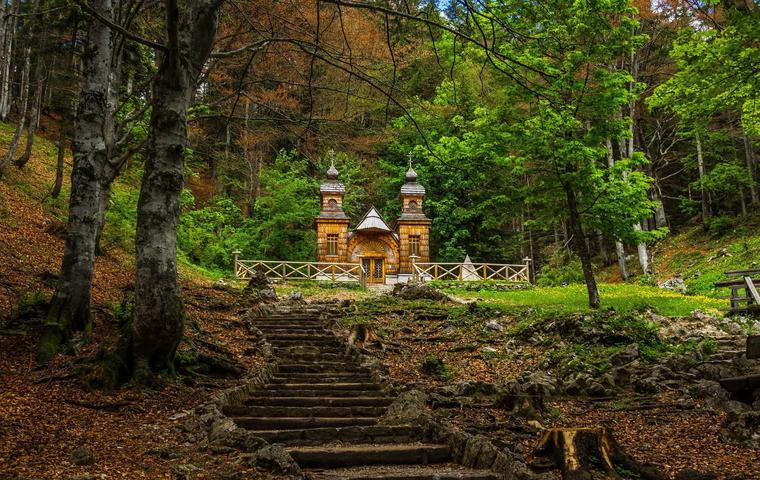
The road to Vršič is one of Europe's most spectacular mountain drives. The ascent from the Kranjska Gora side winds through dense beech, spruce, and larch forest. With each switchback, the perspective shifts: valleys recede below, and grey scree slopes and rock faces loom ahead. Each turn is numbered – original cobblestones from the World War I road surface survive on several bends. At turn #8, the Russian Chapel marks the site where POWs who built the road in 1915–1916 are commemorated.
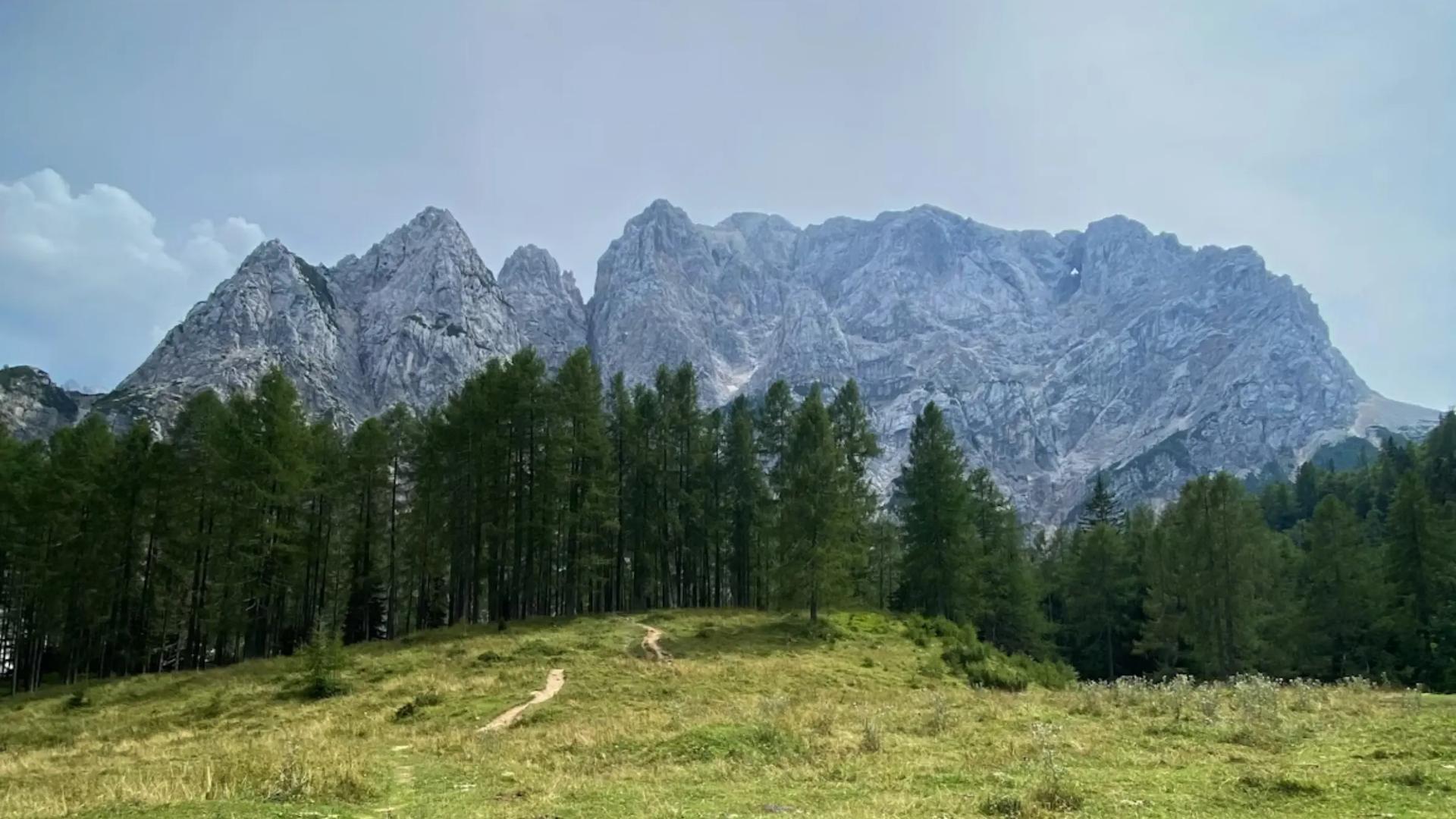
At the summit, forest gives way to alpine meadows and dwarf pine against grey scree slopes. Two mountain huts operate here: Tičarjev dom (June–September, 36 beds, from €32/night in a dormitory) and Poštarski dom (20-minute walk from the pass, mains €5–10). From the top, the rock walls of Prisank rise to the east and the Trenta Valley stretches southward. On Prisank's face, at certain lighting angles, you can spot the Heathen Maiden (Ajdovska deklica) – a natural rock formation resembling a woman's face.
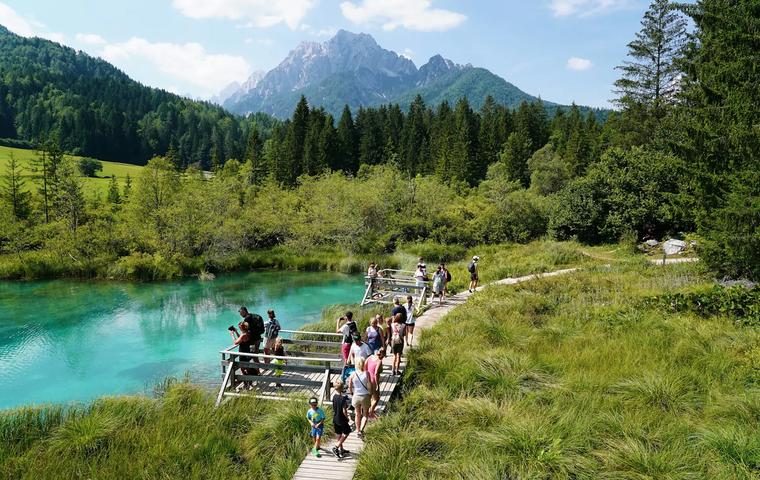
The descent toward Trenta covers 26 turns through alpine meadows to the Soča Valley floor. The road leads to the source of the Soča River – a turquoise karst spring reached by a short walk. Road cyclists use the pass as one of the region's most challenging routes.
Highlights
Why visit
Elevation – 1,611 m, Slovenia's highest road pass
Hairpins – 50 numbered turns, roughly 1,200 m elevation gain
Route length – 24 km from Kranjska Gora to Trenta
Historic road – built by Russian POWs in 1915 to supply the Isonzo Front
Mountain huts – Tičarjev dom and Poštarski dom at the summit, beds from €32
Hiking base – trails to Mala Mojstrovka (2,332 m), Prisank (2,547 m), via ferrata routes
History
Past & present
Vršič Pass existed as a mountain trail long before World War I. In 1915, with fighting on the Isonzo Front, Austria-Hungary ordered a full military road built over the pass to supply troops in the Soča Valley. Over 10,000 Russian prisoners of war captured on the Eastern Front carried out the construction. The road was completed in roughly six months by the end of 1915. In March 1916, an avalanche from the slopes of Mount Mojstrovka buried the POW camp, killing over 300 men.
Surviving prisoners built a small wooden Orthodox chapel in memory of their fallen comrades. The road from Kranjska Gora to the summit was renamed "Russian Road" (Ruska cesta) in 2006. Today, the pass is a major tourist attraction and a starting point for mountain hikes. In 2025, renovation work was undertaken on the road, including a reduction in roadside parking spaces to manage traffic and improve safety.
Getting there
Transport & directions
From Kranjska Gora (north side):
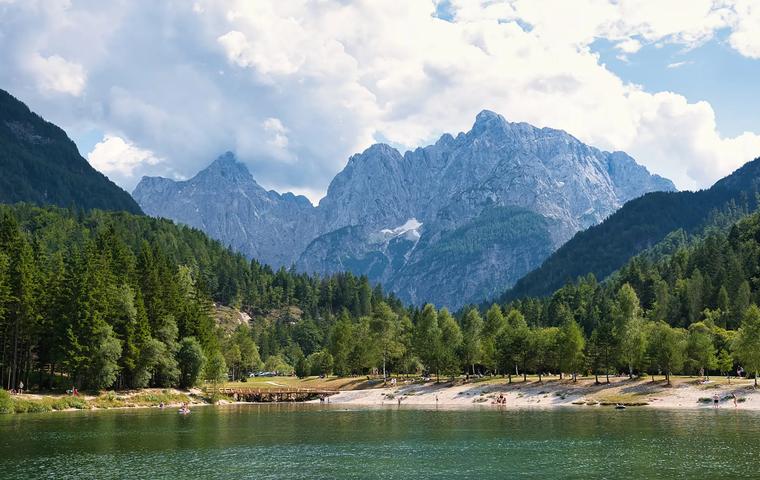
– By car from Lake Jasna – 12 km to the summit, 30–40 min. Car rental is the best option for Vršič
– Summer bus (July–September): Kranjska Gora–Bovec via the pass, 2 departures daily, schedule at nomago.si
– Hitchhiking is common and safe on the road to the pass
From Bovec / Soča Valley (south side):
– By car – 12 km, 26 hairpins from the south, 30–40 min
– Summer bus from Bovec
From Ljubljana (85 km to Kranjska Gora):
– 1-hour drive to Kranjska Gora + 30–40 min ascent
– Full-day guided tour – from €60–80
From Bled (40 km):
– 40 min by car to Kranjska Gora + ascent
When to go
Best time to visit
Season: June–September – road reliably open, warm weather. October brings golden larch foliage, but early snow may close the road. May – the road may have just reopened, with possible restrictions.
Time of day: Early morning (before 8:00 AM) for minimal traffic and best light. By 10:00 AM on summer weekends, car parks fill up.
Duration: Drive without stops – 1 hour. With photo stops, Russian Chapel, and lunch at a mountain hut – 3–4 hours. A full day if hiking.
Avoid: Weekends and holidays in July–August – traffic jams and no parking. Skip driving in rain or fog – minimal visibility and slippery surface.