Hero background

Kobarid Museum

Kobariški muzej

Council of Europe prize-winning museum – the main exhibition on the 1915–1917 Isonzo Front battles

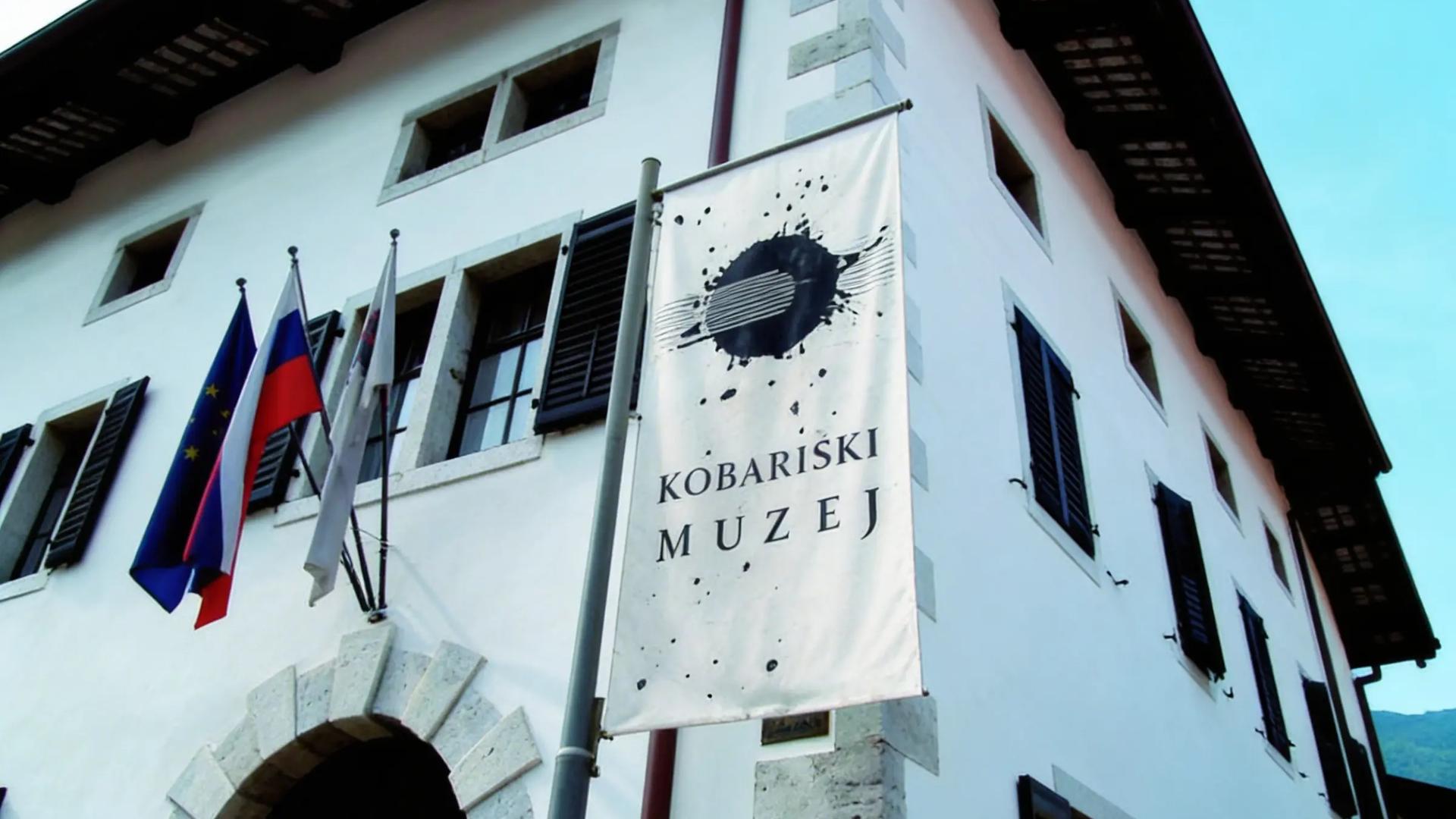
Kobarid Museum (Kobariški muzej) is a history museum in the center of Kobarid, dedicated to the Isonzo Front of World War I. Located at Gregorčičeva ulica 10, it sits 120 km northwest of Ljubljana. Founded in 1990 as a private collection, it has grown into one of Slovenia's most visited museums. In 1993, it received the Council of Europe Museum Prize – the continent's highest museum distinction.

The exhibition spans three floors and covers 29 months of trench warfare between Italian and Austro-Hungarian forces in the Soča Valley, culminating in the 12th Battle of the Isonzo (Battle of Caporetto) in October 1917. A 19-minute multivision film (subtitles in 4 languages) and an animated relief model of the mountain theater of operations are the centerpiece exhibits.

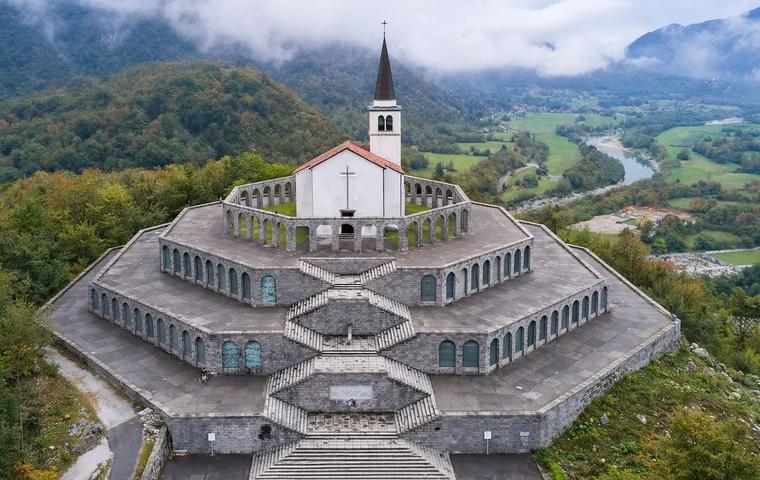
Admission is €8 for adults (~$8.50). Allow 1.5 hours for a guided visit. The museum is open daily year-round. It pairs well with a walk along the Kobarid Historical Trail and a visit to the Italian Charnel House.

Location

On the Map

About

What's Here

The museum occupies a heritage building in central Kobarid. The ground floor hosts temporary exhibitions (free admission) and a documentary screening room. The second floor covers Kobarid's history from antiquity to the start of WWI: the town's strategic position between Friuli and Carinthia, Roman roads, and medieval trade routes. Thematic Isonzo Front rooms form the core collection: the Krn Room covers the start of hostilities, the White Room depicts winter suffering of soldiers at 2,000+ m altitude, the Rear Room shows life behind the front lines, and the Black Room serves as a warning against the futility of war.

The third floor is devoted to the Isonzo Front's final act. The central exhibit is an animated mountain relief with projection mapping that shows the course of the Battle of Caporetto. An audio recording of soldiers' memoirs complements the visuals. High-quality photographic materials – original October 1917 shots, digitized and enlarged – line the walls. The collection includes weapons, ammunition, field hospital surgical instruments, personal belongings, and soldiers' letters home.

The museum has a bookshop with WWI literature in several languages. Guided tours are available in Slovenian, Italian, English, German, and Croatian. Guides are regional military history specialists who adapt their presentation to the group's level. The museum also organizes outdoor guided tours to Isonzo Front remains in the surrounding mountains – from 3 to 10 hours on foot.

Why Visit

The Highlights

Awards – 1993 Council of Europe Museum Prize, nominated for European Museum of the Year

Exhibition – 3 floors, over 1,000 artifacts: weapons, photographs, personal items, surgical instruments

Multivision film – 19-minute documentary with subtitles in Slovenian, English, German, and Italian

Animated relief – projection-mapped mountain model with guide's laser pointer showing the course of the 12th Battle of the Isonzo

Languages – guided tours in 5 languages, guides with deep knowledge of the region's military history

Open year-round – the only museum in the Soča Valley open daily without closures

History

Past & Present

The museum was founded in 1990 based on a private collection assembled by Kobarid enthusiasts. The founders gathered WWI artifacts scattered across the Soča Valley – from soldiers' helmets to fortification fragments. Just three years later, in 1993, the collection received the Council of Europe Museum Prize – recognition of its unique approach: the exhibition favors no side in the conflict, instead showing war through the eyes of ordinary soldiers. The Battle of Caporetto (12th Battle of the Isonzo, October 1917) is the museum's central theme. It was one of the largest mountain battles in history, in which German-Austrian forces broke through the Italian front.

Since opening, the museum has been visited by three European Parliament presidents, heads of state, Nobel laureates, and members of royal families. In 2005, the exhibition was modernized with upgraded multimedia equipment and a new documentary marking the 90th anniversary of the start of hostilities. Today the museum serves as the central institution for studying the Isonzo Front heritage in Slovenia and partners with Italian and Austrian organizations on creating a 'European Park of Memory.'

For Visitors

Visitor Information

Tickets & Prices

Admission:

- Adults: €8 (~$8.50)

- Pensioners, students: €6 (~$6.40)

- Schoolchildren: €4 (~$4.25)

- Family ticket: €20 (~$21.30)

- Disabled visitors (with ID): 50% discount

Guided museum tours:

- Groups under 15 people: €30/hour (~$32)

Outdoor guided tours:

- Italian Charnel House: €40/group (~$42.50)

- Kobarid Historical Trail: €40/hour/group (~$42.50)

- Kolovrat outdoor museum: €50/hour/group (~$53)

Maximum 30 people per guide. Temporary exhibitions on the ground floor are free. Tickets available at the box office and online. Payment by cash, card, or voucher.
Rules & Restrictions

Photography inside the permanent exhibition is prohibited – the museum is a private institution. Photos are allowed in temporary exhibition halls. During guided tours, visitors are asked not to take phone calls. Large backpacks should be left in the storage area at the entrance. No dress code requirements.

On-Site Facilities

On-site:

- Bookshop with WWI literature

- Restrooms (including accessible facilities)

- Documentary film with subtitles for hearing-impaired visitors

- Tactile exhibits and Braille descriptions for visually impaired visitors

Accessibility: The building is monument-protected – no elevator or ramps. The permanent exhibition on floors 2–3 is not wheelchair accessible. Temporary exhibitions on the ground floor are accessible.

Parking: Free municipal parking in central Kobarid (5-minute walk).

Wi-Fi: None. 4G coverage is reliable.

Getting There

Transport & Directions

From Ljubljana (120 km, 1.5–3 hours):

- Nomago bus – 1 daily departure, ~3 hours, €14–25 (~$15–27). Departs from Ljubljana bus station via Idrija and Tolmin.

- Rental car – 1.5 hours via roads through Idrija or Nova Gorica. A vignette is mandatory on highways.

- Train + taxi: train to Most na Soči station (~2.5 hours), then taxi 20 km to Kobarid.

From Bovec (21 km, 25 minutes):

- Local bus or taxi. Road runs along the Soča River.

From Tolmin (16 km, 20 minutes):

- Bus or taxi. Several departures daily.

On-site:

The museum is in central Kobarid at Gregorčičeva ulica 10. From the parking area – 5 minutes on foot. Signs throughout the town.

When to go

Best time to visit

Season: The museum is open year-round. Best time to visit is May–September, when you can combine it with the Historical Trail and Kozjak Waterfall.

Time of day: Morning (at opening) – fewer visitors. Summer afternoons bring tour groups.

Duration: 1–1.5 hours for the exhibition. With an English-language guided tour – 1.5 hours. Full day: museum + Historical Trail + Italian Charnel House.

Avoid: July–August midday hours – peak crowds. Book guided tours in advance.

FAQ

Common Questions

Adults €8 (~$8.50), students and pensioners €6, schoolchildren €4, family ticket €20. Temporary exhibitions on the ground floor are free.

Self-guided – 1–1.5 hours. Guided tour – 1.5 hours. Plan half a day if combining with the Historical Trail and Italian Charnel House.

Yes. Tours run in Slovenian, Italian, English, German, and Croatian. The documentary film has subtitles in 4 languages. Book English tours in advance during peak season.

Photography is prohibited in the permanent exhibition. It's allowed in temporary exhibition halls on the ground floor.

Yes, the exhibition is visual: models, photographs, a multivision film. Children under 12 may find the war content emotionally heavy. For older schoolchildren – a valuable history lesson.

Partially. The ground floor (temporary exhibitions, film screening, restrooms) is accessible. The permanent exhibition on floors 2–3 requires stairs – no elevator. The building is monument-protected, limiting modifications.

Not for individual visits. Guided tours (especially in English or German) should be booked ahead by calling +386 5 389 00 00 or via the museum's online reservation form.

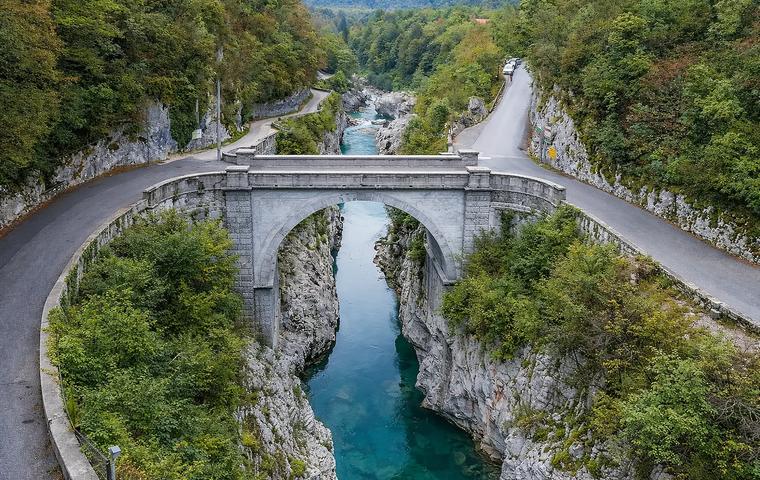
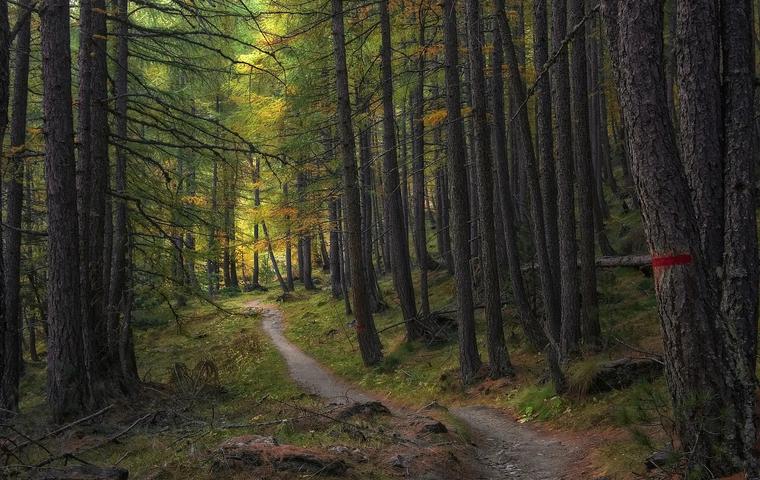
The Kobarid Historical Trail (5 km, 3–5 hours) passes the Italian Charnel House, the Tonocov Grad archaeological site, WWI trenches, Napoleon Bridge, and Kozjak Waterfall. Virje Waterfall is 7 km away.

Nomago bus from Ljubljana – 1 daily departure, ~3 hours, €14–25. Alternatively, train to Most na Soči, then a 20 km taxi ride. A rental car gives the most flexibility in the Soča Valley.

Distance

Travel Time

On foot from Kobarid center 1-2 min.
From Kranjska Gora by car ~46 min.
From Bled by car ~1 h 4 min.
From LJU airport (Ljubljana Airport (LJU)) by car ~1 h 40 min.
From POW airport (Portorož Airport (POW)) by car ~2 h 8 min.
Social

Share