Tickets & prices
Admission:
Adults: 900 ALL (≈€9 / $10)
Combo ticket with Bunk'Art 1: 1,300 ALL (≈€13 / $14)
Audio guide: +100 ALL via app (Albanian, English, Italian)
Payment: cash only (ALL or EUR).
Ticket booth at the entrance (concrete dome).
Bunk'Art 2
Underground secret police bunker in central Tirana – a museum of surveillance and repression
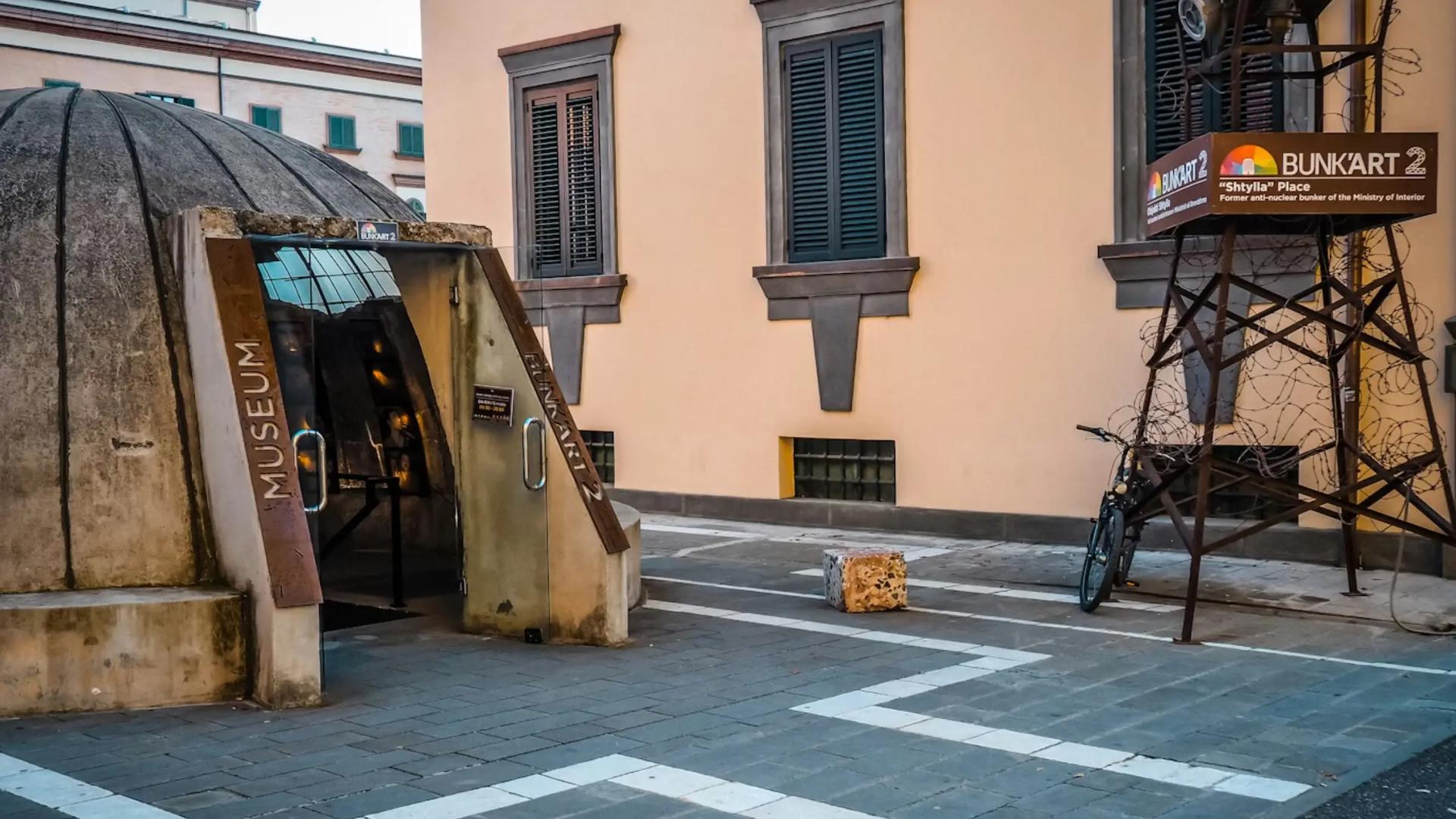
Bunk'Art 2 is a museum inside a former nuclear bunker beneath the Ministry of Interior, 100 meters from Skanderbeg Square. Built in 1981–1986 for the political elite, it was linked to the Sigurimi – communist Albania's secret police. The exhibition focuses on the surveillance system, repression, and suppression of dissent.
The entrance is a concrete bunker dome protruding from the pavement on Abdi Toptani Street. Admission is 900 ALL (≈€9 / $10), combo ticket with Bunk'Art 1 costs 1,300 ALL (≈€13 / $14). Allow 1–1.5 hours.
The museum occupies a single underground level – more compact than Bunk'Art 1 but more emotionally intense. Its central location means it gets very crowded – visit in the morning if possible.
The entrance is through a concrete dome jutting from the sidewalk. Stairs lead down to a single underground level with 24 rooms connected by narrow corridors. Walls, ceilings, and blast doors are original, dating to the 1980s construction.
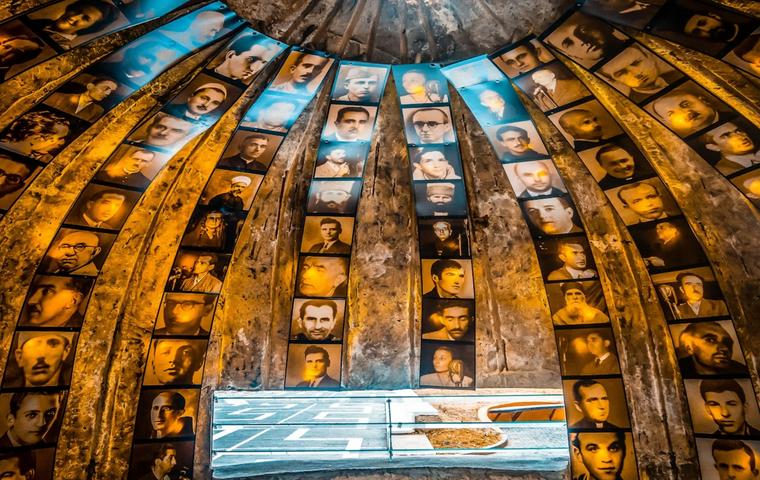
The first section covers Albania's police history from the Ottoman Empire through World War II – photographs, documents, uniforms. The main and most harrowing section covers the Sigurimi: wiretapping equipment, typewriters used for denunciations, personal files, photographs of the arrested and disappeared. Audio testimonies from victims play from speakers in dedicated rooms.
The atmosphere is oppressive – dim lighting, low ceilings, cramped spaces. Corridor walls are covered with information panels in small text – during peak hours, visitors queue to read them. The final rooms are dedicated to the regime's victims – names, faces, stories. The exit is on the opposite side from the entrance, leading to an interior courtyard.
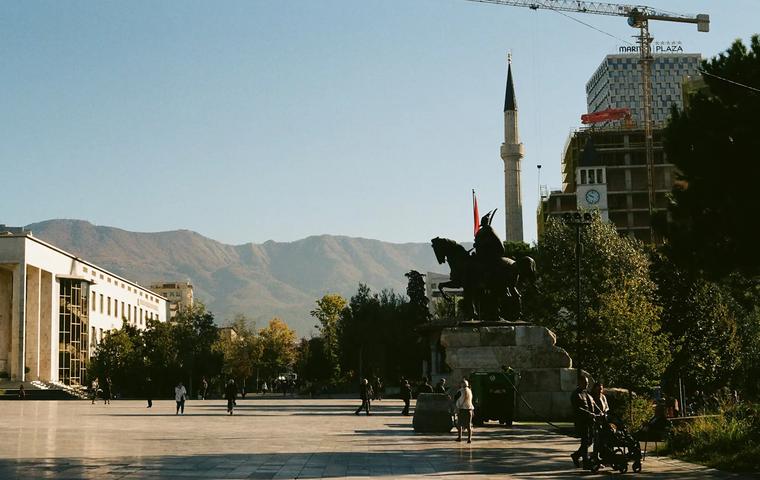
Location – 100 m from Skanderbeg Square, entrance through a concrete dome in the pavement
Sigurimi exhibit – secret police equipment: surveillance devices, interrogation records, personal files
24 rooms – on a single underground level, one-way visitor route
Audio testimonies – recordings of victims' accounts in dedicated rooms
Blast doors – original nuclear-rated doors from the 1980s
Contrast – from the bustling city center down into bunker silence in one flight of stairs
The bunker beneath the Ministry of Interior was built between 1981 and 1986 – one of the last major bunker projects in Albania. Enver Hoxha died in 1985, a year before construction was completed. The bunker was designed to protect the ministry and the Sigurimi apparatus – the secret political police that controlled every aspect of Albanian life. The original entrance was from inside the ministry building; the bunker was entirely classified.
After the regime fell, the facility remained sealed. In 2016, the bunker was opened as a museum dedicated to the victims of communist terror. The exhibition was created with input from historians and former political prisoners. The museum quickly became one of the most visited sites in Tirana, drawing hundreds of thousands of visitors annually.
Admission:
Adults: 900 ALL (≈€9 / $10)
Combo ticket with Bunk'Art 1: 1,300 ALL (≈€13 / $14)
Audio guide: +100 ALL via app (Albanian, English, Italian)
Payment: cash only (ALL or EUR).
Ticket booth at the entrance (concrete dome).
Photography is allowed without restrictions. It's cool inside – a light jacket is recommended. Low ceilings and narrow corridors may be uncomfortable for visitors with claustrophobia. The exhibition is emotionally heavy – photos of interrogations, prisons, executions. Not recommended for children under 12.
On-site:
Restrooms near the exit
Souvenir shop
No cafe – nearest on Skanderbeg Square (3 minutes)
Accessibility: Entry is down a flight of stairs. Inside, the floor is level throughout. Wheelchair access is difficult due to the entrance stairs.
Parking: No dedicated parking. Central Tirana is a pedestrian zone.
Location: Rruga Abdi Toptani, opposite City Hall, 100 m south of Skanderbeg Square.
From the center:
– Walk from Skanderbeg Square – 2 minutes
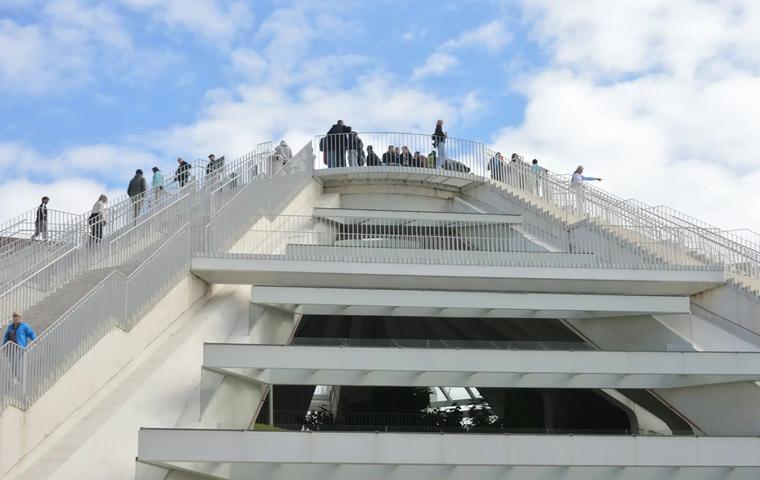
– From the Pyramid – 5 minutes north
– From the Blloku district – 10 minutes north
Landmark: A concrete bunker dome protruding from the sidewalk – visible from the street.
Season: Year-round. Indoor temperature is constant.
Time of day: Morning (9:30–11:00 AM) – minimal queuing in corridors. During peak season (June–August), afternoons get cramped in the narrow passages.
Duration: 1–1.5 hours. Reading all panels may take up to 2 hours.
Tip: Visit after Bunk'Art 1 or a communist heritage walking tour – the context helps you understand the exhibition.
Practical answers about visiting, routes and time on site.
900 ALL (≈€9 / $10) for adults. Combo ticket with Bunk'Art 1 costs 1,300 ALL (≈€13). Audio guide is an additional 100 ALL.
1–1.5 hours. Reading all information panels may take up to 2 hours. The museum is more compact than Bunk'Art 1.
Bunk'Art 2 is more compact (24 rooms on one level vs. 106 across five). It focuses on the Sigurimi secret police and surveillance. Bunk'Art 1 covers broader Albanian history from WWII through the end of communism. Bunk'Art 2 is more conveniently located in the city center.
Yes, without restrictions. Unlike the House of Leaves museum (former Sigurimi headquarters), photography is permitted throughout.
The exhibition includes photos of interrogations, executions, and prisons – not recommended for children under 12. Teenagers may find it educational for understanding the country's history.
Cash only – Albanian lek (ALL) or euros. The nearest ATM is on Skanderbeg Square, a 2-minute walk.
Morning (9:30–11:00 AM), before tourist groups fill the narrow corridors. Summer afternoons can get very crowded.
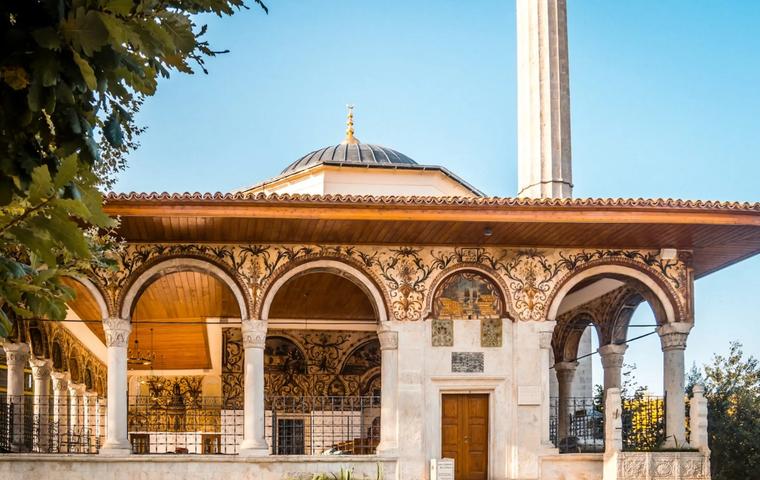
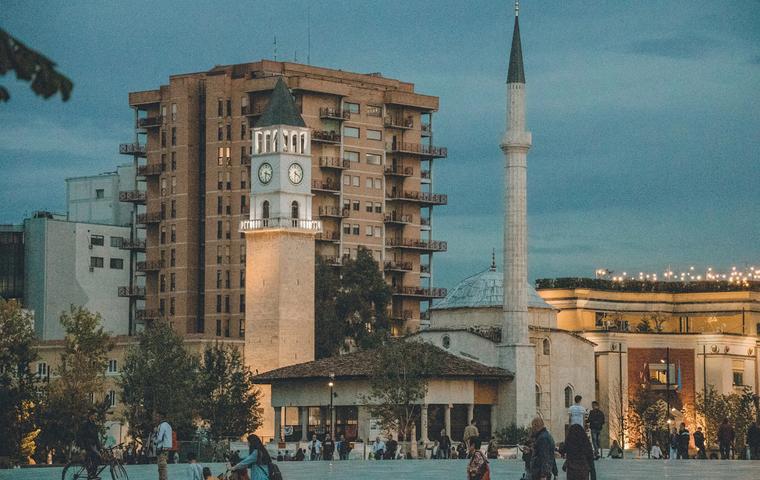
Skanderbeg Square is 2 minutes away. Et'hem Bey Mosque and Clock Tower – 3 minutes. Pyramid of Tirana – 5 minutes south. The House of Leaves museum (secret police HQ) is a 5-minute walk.
Sandy Adriatic shores for toddlers, turquoise Riviera coves for teens – at half the price of Greece. A practical guide to family holidays in Albania.
March 28, 2026
A week-long driving itinerary covering two UNESCO cities, the Albanian Riviera, Llogara Pass and real prices. Where to sleep, what to skip, and how much fuel costs.
March 15, 2026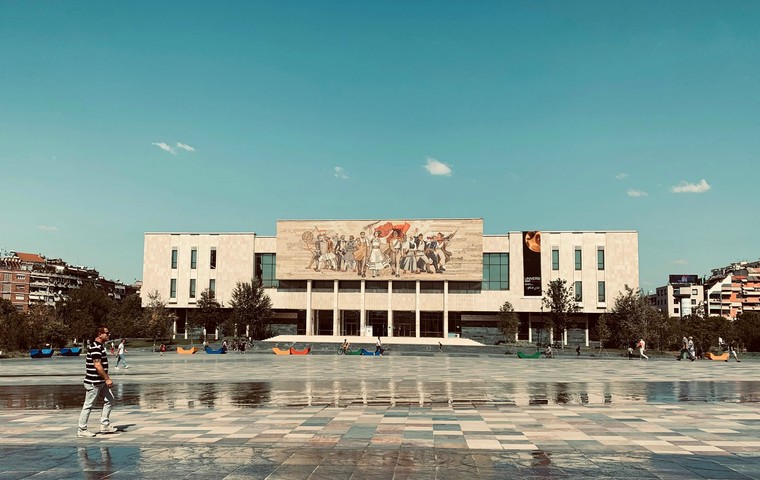
Tirana is Albania's best launch pad: UNESCO Berat from $12, Kruja Castle from $24, Gamti Mountain hikes from $12. Real prices, travel times, and what they don't tell you.
March 25, 2026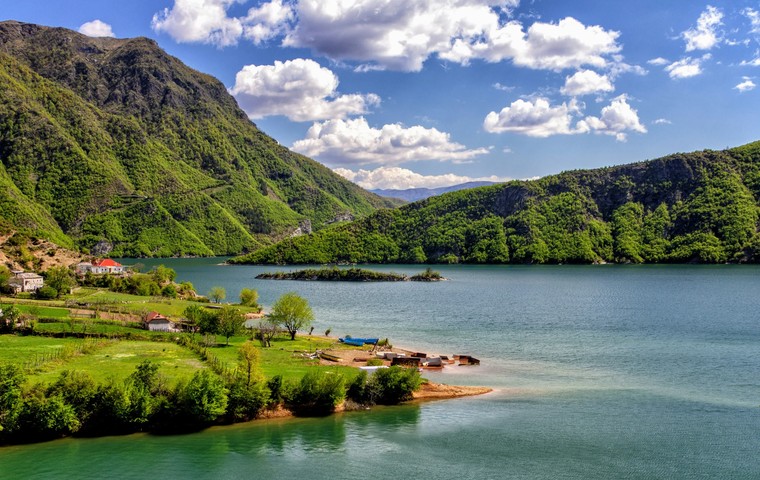
Is April a good time to visit Albania? Weather details, sea temperature, prices, top attractions, and practical advice for traveling to Albania.
February 27, 2026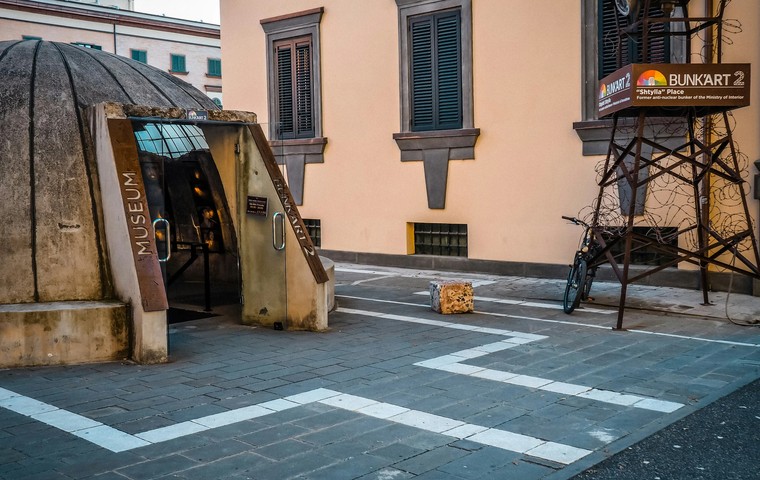
Two declassified nuclear bunkers in Tirana are now museums on Hoxha's dictatorship. Tickets €9, 106 underground rooms, secret police interrogation cells – a visitor's guide.
March 20, 2026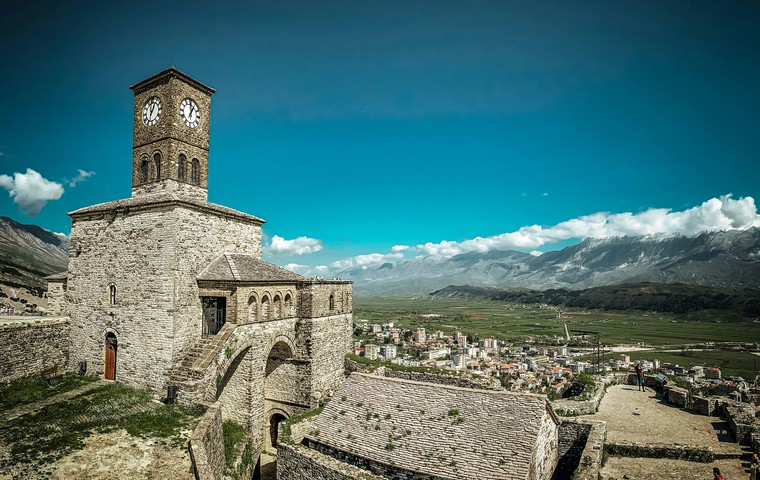
March in Albania: 13–16°C on the coast, a sea too cold for swimming, but no crowds and prices 30–40% below summer. What's open, transport and tips.
February 26, 2026