In detail
What's here
The square is paved with stone sourced from every region of Albania, creating a subtle 2.5% slope from the edges toward the center – rainwater drains into the green zones around the perimeter. At the center stands the bronze equestrian statue of Skanderbeg by sculptor Odhise Paskali (erected 1968): the 15th-century national hero who held off the Ottoman Empire for 25 years. In summer (June–September), 100 interactive fountain jets operate hourly from 10:00 AM to 10:00 PM.
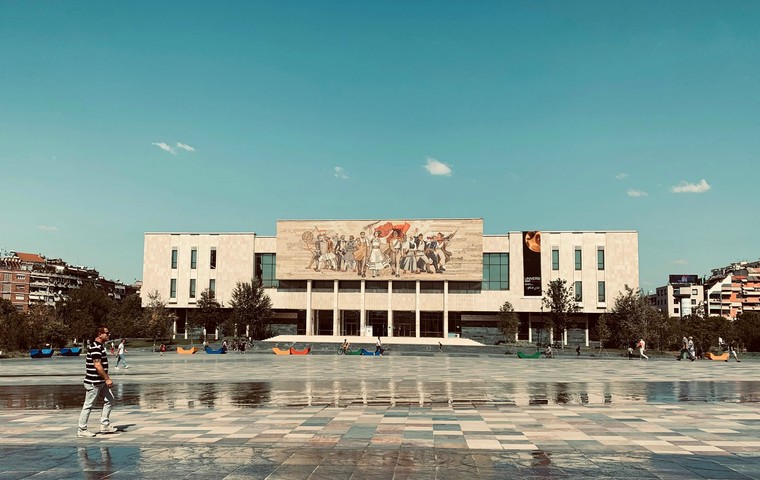
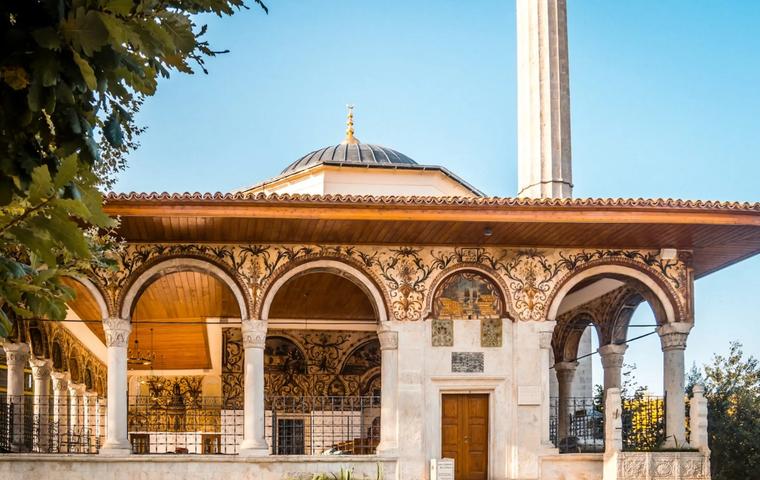
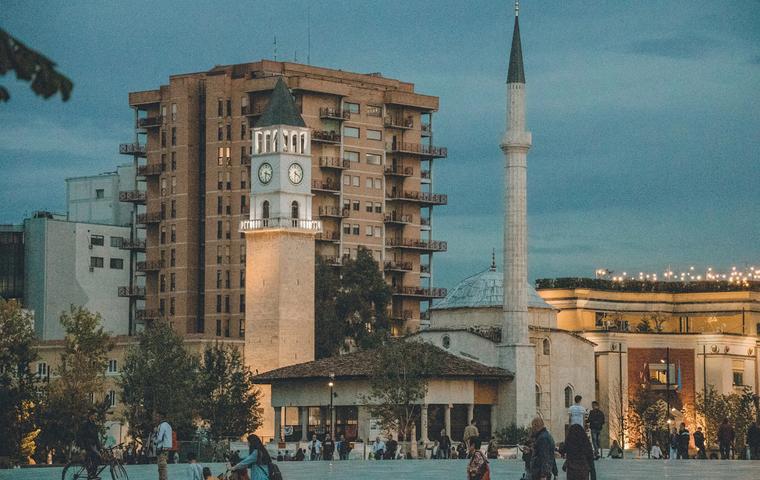
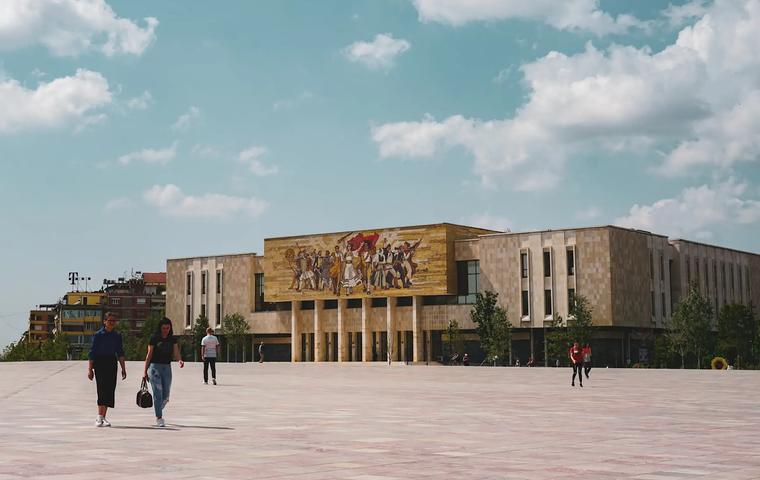
The north side is dominated by the National Historical Museum – its facade mosaic "The Albanians" (1981) is visible from anywhere on the square. On the east side, the Palace of Culture (1963) houses the National Opera and Ballet Theatre and National Library. Opera tickets run 500–2,000 ALL (€5–20/$5–22). The southeast corner holds the 18th-century Et'hem Bey Mosque with its rare frescoes and the 1822 Clock Tower.
The square comes alive in the evening when locals gather for the traditional xhiro (evening stroll), lights illuminate the buildings and fountains, and the surrounding cafés buzz with activity. In November–December, a Christmas fair takes over the space. National Flag Day (November 28–29) brings fireworks and concerts.
Highlights
Why visit
Area – 40,000 m², the largest pedestrian square in the Balkans
Redesign – by Belgian firm 51N4E, completed 2017, European Prize for Urban Public Space 2018
Skanderbeg Monument – bronze equestrian statue from 1968 by sculptor Odhise Paskali
Fountains – 100 interactive jets, operating June–September from 10:00 AM to 10:00 PM
Architectural mix – spans from an 18th-century Ottoman mosque to 1930s Italian Rationalism and 1960s socialist realism
Historic significance – site where Enver Hoxha's statue was toppled in 1991, marking Albania's democratic transition
History
Past & present
The first public space here was created by Austrian forces in 1917. After Tirana became the capital in 1920, Italian architects Armando Brasini and Florestano Di Fausto designed the square in a Neo-Renaissance style. Under the Italian occupation of 1939, Gherardo Bosio updated the plan. During the communist period (1945–1991), the square became a parade ground: the Palace of Culture, the National Museum, and statues of Stalin and Hoxha were added.
In 1991, massive protests on the square led to the fall of the communist regime – Hoxha's statue was torn down. After decades of chaotic traffic, the square underwent several redesign attempts. The decisive transformation came with the 51N4E project, implemented in 2016–2017 under Mayor Erion Veliaj: vehicles were removed, and the space was converted into a pedestrian zone with underground parking, green areas, and paving stone from across Albania.
Getting there
Transport & directions
From Tirana Airport (TIA, 17 km, 25–35 min):
– Luna Bus shuttle – 400 ALL (≈ €4/$4), every 30–60 min, stops in the city center
– Taxi via app (inDriver, Speed Taxi) – 2,000–2,500 ALL (€20–25/$22–27)
Around the city:
– Walk from Blloku district – 5–10 min
– City bus – 40 ALL (€0.40), most routes pass the square
– Taxi within the city – 300–700 ALL
From other cities:
– Buses from Tirana's south and north terminals arrive 10–15 min walk from the square
– If renting a car – use the underground parking beneath the square