In detail
What's here
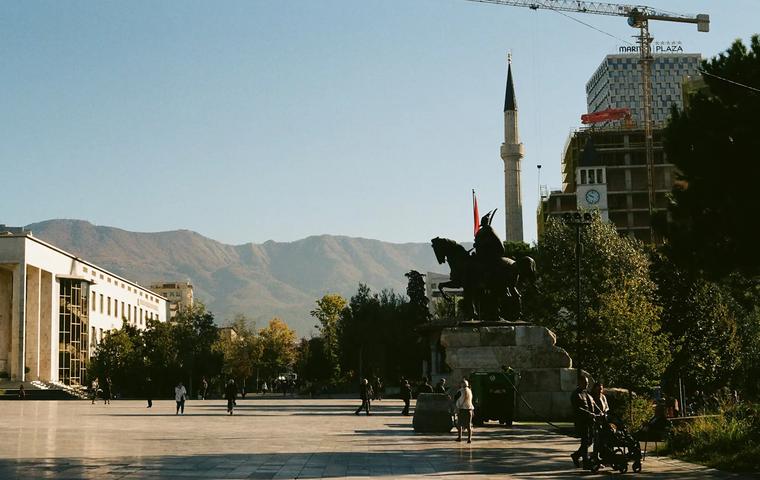
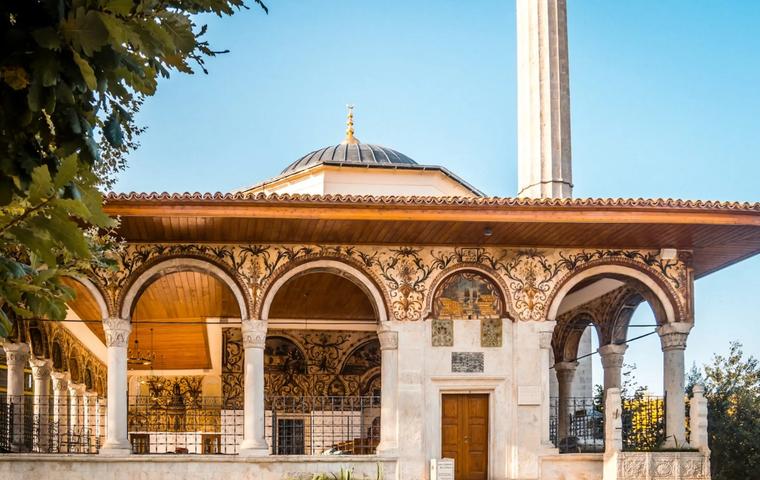
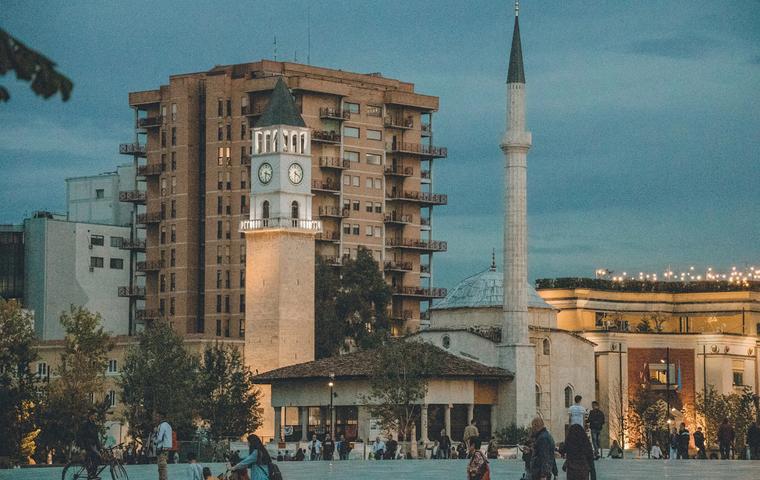
The museum building is a massive 1981 structure on the north side of Skanderbeg Square, opposite the Et'hem Bey Mosque and Clock Tower. The main facade is dominated by the monumental mosaic 'The Albanians', approximately 40 × 10 m – created by five artists in 1980, depicting historical figures from Illyrian warriors to WWII partisans. It is one of the last major examples of Socialist Realism in Europe.
Eight pavilions cover all key eras: the Pavilion of Antiquity (585 objects – Illyrian artifacts, the 4th-century BC 'Beauty of Durrës' mosaic, a 3rd-century BC head of Artemis), Middle Ages, National Renaissance, Independence, Iconography (icons by 16th-century master Onufri), Anti-Fascist War, Communist Terror, and a Mother Teresa pavilion. The exhibition follows a chronological layout across multiple floors.
Labels were predominantly in Albanian with some English. Before closure, audio guides and group tours were available. The building is undergoing renovation with upgraded exhibition spaces, funded by the EU4Culture program.
Highlights
Why visit
Facade mosaic – 'The Albanians' (1980), a monumental Socialist Realist panel, one of the largest in Europe
Collection – 4,750 objects in 8 thematic pavilions, from the Stone Age to the 20th century
Scale – 27,000 m² total area, 18,000 m² of exhibition space
Iconography – collection of icons by 16th-century master Onufri, unique in the Balkans
Antiquities – 4th-century BC 'Beauty of Durrës' mosaic, 3rd-century BC head of Artemis
Status – closed for renovation since March 2024, reopening planned for 2028
History
Past & present
The museum opened on 28 October 1981 after three years of planning by historians, linguists, archaeologists, and art specialists. The building was constructed with Soviet assistance; after relations soured, China helped complete it – the architectural style resembles Beijing-era museums. The facade mosaic 'The Albanians' was completed in 1980 by five artists: Vilson Kilica, Anastas Kostandini, Agim Nebiu, Justin Droboniku, and Aleksander Filipi.
After communism fell, the exhibition was revised – pavilions on Communist Terror and Mother Teresa were added. The museum became the country's primary historical institution, but the building needed major renovation. In March 2024, the museum closed for a comprehensive overhaul funded by the EU4Culture program. Work includes upgrading engineering systems, reorganizing exhibition spaces, and creating a modern multimedia environment. Reopening is planned for 2028.