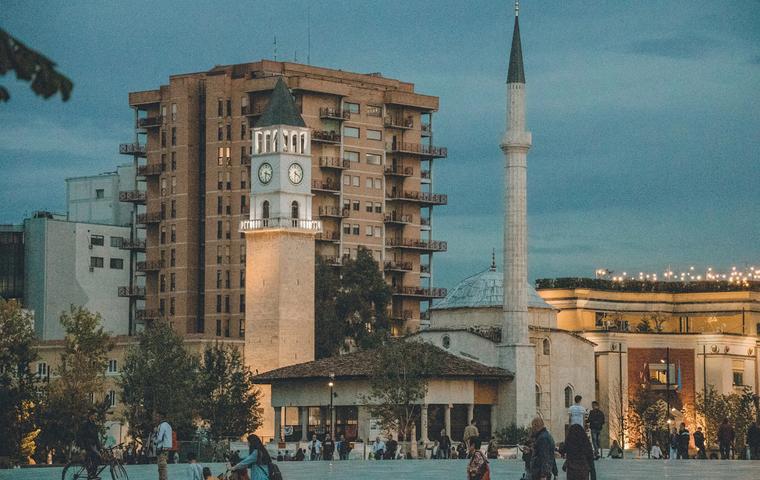
In detail
What's here
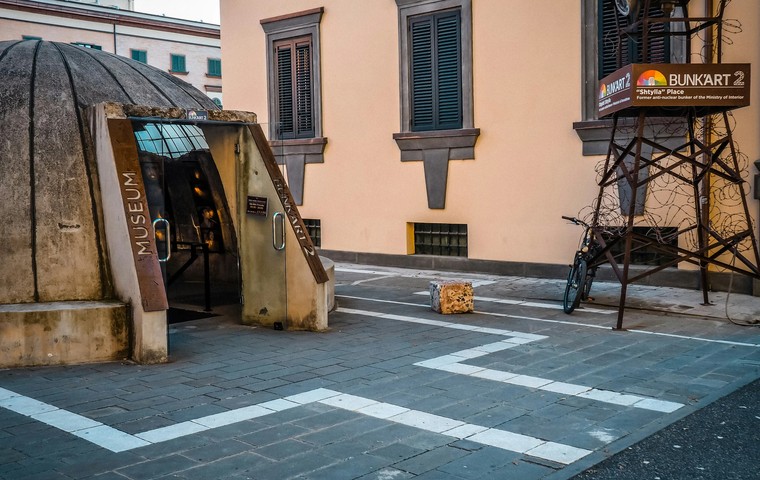
The entrance is through a roughly 200 m tunnel cut into a hillside, passing directly beneath the Dajti Ekspres cable car station. At the tunnel exit, a sandy clearing with the ticket booth sits next to an active military base. From the booth, it's another 300 m along a woodland path to the bunker entrance.
Inside, a labyrinth of 106 rooms across five levels is connected by long corridors with low ceilings and heavy blast doors. The exhibition traces Albanian history from World War II through the end of communism: propaganda materials, reconstructed offices of Hoxha and the prime minister, communication equipment, and military planning maps. Dedicated rooms recreate daily life under dictatorship – a typical Albanian family's living room, a pioneer room.
The highlight is an underground auditorium seating 200, with a real stage and two tiers – a full theater deep below ground, still used for events. Art installations in some rooms complement the historical exhibits with contemporary works. The atmosphere is defined by oppressive silence, dim lighting, and the smell of concrete and damp.
Highlights
Why visit
Scale – 106 rooms across 5 underground levels, the largest bunker in Albania
Hoxha's quarters – the dictator's personal office and bedroom, preserved in original condition
Underground theater – 200-seat auditorium with a real stage, still used for events
Tunnel entrance – 200 m through a hillside, passing under the cable car station
Art installations – contemporary art pieces in former bunker rooms
Temperature – constant 14–16°C (57–61°F) inside year-round
History
Past & present
In the 1970s, Enver Hoxha, consumed by paranoid fear of invasion, ordered a secret nuclear bunker built on the outskirts of Tirana. It was designed for 300 people – the country's top military and political leadership. Construction was carried out in total secrecy, with the only entrance through a classified ministry building. Hoxha died in 1985 without ever using the bunker – it was never activated for its intended purpose.
After the regime fell, the bunker remained a classified military site next to an active base. In 2014, the government decided to declassify it and convert it into a museum. The renovation preserved the original structure – blast doors, ventilation systems, command centers. The museum opened in November 2014 and quickly became one of Tirana's top attractions, drawing over 200,000 visitors annually.
Getting there
Transport & directions
From central Tirana (5 km, 20–45 minutes):
– Bus No. 11 to Porcelan stop – 40 ALL (≈€0.40), departs from Rruga Ludovik Shllaku (near the Clock Tower), every 15 minutes, 30–45 minutes ride
– Taxi – 700–1,000 ALL (≈€7–10 / $7–10), 15–20 minutes
– Rental car – free parking at the entrance
From Dajti Ekspres cable car:
The lower cable car station is a 10-minute walk from Bunk'Art 1. Easy to combine.
On-site:
From the tunnel entrance to the ticket booth – 200 m (5-minute walk). From the booth to the bunker entrance – 300 m along a woodland path.