Blog · Transport
Car Rental in Albania: Companies, Insurance, Roads and Hidden Pitfalls
 Transport
In this article
Some links are affiliate links. You pay the same, and we may earn a commission.
Complete guide to renting a car in Albania: where to book, costs, insurance traps, road conditions, fuel prices, parking and cross-border trips.
Renting a car in Albania costs 20–50 € per day – some of the lowest rates in Europe. Outside of Tirana, public transport is limited, making a rental the only practical way to explore the Riviera, mountain passes and villages that buses never reach. The main things to watch out for: basic CDW insurance does not cover tyres or undercarriage damage, local driving can be assertive, and most companies require a credit card for the deposit.
Key facts:
- Rental cost – from 20 € per day for economy (low season) to 50 € per day for an SUV (summer)
- Fuel – approximately 2.10 € per litre for petrol, diesel slightly cheaper (Updated: February 2026)
- Minimum age – 21, surcharge of 3.50–10 € per day for drivers under 25
- Licence – any valid driving licence held for at least 1 year; IDP required only if your licence is not in the Latin alphabet
- Deposit – 250–1 500 € blocked on a credit card
- Toll roads – virtually none, except the Llogara Tunnel and the A1 corridor towards Kosovo
- Blood alcohol limit – 0.01 ‰, effectively zero
Where to Book: Rental Companies and Aggregators
Tirana has branches of international brands (Europcar, Sixt, Enterprise) alongside dozens of local operators. International companies charge 30–50 % more on average, but offer more transparent insurance terms. Local providers often have better prices and flexible conditions, though the fine print deserves careful attention.
Two reliable aggregator options: Localrent focuses on local providers with low or zero deposits (from 0–300 €, versus 800–1 500 € elsewhere) and specialises in Balkan cross-border trips. EconomyBookings casts a wider net across international and local brands.
| Parameter | Localrent | International brands |
|---|---|---|
Daily rate (economy) | 20–30 € | 35–55 € |
Deposit | 0–300 € | 800–1 500 € |
Credit card required | No | Yes |
Cross-border trips | Balkan specialist | Limited, surcharge applies |
Insurance: What Is Covered and What Is Not
This is the single most critical issue when renting in Albania. Basic coverage – CDW (Collision Damage Waiver) and TPL (Third-Party Liability) – is included in the rental price with most companies. However, CDW always comes with an excess (deductible) – the amount you personally pay in case of damage. Typical excess: 500–1 500 €.
What standard CDW does not cover:
- tyres and wheels (the most common damage on Albanian roads)
- windscreen and mirrors
- undercarriage
- damage from driving on unpaved roads, even with 4WD
- collisions with livestock (goats and cows wander freely on rural roads)
Full Insurance / Super CDW costs 10–20 € per day and reduces the excess to zero, but even this often excludes tyres and undercarriage. Get written confirmation of exactly what is covered before signing.
An alternative approach is travel insurance that includes rental car coverage. Check visa requirements for your nationality and explore options like Ekta, which offers policies starting from 7 € per week.
Important: If you have an accident, call the police (129 or 112) and get a written report. Without a police report, most rental companies will deny insurance claims and charge the full repair cost to your card.
Documents Required
Standard set: passport, driving licence held for at least 1 year, credit card in the driver's name. EU and EEA licences are accepted without question. An International Driving Permit (IDP) is only formally required if your licence is not in the Latin script, but bringing one is advisable as some rental companies and police officers may ask for it.
Which Car to Choose
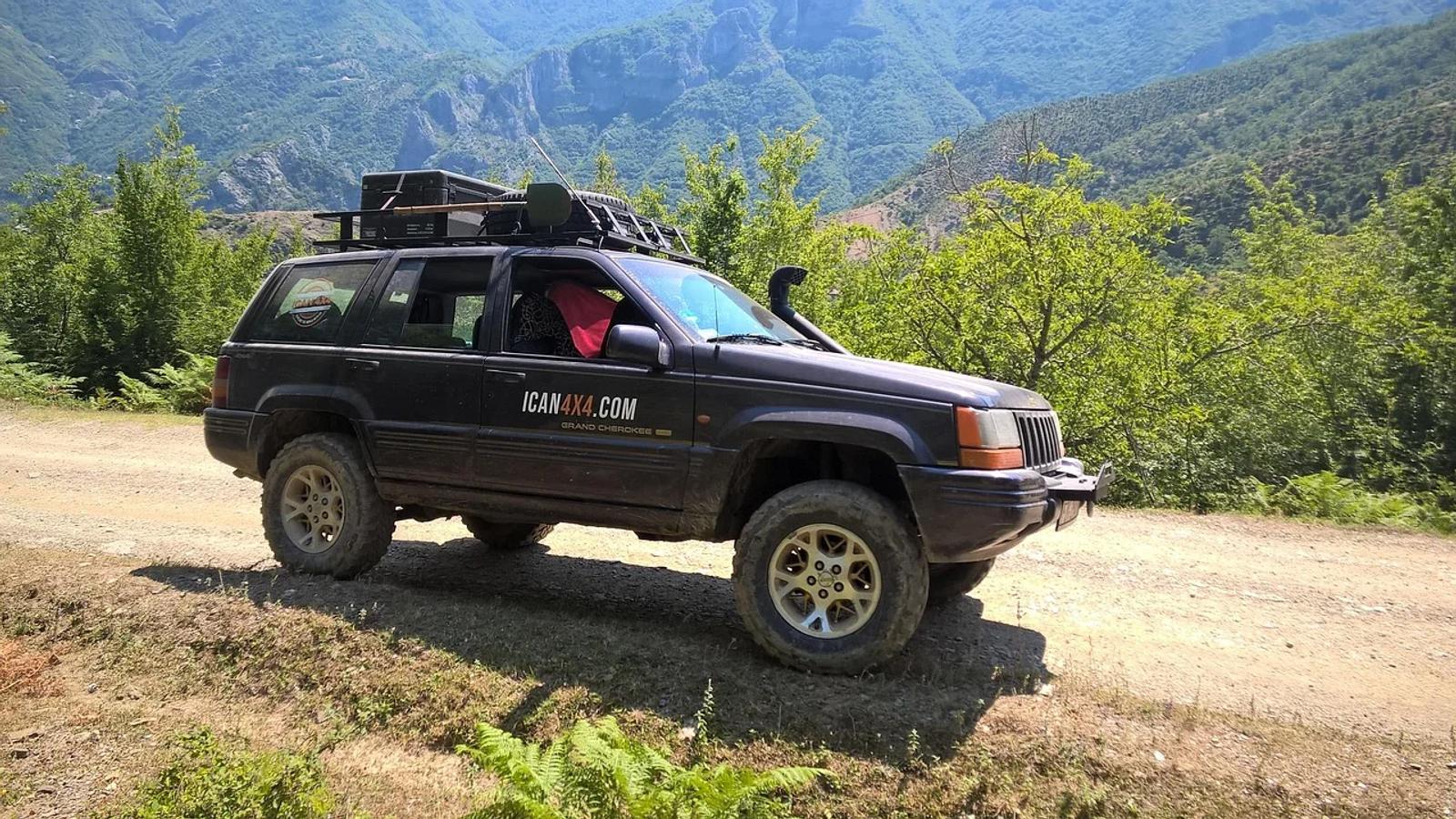
For coastal routes (Vlorë – Sarandë – Himarë) and travel between major cities, a standard sedan or compact is sufficient. The main SH8 highway (Tirana – Vlorë – Sarandë) is in good condition.
An SUV is justified if you plan:
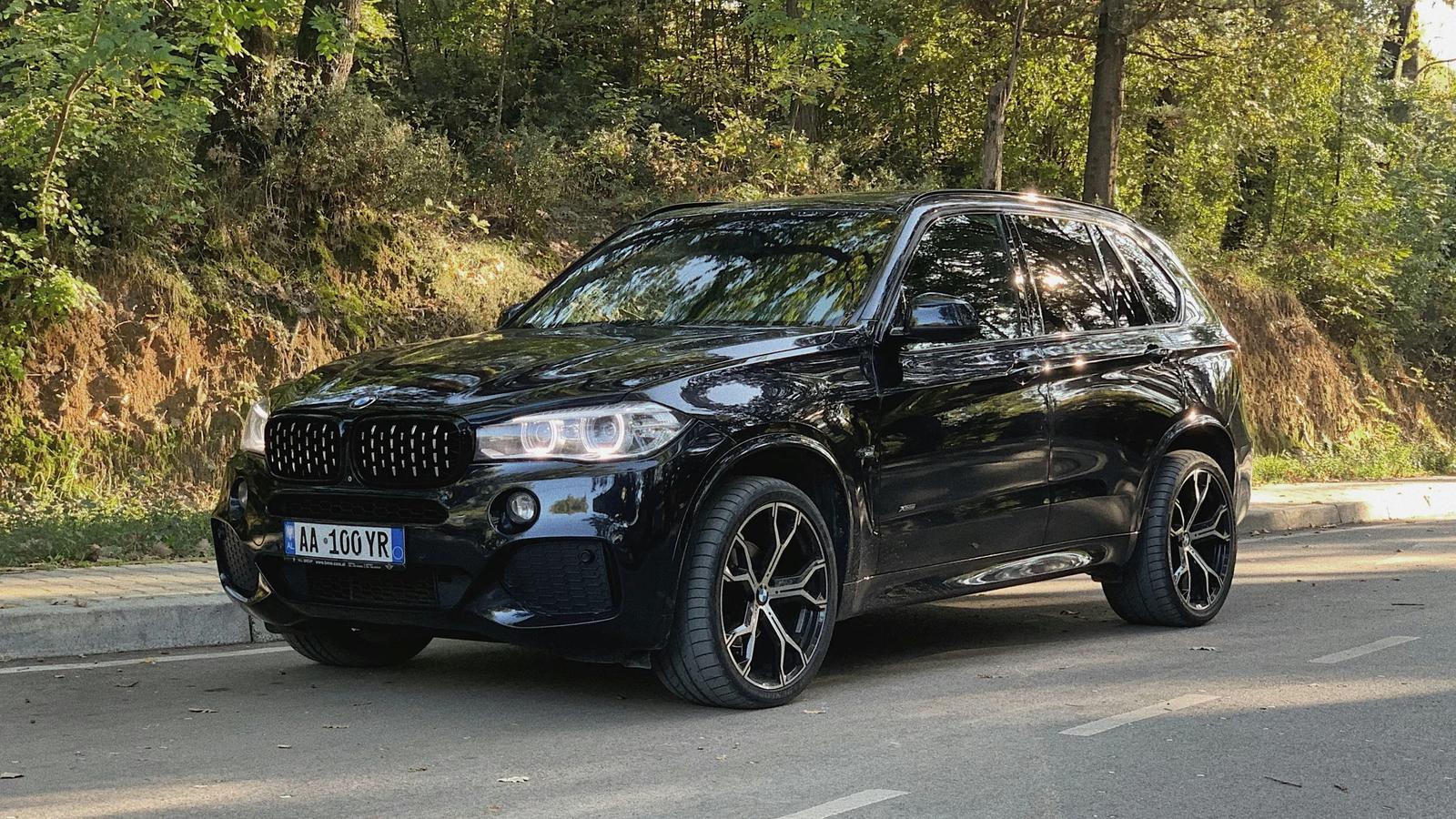
- mountain routes to Theth or Valbona through the Albanian Alps
- unpaved descents to wild beaches like Gjipe Beach or Ksamil Beach
- off-season travel when secondary roads can be washed out
Around 70 % of Albania is mountainous, so a sufficiently powerful engine matters. Minimum 1.4–1.6 litres. Diesel vehicles are more economical and more commonly available.
Road Conditions
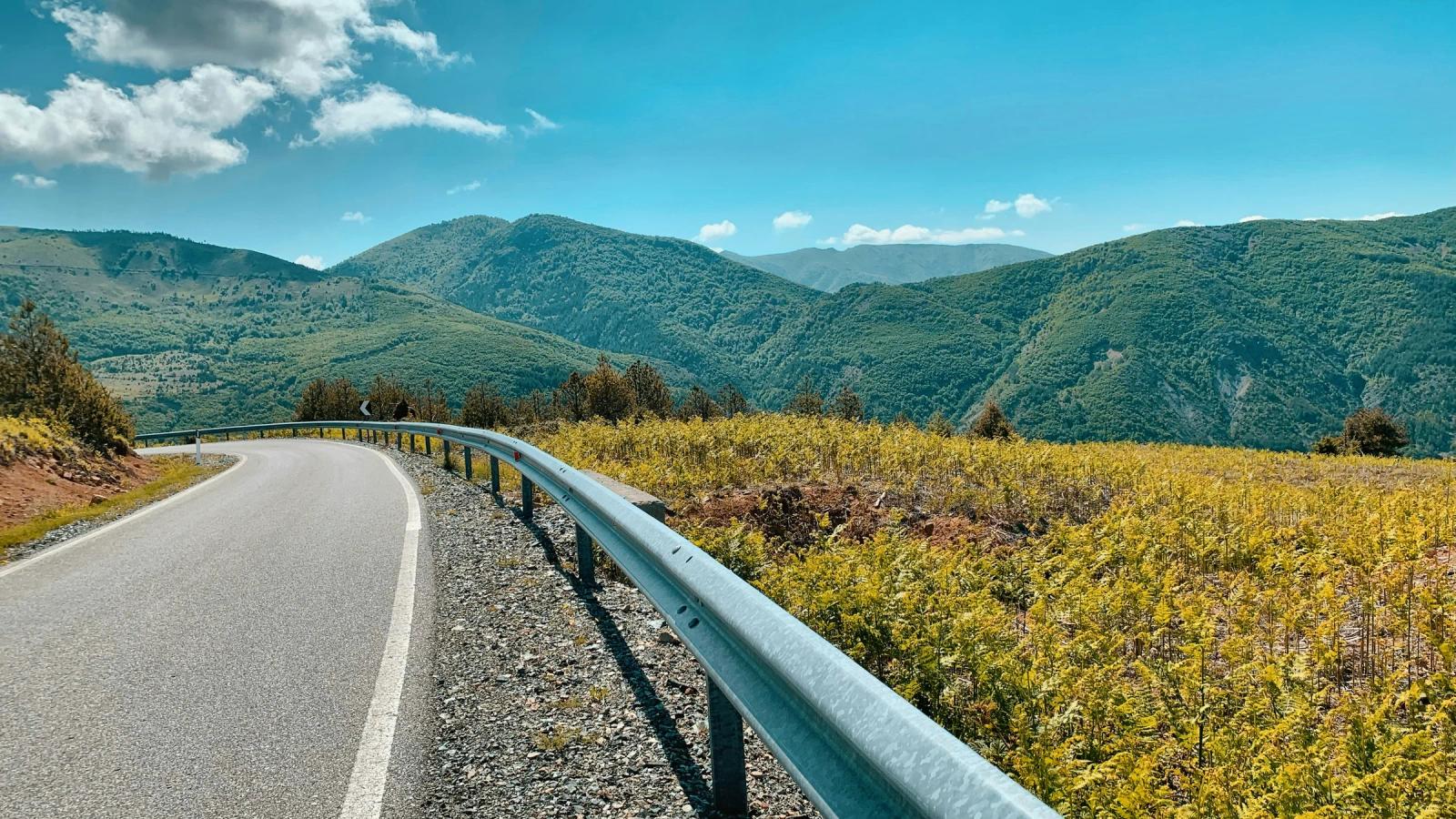
Roads in Albania have improved dramatically and now approach European standards on main routes. The government continues investing in infrastructure: in 2025, the Llogara Tunnel was completed, connecting Riviera resorts and bypassing the steep, winding Llogara Pass.
| Road type | Condition | What to expect |
|---|---|---|
Motorways (A1, A2, A3) | Excellent | Speed limit 110 km/h, fresh tarmac |
Coastal SH8 | Good | Scenic views, but narrow sections and summer congestion |
Between major cities | Good | Quality improving year on year |
Mountain passes | Fair | Switchbacks, narrow lanes, livestock |
Beach access roads | Poor | Unpaved, potholed, sometimes no surface at all |
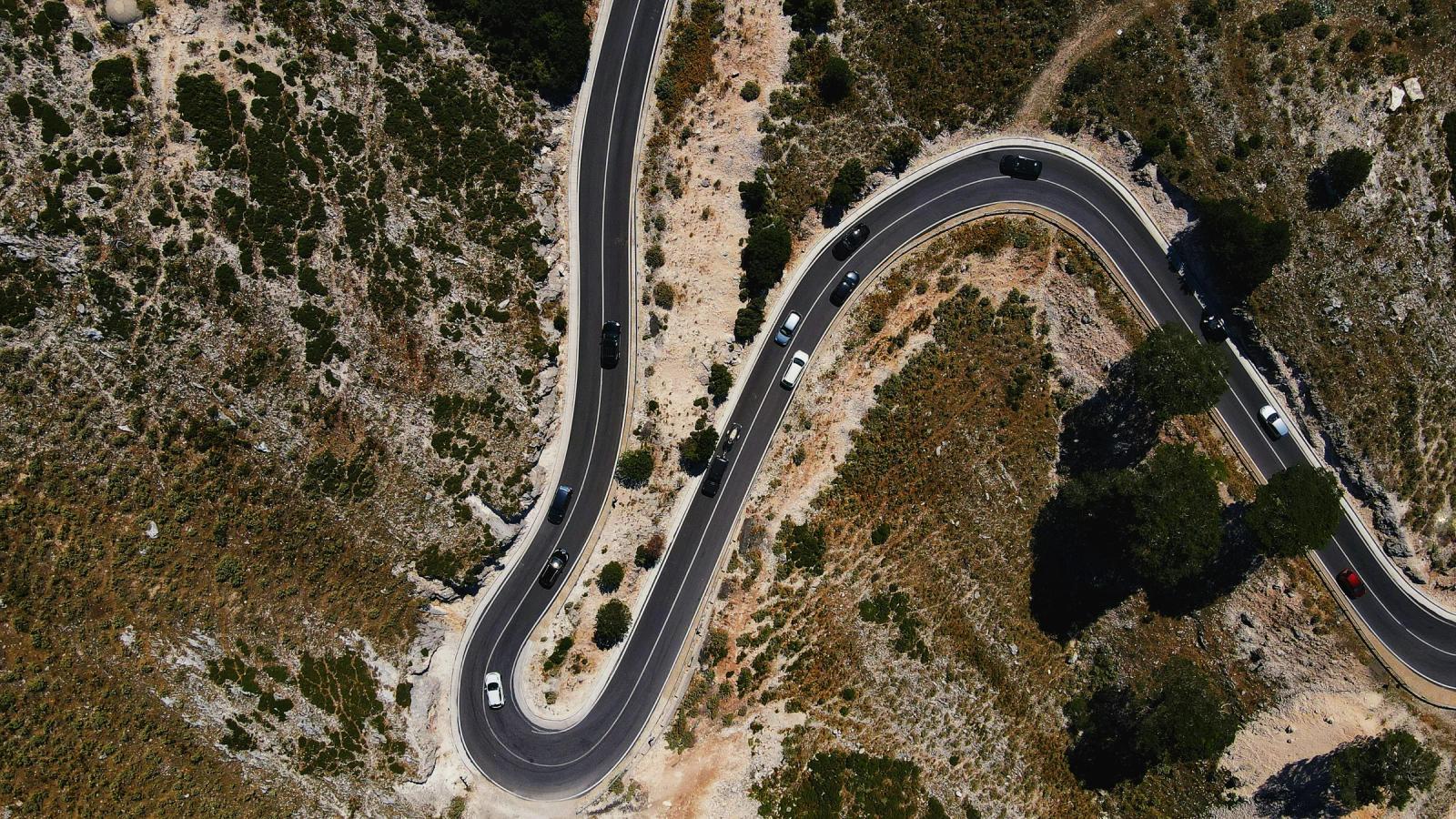
Note: Even on technically good roads, traffic jams approaching Tirana and single-lane bottlenecks can turn a 170 km drive into a 5-hour journey. Always budget extra time.
Rules of the Road
Driving is on the right. Speed limits: 40–60 km/h in towns, 80–90 km/h on rural roads, 110 km/h on motorways. Speed cameras and police checkpoints are common, particularly on city outskirts. On-the-spot fines for speeding go up to 5 000 lek (approximately 45 €).
Police are known to stop rental cars more frequently than local vehicles. Keep on hand: passport, licence, rental agreement, insurance documents. Seatbelts are mandatory for all passengers, and mobile phones may only be used hands-free.
Local driving culture is distinctive. Expect assertive overtaking, flexible interpretation of lane markings, liberal use of the horn (more communication than aggression) and livestock on the road. Driving calmly and predictably is the best approach.
Fuel, Parking and Fines
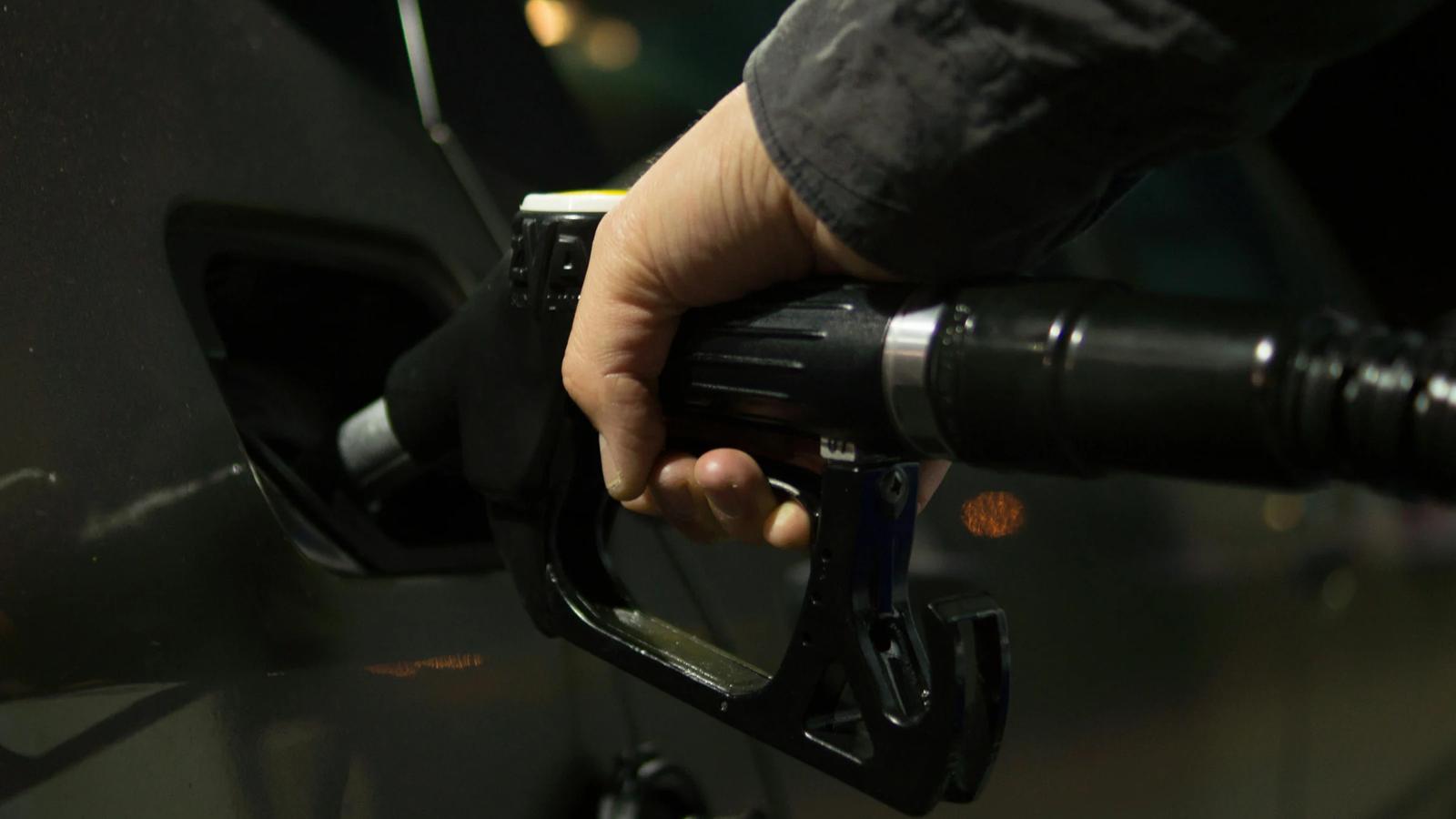
Fuel. Petrol (95 octane) is approximately 2.10 € per litre, diesel around 1.70 €. Stations are available in every town and along major routes, but fill up before heading into mountains or remote areas. (Updated: February 2026)
Parking. In Tirana, parking is challenging – free spots are rare, underground garages cost 2–5 € per hour. In resort towns (Sarandë, Vlorë) finding a space in summer can be difficult. In smaller towns and near attractions, parking is generally free.
Fines. Issued on the spot. Most common: speeding (up to 5 000 lek), unbuckled seatbelt (2 000–3 000 lek), using a phone while driving (3 000–5 000 lek). Always ask for and keep the receipt.
Cross-Border Trips
Most rental companies in Albania permit travel to Montenegro, Kosovo and North Macedonia, but you must inform them at booking. Required: written authorisation from the company, a Green Card (15–40 € depending on country coverage) and a separate border-crossing fee of 30–60 € per crossing. Total budget: 70–110 €.
Travel to Greece is virtually impossible – the overwhelming majority of companies prohibit it in their terms due to insurance complications.
Localrent specialises in Balkan cross-border rentals: Green Card and authorisation are arranged at booking without increasing the deposit.
Returning the Car
Return the car with the same fuel level as at pickup. If the tank is short, the company will refuel at an inflated rate (up to 2.50 € per litre plus a 10 € service fee). Inspect the car together with the rental agent, photograph the bodywork and mileage. Any scratches not documented in the pickup report can be charged to you.
Frequently Asked Questions
1. Do I need an SUV for driving in Albania? No. For most routes (coast, major cities, Berat, Gjirokastër) a regular sedan is fine. An SUV is only necessary for mountain villages and unpaved beach access roads.
2. Can I rent a car without a credit card? Yes, through Localrent – some vehicles have zero deposit or accept debit cards. International brands require a credit card.
3. How much does full insurance cost? Full Insurance / Super CDW adds 10–20 € per day. It reduces the excess to zero, but the list of exclusions (tyres, undercarriage) should be confirmed separately.
4. Is driving in Albania safe? Yes, provided you drive calmly and attentively. Roads are in good condition. The main hazards are local driving styles, livestock on roads and unpaved tracks in remote areas. Thousands of tourists drive around Albania every year without issues.
5. Can I drive a rental car to Montenegro or Greece? Montenegro, Kosovo and North Macedonia – yes, with an additional 70–110 € (Green Card + authorisation). Greece – virtually impossible as most companies prohibit it.
Conclusion
Renting a car in Albania is the most flexible and affordable way to explore the country. Rates from 20 € per day make it one of Europe's cheapest rental destinations. The key is choosing the right insurance, reading the contract carefully and taking your time on mountain switchbacks.
Sources:
Government of Albania – official road infrastructure portal
GlobalPetrolPrices – current petrol and diesel prices in Albania
Albanian State Police – traffic rules for tourists
Trading Economics – Albania fuel price statistics
Albsig – Green Card insurance for cross-border trips
Places to see in Albania
You may also like
Driving in Albania 2026: Traffic Police Target Rentals – Fines & Rules You Can't Miss
Zero alcohol tolerance (0.01‰), daytime headlights mandatory, phone use fine €150. Police specifically pull over rental cars. The real rules behind the wheel in Albania.
April 21, 2026Ulcinj to Shkodër by Car: Is It Worth the Day Trip and What Documents Do You Need
How to drive from Ulcinj, Montenegro to Shkodër, Albania – Sukobin-Muriqan border crossing, rental car documents, Green Card insurance, what to see, and trip costs in 2026
February 24, 2026
Travel Insurance for Albania – Do You Really Need It and What Does It Cost?
Albania doesn't legally require travel insurance, but a mountain rescue can cost $25,000+. Real prices for healthcare, policy comparison, and what to look for before you go.
March 15, 2026
Albania with Kids: Best Beaches, Resorts & Family Logistics Explained
Sandy Adriatic shores for toddlers, turquoise Riviera coves for teens – at half the price of Greece. A practical guide to family holidays in Albania.
March 28, 2026Montenegro – Albania Border Crossing: 3 Checkpoints, Wait Times & What Documents You Need
Three crossings, wildly different queues. Which one to pick, what papers border guards actually check, and how to skip the summer gridlock – a practical breakdown.
March 20, 2026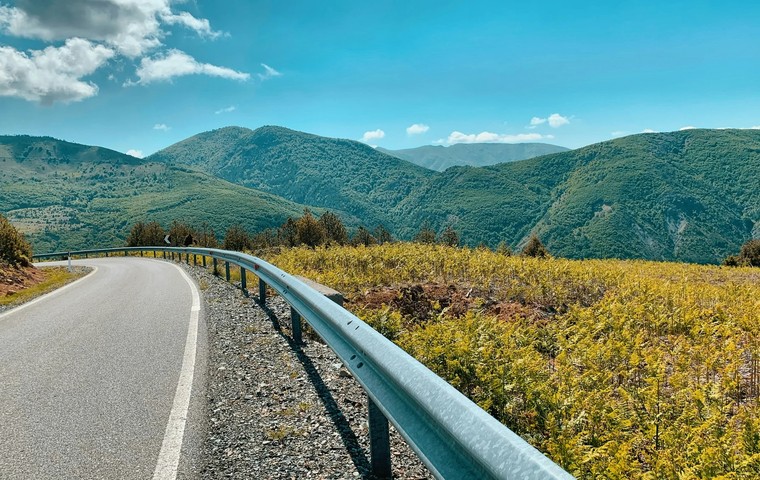
7-Day Albania Road Trip: Tirana to the Riviera Without Backtracking
A week-long driving itinerary covering two UNESCO cities, the Albanian Riviera, Llogara Pass and real prices. Where to sleep, what to skip, and how much fuel costs.
March 15, 2026