In detail
What's here
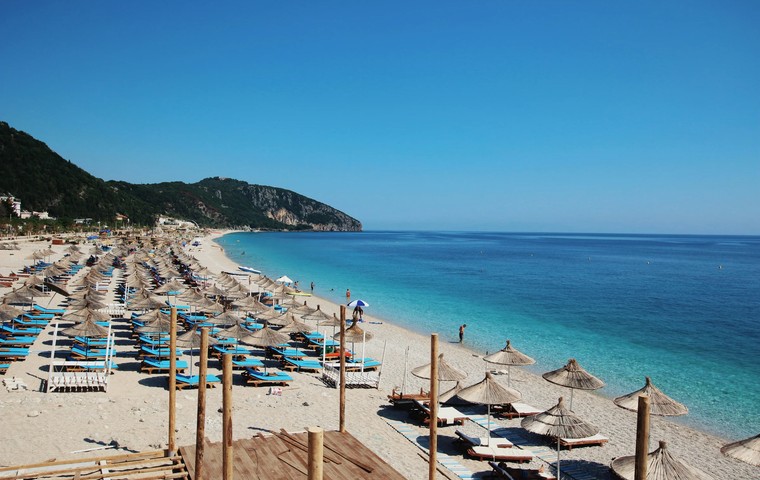
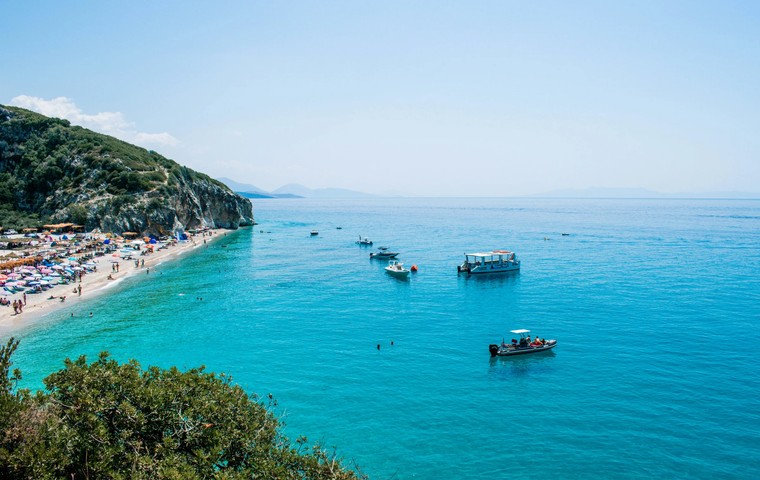
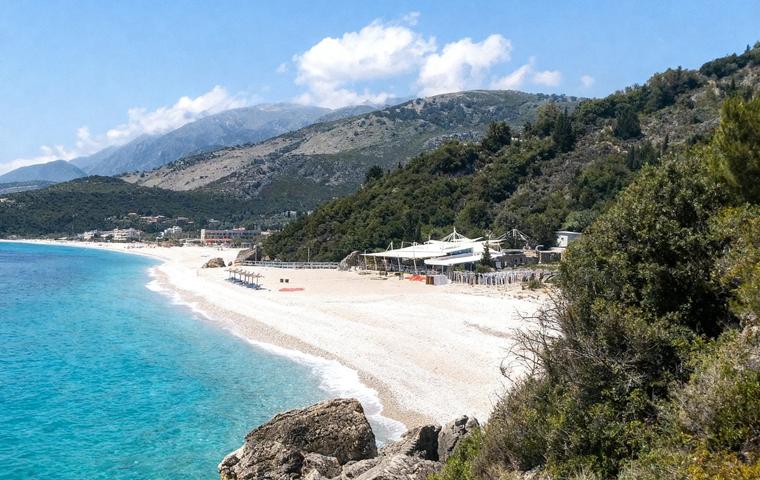
The beach lies at the mouth of the Gjipe Canyon – a narrow gorge with vertical walls up to 70 m high. The shore is fine white pebbles, transitioning to larger rocks near the water's edge. The beach stretches about 200 m long and 30–40 m wide. The water is transparent and turquoise, though it can be cooler than open beaches – the canyon casts shade in the morning hours.
The trail from the parking area descends along a dirt road with an elevation drop of about 100 m. The path is rocky, shadeless, and passable by 4WD vehicles (at your own risk). Along the way you'll spot concrete bunkers from the communist era – Albania built over 173,000 of them between 1968 and 1986. From the top of the trail – a panoramic view of the canyon and beach, one of the best photo spots.
On the beach, 2–3 bar-restaurants serve food and drinks (prices about twice what you'd pay in Himara). Seafood is fresh. Kayak and SUP board rental costs about 1,000 ALL (~€10 / ~$11) per hour. Past the left edge of the beach lie sea caves, accessible by swimming or kayak in calm conditions. You can hike 1–2 km into the canyon along the riverbed – an interesting route for hiking enthusiasts. Camping is allowed: in summer, Gjipe Eco Campground operates (tent – €30–40/night with showers).
Highlights
Why visit
Canyon – beach at the mouth of a gorge with cliffs up to 70 m, one of the most dramatic settings on the Riviera
Water – turquoise and crystal-clear with several meters of visibility. Temperature 20–24°C (68–75°F) in summer
Access – on foot only (20–30 min from parking) or by boat from Himara
Bunkers – communist-era concrete bunkers (1968–1986) along the trail to the beach
Caves – sea caves beyond the beach edge, accessible by swimming or kayak
Camping – permitted, with Gjipe Eco Campground operating in summer
History
Past & present
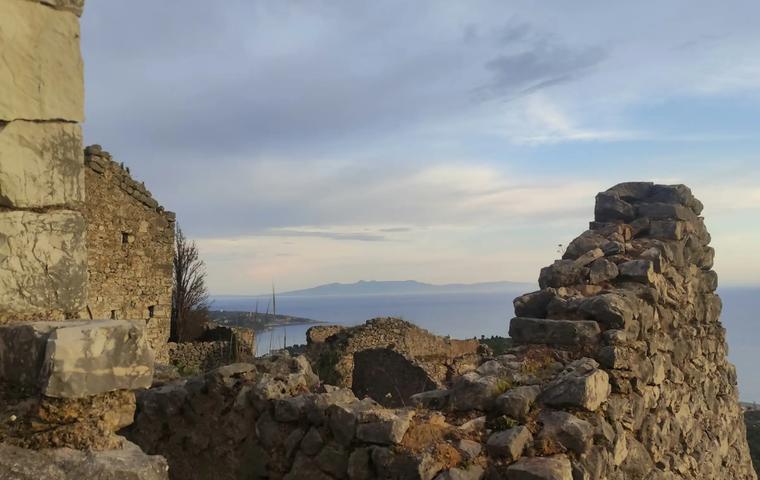
Gjipe Canyon is a natural formation created by erosion of the limestone along the Ionian coast. The cove was used by fishermen for centuries but remained difficult to access due to the lack of roads. During Enver Hoxha's rule (1944–1985), the coastline was militarized: over 173,000 bunkers were built across Albania in just 18 years. Several bunkers survive along the trail to Gjipe Beach.
The beach began attracting tourists in the 2010s as the Albanian Riviera developed as a budget beach destination. The road from the highway to the parking area was paved, and the first cafés appeared. In winter, the sea level rises and completely covers the beach, destroying all infrastructure – restaurants and sun loungers are reinstalled every spring. In recent years the beach has grown in popularity but remains relatively uncrowded thanks to its challenging access.
Getting there
Transport & directions
By car + on foot (main route):
From Himara – 16 km north on SH8 (30 min), turn at the monastery sign. Then 2.5 km on a narrow paved road to the parking lot. From parking – 20–30 min walk downhill (1–1.5 km, dirt road). Uphill return – 30–45 min
By boat from Himara:
Water taxi – ~2,000 ALL (~€20 / ~$22) per person, round trip. Operates in summer, arrange at the waterfront or through your hotel
By shared minivan (furgon):
Any Himara–Dhermi furgon along SH8. Ask to be dropped at the Gjipe turnoff. From the highway to the parking lot – 2.5 km walk, plus 1.5 km to the beach
From Dhermi (8 km):
By car – 15 min to the parking lot, then walk down