Hero background

Himara Castle

Kalaja e Himarës

A fortified settlement from the 8th century BC perched 240 m above the Ionian Sea

Himara Castle (Kalaja e Himarës) is an ancient fortified settlement on a rocky hilltop 2.5 km north of the modern center of Himara. The first fortifications here date to the 8th century BC, when the area was inhabited by the Chaonian tribe. Roman author Pliny mentioned this site in the 1st century AD as "the Castle of Himara on the Coast of Epirus, on the Ceraunian Mountains." The hill rises 240 m above sea level with cliffs on all sides and views across the Ionian coastline.

From Himara town center, follow the SH8 road toward Dhermi for 2.5 km uphill. Walking takes 30–45 minutes; by car or taxi it's about 10 minutes. Free parking and a small information kiosk are located at the old town entrance.

Allow 1–1.5 hours for a visit. Entry costs 300 ALL (~€3 / ~$3.30). Inside you'll find a network of cobblestone alleys, ruined and restored stone houses, several Orthodox churches from the 11th–13th centuries, and Café Butterfly with sea views.

Location

On the Map

About

What's Here

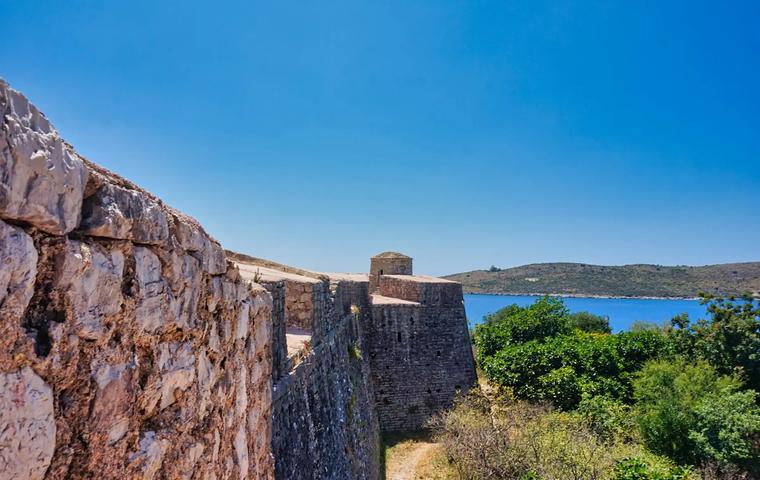
Himara Castle is not a single structure but an entire fortified village atop a rocky hill. Narrow cobblestone lanes wind between stone houses – some abandoned and in ruins, others renovated into guesthouses and cafés. The walls are built from roughly hewn limestone, with visible masonry from different eras – Byzantine, Venetian, and Ottoman layers are all evident. Several Orthodox churches survive within the walls: the Church of Saints Sergius and Bacchus (11th century) with remnants of frescoes, the Church of the Virgin Mary Kassopitra, and the Church of St. Michael (13th century). At the foot of the hill beside the SH8 highway stands the Greek-Orthodox Church of All Saints.

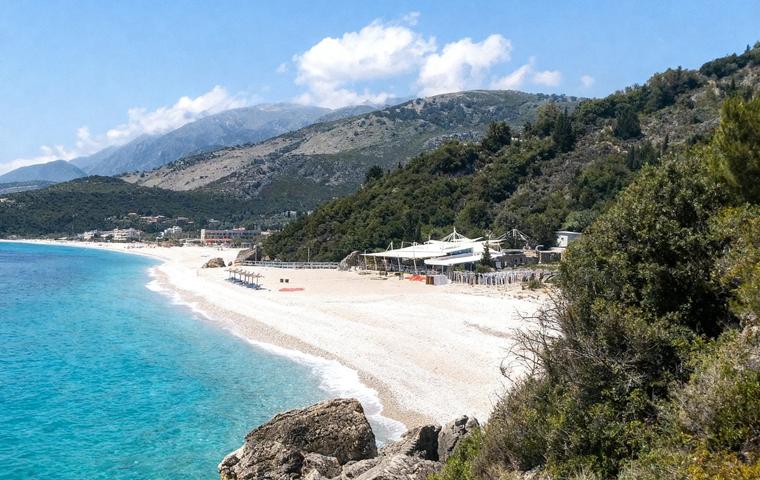
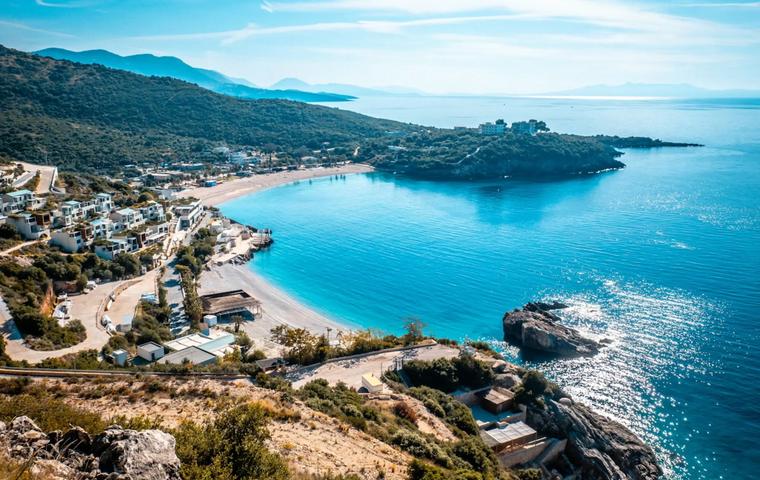
The main reason to climb the hill is the 360-degree panorama. To the west – Livadi Beach and the Ionian Sea, with Corfu visible on the horizon on clear days. To the south – the bay and modern Himara. To the east and north – the Visha and Kole Midhari Canyons backed by the Ceraunian Mountains. The lighting is best about an hour before sunset, when the sun bathes the stone walls in warm golden tones.

People still live inside the castle walls – several families occupy restored houses. The atmosphere is quiet, with few tourists most of the time. Café Butterfly on the upper terrace serves coffee and homemade sweets (tea – 300 ALL / ~€3). In summer the hilltop is hot with virtually no shade – bring water and a hat.

Why Visit

The Highlights

Age – fortifications on this site span approximately 3,500 years, with the earliest dating to the 8th century BC

Elevation – the hill rises 240 m above sea level, roughly 150 m above the SH8 highway

Churches – three Orthodox churches from the 11th–13th centuries inside the walls, including the Church of Saints Sergius and Bacchus with surviving frescoes

Panorama – 360-degree views: Ionian Sea, Corfu, Visha and Kole Midhari Canyons, Ceraunian Mountains

Living settlement – the castle is still inhabited, with several families living in restored stone houses

Cultural monument – protected by the Albanian state as a cultural heritage site

History

Past & Present

The hilltop settlement dates to approximately 1500 BC, inhabited by the Chaonians – an Illyrian (or, by some accounts, Epirote) tribe. By the 8th century BC the site had defensive walls. Under the Byzantine Empire, the fortress was significantly reinforced during Emperor Justinian's reign and became part of a chain of coastal fortifications. In the 8th century AD it became the seat of the Bishopric of Himara. Through the medieval period the castle changed hands repeatedly – between Byzantines, Normans, and Venetians.

From the 15th century, as the Ottoman Empire expanded into the region, Himara became a center of resistance. Its inhabitants were known for their fierce independence, repeatedly rebelling against Ottoman rule and reportedly maintaining ties with Skanderbeg. By the 16th century the population began moving downhill toward the coast, and the castle gradually emptied. During the 20th-century socialist era Himara fell into neglect. Today, slow restoration continues – some houses have been rebuilt, guesthouses and cafés have opened, but much of the settlement remains in ruins.

For Visitors

Visitor Information

Tickets & Prices

Entry:

Adults: 300 ALL (~€3 / ~$3.30)

Children's pricing – check on-site

Tickets are sold at a small booth near the parking area at the old town entrance. The booth is not always staffed – if closed, entry may be free. Cash only (ALL).

Rules & Restrictions

No major restrictions. Photography is allowed throughout. Cover shoulders and knees when entering churches. Paths inside the castle are rocky and uneven – wear sturdy shoes with non-slip soles. In summer the hilltop is very hot with almost no shade – bring water, sunscreen, and a hat. There are no railings at cliff edges – supervise children closely.

On-Site Facilities

On-site:

Café Butterfly – coffee, tea, homemade sweets (tea 300 ALL / ~€3). Sea-view terrace

Several guesthouses

Parking: Free lot at the old town entrance. Fills up by midday in summer

Wi-Fi: Available at the café. 4G coverage is stable

Accessibility: Steep climb on uneven cobblestone paths. Not suitable for wheelchairs or visitors with limited mobility

Getting There

Transport & Directions

From Himara town center (2.5 km, 10 min by car):

– Walk along the SH8 toward Dhermi – 30–45 minutes uphill. Pedestrian sidewalk available

– Taxi – 500–800 ALL (~€5–8 / ~$5.50–9), agree on the fare in advance

– By car – free parking at the entrance

From Tirana (220 km, 4–5 hours):

– Bus to Himara – 1,200–1,500 ALL (~€12–15 / ~$13–16), 2–3 departures daily, then taxi or walk

Car rental – most convenient option, scenic route via Llogara Pass

From Livadi Beach (on foot):

– Old trail through olive groves – about 40 minutes, uphill hike with coastal views

When to go

Best time to visit

Season: April–October for comfortable weather. Open year-round but winters can be windy and rainy.

Time of day: 1–1.5 hours before sunset for the best light and cooler temperatures. Early morning (before 10:00) for fewer visitors. Avoid midday in summer.

Duration: 1–1.5 hours for the castle and old town. Add 2.5–3 hours total if walking from the town center.

Avoid: July–August midday – temperatures exceed 35°C with no shade. Summer weekends bring more tour groups.

FAQ

Common Questions

300 ALL (~€3 / ~$3.30) per person. Tickets are sold at the booth near the parking area, cash only. If the booth is closed, entry may be free.

1–1.5 hours for the castle and old town. If walking up from Himara town center, add 30–45 minutes each way for the climb.

Walk from Himara center along the SH8 road – 30–45 minutes uphill with a pedestrian sidewalk. Or take a taxi for 500–800 ALL (~€5–8). You can also hike the old trail from Livadi Beach – about 40 minutes through olive groves.

Yes, Café Butterfly in the upper part of the castle serves coffee, tea (300 ALL / ~€3), and homemade sweets with panoramic sea views from the terrace.

Yes, with caution. Paths are uneven and cliff edges have no barriers – keep close watch on children. The uphill walk may be tiring for small children; driving up is recommended.

Sneakers or hiking shoes with non-slip soles. The cobblestone paths inside are steep and uneven in places. Flip-flops and sandals are not recommended.

Livadi Beach – at the foot of the hill. Porto Palermo Castle – 8 km south. Gjipe Beach – 16 km north. Llogara National Park – 25 km.

The castle is accessible year-round, though the ticket booth may be closed off-season. Winter can be windy and rainy, but you'll have the place almost entirely to yourself.

Distance

Travel Time

On foot from Himara center 2-3 min.
From Gjirokastra by car ~49 min.
From Saranda by car ~51 min.
From VLO airport (Vlora Airport (VLO)) by car ~1 h 32 min.
From TIA airport (Tirana Airport (TIA) ) by car ~3 h 36 min.
Social

Share