Tickets & prices
Entry:
Adults: 300 ALL (~€3 / ~$3.30)
Tickets are sold at the castle entrance. Cash only (ALL) – euros may not be accepted. A receipt may not be issued.
Kalaja e Porto Palermos
A triangular Ottoman fortress from 1804 on a peninsula in an Ionian Sea bay
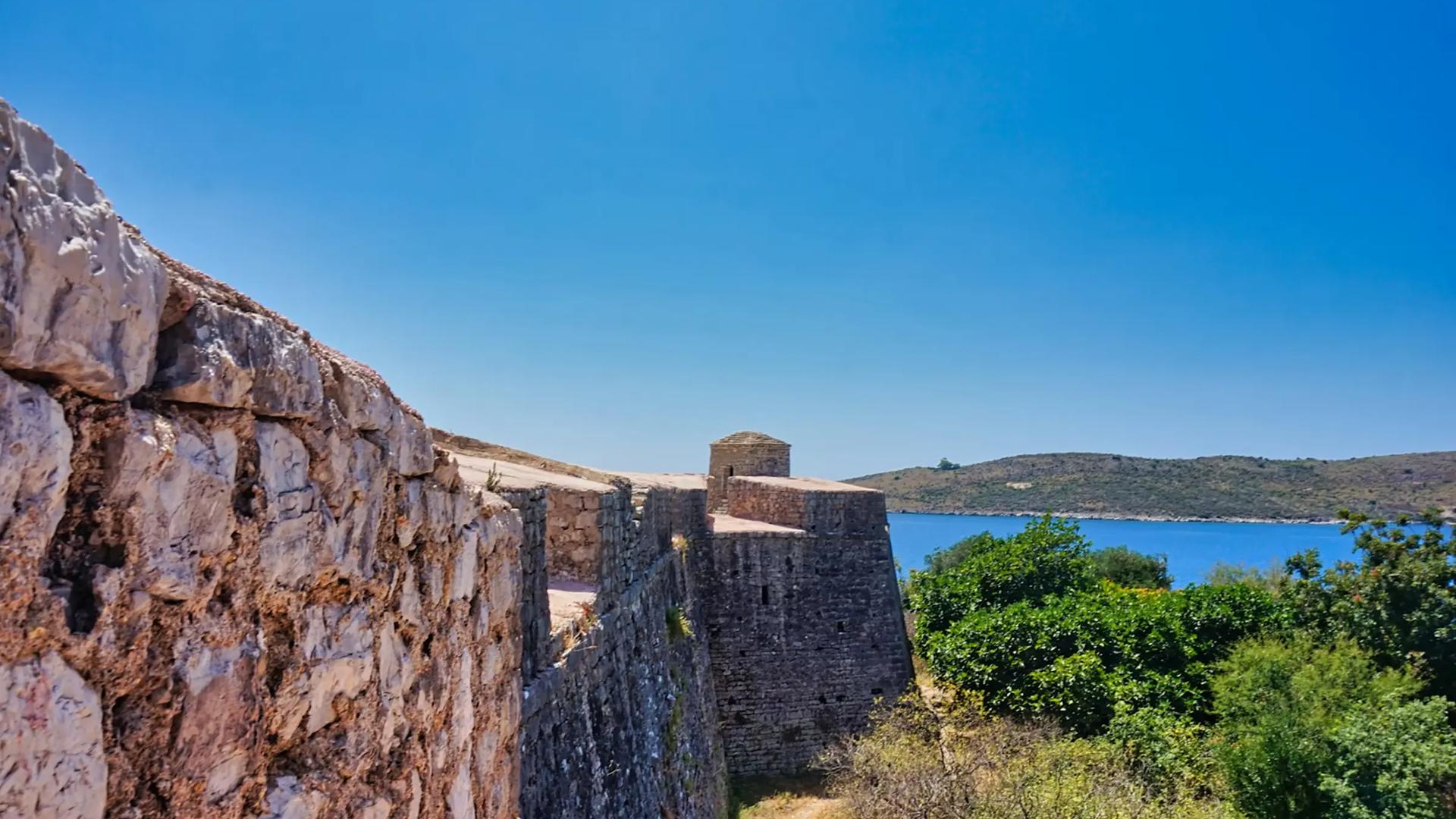
Porto Palermo Castle (Kalaja e Porto Palermos) is an early 19th-century military fortress on a small peninsula in the bay of the same name, 8 km south of Himara. Built on the orders of Ali Pasha of Tepelena, one of the most powerful rulers of the region during the Ottoman era. The castle features a triangular layout with three towers at the corners and walls 3.2–3.5 m thick. The peninsula is connected to the mainland by a narrow strip of land – it's a 2–3 minute walk from the parking area to the castle.
The easiest way to reach it is by car: 15 minutes south of Himara along the SH8 highway. Buses (shared minivans) between Himara and Qeparo pass by, but the stop is on the highway. A ticket booth operates at the entrance.
A visit takes 30–45 minutes. Inside are ground-floor rooms (former prison, barracks, storerooms), and above is a terrace with views across the bay and coastline. A small beach with clear water lies right next to the castle walls.
The castle sits on a rocky promontory connected to the mainland by a narrow causeway. Its triangular plan with three pentagonal towers at the corners is a distinctive feature that has led historians to debate the true builders – a similar style is found in Venetian fortresses, notably the fort at Butrint. The walls are made of neatly fitted limestone blocks, 3.2–3.5 m thick. Inside, a central hexagonal chamber with a domed ceiling supported by six pillars provides access to all rooms and passages.
The ground floor houses a series of rooms: the former prison (a central cell facing the sea), guard quarters, and storage areas. The spaces are mostly empty with minimal information panels – inscriptions from various eras appear on the walls, including Italian text from World War II and Albanian slogans from the communist period. A stone stairway leads to the upper terrace: five watchtowers with gun loopholes, each capped with a dome. From the terrace – panoramic views of Porto Palermo Bay, turquoise water, the rocky coastline, and the Ceraunian Mountains.
In the northern part of the bay, remnants of a communist-era military base survive – concrete barracks with socialist slogans on the walls and a submarine tunnel carved into the rock. Next to the castle is a small pebble beach with clear water, ideal for a swim after your visit.
Architecture – triangular plan with three pentagonal towers, walls 3.2–3.5 m thick made of limestone blocks
Commissioner – built in 1804 by order of Ali Pasha of Tepelena with the help of French military engineers
Central hall – hexagonal room with a domed ceiling on six pillars, connecting all chambers of the fortress
Terrace – upper platform with five watchtowers and a panorama of the bay, Ionian Sea, and Ceraunian Mountains
Submarine base – a Cold War–era submarine tunnel and barracks survive in the bay
Beach – a small pebble beach with crystal-clear water right beside the castle walls
The bay of Porto Palermo (known in antiquity as Panormos) served as a harbor since ancient times, protecting the coast of Himara. The current fortress was built in the early 19th century by order of Ali Pasha of Tepelena – a powerful Ottoman ruler who controlled southern Albania. According to a now-missing memorial plaque, construction was completed in 1804 with the assistance of French military engineers. Legend says the engineers were killed after the work was finished. In 1803, Ali Pasha offered the castle and port to the British Royal Navy – the garrison at that time consisted of just 10 men with two four-pound cannons.
After Ali Pasha's death in 1822, the fortress fell into disrepair. During World War II, Italian forces used it as a prison and military post. Under the communist regime, the bay was converted into a secret submarine base – a tunnel for submarines was carved into the rock. In 1948 the castle was designated a Cultural Monument. Today it operates as a museum open to visitors.
Entry:
Adults: 300 ALL (~€3 / ~$3.30)
Tickets are sold at the castle entrance. Cash only (ALL) – euros may not be accepted. A receipt may not be issued.
Photography is permitted. The interior is dark – a phone flashlight is useful. Stone stairways are steep in places – wear sturdy shoes. The military base in the northern part of the bay is private property – view from the outside only.
On-site:
Small restaurant near the parking area
Beach next to the castle
Parking: Free lot on the causeway between the castle and the highway, limited spaces
Wi-Fi: None. 4G may be unreliable
Accessibility: Ground floor is accessible without stairs. The terrace requires climbing a stone stairway – not suitable for wheelchairs
From Himara (8 km, 15 min):
– By car along SH8 south, right turn toward the bay (easy to miss the turn)
– Taxi – 800–1,000 ALL (~€8–10 / ~$9–11)
– Shared minivan (furgon) Himara–Qeparo (100 ALL / ~€1), ask to stop at Porto Palermo, then walk 5 min
From Saranda (45 km, 50–60 min):
– By car along SH8 north
– Bus toward Himara, get off at Porto Palermo
On-site:
From the parking lot to the castle – 2–3 minutes' walk along the causeway
Season: May–October is best. The castle is open daily 9:00–18:00.
Time of day: Morning (before 11:00) for fewer visitors and comfortable temperatures. Evening for the best photography light.
Duration: 30–45 minutes for the castle. With beach time – 2–3 hours.
Avoid: Midday in July–August – stuffy inside and hot on the terrace.
Practical answers about visiting, routes and time on site.
300 ALL (~€3 / ~$3.30) per person. Cash only at the entrance.
30–45 minutes for the castle. If combining with the nearby beach – 2–3 hours.
Shared minivans (furgons) between Himara and Qeparo pass by – ask the driver to stop at Porto Palermo. Cost is about 100 ALL (~€1). For the return, flag down a furgon on the highway, but waits can be long.
Yes, a small pebble beach with clear water right next to the castle. Sun loungers and umbrellas – check availability on-site, sometimes available through the restaurant.
During the communist era, the northern part of the bay housed a secret military base with a rock-cut tunnel for submarines. The base is private property – viewable from outside or by boat only.
Easily paired with Himara Castle (8 km north) and Jale Beach (10 km north). A must-stop along the SH8 coastal road between Vlora and Saranda.
Yes, the site is compact. It's dark inside – small children may find it uncomfortable. The terrace stairway has no railings – supervise closely. After the visit, kids can swim at the beach.
The question is debated. The official version credits Ali Pasha in 1804. However, the triangular plan with corner towers is typical of Venetian forts (compare the castle at Butrint). Ali Pasha likely rebuilt an earlier fortification.
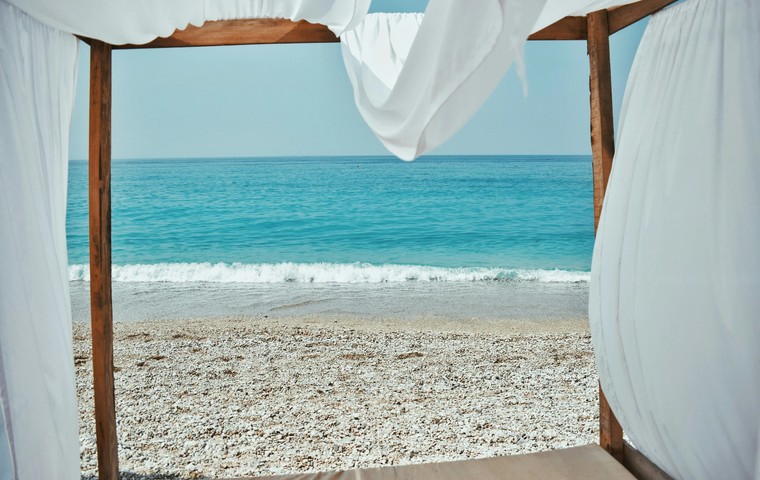
From Ksamil to Durres – specific hotels with their own sunbeds on the beach, real prices, and the weak spots nobody mentions.
April 24, 2026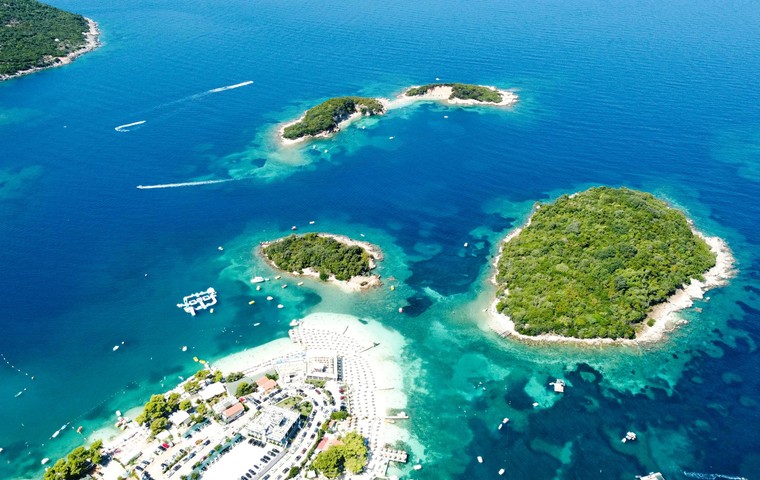
A practical ranking of the best beaches in Albania from Ksamil to Durrës – sunbed prices, how to get there, when to visit, and what to know before you go in 2026.
March 06, 2026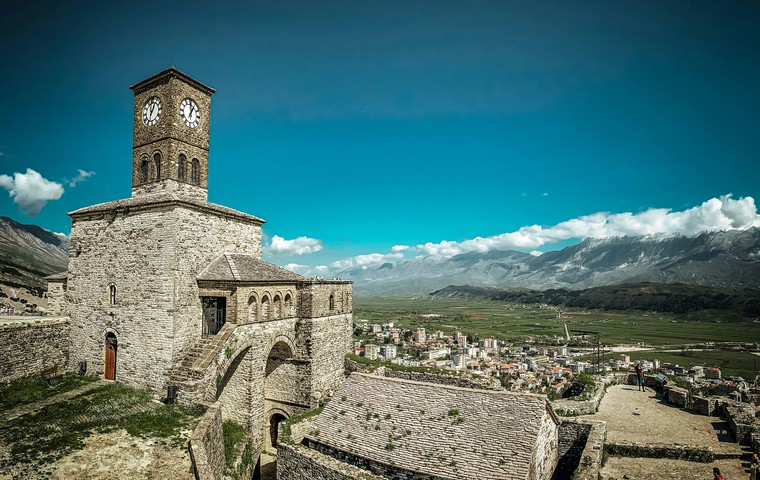
March in Albania: 13–16°C on the coast, a sea too cold for swimming, but no crowds and prices 30–40% below summer. What's open, transport and tips.
February 26, 2026