Blog · Transport
Driving in Albania 2026: Traffic Police Target Rentals – Fines & Rules You Can't Miss
 Transport
In this article
- 01Key Takeaways
- 02Speed Limits: Where They Actually Catch You
- 03Alcohol: Practically Dry Driving
- 04Mandatory In-Car Equipment
- 05What Happens at a Traffic Stop
- 06Cameras and Fines via Rental Company
- 07Parking in Cities
- 08Albanian Driving Culture
- 09Mountain Roads and Winter
- 10Fuel and Gas Stations
- 11Child Passengers
- 12What to Do After an Accident
- 13Tips Standard Guides Skip
- 14Frequently Asked Questions
- 15Bottom Line
- 16See Also
- 17Sources
Some links are affiliate links. You pay the same, and we may earn a commission.
Zero alcohol tolerance (0.01‰), daytime headlights mandatory, phone use fine €150. Police specifically pull over rental cars. The real rules behind the wheel in Albania.
Albanian traffic police actively target rental cars with foreign plates and run document checks at roughly one in five posts – that is the reality travel guides skip. On-the-spot fines can reach 30 000 lek (≈€300) for foreigners, and the near-zero alcohol limit (0.01‰) means a single glass of wine at dinner is grounds for license suspension and vehicle confiscation. Headlights must stay on 24/7, handheld phone use costs up to €150, and road cameras forward fines to the rental company, which then charges your card plus a €20–40 admin fee. Below is the working minimum you need before picking up keys in Tirana or Saranda.
Key Takeaways
- Speed limits: 40 km/h in urban areas, 80 km/h on rural roads, 110 km/h on motorways. Speeding fines range from €45 to €200+.
- Alcohol: limit 0.01‰ – effectively zero. Fines €250–400, license suspension 6–12 months, possible vehicle confiscation.
- Daytime headlights mandatory year-round – missing this costs €20–40.
- Handheld phone use – €50–150 fine, police enforce actively, even at traffic lights.
- Foreigners are often asked to pay on the spot in lek cash – this is legal, but always demand the official receipt.
- Seatbelts mandatory for all passengers – €30 fine per unbelted person, rear seats included.
- Children under 12 cannot sit in the front seat without a proper seat; under 4 in rear seats must use a child seat.
Speed Limits: Where They Actually Catch You
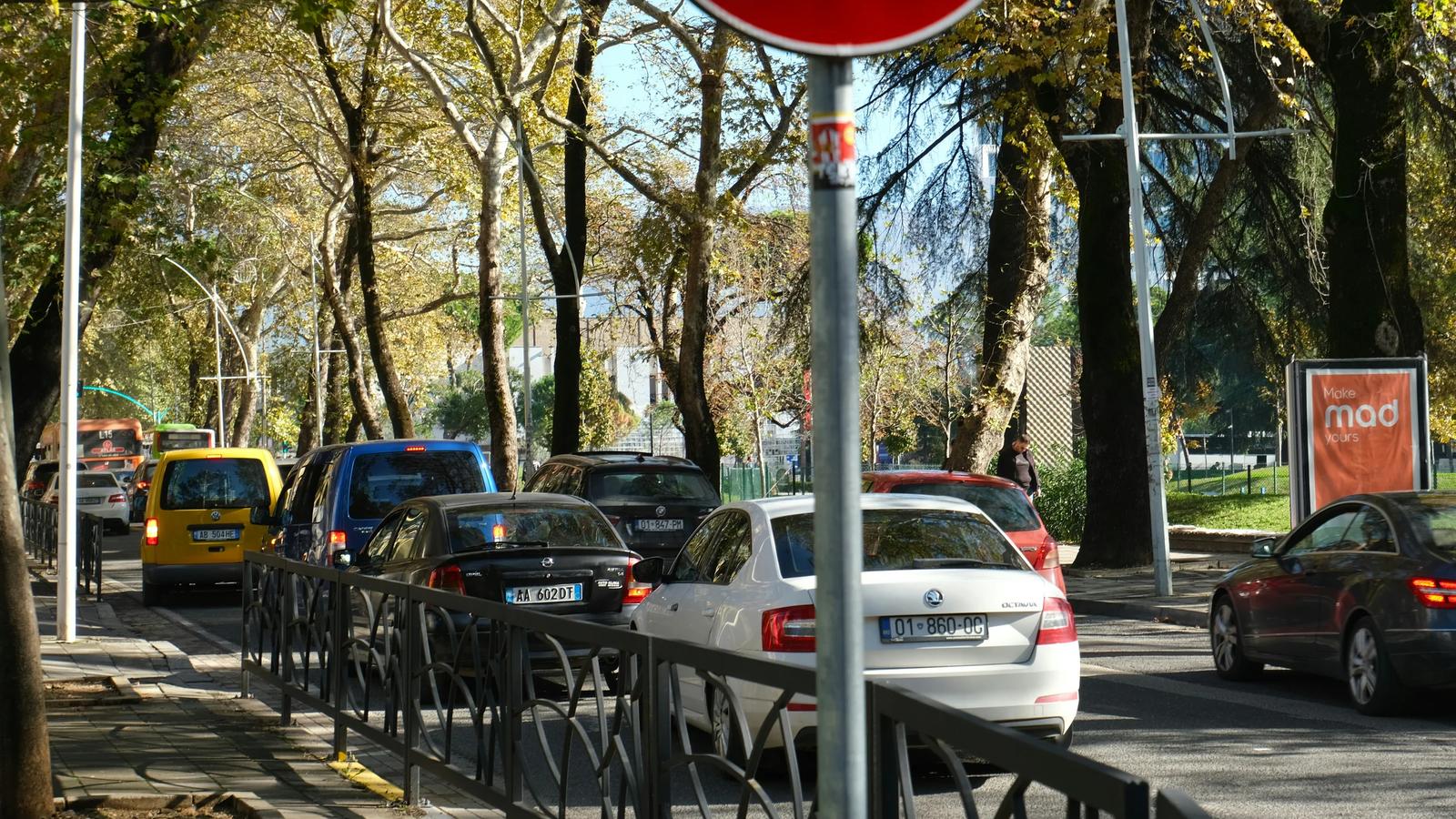
Albanian speed limits match most European countries on paper, but enforcement has quirks. Police place radars in zones where the limit drops abruptly from 80 to 40 km/h – typically at village entrances and near schools. According to traveler reports, this accounts for up to 70% of stops involving foreign drivers. Locals drive significantly faster than the limit, but if you follow them – you are the one who gets pulled over: the rental plate is visible from a distance.
| Road type | Limit | Fine for up to 10 km/h over | Fine for 40+ km/h over |
|---|---|---|---|
Urban | 40 km/h | ≈€45 (5 000 lek) | €200+ plus license suspension |
Rural road | 80 km/h | ≈€45 | €200+ plus license suspension |
Motorway (SH1, SH2) | 110 km/h | ≈€45 | €200+ plus license suspension |
Mopeds / scooters | 30 km/h everywhere | ≈€45 | – |
(Updated: April 2026)
Note: radar detectors and speed-camera warning apps are illegal in Albania. If an officer sees a live Radarbot-type app on your phone, expect an on-the-spot fine. Google Maps or Waze in standard navigation mode is fine, but the phone cannot be held in your hand.
Alcohol: Practically Dry Driving
The 0.01‰ limit is not a "one beer is fine" limit – it is effectively zero. Residual alcohol from last night's dinner can test positive. Police set up breathalyzer checkpoints routinely at night, especially along the coast – around Saranda, Vlora and Himara after 11 PM.
- 0.01–0.05‰: fine 2 500–10 000 lek (€26–102), license suspension 6 months.
- Over 0.05‰: fine up to 20 500 lek (≈€205), suspension up to 12 months, possible on-the-spot vehicle seizure.
- Refusal to test: automatic 5 000–20 000 lek fine and license seizure.
If dinner involves wine, take a taxi or stay overnight. For flexible trips with a car available only when needed, booking a rental through Localrent on a per-stretch basis can work better than keeping a car full-time.
Mandatory In-Car Equipment
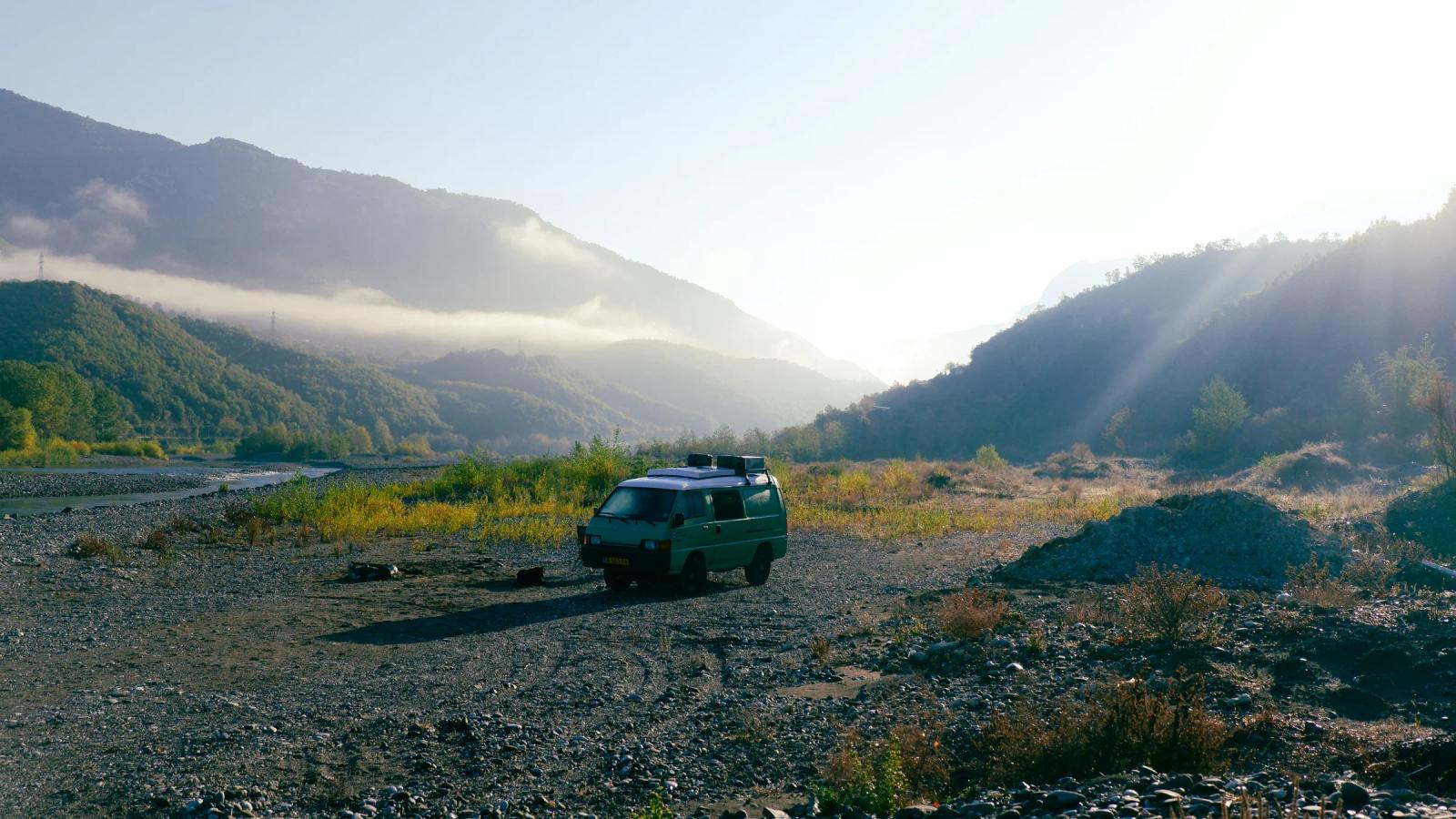
Checks are not constant, but if an officer inspects and something is missing, expect a 3 000–5 000 lek fine (€25–50) per missing item. Rental cars should have everything, but open the trunk before leaving the lot:
- Warning triangle.
- High-visibility vest – one per occupant, minimum one for solo drivers.
- First aid kit.
- Spare wheel, jack, wheel wrench.
- Fire extinguisher (checked less often but recommended).
- Documents: driving license, insurance (green card is no longer required for foreigners as of 2023, but the rental agreement and insurance policy must be in the car).
What Happens at a Traffic Stop
The officer is legally required to state the reason for stopping you – this is written into the Albanian Traffic Code. In practice they ask for license, vehicle registration and insurance, and visually check for the triangle and vest. If there is a violation, the ticket is written on the spot.
Key detail: if you pay within 5 days, the fine is reduced by 20%. Foreign drivers are often offered on-the-spot cash payment in lek – this is a legal procedure, but insist on the official receipt (fleta e gjobës). Without it, the money may simply pocket.
Warning: if you are asked to pay €100 cash on the spot without any paperwork, that is a scam. Politely ask for a receipt and call the rental company. Real fines always come with documentation, and the maximum legal on-the-spot amount for foreigners is 5 000 lek (≈€40). Anything higher goes through the e-Albania system.
Cameras and Fines via Rental Company
Fixed cameras in Albania are fewer than in Western Europe but growing – in Tirana, along the SH2 Tirana–Durrës motorway, and on the SH8 coastal serpentine. Camera fines flow into e-albania.al, then to the rental company, which:
- Charges the fine to your payment card (or deposit).
- Adds an admin fee – typically €20–40 per fine.
- Emails you the notice with a copy of the report.
"Didn't see the camera, got away with it" does not apply here. Fines arrive 2–8 weeks after car return.
Parking in Cities
In Tirana parking is paid almost everywhere downtown. The city is split into two zones:
| Zone | Rate | Hours |
|---|---|---|
Zone A (historic center) | 100 lek/hour (≈€1) | 07:30–20:00 |
Zone B (inner districts) | 40–50 lek/hour (≈€0.40–0.50) | 07:30–20:00 |
(Updated: April 2026)
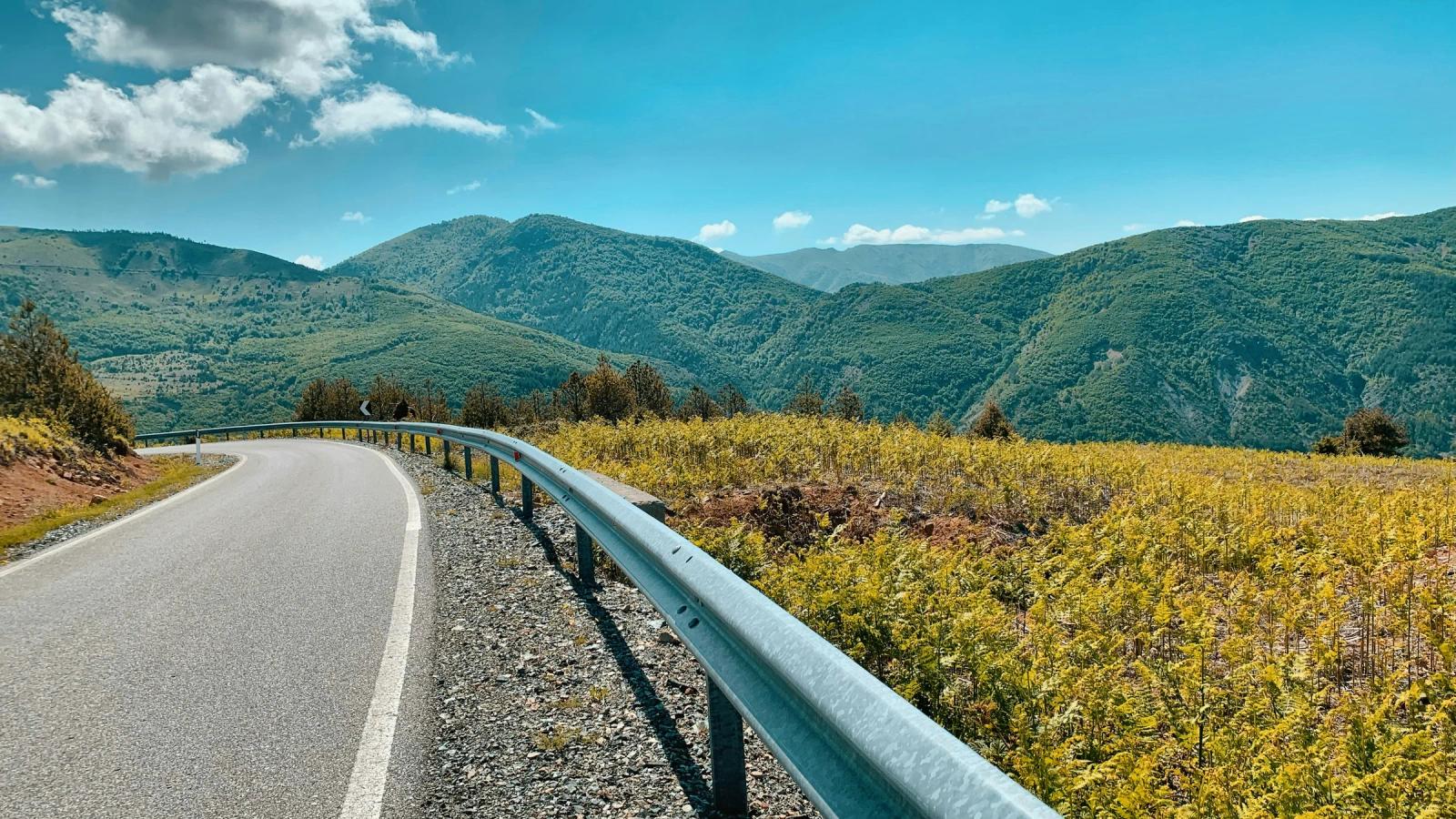
Pay at parking meters (coins or card) or via SMS to the short number on the sign. Fine for unpaid parking starts at 500 lek (≈€5); towing adds 4 000 lek (≈€40) to retrieve the car. Disabled spaces are strictly enforced with higher fines.
In Saranda and Vlora, seafront parking is paid in-season (June–September), 100–150 lek/hour. In small towns like Berat and Gjirokastra, parking is free but scarce – old towns with narrow streets are not built for cars, leave the vehicle at the edge.
Albanian Driving Culture
What travel guides call "chaotic driving culture" translates to specific behaviors:
- Turn signals are used rarely – watch the wheels, not the lights.
- Overtaking on solid lines is routine for locals, but foreigners get fined 10 000–15 000 lek (€100–150).
- Roundabouts – entering traffic sometimes has priority; read the signs.
- Pedestrians step into the road without warning, especially at night in poorly lit areas – keep distance.
- Livestock on the road in mountain areas like Theth, Valbona and Llogara is normal. Drive around slowly.
- Animals – stray dogs in villages often lunge at cars; do not brake abruptly.
Mountain Roads and Winter
The Riviera serpentines (SH8 over Llogara Pass), the roads to Theth and Valbona, and the Berat–Vlora mountain crossing are narrow two-lane roads with cliff edges and often no guardrails. Posted limits are usually 50–60 km/h, but realistic pace with curves is 30–40 km/h.
Winter tires are not mandatory in Albania, but snow chains on two drive wheels are allowed from November 1 to April 30. For Llogara Pass and the Theth road in winter, do not attempt without winter tires or chains – police may turn you back. Fuel stations in mountain zones are scarce, so top up in towns rather than running on fumes.
Fuel and Gas Stations
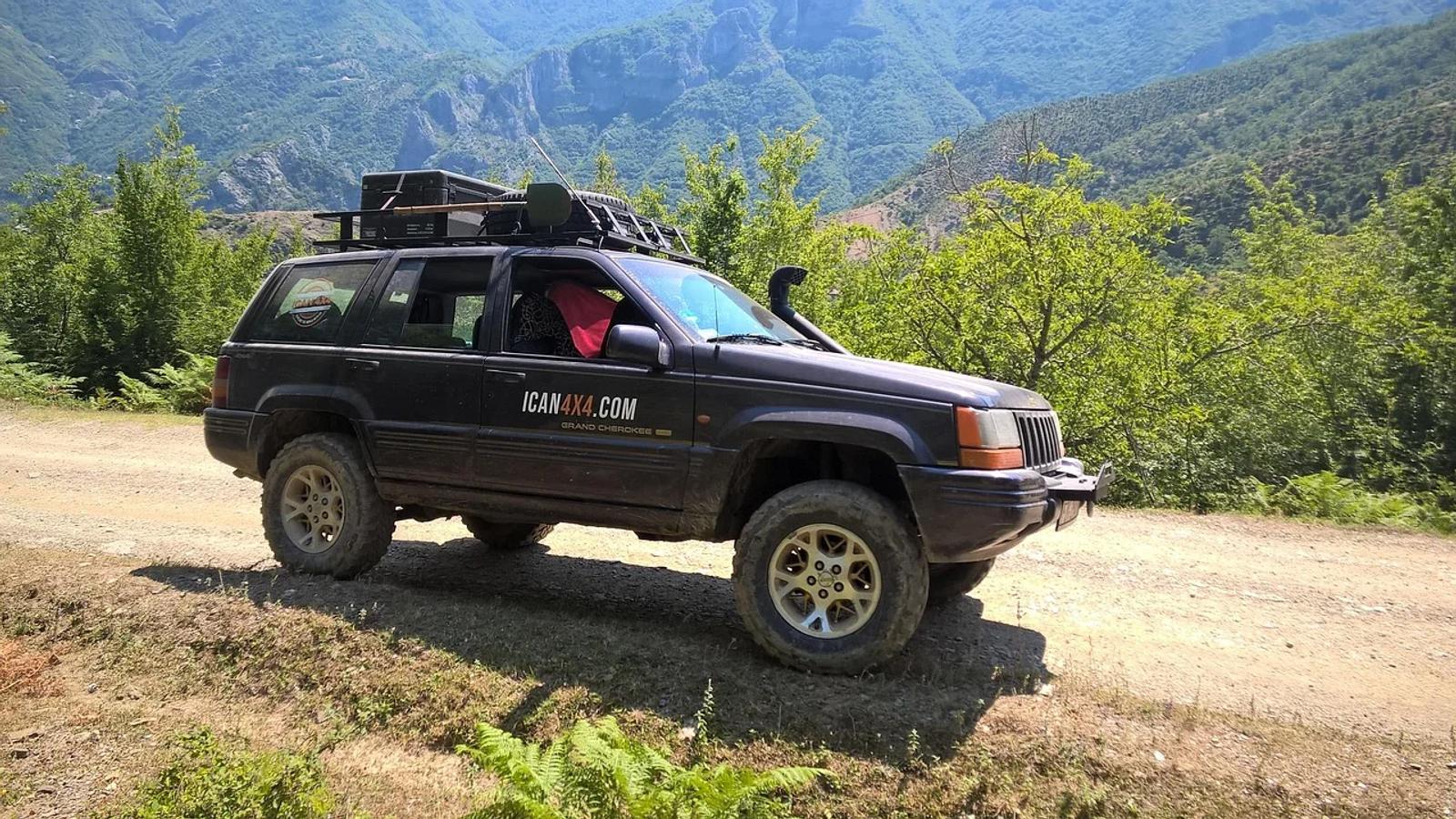
Fuel prices in Albania are government-regulated and similar country-wide. Quality at chain stations (Kastrati, Bolv-Oil, Gulf, Europetrol) is consistent; at small rural stations it is a gamble. Traveler reports suggest diesel injectors on rental cars fail more often after fueling in remote villages.
| Fuel | Price (April 2026) | Comment |
|---|---|---|
Petrol 95 | 185–200 lek/l (≈€1.85–2) | Mid-range by European standards |
Diesel | 170–185 lek/l (≈€1.70–1.85) | More popular locally than petrol |
LPG | 60–70 lek/l (≈€0.60–0.70) | Most major chain stations |
(Updated: April 2026)
Payment: chain stations accept Visa/Mastercard with no issues; rural stations are cash only (lek). Euros are accepted limitedly and at unfavorable rates. Major stations have restrooms and shops; at small ones, the attendant may require prepayment.
Child Passengers
Rules are strict and frequently checked, especially at Tirana airport exits and on resort routes:
- Children under 12 cannot sit in the front seat without a proper seat.
- Children under 4 in rear seats must use a child seat.
- Child seats can be booked with the rental for €5–10/day, but supply is limited – reserve ahead.
- Violation fine: €50–150; repeat offenses can trigger license suspension.
What to Do After an Accident
- Call police on 112 (single emergency number, free from any mobile).
- Do not move the cars before police arrive, even if blocking traffic – photograph positions.
- Take photos of damage, license plates and the other driver's documents.
- Get the police report (procesverbal) – insurers will not accept claims without it.
- Notify the rental company within 24 hours, or insurance coverage lapses.
Full insurance (CDW + TP) covers accidents, but most companies carry a €500–2 000 deductible. Additional travel insurance such as Ekta or a top-up from the rental provider closes that gap.
Tips Standard Guides Skip
- Do not pull over on mountain shoulders without need – Albanian drivers are notoriously inattentive to stopped cars, and "rest-stop" accidents are a real risk.
- Download offline maps – in Theth, Valbona and some mountain passes, mobile coverage drops completely.
- Entering Tirana from the north (from Shkodër side) hits multi-kilometer jams on Friday evenings and Sunday evenings – plan to avoid these windows.
- Border crossings to Montenegro (Hani i Hotit) and North Macedonia can queue 1–3 hours in peak season. Verify your rental agreement allows cross-border driving – the surcharge is typically €30–50.
- Travel insurance is a must – Albanian state medicine charges foreigners upfront from €500 for any serious injury.
Frequently Asked Questions
1. Is a foreign driving license valid in Albania?
Most national licenses are accepted if valid for at least one more year. Check visa requirements and license rules for your nationality; an International Driving Permit (IDP) is recommended for non-EU licenses and avoids disputes during police checks. EU/EEA licenses are accepted without translation.
2. Can I pay a fine in cash to the police officer?
Yes, on-the-spot fines up to 5 000 lek (≈€40) can be paid in lek cash – this is legal procedure. Always demand the official receipt (fleta e gjobës). Paying within 5 days reduces the fine by 20%. Amounts above 5 000 lek are paid through a bank using the reference on the report.
3. What happens if a fine arrives after I return home?
The rental company charges the fine to your payment card plus a €20–40 admin fee. You can appeal via e-albania.al within 10 days of notification, but for foreigners the process is cumbersome and takes 2–6 months. Paying is usually simpler.
4. Are there toll roads in Albania?
The only toll section is the Milot–Morinë (SH1/A1) motorway toward Kosovo, with a €5–7 one-way charge for passenger cars, paid in cash or card at the toll booth. All other motorways are free.
5. How safe is driving at night?
Main roads are poorly lit and mountain roads have no lighting at all. Pedestrians and livestock on the road at night are real hazards. Traveler reports indicate nighttime rental-car accidents occur 3–4 times more often than daytime ones. Plan long drives – especially mountain routes – for daylight hours.
Bottom Line
Albanian traffic rules are broadly European, but enforcement is harsher than guidebooks suggest. Police specifically target rental cars, the alcohol limit is effectively zero, and headlights are required around the clock. On-the-spot fines for foreigners are legally capped at 5 000 lek – anything higher goes through the banking system or hits the rental company. The working rule: do not match local speeds, obey the signs literally, and your trip stays clean.
See Also
- Car Rental in Albania: Companies, Insurance, Roads and Hidden Pitfalls
- Ulcinj to Shkodër by Car: Is It Worth the Day Trip and What Documents Do You Need
- Healthcare for Tourists in Albania: Hospitals, Pharmacies and Insurance
Sources
- e-Albania – check and pay fines
- Albanian State Police – official driver information
- Ministry of Infrastructure and Energy of Albania – road regulations
- UK Foreign Office – Albania travel advice
- Automobile Club of Albania
Places to see in Albania
You may also like
Car Rental in Albania: Companies, Insurance, Roads and Hidden Pitfalls
Complete guide to renting a car in Albania: where to book, costs, insurance traps, road conditions, fuel prices, parking and cross-border trips.
February 25, 2026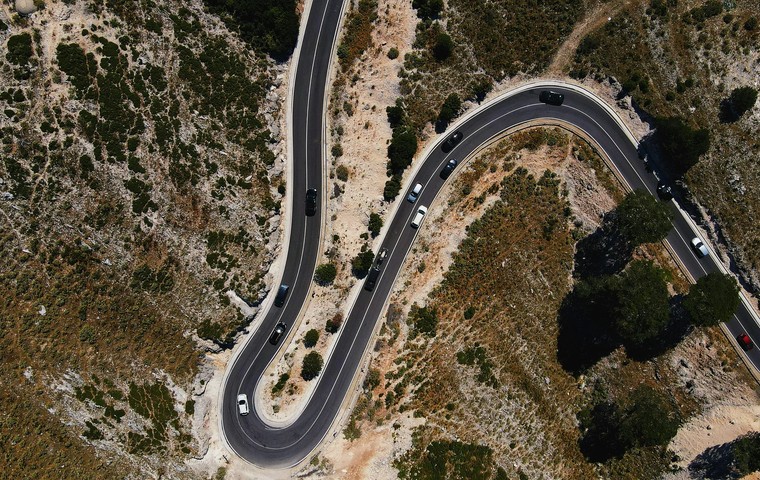
Ulcinj to Shkodër by Car: Is It Worth the Day Trip and What Documents Do You Need
How to drive from Ulcinj, Montenegro to Shkodër, Albania – Sukobin-Muriqan border crossing, rental car documents, Green Card insurance, what to see, and trip costs in 2026
February 24, 2026
7-Day Albania Road Trip: Tirana to the Riviera Without Backtracking
A week-long driving itinerary covering two UNESCO cities, the Albanian Riviera, Llogara Pass and real prices. Where to sleep, what to skip, and how much fuel costs.
March 15, 2026
Albania with Kids: Best Beaches, Resorts & Family Logistics Explained
Sandy Adriatic shores for toddlers, turquoise Riviera coves for teens – at half the price of Greece. A practical guide to family holidays in Albania.
March 28, 2026Montenegro – Albania Border Crossing: 3 Checkpoints, Wait Times & What Documents You Need
Three crossings, wildly different queues. Which one to pick, what papers border guards actually check, and how to skip the summer gridlock – a practical breakdown.
March 20, 2026
Localrent Albania: How to Find a No-Deposit Car and Check Insurance
"No deposit" does not guarantee full insurance. Follow a real €247.38 quote to the payment boundary and see what to verify first.
July 16, 2026