Blog · Tips
What to Eat in Montenegro: 10 Dishes Worth Ordering (With 2026 Prices)
 Tips
In this article
Some links are affiliate links. You pay the same, and we may earn a commission.
Montenegrin food isn't seafood first – it's meat, cheese and bread from the mountain villages. 10 dishes worth ordering, where to find the real versions, and what they cost in 2026.
The biggest misconception about Montenegrin cuisine is that it's "seafood-forward." It isn't. The country is meat- and dairy-driven: 3 of the 4 most famous dishes come from mountain villages, not the coast. Average check in a good konoba runs 15–25 € per person, portions are large, and sharing one course between two people is normal practice. This guide covers 10 dishes actually worth ordering, where to find the real versions, and what they cost in 2026.
Key points
- Njeguški pršut is the country's signature product – dry-cured ham aged in the mountain wind in the village of Njeguši above Cetinje.
- Portions are huge: a standard pljeskavica is 250–300 g of meat, a "mešano meso" (mixed meat platter) starts at 500 g per person. Ordering "to share" is the norm.
- Konoba ≠ restaurant: it's a family-run tavern cooking by old recipes, and the bill is typically 30–40 % lower than a tourist restaurant for the same quality.
- Tips aren't included on any bill – 10 % is standard, rounding up to the nearest euro is acceptable.
- Vranac is the only indigenous red grape, served everywhere from street grills to fine dining. Glass – 2,5–4 €, bottle at supermarket – from 5 €.
- Card payment works in most coastal restaurants but mountain konobas and village bakeries are cash-only.
- Lunch (1–3 PM) is the main meal, dinner starts at 7 PM. Before 7 PM only tourist-oriented spots are open.
Top 10 dishes to order
1. Njeguški pršut (dry-cured ham)
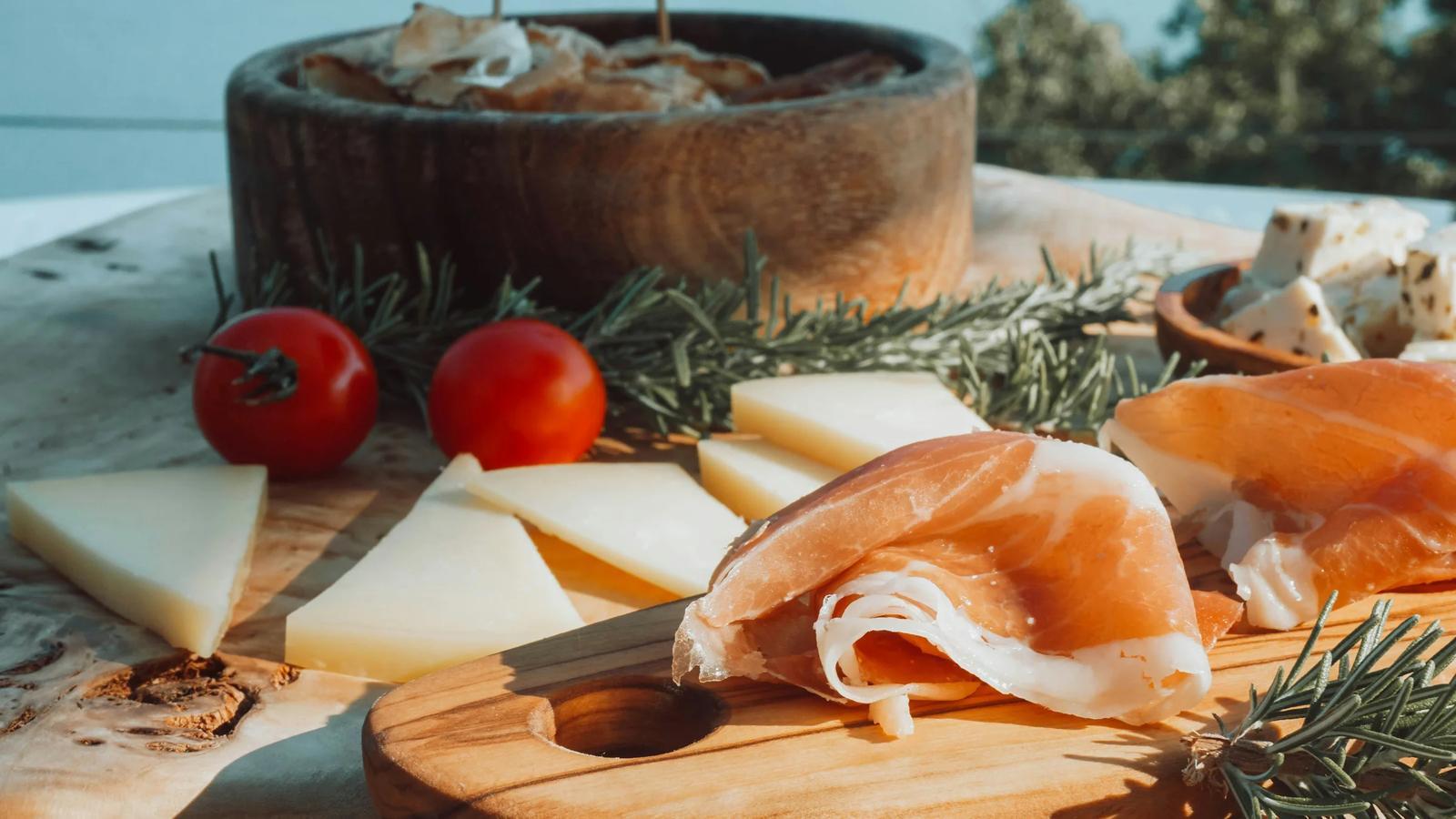
Dry-cured pork ham – the country's signature food product. Made in exactly one place: the village of Njeguši in the mountains above Cetinje, at around 900 m elevation. Legs are salted in sea salt for three weeks, cold-smoked over beech wood, then air-dried in the bura mountain wind for 8–10 months. Result: paper-thin slices with a smoky-nutty flavour, served cold with cheese and olives.
Where to try: only in Njeguši village itself (30 minutes by car from Kotor via the famous 25-hairpin serpentine road) or at quality konobas along the coast. Chain restaurants often serve imports or young pršut (3–4 months) – softer but missing the signature aroma.
Price (2026): single plate – 8–12 €, large board for two with cheese and olives – 18–25 €.
2. Njeguški sir (Njeguši cheese)
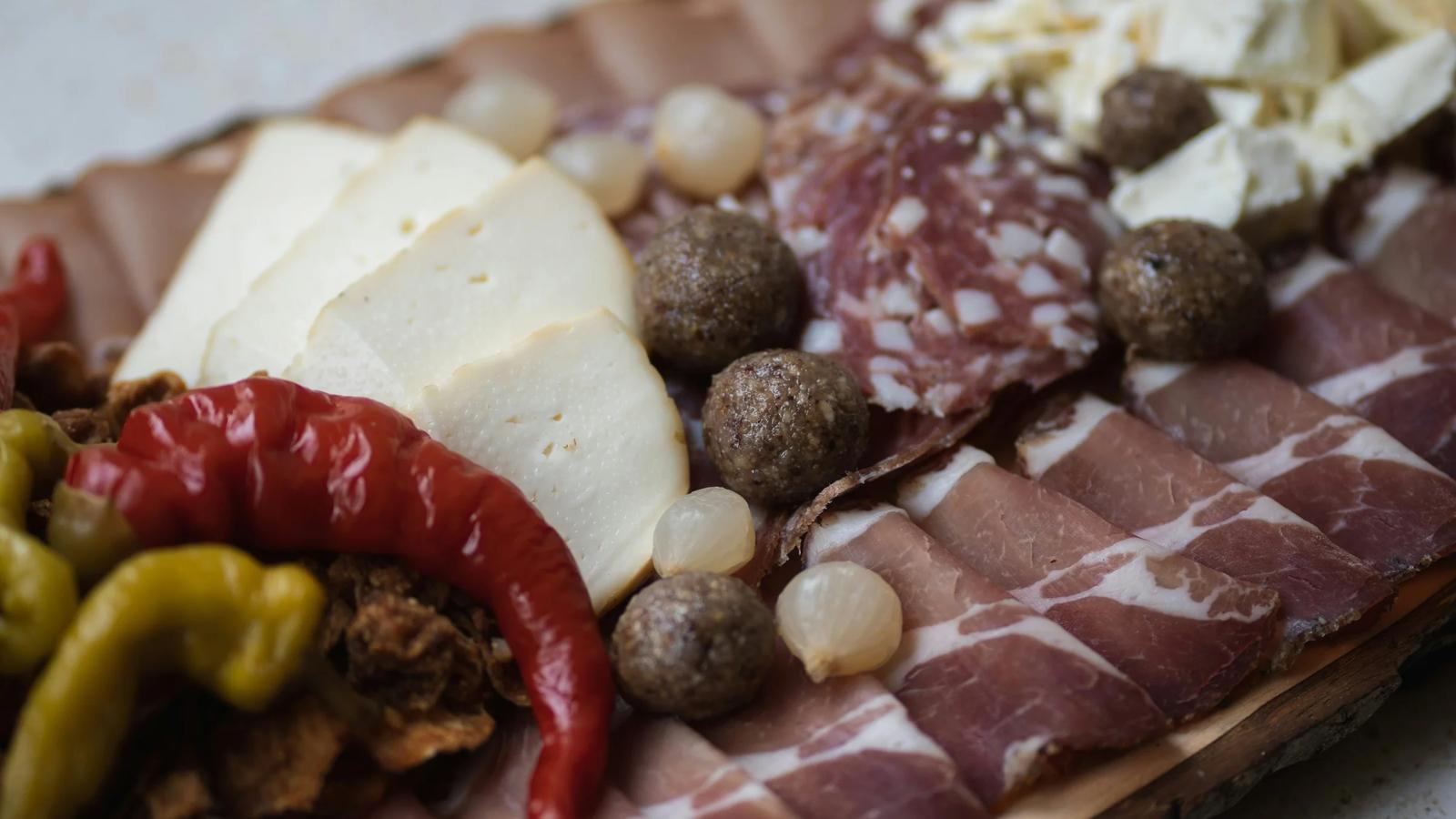
Second product from the same village – a hard sheep's milk cheese aged in wooden boxes for at least four weeks. Flavour is salty with a characteristic "dry" texture and strong sheep-milk aroma. Served sliced alongside pršut or crumbled into salads. Mountain konobas often serve a softer "domestic" cheese in olive oil with herbs – a different product entirely.
Insider tip: in Njeguši village you can buy a whole wheel (400–600 g) directly from the producer for 10–15 €. The same wheel in Kotor souvenir shops costs 20–25 €.
3. Kačamak
Mountain peasant food: cornmeal boiled with potatoes, finished with kajmak (clotted cream) or local cheese. Texture is dense, closer to Italian polenta but richer and heavier. Served hot with sour milk or sour cream. One portion easily replaces an entire lunch.
Where to try: best in the north – Žabljak, Kolašin. Coastal restaurants have kačamak on the menu but often serve a simplified version without kajmak.
Price: 6–10 € at a konoba, 12–15 € at a tourist restaurant.
4. Ćevapi
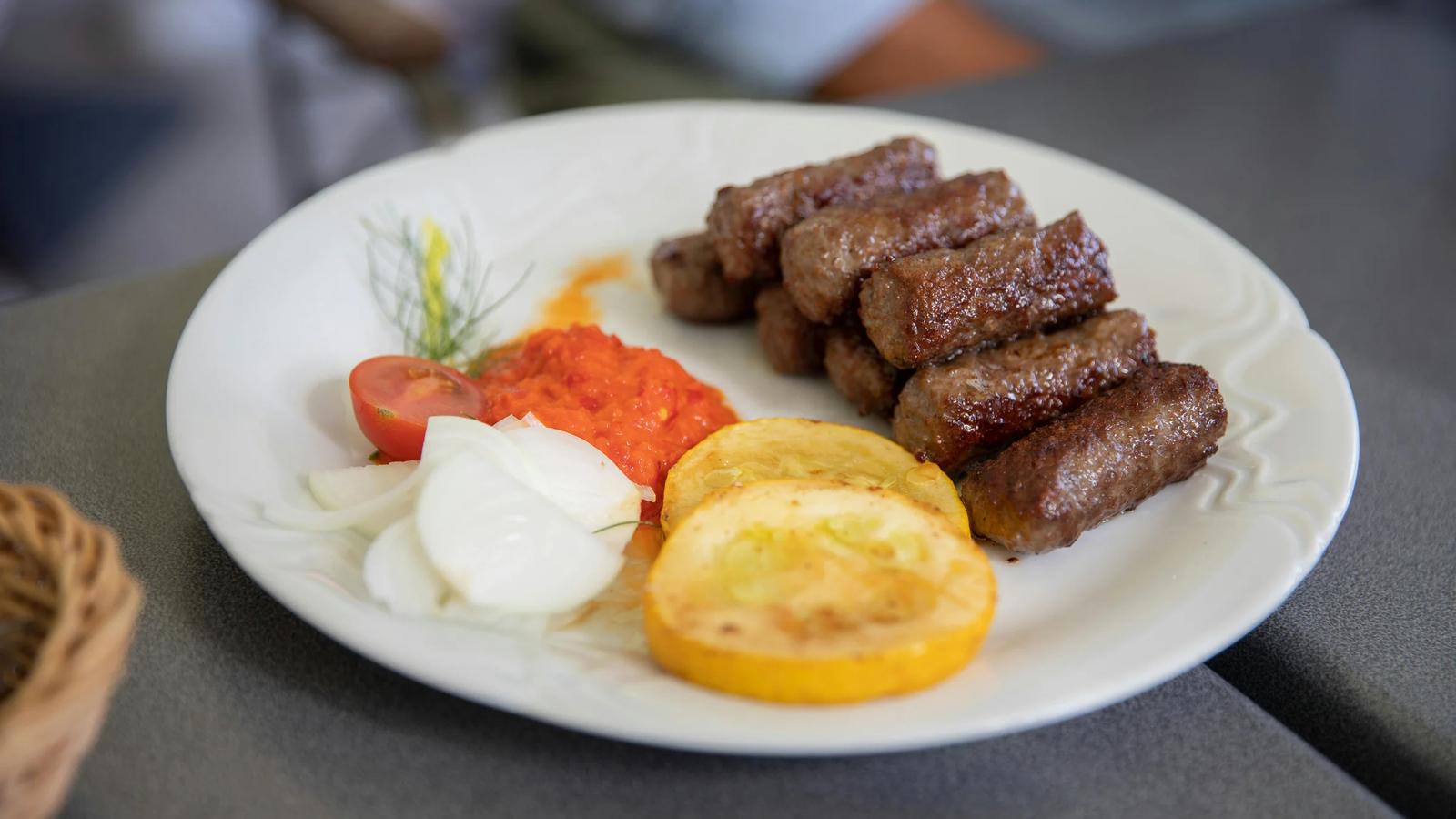
Small, skinless grilled sausages made from minced beef and lamb with spices. Served in flatbread (lepinja) with onions, kajmak and ajvar (roasted pepper relish). Standard portions are 5 or 10 pieces. This is Balkan street food #1: every town has a "ćevabdžinica" – a place specialising exclusively in ćevapi.
Important: ćevapi at a chain fast food place and at a good konoba are essentially two different dishes. At village places the meat is coarse-ground with genuine smoke flavour; tourist spots often use pre-frozen mince.
Price (2026): 10 pieces in lepinja – 5–8 € takeaway, 8–12 € dine-in.
5. Pljeskavica
The "Balkan burger" – a flat round patty made from mixed beef, pork and lamb. Diameter 15–20 cm, thickness 2 cm, weight 250–350 g. Variants include stuffed with kajmak, cheese or bacon (gourmet pljeskavica). Served in lepinja as a sandwich or on a plate with fries and ajvar.
Where to try: BBQ grills in any town. In Kotor BBQ Tanjga is a local favourite (per traveller reviews – the best pljeskavica in the old town); in Herceg Novi – Tri Lipe near the marina.
Price: standard – 6–9 €, stuffed gourmet – 10–14 €.
6. Lamb "ispod sača" or lamb in milk
Lamb slow-roasted under a cast-iron bell (sač) with coals piled on top – classic mountain cooking. Meat comes out meltingly tender with a golden crust, potatoes soaked in jus. The northern variant – lamb stewed in milk with rosemary and garlic – takes 4–5 hours and is served only at specialist konobas.
Where to try: konobas around Lovćen National Park and villages north of Podgorica. Often must be pre-ordered 2–3 hours ahead.
Price: 18–28 € per 400–500 g portion.
7. Crni rižoto (black risotto)
Risotto with cuttlefish ink – the signature coastal dish. Cooked on white wine with onion, garlic and seafood. Colour is near-black, flavour is intensely marine. Available along the whole coast but the best versions are in Kotor, Perast and Budva.
Heads-up: some chain restaurants use frozen ink – the dish looks identical but tastes flat. Look for menus that specify "svježi" (fresh) seafood.
Price: 14–22 € per portion.
8. Burek and pita
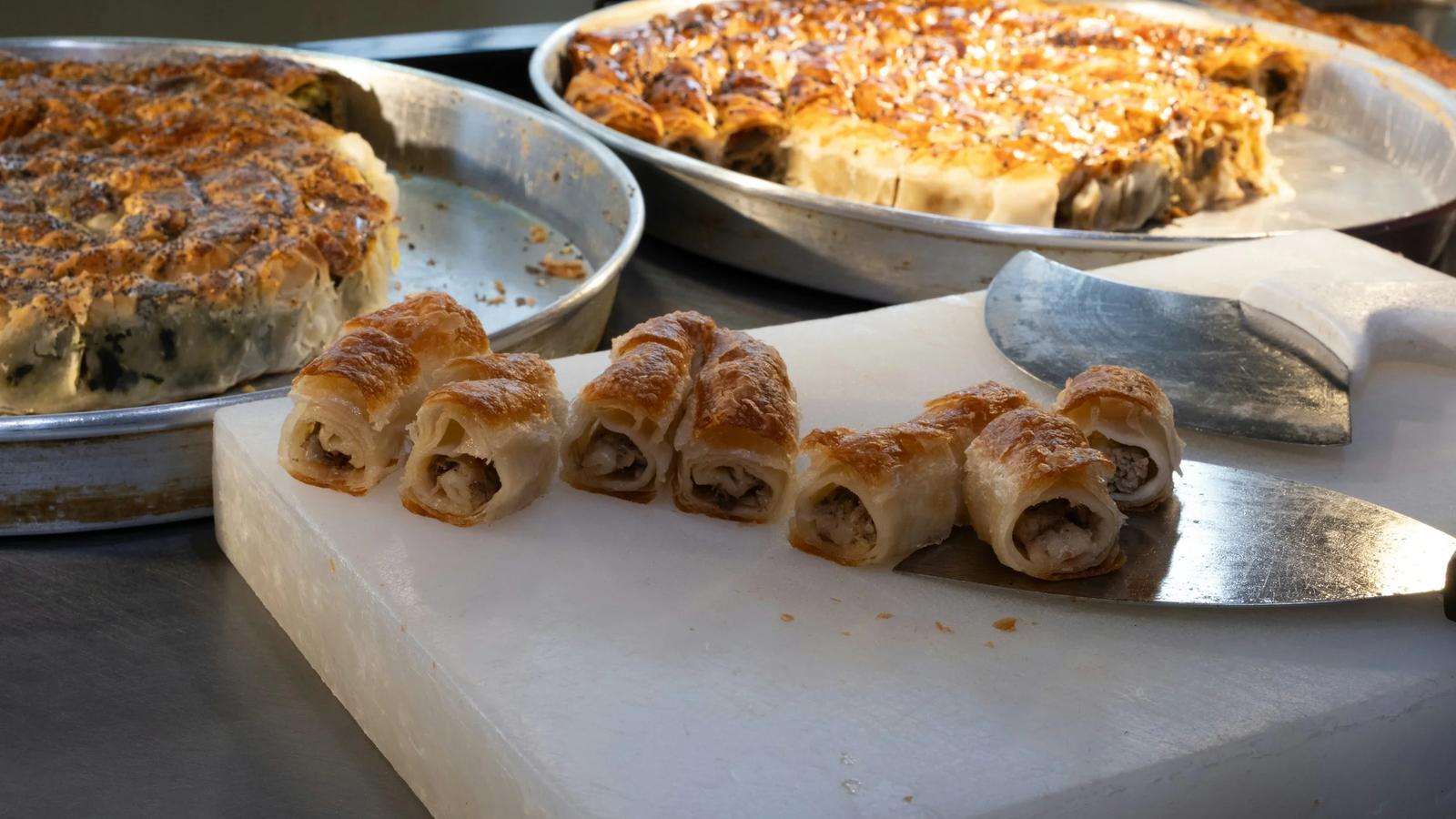
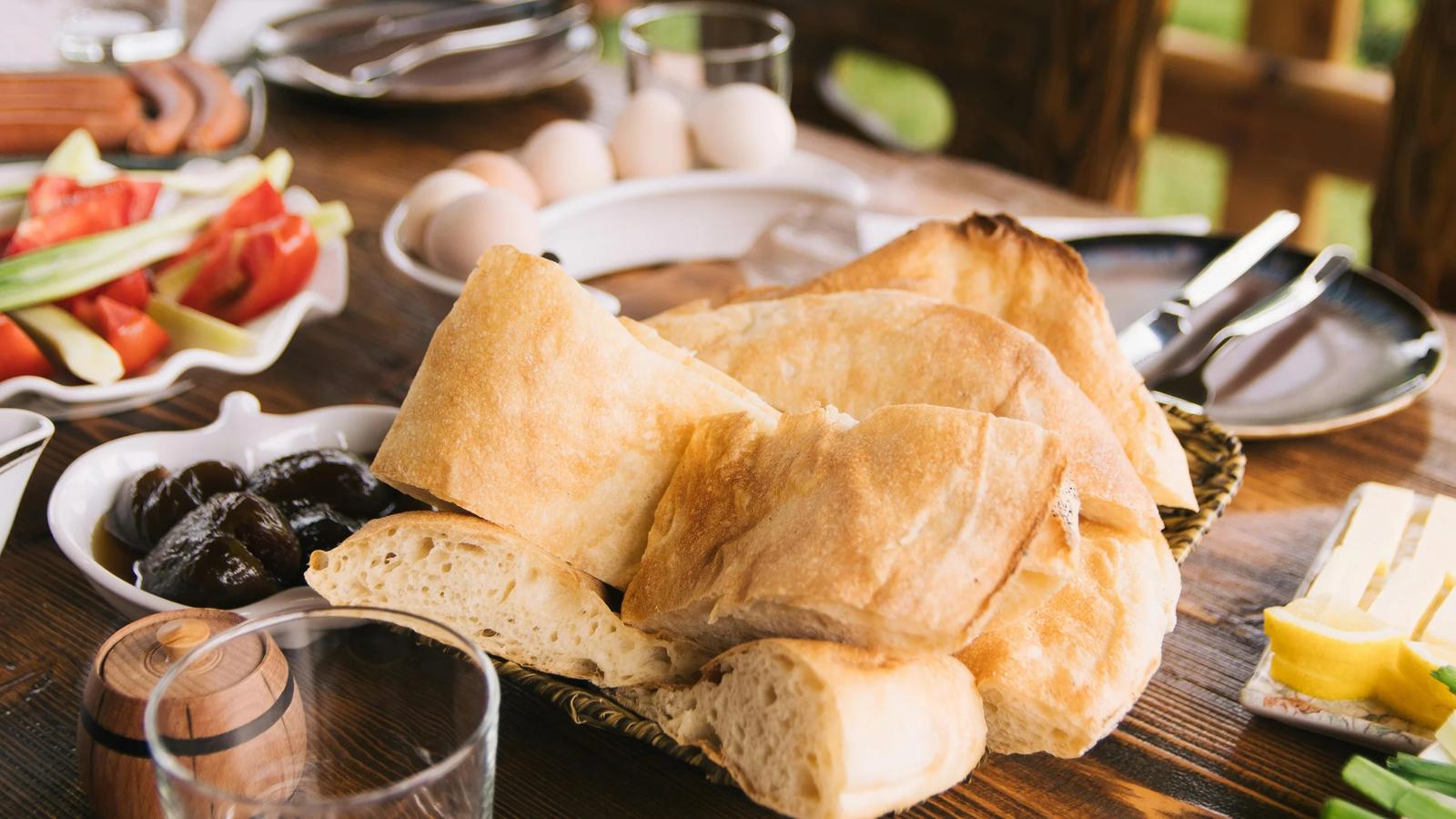
Flaky filo pastry with fillings: meat (burek), cheese (sirnica), spinach (zeljanica). Sold at bakeries (pekara) from 6 AM to 11 AM – the classic breakfast. Paired with a cup of drinking yogurt – a tradition worth respecting. The combo balances out: fat-rich burek + tangy yogurt.
Where to try: any pekara in the old town. Tourist areas sell burek too but often reheated – the real thing should be hot straight from the oven.
Price: 250–300 g portion – 1,5–3 €, yogurt – 1 €.
9. Krempita
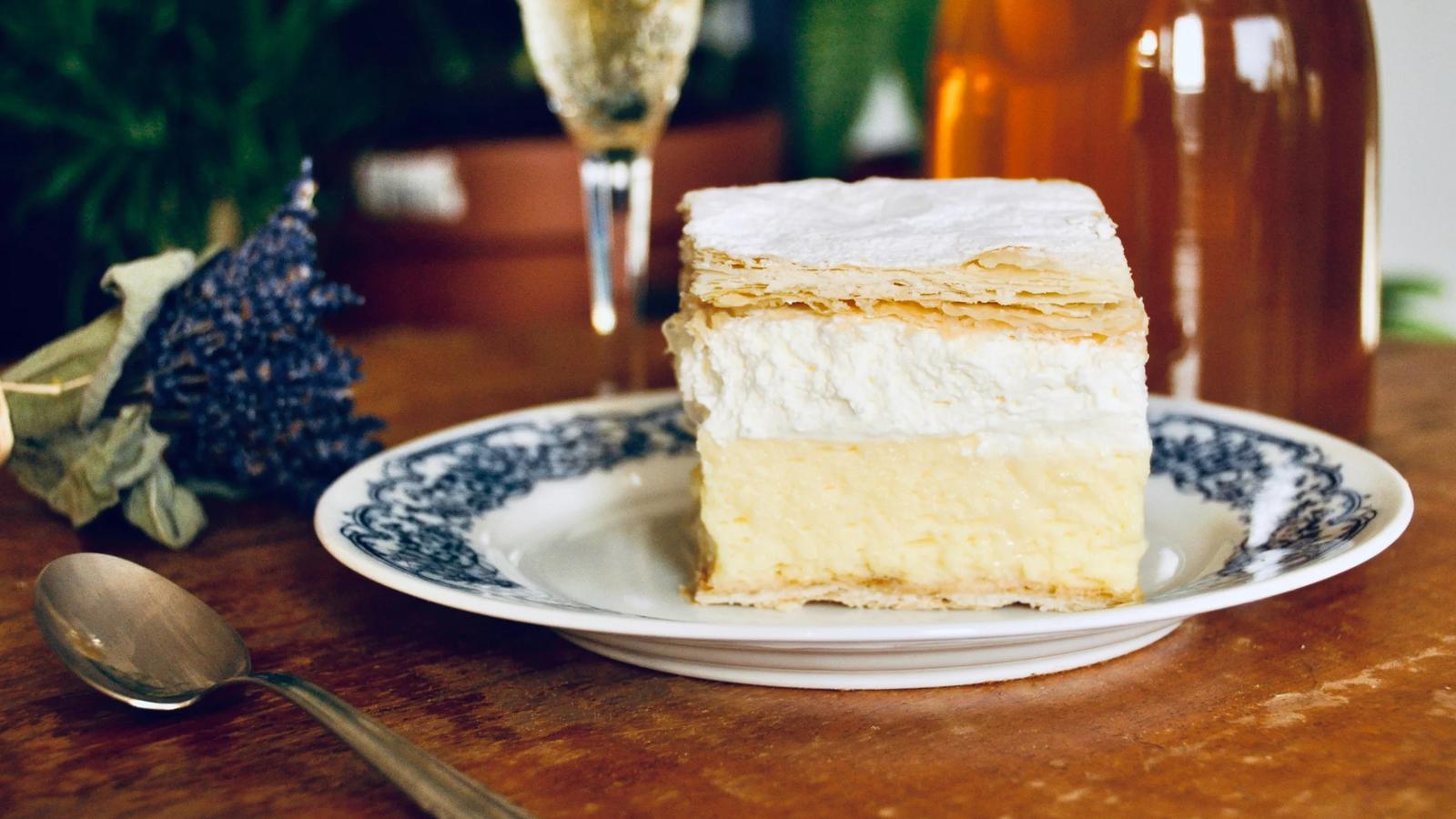
The #1 dessert in Montenegro: two layers of puff pastry sandwiching a thick slab of vanilla custard, dusted with powdered sugar. The roots are Austro-Hungarian (Central Europe calls it Cremeschnitte, Slovenia – kremšnita), but Montenegro settled on its own version: no whipped cream layer on top, just pure custard. Texture is pure contrast – crisp pastry against a nearly pudding-like centre, sweetness dialled down.
Where to try: any decent bakery or pastry shop (poslastičarnica) in the old town. Morning pairing with coffee, or as an after-lunch dessert.
Important: only buy krempita from places with high turnover – after a day or two the pastry soaks up the custard and the texture collapses. Tourist cafes on the waterfront often serve yesterday's.
Price: slice from a bakery – 1,5–2,5 €, pastry shop – 2,5–4 €, as a restaurant dessert – 4–6 €.
10. Vranac wine and rakija
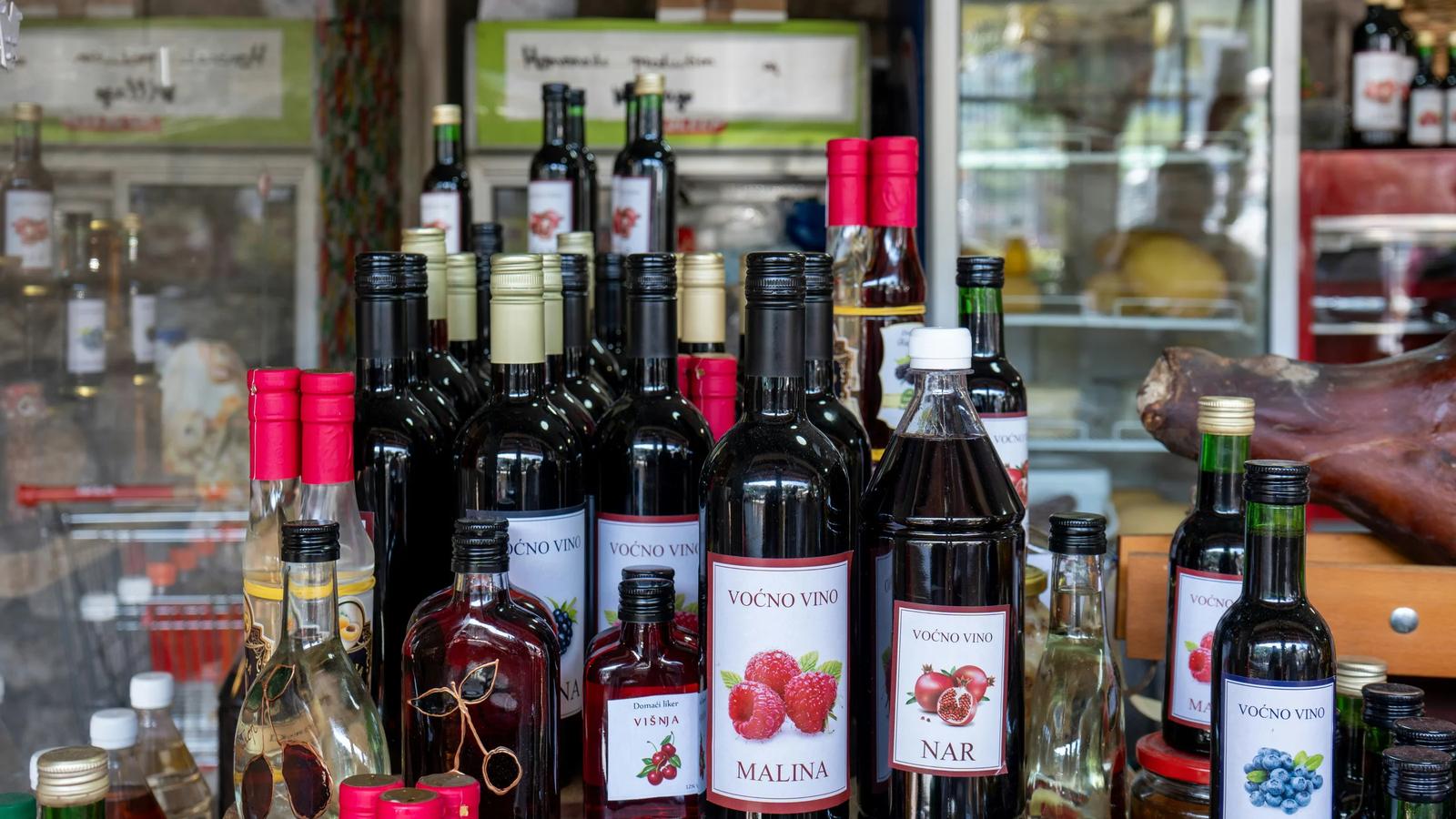
Vranac is Montenegro's only native red grape, grown mostly around Lake Skadar and Podgorica. Body is full, with dark berry and spice notes. Krstač is the main local white, more aromatic and acidic. Rakija is fruit brandy (50–55 % ABV) served as an aperitif: grape (lozovača), plum (šljivovica), herbal (travarica).
Wine tours with tastings are a separate format: Wine Roads of Montenegro take a full day and cover 2–3 wineries around Lake Skadar, typically with lunch included.
Price: glass of Vranac at a konoba – 2,5–4 €, bottle at supermarket – 5–8 €, top-tier Plantaže labels – 12–18 €. Shot of rakija – 1,5–3 €.
Restaurant prices in Montenegro (2026)
Baseline check at a konoba – mid-range, per person with a drink. Prices actualized: March 2026.
| Dish | Street / fast food | Konoba (family-run) | Tourist restaurant |
|---|---|---|---|
Ćevapi (10 pcs) | 5–7 € | 8–12 € | 12–16 € |
Pljeskavica | 4–6 € | 7–10 € | 12–18 € |
Kačamak | – | 6–10 € | 12–15 € |
Pršut plate | – | 8–12 € | 14–20 € |
Black risotto | – | 12–16 € | 18–25 € |
Lamb ispod sača | – | 18–25 € | 25–35 € |
Burek (250 g) | 1,5–3 € | 3–4 € | – |
Šopska salad | – | 4–6 € | 6–9 € |
Glass of Vranac | – | 2,5–4 € | 4–7 € |
Local draft beer 0,5 L | 1,5–2 € | 2–3,5 € | 3,5–5 € |
Average dinner for two (starter + main + 2 glasses of wine) at a konoba – 45–65 €, at a sea-view restaurant – 80–120 €.
Where to eat: konoba vs restaurant
Konoba isn't a style – it's a format. A family-run tavern, often without a printed menu (they tell you verbally what's cooking today), 4–6 tables, kitchen behind a curtain. Check runs 30–40 % lower than a chain restaurant at comparable quality. Downside: limited English menus and unpredictable hours in low season (weekends only is common).
Coastal restaurant is the predictable format – multilingual menu, wine list, A/C. But there's a "view premium": waterfront tables run 20–35 % more than the same chain 200 m inland.
Fast food (ćevabdžinica, pekara) – the budget lunch option: ćevapi or burek with yogurt comes in at 5–7 €.
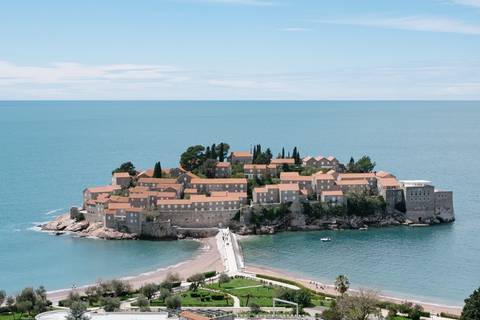
Warning: tourist zones in Budva and Sveti Stefan, especially in peak season, have inflated prices – menus without prices, "fish by weight," sudden 15 % tip added to the bill. Always ask for a printed menu and confirm the final price before ordering.
Food tours and itineraries
The most popular format is a one-day wine-and-food tour with visits to wineries around Lake Skadar and tastings at a traditional konoba. From Kotor, a highly-rated option is a walking tour with wine and food tasting through Kotor's old town at around 94 € per person (197+ reviews, 4.9 rating).
For a broader country overview with a Njeguši ham tasting included, the Great Montenegro Tour with Lovćen, Sveti Stefan and Crnojević River runs around 79 € per person and stops in Njeguši village to sample pršut at the source (637+ reviews, 4.9 rating).
For accommodation near wineries and konobas, Booking.com with the 8+ rating filter reliably surfaces quality family-run stays rather than mass-market hotels.
Practical tips
- Call konobas 2–3 hours before arrival, especially if you want lamb ispod sača or anything cooked in a sač – these dishes take hours and aren't always pre-made.
- Order "mešano meso" (mixed meat platter) – the best way to try ćevapi, pljeskavica, vešalica (steak) and kobasica (sausage) in one go. One kilo for two – 20–28 €.
- On tipping: 10 % is standard, 15 % for great service. Not included in the bill – leave cash or ask to add it to card.
- Cards work (Visa/Mastercard) at around 80 % of coastal restaurants and major konobas, but village spots and mountain konobas are cash-only. Always carry 30–50 € in euro notes.
- Digital receipts are mandatory in Montenegro since 2019 – if a place doesn't issue a printed check, it's breaking the law; per traveller reports, it's usually a sign to walk out.
- Vegetarians have options – salads, cheese boards, cheese burek, kačamak without meat. Vegans are limited to coastal vegetable dishes.
- Mobile data for Google Maps is patchy in mountain areas where the best konobas are. Either download offline maps or use an eSIM from Airalo with Balkans or Europe coverage.
FAQ
How much does dinner cost at a good restaurant in Montenegro? Dinner for two with a starter, main course and a glass of wine – 45–65 € at a family konoba and 80–120 € at a fine-dining restaurant with sea view. Single main course averages 15–22 €, glass of wine – 3–5 €.
What should I try first in Montenegro? Njeguški pršut with local cheese, kačamak and pljeskavica – these three dishes define the country's flavour profile. For a coastal trip, add black risotto or a grilled seafood platter.
Do cards work in Montenegrin restaurants? Yes, at around 80 % of restaurants and large konobas in major resort towns – Budva, Kotor, Tivat, Herceg Novi. Visa/Mastercard accepted. Village spots, mountain konobas and bakeries are often cash-only – always carry 30–50 € in euro notes.
Does coastal food differ from mountain food? Yes, substantially. The coast follows Mediterranean logic: fresh fish, octopus, black risotto, olive oil. Mountain cuisine is meat-and-dairy: pršut, cheese, kačamak, lamb, pljeskavica. Wine regions are around Lake Skadar and Podgorica.
Do I need to book a table at a konoba? In summer (June–August) at popular spots in Kotor, Perast and Sveti Stefan – yes, 1–2 days ahead. In low season and village konobas a phone call 2–3 hours ahead is usually enough, especially if you want something specific (lamb under sač, fish of the day).
Conclusion
Montenegrin cuisine isn't exotic or high-end – it's honest peasant food with two distinct schools: meat-and-dairy (mountains) and Mediterranean (coast). The golden rule: skip the restaurants on the main Budva or Kotor waterfront, turn into the next alley, and find a konoba where a family cooks grandma's recipes. 15–25 € per person with a glass of Vranac is the baseline, and it delivers. For deeper exploration – a wine tour to Lake Skadar or a day trip to Njeguši for pršut straight from the producer.
Read also:
- The Taste of the Country: Wine and Culinary Tours in Montenegro
- Montenegro Prices in 2026: How Much Does a Week Really Cost
- Lake Skadar: Kayaking, Pelicans, and the Best Fish Restaurants in Virpazar.
Sources
- Numbeo – Montenegro cost of living data
- National Tourism Organisation of Montenegro
- Plantaže – the largest Montenegrin wine producer
Places to see in Montenegro
You may also like
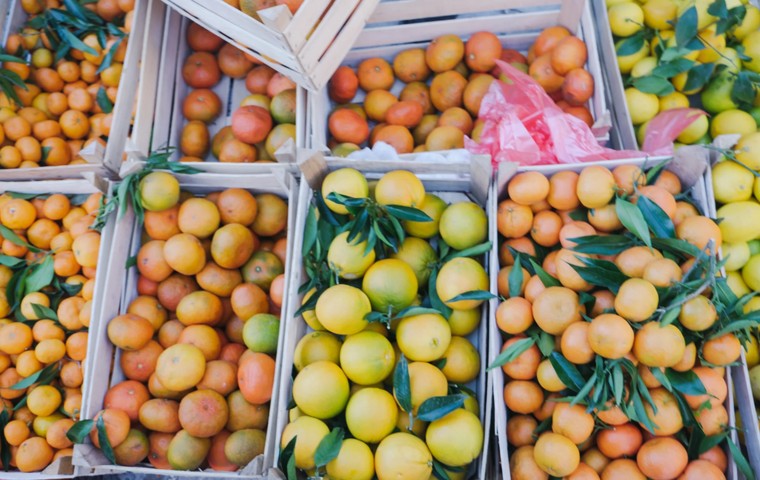
Montenegro Markets (Pijaca): How to Buy Real Cheese at €8/kg, Kajmak and Wine
Budva's market is 1.5–2× more expensive than supermarkets, while Podgorica sells the same cheese at half price. Where to buy real Njeguški cheese, kajmak, pršut and Vranac without the tourist markup.
April 30, 2026
Bar, Montenegro: Ancient Ruins, 2 000-Year-Old Olives & a Working Port
Bar is Montenegro's only ferry port to Italy and the terminus of the Belgrade–Bar railway. Stari Bar fortress, a 2 000-year-old olive tree, quiet beaches, and prices 30% below Budva.
March 21, 2026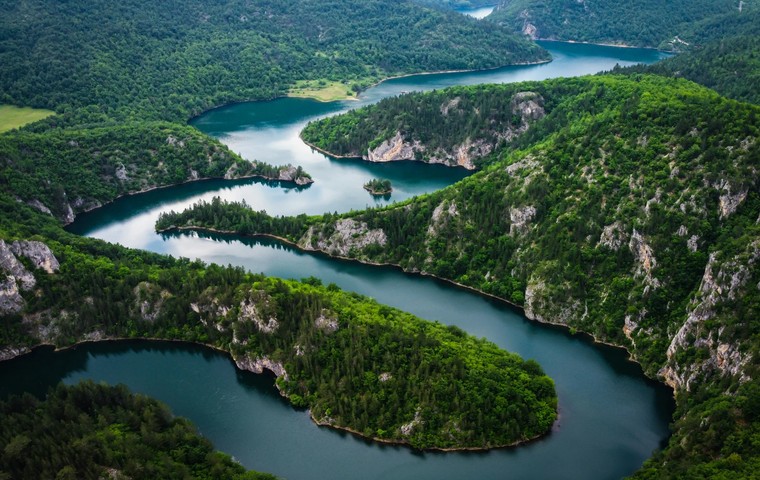
Lake Skadar: €5 Kayaks, Pelicans, and the Real Virpazar Fish Dinner
The Balkans' largest lake, one hour from Budva: group boats from €15, kayaks from €5/hr. Where to eat fresh carp, when pelicans actually show up, and what to skip.
April 22, 2026
Montenegro Prices 2026: Real Weekly Budget – From €480 Bare-Bones to €2 000 Comfort
What a week in Montenegro costs in 2026: lodging, food, car rental, tours.
April 27, 2026
Montenegro Tourist Tax & White Card: Step-by-Step Registration Guide to Avoid Fines
Complete 2026 guide to tourist registration in Montenegro – how to pay the tourist tax, what the "White Card" (Bijeli Karton) is, deadlines, fines, and practical tips for every traveller.
February 24, 2026
Travel Apps for Montenegro 2026: No Uber, No Wolt, Glovo Delivers, eSIM Saves
Uber and Bolt don't work in Montenegro, Wolt left, Google Maps gets addresses wrong. The 7 apps that actually work in 2026, with prices and local quirks.
April 26, 2026