Georgia in 2026 is one of Europe's safest tourist destinations: Level 1 "Exercise Normal Caution" from the U.S. State Department, ranked 21st globally on the Numbeo Crime Index, and Tbilisi sits in the top 50 of the world's safest capitals. Street crime is rare, police are professional and responsive, and walking around the centre at night is genuinely safe. The real risks lie in three areas: mountain roads with aggressive driving, scams in Batumi and Tbilisi nightclubs, and mandatory health insurance, which from January 1, 2026 is required to enter the country.

Key Points
- Georgia ranks in the top 35 safest countries on the Gallup Law and Order Index (86 / 100), with a homicide rate below the European average.
- Mandatory medical insurance for entry from January 1, 2026 – minimum coverage 30 000 $, fine for non-compliance 300 GEL (around 110 $).
- The real danger isn't crime – it's the roads. Local drivers overtake on blind mountain curves and rear seatbelts are often missing.
- Political protests have been ongoing since October 2024 but are localised on Rustaveli Avenue late at night and don't affect tourist routes.
- Abkhazia and South Ossetia are off-limits – entering through these regions can result in a future ban on entering Georgia.
- The main scams are in nightclubs and strip bars in central Tbilisi and Batumi, where the final bill can be 10× the quoted price.
- Tourist treatment is consistently warm, with English widely spoken in major hotels and restaurants.
Hard Numbers: What the Statistics Say
According to Georgian National Police data, in 2025 there were fewer than 12 violent crime incidents per 100 000 visitors in Tbilisi – one of the lowest figures in the region. International safety indices consistently place Georgia ahead of Italy, Greece, and France for tourist security.
The Georgian police force is one of the most reformed in the post-Soviet space. Skoda Octavia patrol cars with flashing lights drive central streets in Tbilisi and Batumi 24/7. English skills vary, but officers handle basic situations quickly.
Important: call 112 for any emergency – it's the unified line for police, ambulance, and fire. English-speaking operators are available, but not always. If heading into the mountains, download Google Translate Georgian offline pack in advance.
Mandatory Insurance from 2026 – The Biggest Change
From January 1, 2026, foreigners need a medical insurance policy valid for the entire stay to enter Georgia. This is law, not a recommendation. Border control enforces it: officers at Tbilisi, Kutaisi, and Batumi airports, as well as the Verkhny Lars land crossing, check the policy and its coverage.
Policy requirements:
- Coverage of at least 30 000 $.
- Valid throughout Georgia (excluding occupied territories).
- Covers the entire stay without gaps.
- Document can be presented digitally, in Georgian or English.
For active travel – skiing in Gudauri and Bakuriani, trekking in Svaneti, rafting – you need extended coverage of at least 50 000 $ with an "active sports" rider. A standard policy doesn't cover these activities, and helicopter evacuation from high altitude costs 3 500–4 000 $ per flight hour.
For a policy compliant with Georgian requirements, Ekta offers a dedicated "Georgia 2026" product with active sports already included. Check visa requirements for your nationality – Georgia is visa-free for most countries for stays of up to one year.

Crime: What to Actually Watch For
Street crime in the conventional tourist sense barely exists in Georgia. Pickpockets work in two locations: Tbilisi central railway station and Batumi nightlife zones in summer. Even there, incident rates are far lower than in Barcelona or Rome.
Real risks flagged by local guides:
- Strip bars and "nightclubs" with touts. Classic scheme in Tbilisi (around Rustaveli Avenue and Shardeni Street) and Batumi: a tout offers a "free cocktail" or "show club", inside the bill grows to 500–1 500 $ for an evening, and security blocks the exit until you pay. Solution: don't follow touts. Stick to venues found via maps or hotel recommendations.
- Currency exchange tricks. Some street exchanges in Tbilisi quote a poor rate or short-change customers. Exchange only at banks or licensed bureaus with electronic boards – the spread vs. the bank rate should be no more than 1–2%.
- Stray dogs. In mountain regions and suburbs, packs can be aggressive, especially in spring. Dogs with tagged ears are vaccinated through the city programme, but in villages there are no guarantees.
- Theft from cars. Don't leave bags or electronics visible in parked cars – particularly at popular monasteries like Jvari and Ananuri Fortress, where organised groups operate.
The Real Danger: Roads, Not People
According to WHO, Georgia ranks in the top 15 European countries for road fatality rates – 2,5× the EU average. This isn't a crime issue; it's driving culture.
What you need to know about Georgian roads:
- Overtaking on solid lines in the mountains is normal. Especially on the Tbilisi – Kazbegi highway and Svaneti switchbacks.
- Rear seatbelts in taxis are often dismantled. Choose newer cars for mountain trips.
- Studded tyres are required in winter on roads to Gudauri and Bakuriani.
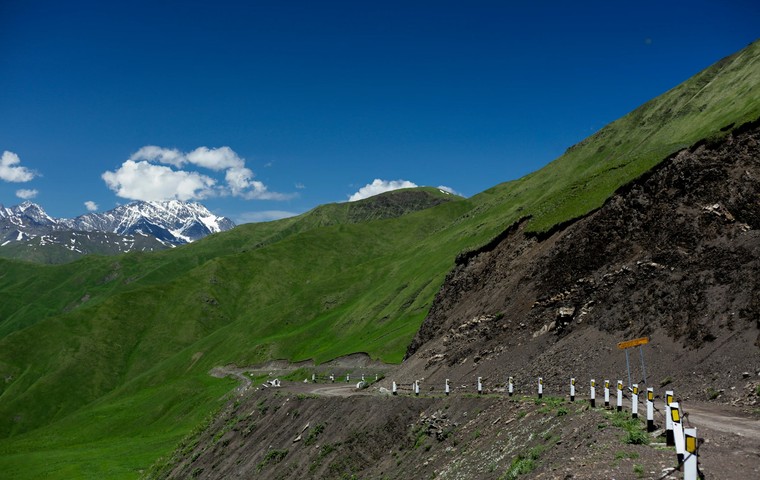
- Crash barriers on mountain stretches are limited, and shoulders sometimes drop straight off cliffs.
The safest way around is Bolt in cities (transparent fares, driver ratings) and pre-booked transfers for longer trips. Avoid old "street" taxis without meters – seatbelts may be missing and the price is announced after the ride. For self-driving across the country, work with established operators like Localrent – they don't block deposits on cards and partner with local rental companies whose vehicles undergo regular technical inspections.
If you're planning day trips to mountains or wine regions, taking an organised tour with a local driver is safer than driving yourself. For example, the Day Trip to Kazbegi and Gudauri from Tbilisi runs at 39 $ per person, the driver knows every blind curve, and the route is fully tested. The Highlights of Caucasus Mountains group tour at 29 $ covers Jinvali, Ananuri, Gudauri, and Kazbegi in one day – cheaper than a private taxi and removes the need to drive yourself.
Political Situation and Protests
Since October 2024, Tbilisi has hosted protests against the ruling party and the suspension of EU accession talks. As of spring 2026, demonstrations continue in a reduced format.
What matters for tourists:
- Rallies are localised on Rustaveli Avenue near the parliament building in Tbilisi.
- They typically start after 7:00 PM and disperse by morning.
- Protesters don't target tourists – the conflict is purely domestic.
- In Batumi, Kutaisi, and mountain regions, there are no protests at all.
Tip: don't book hotels directly on Rustaveli Avenue if you don't want to hear rallies under your window. Choose Sololaki, Vake, or Vera – quiet central neighbourhoods 10–15 minutes' walk from the action.

Tourists are strictly prohibited from participating in protests. Under Georgian law, this can result in a fine, deportation, and a future entry ban. Several foreign nationals detained at rallies have already been deported.
Restricted Regions: Abkhazia and South Ossetia
Under Georgian law, Abkhazia and South Ossetia are occupied territories. Entering from Russia (via Psou or the Roki Tunnel) is considered a border violation. If you later try to enter Georgia on the same passport, you can be denied entry and given a 5-year ban.
The "5-kilometre rule": approaching the administrative line of Abkhazia or South Ossetia closer than 5 km is prohibited, except via the E60 highway. Georgian posts patrol the line, sometimes alongside Russian military. Cases of civilian abductions along these lines were recorded as recently as 2024.
Mountain Safety
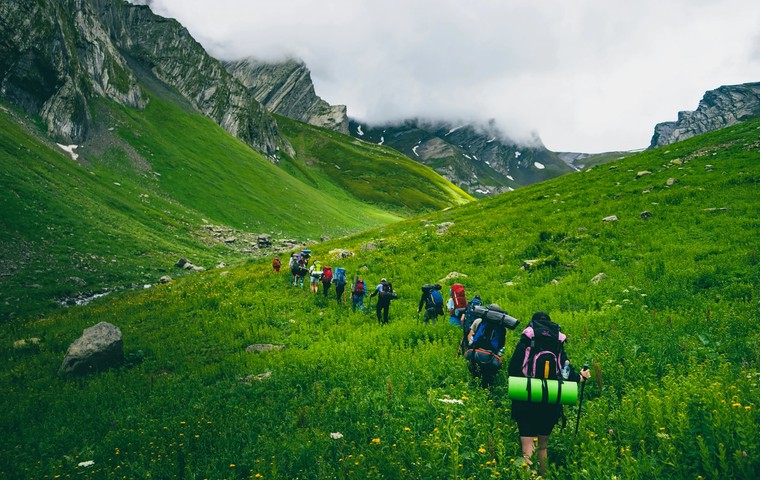
Mountain tourism in Svaneti, Kazbegi, and Tusheti is the most physically dangerous activity in Georgia. Not because of crime, but due to weather and infrastructure.
Critical: in Svaneti and Tusheti, mobile coverage works only in major villages. Before trekking, download Maps.me offline maps, leave your route with the guesthouse host, and tell them your expected return time. If you don't return, they'll call mountain rescue.
The road to Tusheti via Abano Pass is open only June – September and is considered one of the most dangerous roads on the planet – attempting it without a local driver is genuinely risky.

Safety for Specific Traveller Types
Solo female travellers. Georgia is one of the safest countries in the region for women travelling alone. Street harassment is virtually nonexistent, and treatment in cafes and public transport is respectful. The main rules: dress modestly when visiting monasteries (headscarf, knee-length skirt), avoid unlicensed taxis at night, and don't accept drinks from strangers in clubs.
Families with children. No specific risks beyond mountain roads. Hotels and restaurants are family-friendly, with kids' menus, and major supermarkets stock everything you'll need.
LGBTQ+ travellers. Same-sex relationships aren't illegal, but society is conservative. Public displays of affection are best avoided in provinces. Tbilisi has a few friendly bars; Batumi is somewhat more relaxed than the country average.
Costs: Budgeting for Safe Travel
(Updated: April 2026)
Avoiding Common Scams: Checklist
- Exchange money only at banks or large bureaus with electronic boards – "street" booths offer poor rates or pass off counterfeit notes.
- Bolt is the only reliable taxi app. Yandex.Go works too but tends to be pricier. Take street taxis only if the price is agreed in advance.
- Withdraw cash at TBC, Bank of Georgia, or Liberty Bank ATMs – they have the lowest fees. Bring USD or EUR cash, or use a bank card from a non-restricted country.
- Don't follow touts to clubs or casinos. All legitimate venues are findable on Google Maps – they don't need to be sold on the street.
- Check the bill in restaurants. Tourist spots sometimes add a service charge of 10–15% twice or list dishes you didn't order.
- At the border, always carry: passport valid 6+ months, insurance (mandatory from 2026), accommodation booking, return ticket.
Connectivity for a Safer Trip
For online security and stable connectivity in the mountains, set up an eSIM before flying. A local SIM at Tbilisi airport costs 2–3× more than in the city, sometimes more than the eSIM itself.
For multi-country Caucasus trips (Georgia + Armenia + Turkey), a regional plan is more economical – but verify coverage in mountain regions. Svaneti and Tusheti have no signal at all, regardless of carrier.
Insider tip: Georgia has many open Wi-Fi networks, but their security is questionable. If you're shopping or accessing banking apps, use a VPN or mobile data. Especially careful in Rustaveli cafes and Batumi tourist zones.
FAQ
1. Is Georgia safe to visit in 2026? Yes. The U.S. State Department maintains a Level 1 "Exercise Normal Caution" advisory, and Georgia ranks in the top 30 safest countries globally. Violent crime rates are below the European average. The main risks are mountain roads and the mandatory insurance, without which entry is denied from January 2026.
2. Are the protests dangerous for tourists? No. Rallies are held on Rustaveli Avenue in Tbilisi in the evenings and have nothing to do with tourists. Outside the central capital – in Batumi, Kutaisi, and mountain regions – there's no political activity. Just don't book accommodation directly on Rustaveli and don't participate in protests (which results in deportation).
3. Is Georgia safe for solo female travellers? Yes. Georgia is one of the most welcoming countries in the region for solo women. Street harassment is almost nonexistent, and night walks in central Tbilisi and Batumi are safe. Standard precautions: modest dress in monasteries, taxis via Bolt, no drinks from strangers in clubs.
4. What about Abkhazia and South Ossetia? These are occupied territories under Georgian law and off-limits to foreign tourists. Approaching the administrative line closer than 5 km is prohibited. Entering Georgia after visiting Abkhazia or South Ossetia from the Russian side can result in a 5-year entry ban.
5. What to do in an emergency? Call 112 – the unified line for police, ambulance, and fire. Operators speak Georgian and English, sometimes other languages. Tbilisi has a dedicated tourist police service in the Old Town that speaks several languages. For your country's consular contacts, save them in your phone before arrival.
Bottom Line
Georgia in 2026 is a safe destination by any international standard, particularly compared to popular European capitals. Crime risks are minimal, police are professional and approachable, and the welcome is genuinely warm. The real pitfalls aren't people – they're infrastructure: mountain roads, mandatory insurance, restricted separatist regions. Sort your insurance in advance, don't drive in the mountains without experience, and skip the nightclub touts – and your trip will be one of the calmest in the region.
Sources
- U.S. Department of State Travel Advisory – official US government guidance
- UK Foreign Office Foreign Travel Advice for Georgia
- Geostat – National Statistics Office of Georgia
- Numbeo Crime Index 2026
- Global Peace Index 2025
- Georgian Tourism Law 2026 – insurance requirements