Blog · Tours
What to Eat in Georgia – 15 Dishes Worth Booking a Flight For
 Tours
ToursIn this article
- 01Khinkali – Georgian dumplings you eat with your hands
- 02Khachapuri – not one dish, but a whole family
- 03Meat dishes: mtsvadi, shkmeruli and chakhokhbili
- 04Soups: kharcho, chikhirtma and khashi
- 05Starters: pkhali, badrijani and mushrooms on ketsi
- 06Baked goods and street food: lobiani, kubdari and bakery runs
- 07Sweets: churchkhela, pelamushi and kozinaki
- 08Wine: qvevri, saperavi and Kakhetian classics
- 09Cooking classes: make khinkali yourself
- 10Where to eat: venue types and price guide
- 11Etiquette and practical tips
- 12Frequently asked questions
- 13Summary
- 14Sources:
Some links are affiliate links. You pay the same, and we may earn a commission.
Khinkali for under a dollar, Adjarian khachapuri with egg and butter, qvevri wine aged 8,000 years – real prices, local tips and the dishes that define Georgian cuisine.
Georgian cuisine is one of those rare reasons people reroute entire trips. This is not just eating well abroad – it is a full culinary system: from khinkali dumplings you eat with your hands (drinking the broth is mandatory) to orange wine fermented in clay qvevri vessels, a method that is roughly 8 000 years old. An average meal in Tbilisi runs 30–40 GEL (10–13 USD) per person with wine, and street food costs as little as 5–10 GEL. Below is a practical list of dishes to try, with current prices and tips on where locals actually eat.
Key facts:
- 1 GEL ≈ 0.37 USD (April 2026). Prices below are in Georgian lari with USD equivalents.
- Budget lunch – 15–25 GEL (5–9 USD) per person at a casual eatery; a mid-range dinner for two with wine – 60–80 GEL (22–30 USD).
- Khinkali – 2 to 3 GEL per dumpling. Most restaurants require a minimum order of 5 pieces of one filling.
- Adjarian khachapuri – 10 to 24 GEL depending on size and venue.
- Wine at restaurants – 7–12 GEL per glass, 25–70 GEL per bottle. Homemade wine – from 16 GEL per litre.
- Street food (lobiani, bakery khachapuri, churchkhela) – 2–5 GEL per serving. Cheapest and most filling option.
- Service charge of 10–18% is added automatically in many Tbilisi restaurants – check your bill.
Khinkali – Georgian dumplings you eat with your hands
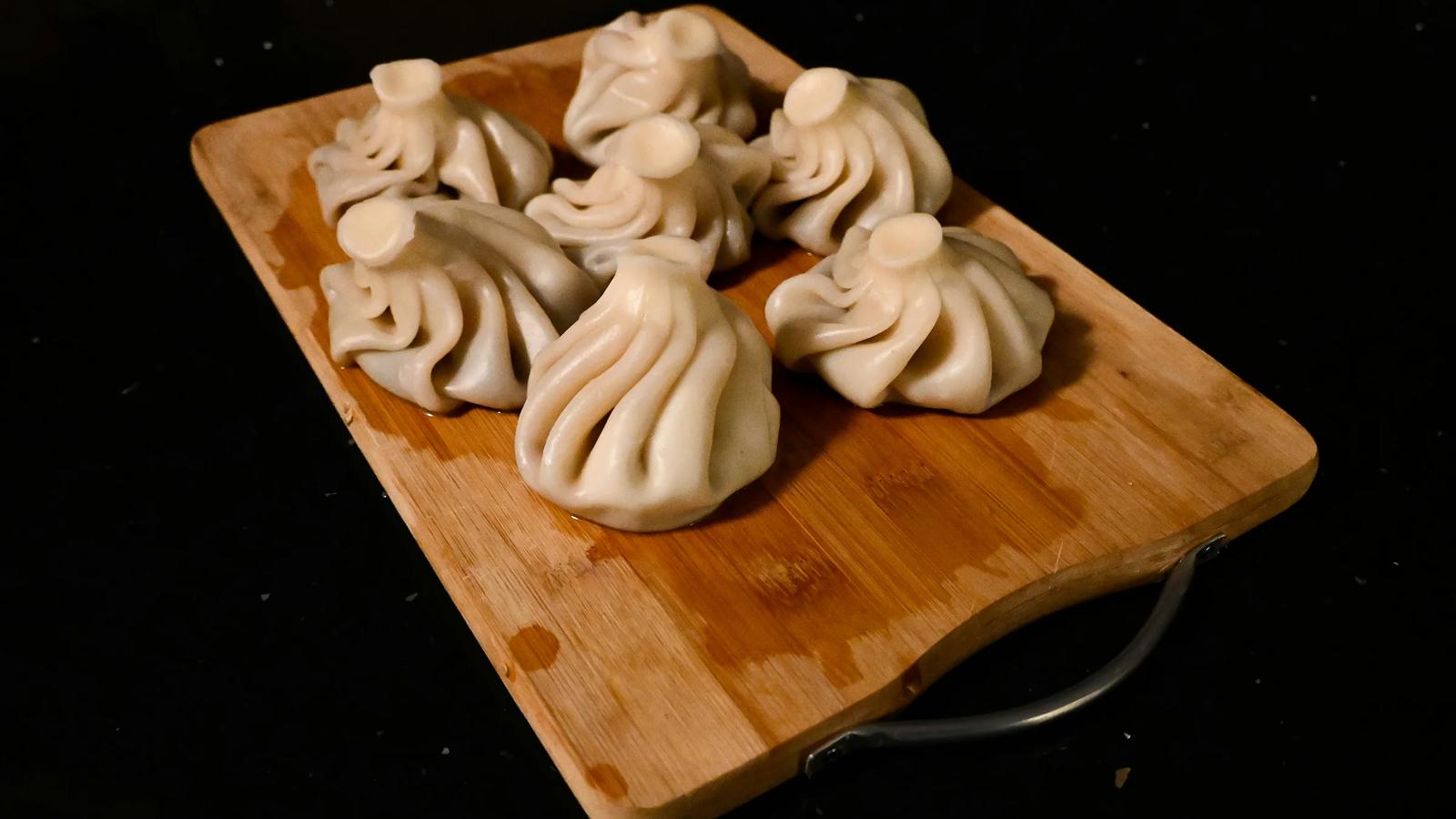
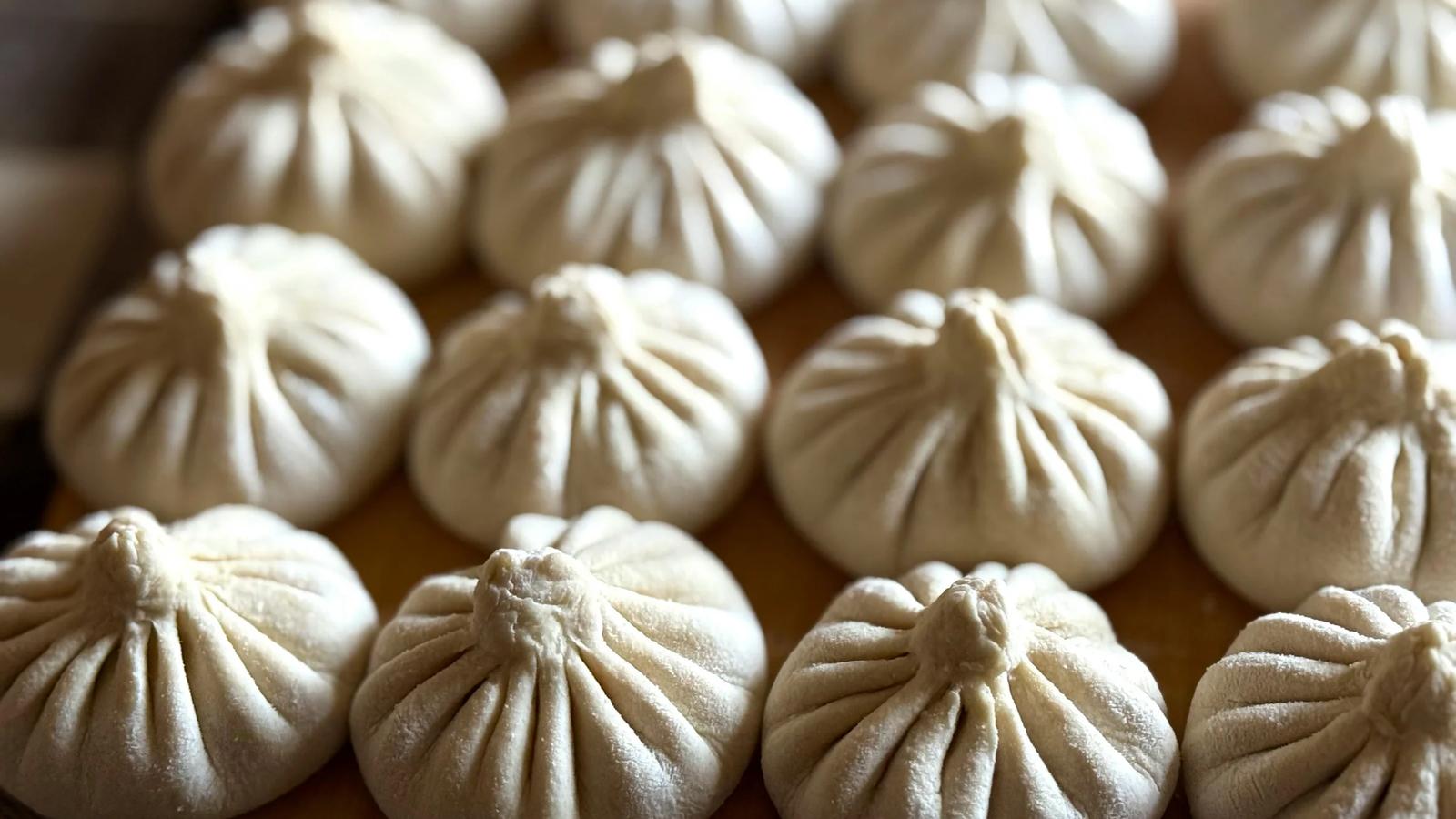
Khinkali are not just dumplings – they are a ritual. Hand-pleated dough, meat broth trapped inside, a twisted knot on top you use as a handle. The rule: hold the knot, bite a small hole, drink the broth, eat the rest. The knot itself is left uneaten – the number of discarded knots on your plate is your score.
The classic filling is kalakuri (pork and beef with spices). Other options include mtiuluri (mountain-style, beef only with more herbs), cheese, mushroom, and potato. In Tbilisi, kalakuri khinkali cost 2–2.5 GEL each; mountain and specialty versions go up to 3 GEL.
Do not order khinkali two at a time to "sample" – most restaurants require a minimum of 5 per filling. 10 khinkali is a standard portion for one hungry traveller.
Khachapuri – not one dish, but a whole family
Khachapuri is the national dish, but it is not a single cheese bread – it is a family of dozens of regional recipes. Each part of Georgia has its own version.
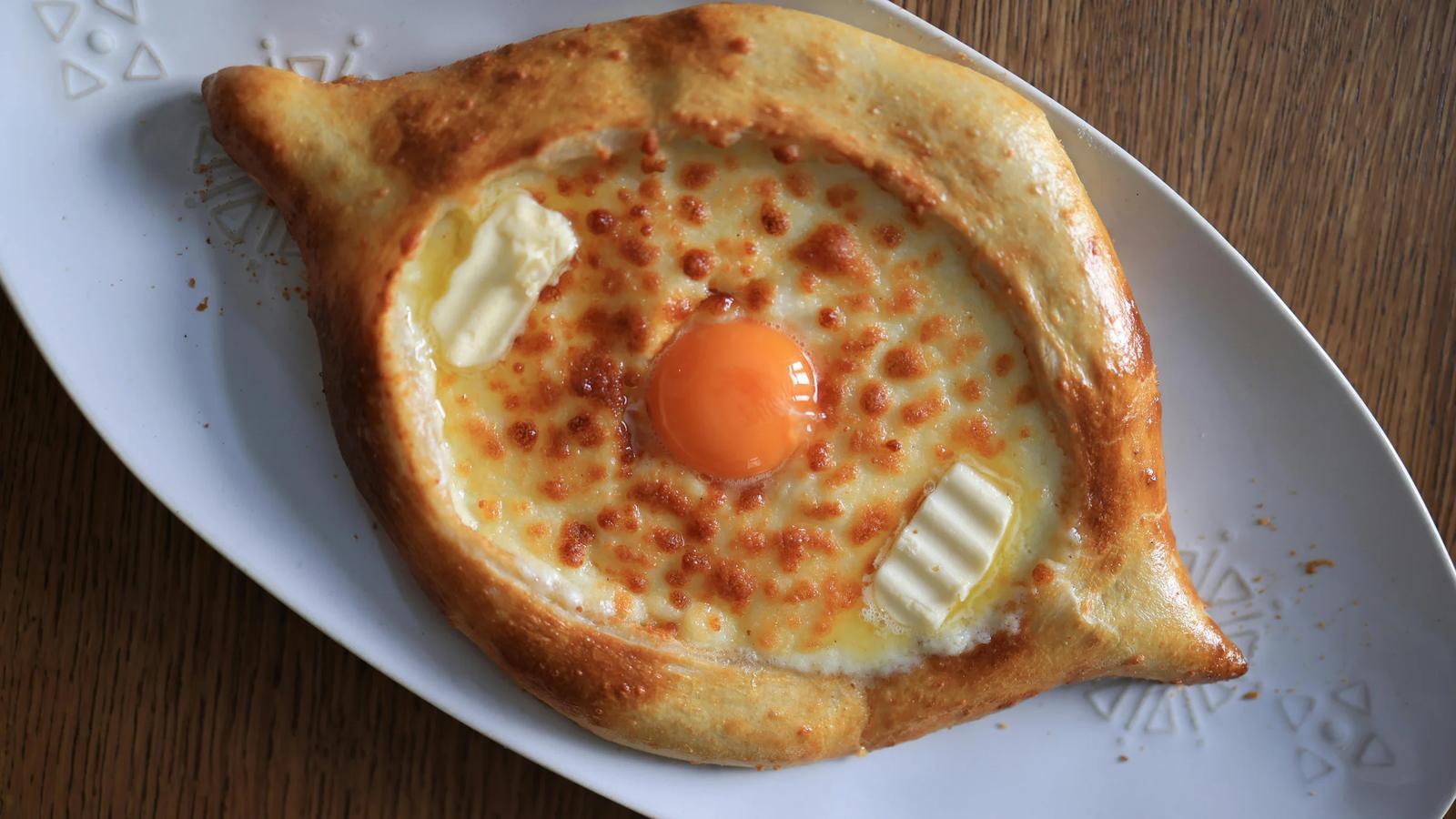
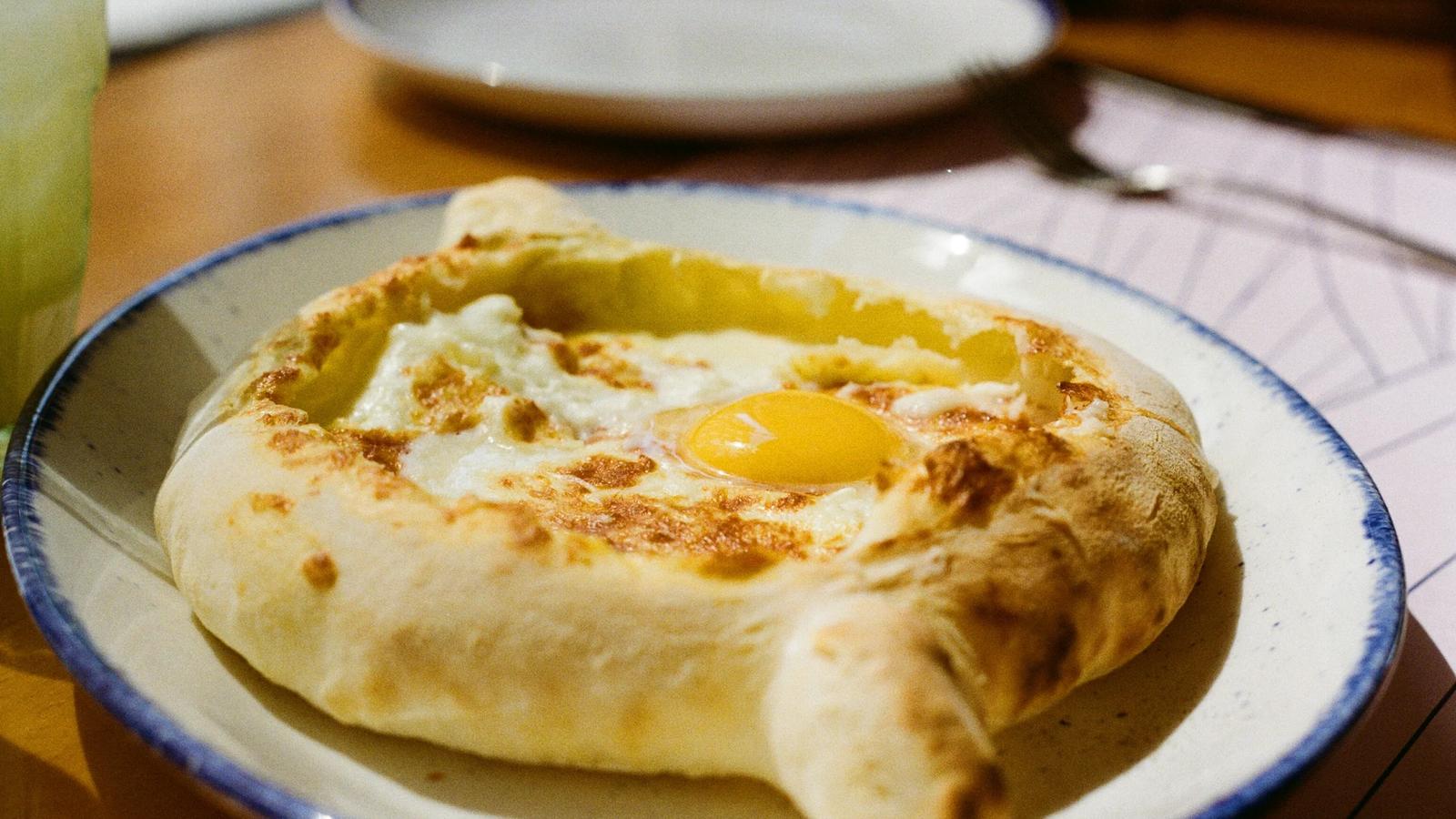
Adjaruli (Adjarian-style) – a boat-shaped bread with sulguni cheese, butter, and a raw egg. The most photogenic and famous version. You mix it yourself – stir the egg and butter into the hot cheese, then tear pieces of the rim and dip. In Batumi, 10–15 GEL; in Tbilisi, 12–24 GEL.
Imeruli – round, sealed, filled with Imeretian cheese. Simpler, cheaper (8–14 GEL), and what Georgians eat most at home.
Megruli – like Imeruli, but with cheese melted on top as well, forming a golden crust. Rich and very filling.
Penovani – puff pastry version, crispy triangle. Sold in bakeries for 3–5 GEL – an ideal grab-and-go snack.
Khabizgini – Ossetian-influenced version with cheese and potato, found in mountain regions.
Meat dishes: mtsvadi, shkmeruli and chakhokhbili
Georgia is a nation of meat-eaters, and meat is treated seriously here.
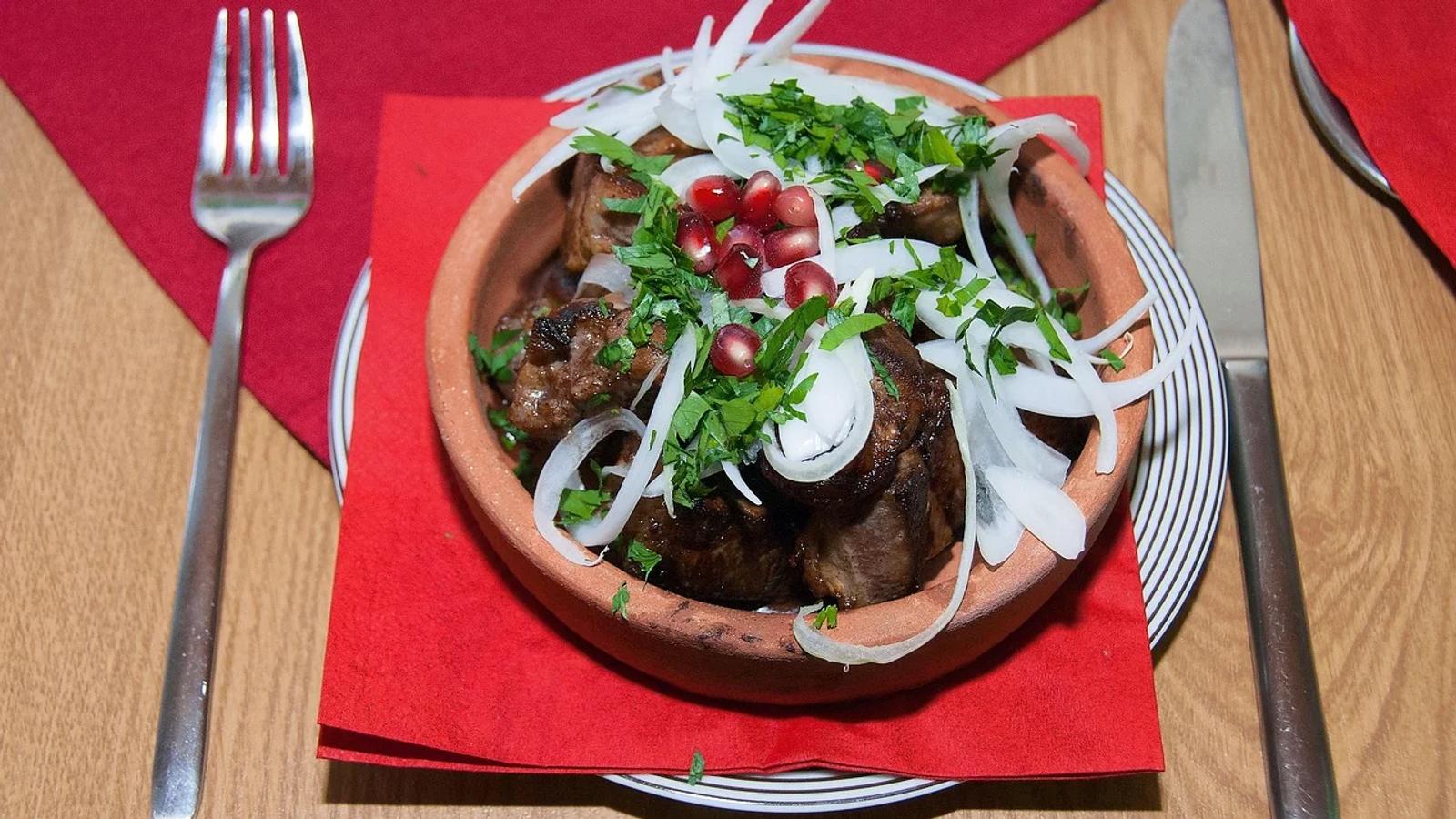
Mtsvadi (shashlik) – pork grilled over grapevine embers, the most authentic method. Pork – 13–22 GEL, veal – 19–25, lamb – 22–30 GEL. Served with pickled onions and lavash.
Shkmeruli (chkmeruli) – whole chicken pan-fried and drenched in a garlic cream sauce. One of the most flavour-forward dishes – 16–29 GEL. Served on a ketsi (clay pan).
Chakhokhbili – chicken stewed in tomato sauce with coriander and spices. A homestyle stew found in every restaurant.
Ojakhuri – meat and potatoes on a ketsi. Simple, filling, family-style – 12–18 GEL. The name translates as "family dish."
Tapaka chicken – chicken pressed flat and fried crispy – 22–24 GEL.
Soups: kharcho, chikhirtma and khashi
Kharcho – a thick beef soup with rice, walnuts, and tkemali (sour plum). Georgian kharcho has nothing in common with its Soviet-era imitations – here it is spicy, rich, and distinctly tart. 10–18 GEL.
Chikhirtma – a light chicken soup thickened with egg and flour, brightened with lemon. Considered the best remedy after a Georgian feast – 7–14 GEL.
Khashi – a broth of beef trotters and tripe simmered overnight. Served early morning (from 6–7 AM) with garlic, lavash, and chacha. It is not just food – it is a ritual, eaten after celebrations. From 10 GEL.
Khashi is only served in the morning. If you see it on a menu after lunch, it is not the real thing.
Starters: pkhali, badrijani and mushrooms on ketsi
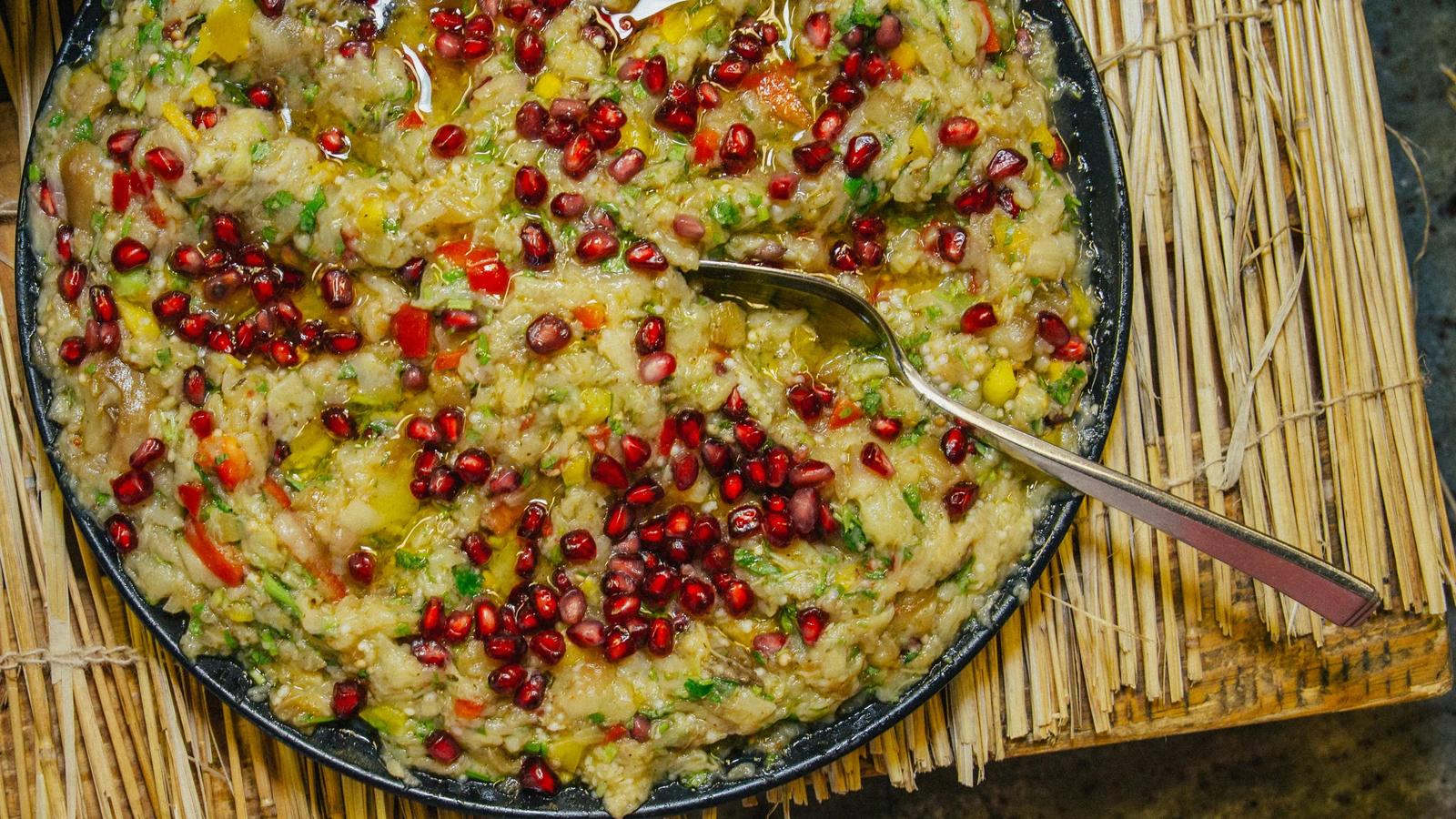
Pkhali – an assortment of vegetable-walnut pastes. Spinach, beetroot, cabbage, and beans are ground with walnuts, garlic, and spices, formed into balls, and topped with pomegranate seeds. A set of 4 – 15–20 GEL; individually – 7–10 GEL.
Badrijani nigvzit – eggplant rolls filled with walnut paste and pomegranate. A classic cold starter on every Georgian table.
Mushrooms with sulguni on ketsi – mushrooms baked with cheese on a clay pan. Sizzling, steaming, straight from the oven – 12–18 GEL. One of the best wine accompaniments.
Ajapsandali – a vegetable stew of eggplant, pepper, tomato, and herbs. Especially good in summer – from 15 GEL.
Jonjoli – pickled bladderwort sprouts, salty and crunchy. Sometimes described as Georgian capers. Served as a standalone snack or alongside meat.
Baked goods and street food: lobiani, kubdari and bakery runs
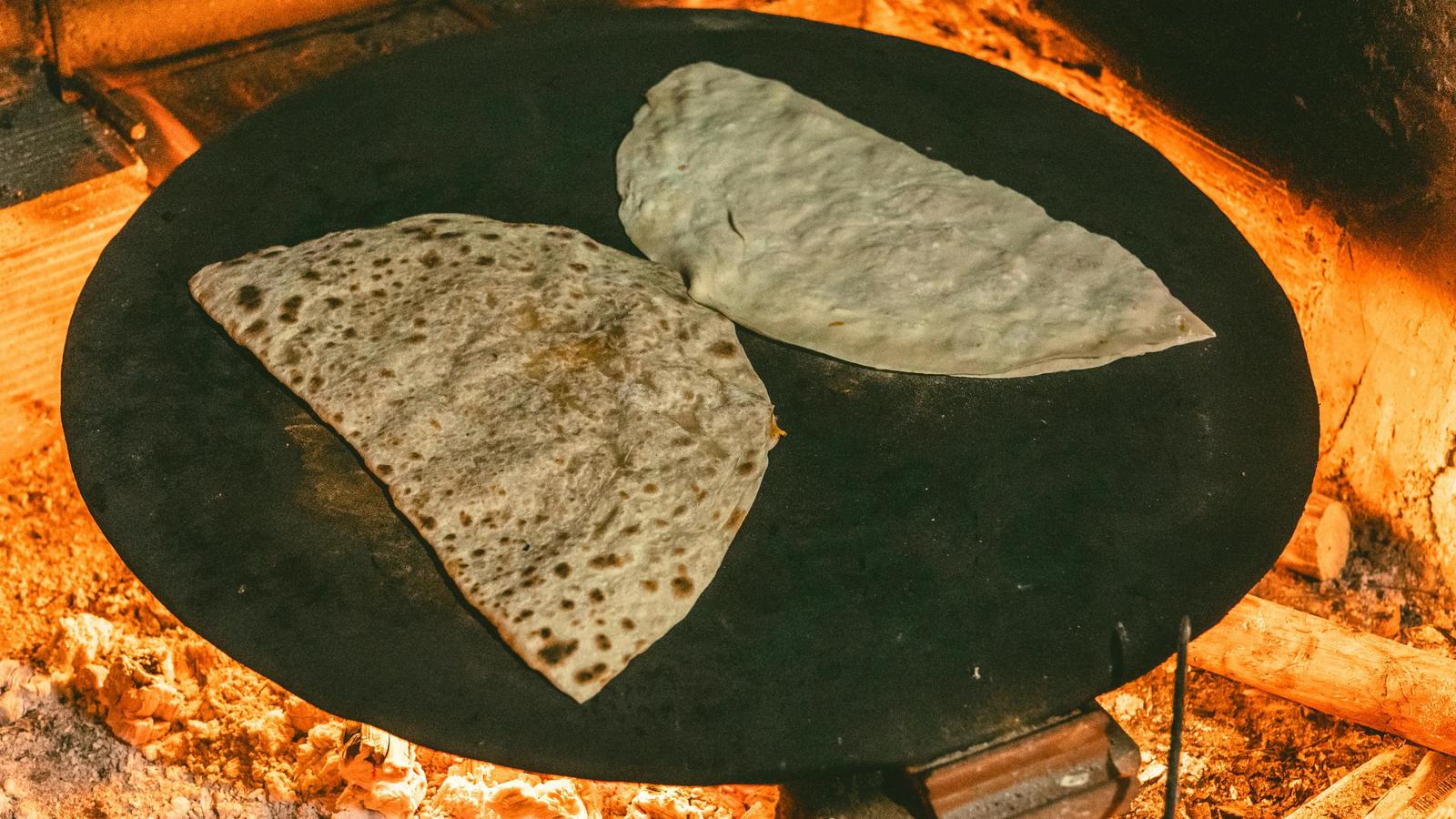
Bakeries (called "tone" after the traditional clay oven) are the cheapest way to eat in Georgia. Hot shotis-puri bread from a tone costs 1–2 GEL, lobiani runs 3–5 GEL, and either one works as a full breakfast.
Lobiani – flatbread stuffed with seasoned bean paste. Simple, cheap, filling – 3–5 GEL. Especially good in Kutaisi and the Racha region.
Kubdari – a Svan meat pie from Mestia and Svaneti. Dough filled with chopped meat seasoned with utskho-suneli and other mountain spices. 7–12 GEL.
Chvishtari – corn-flour flatbreads with cheese, typical of mountain areas.
Sweets: churchkhela, pelamushi and kozinaki
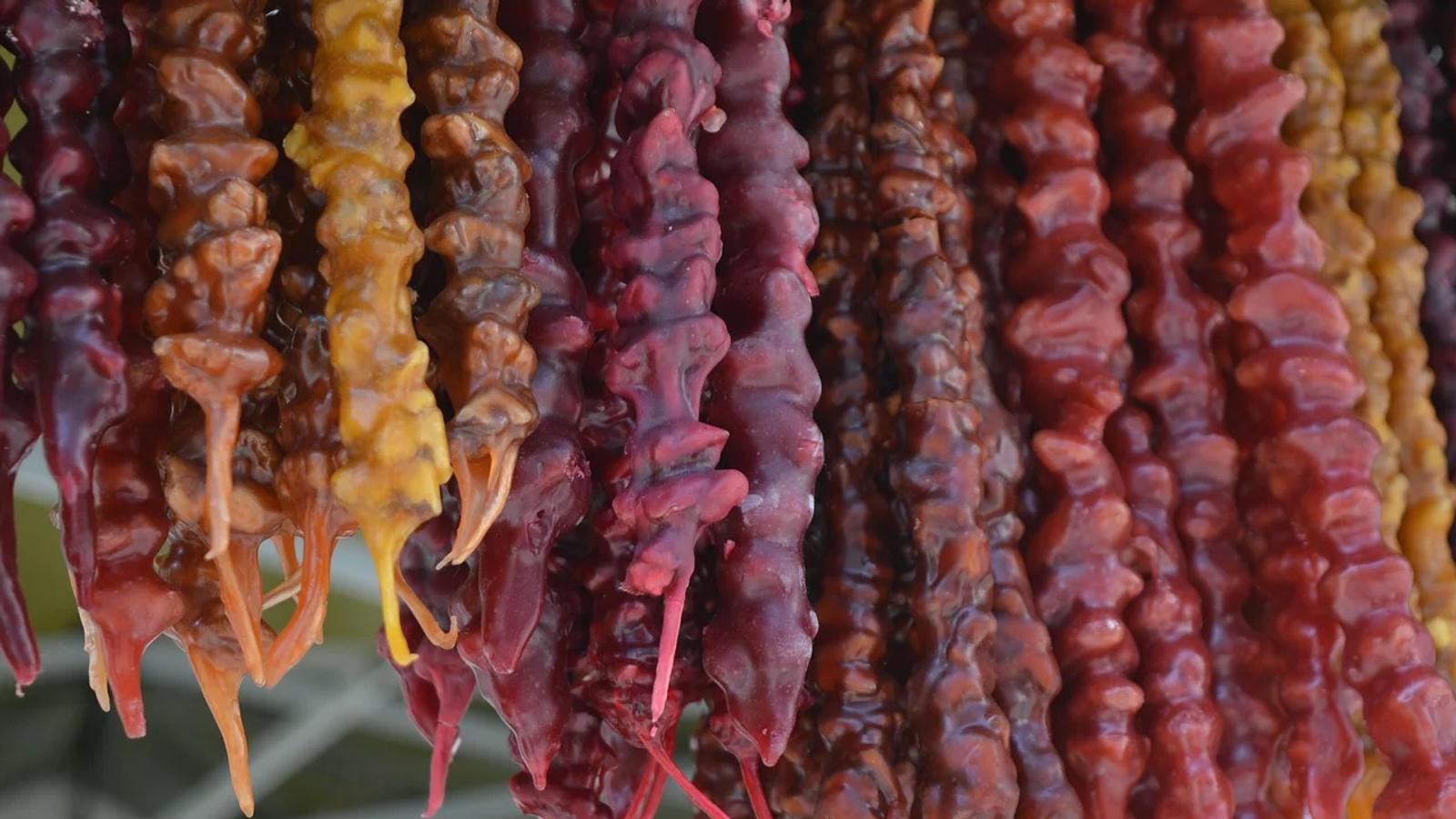
Churchkhela – strings of nuts (walnut or hazelnut) coated in thickened grape juice (badagi). Fresh churchkhela is soft with a matte surface. If it is covered in a white powdery coating, it has dried out and may be from a previous season. 2–5 GEL per piece.
Pelamushi – a thick pudding made from grape juice and flour, the base from which churchkhela is made. Served as a dessert topped with walnuts.
Kozinaki – caramelised walnuts in honey. A traditional New Year sweet, but available year-round.
Lagidze water – not a sweet, but essential: flavoured lemonades (chocolate, tarragon, cream soda) made from natural syrups – from 4 GEL per glass. A cult Georgian drink.
Wine: qvevri, saperavi and Kakhetian classics
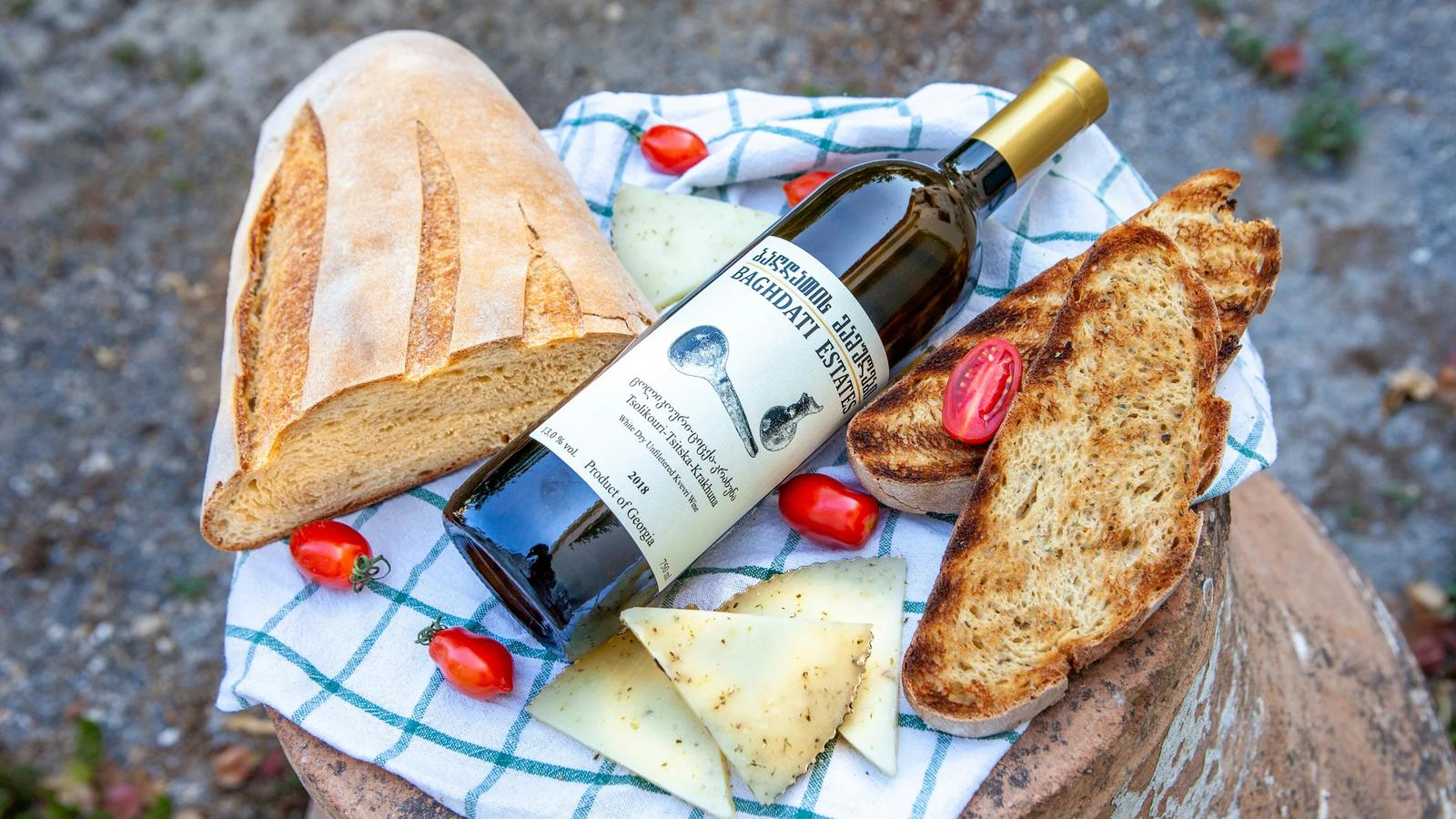
Georgia is one of the world's oldest winemaking countries. Wine here ferments in qvevri – clay vessels buried in the ground. This method is roughly 8 000 years old and is listed as UNESCO Intangible Cultural Heritage.
What to try:
| Category | Name | Style | Note |
|---|---|---|---|
Red dry | Mukuzani | Dark, tannic | The most "serious" Georgian wine |
Red semi-sweet | Khvanchkara | Soft, berry-forward | Premium – from 45 GEL per bottle |
Red semi-sweet | Kindzmarauli | Fruity, velvety | Most popular with visitors |
White dry | Tsinandali | Light, crisp | Pairs well with fish and cheese |
Orange (amber) | Rkatsiteli (qvevri) | Tannic, amber-hued | Georgia's signature – fermented on skins in clay |
Prices: a glass at a restaurant – 7–12 GEL, a bottle – 25–70 GEL. Homemade wine – from 16 GEL per litre. Chacha (grape brandy) – from 25 GEL for 0.5 litres. (Updated: April 2026)
The main wine region is Kakheti (Telavi), and day trips from Tbilisi are the most popular format. A top-rated group tour is Day Trip to Kakheti Wine Region Including 9 Wine Tastings from 39 USD per person, covering wineries, tastings, and Sighnaghi. It has nearly 2 800 reviews.
For a food-focused experience without leaving the city, consider Private Tbilisi Food Tour: 9 Tastings Walk in Bohemian District from 63 USD – a private walking tour through the Old Town with 9 tasting stops.
Cooking classes: make khinkali yourself
One of the best souvenirs from Georgia is the skill of folding khinkali. Cooking classes run in Tbilisi and Batumi, and they are practical workshops, not tourist performances: dough preparation, proper knot folding, khachapuri shaping.
A popular group option is Small-Group Khinkali and Khachapuri Cooking Class in Tbilisi from 27.50 USD per person, with over 225 reviews.
Where to eat: venue types and price guide
| Venue type | Average spend (1 person) | What to expect |
|---|---|---|
Bakery (tone) | 3–7 GEL (1–2.50 USD) | Khachapuri, lobiani, shotis-puri. Grab-and-go |
Sakhinkle (khinkali house) | 15–25 GEL (5–9 USD) | Khinkali, beer, basic starters |
Family restaurant | 25–40 GEL (9–15 USD) | Full menu, homemade wine |
Mid-range restaurant | 40–60 GEL (15–22 USD) | Full service, signature dishes |
Fine dining | 60+ GEL (22+ USD) | Modern Georgian cuisine, wine list |
(Updated: April 2026)
Tbilisi restaurants are 20–30% pricier than the rest of Georgia. On a tight budget, eat at bakeries and khinkali houses, and save the restaurant dinner for one special evening.
Etiquette and practical tips
Portions are designed for sharing. Georgian dining is communal. Three dishes for two people is usually more than enough. Order a khachapuri, one meat dish, and a salad – you will be full.
Service charge. Many restaurants in Tbilisi add a 10–18% service fee. Check your bill before leaving an additional tip.
Coriander is everywhere. Fresh coriander (cilantro) is the base herb of Georgian cooking. If you dislike it, say so in advance.
"Spicy" vs "flavourful." Georgian food is aromatic and well-spiced, but not chilli-hot in the Thai sense. Exceptions include western Georgian adjika and certain Megrelian dishes.
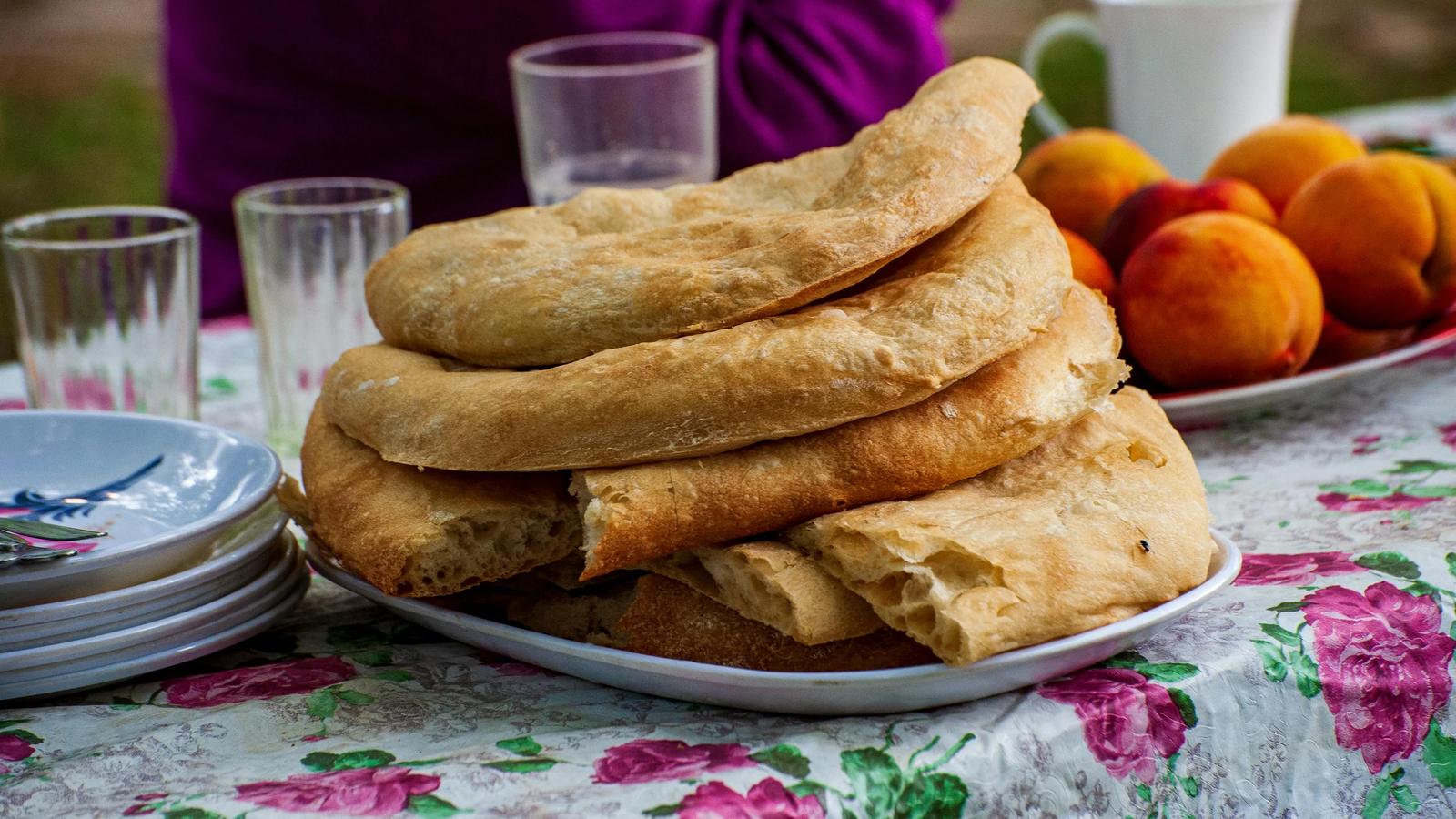
Bread is part of the meal. Fresh shotis-puri is served with every lunch, free of charge. Using it to mop up sauce is standard practice.
Frequently asked questions
1. How much does a filling meal cost in Georgia? 15–25 GEL (5–9 USD) per person at a casual eatery. For that price, you get 10 khinkali and a beer, or a khachapuri with salad. A mid-range dinner for two with wine runs 60–80 GEL (22–30 USD).
2. Which dishes should I try first? Kalakuri khinkali, Adjarian khachapuri, pkhali (set of 4), mushrooms with sulguni on ketsi, and a glass of Saperavi. This covers the essential range of Georgian flavours.
3. Can vegetarians eat well in Georgia? Yes, and with real variety. Pkhali, badrijani, ajapsandali, lobiani, mushrooms on ketsi, cheese khachapuri, and cheese or potato khinkali are all meat-free. Georgian cuisine historically includes many plant-based dishes due to Orthodox fasting traditions.
4. Is a cooking class worth it? Yes, if you want to take home a skill rather than just photos. Khinkali and khachapuri workshops cost 27–63 USD and last 2–3 hours. Recipes genuinely work at home.
5. Where are the best khinkali – Tbilisi or the mountains? Mountain khinkali (mtiuluri) – pure beef with generous herbs – differ from urban kalakuri. Both are excellent in their own way. Tbilisi offers more variety, but Kazbegi and the village of Pasanauri along the Georgian Military Highway serve mountain recipes that are hard to find in the capital.
Summary
Georgian cuisine is not background to a trip – it is a core reason to go. At 5–10 USD for a full meal, you can eat well and differently every day without repeating a dish. The best strategy: breakfast at a bakery (3–5 GEL), lunch at a khinkali house (15–25 GEL), and one evening at a restaurant with a wine tasting. If time allows, take a cooking class – the ability to fold khinkali will outlast any fridge magnet.
Read also:
- First Time in Georgia – What You Need to Know
- Telavi and Kakheti Wine Region
- What to See in Tbilisi in 1, 2 and 3 Days
Sources:
- National Bank of Georgia – exchange rates
- Georgian National Tourism Administration
- Ministry of Environmental Protection and Agriculture of Georgia
- UNESCO – Ancient Georgian traditional Qvevri wine-making method
Places to see in Georgia

You may also like
Best Day Trips from Tbilisi: 7 Tours from $13 (2026 Guide)
Kazbegi, Kakheti wine country, Mtskheta, Vardzia – the day trips locals actually recommend, with honest prices, timing and pitfalls most guides skip.
April 21, 2026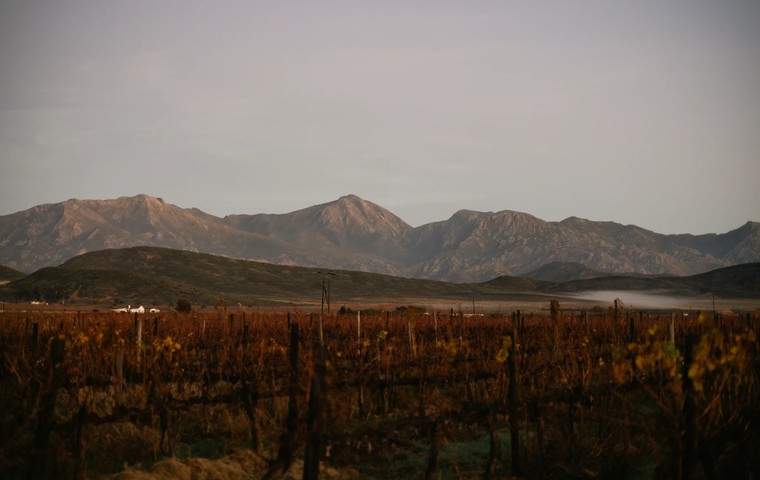
Telavi and Kakheti – Georgia's Wine Region: What to See, How to Get There, Prices
Complete guide to Telavi and Kakheti – Georgia's wine heartland. Qvevri tastings, monasteries, routes from Tbilisi, accommodation and food costs, practical tips.
February 20, 2026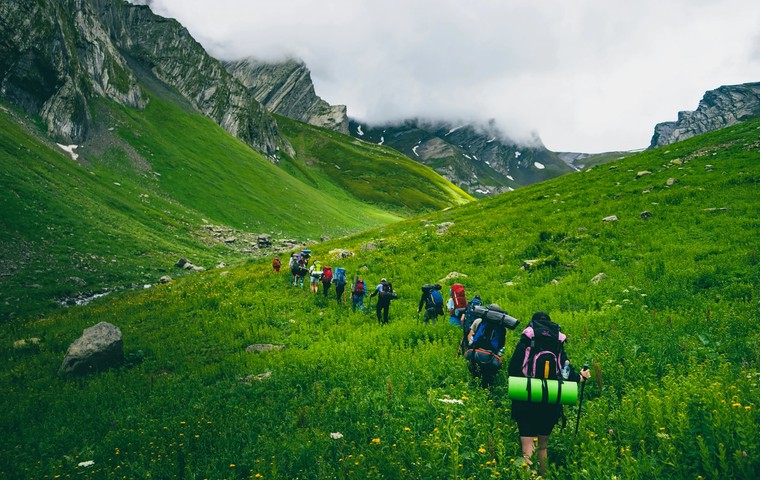
Georgia in July: +30 °C Heat, +26 °C Sea & Real Trekking Conditions
Tbilisi hits +34 °C, Batumi gets thunderstorms, and mountain snow cleared a week ago. Where to actually go, what it costs in 2026, and what to skip.
April 21, 2026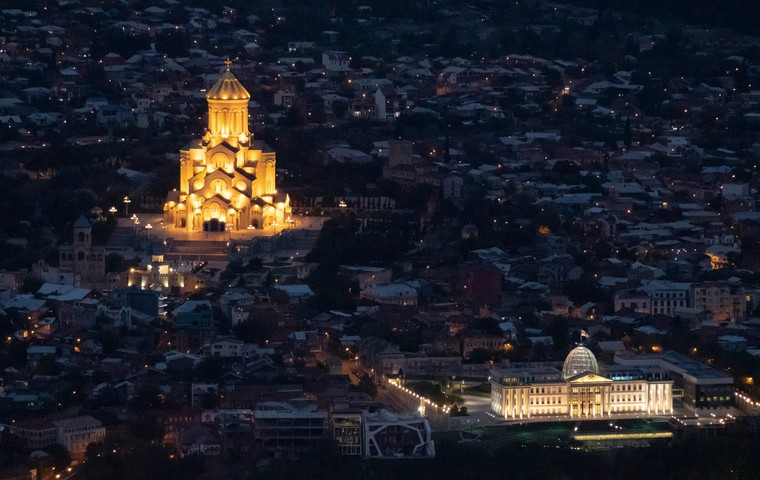
Romantic Weekend in Tbilisi: A Couple's Itinerary
Sulfur baths for two cost $25, dinner with Georgian wine runs $40, and the sunset from Narikala is priceless. A practical 2–3 day Tbilisi itinerary built for couples.
April 09, 2026
Kutaisi – What to See & Is It Worth Visiting? A Guide to Georgia's Second City
Kutaisi isn't a resort – it's a 3,000-year-old city with UNESCO monasteries, epic canyons 30 minutes away, and prices half of Tbilisi. Here's who should visit and who should skip it.
March 25, 2026
Georgia in June: +27°C, Early Season Prices & What to Really Expect
June is Georgia's sweet spot – warm weather without peak crowds, Batumi sea reaching 23°C, and hotel prices 20–30% below midsummer peaks. Here's the honest picture.
March 20, 2026