Blog · Tips
Mobile Internet in Georgia's Mountains: Where Magti Works, Where Nothing Does
 Tips
TipsIn this article
- 01Key takeaways
- 02Coverage by operator: where it works, where it doesn't
- 03Magti prices for travelers
- 04eSIM in Svaneti and Kazbegi: the convenience myth
- 05Guesthouse Wi-Fi: what to expect
- 06Trekking strategy: going offline
- 07Car rental and connectivity on the Georgian Military Highway
- 08Frequently asked questions
- 09Bottom line
- 10Sources
Some links are affiliate links. You pay the same, and we may earn a commission.
Magti holds signal in Mestia and at Gergeti Church, but goes silent on the Chalaadi trail. Real coverage map for Svaneti and Kazbegi, 2026 prices, and why eSIM isn't a magic fix in the high country.
In Georgia's mountains, there is exactly one operator that holds a stable network: Magti. In populated areas of Svaneti (Mestia, Ushguli) and around Kazbegi (Stepantsminda), Magti delivers reliable 4G; Silknet drops in and out, and Cellfie is essentially useless once you leave the cities. On hiking trails to glaciers and mountain passes, no operator has signal. If you plan trekking or remote work from Mestia, buy a Magti SIM in Tbilisi or Kutaisi before you head into the mountains. eSIM works fine in cities, but in the high country it roams onto the same Magti or Silknet network – often the weaker one – so quality lags behind a local SIM.
Key takeaways
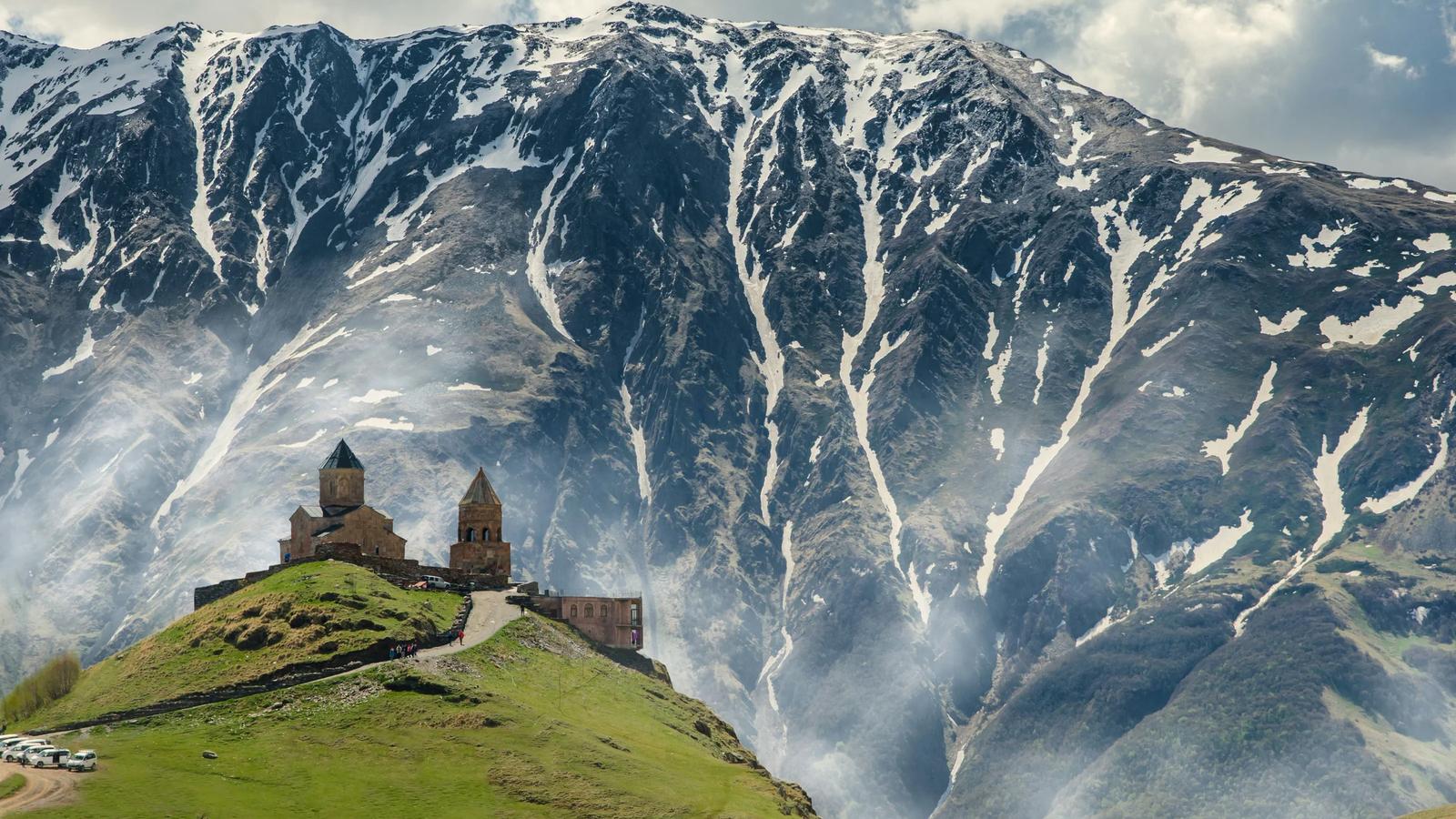
- Magti is the only reliable mountain operator: 4G in Mestia, Ushguli, along the Georgian Military Highway, and at Gergeti. Silknet works in towns but cuts out in gorges. Cellfie is poor outside cities.
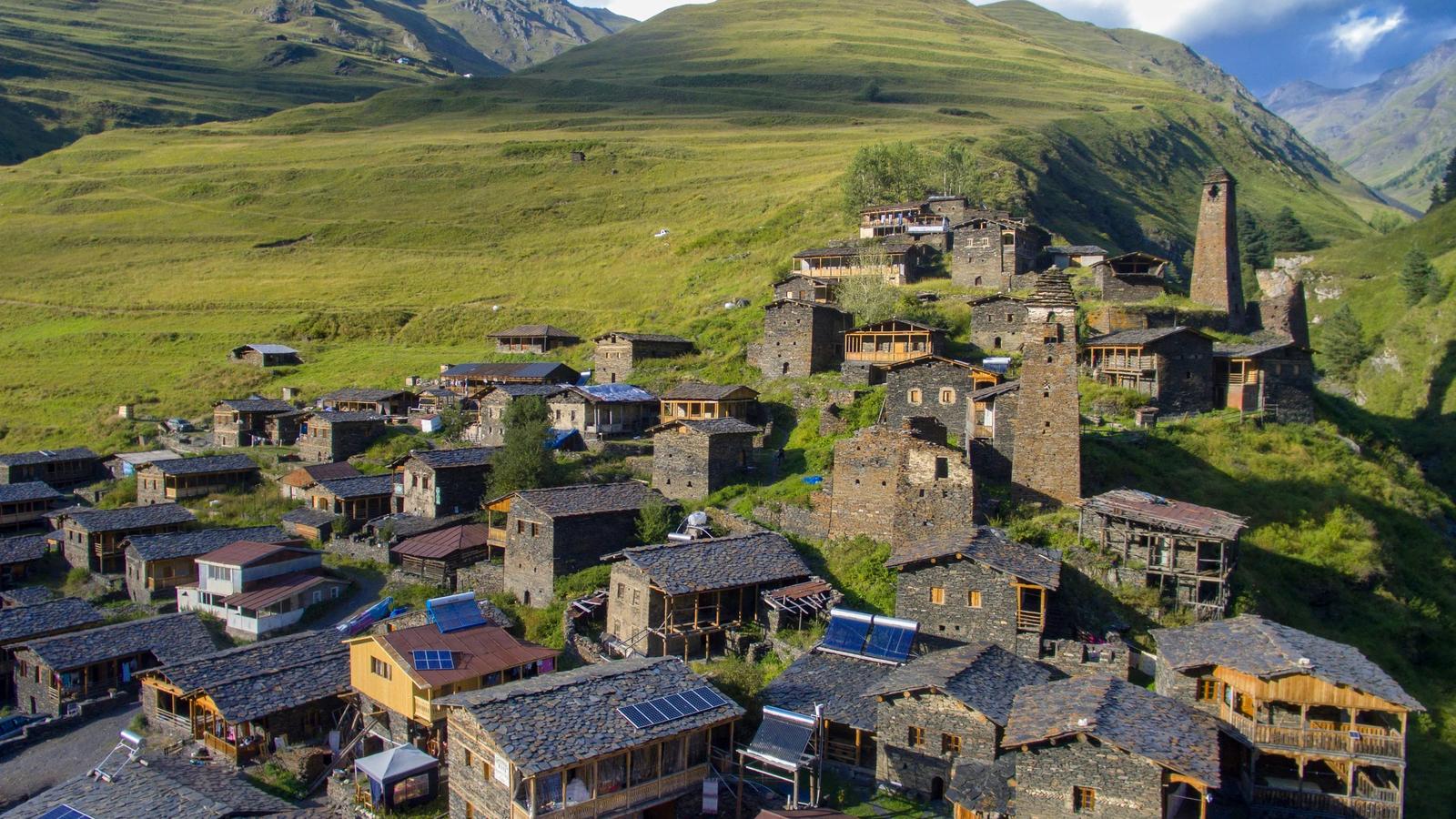
- No operator works on the trails: Chalaadi Glacier, Koruldi Lakes, the slopes of Mount Kazbek, and Zagar Pass are dead zones. Plan offline.
- eSIM in the mountains performs worse than a physical Magti SIM: international providers roam onto local networks – often Silknet, which is weaker in Svaneti.
- Avoid airport SIMs: prices are 30–50 % higher than at city stores, and queues run 30+ minutes.
- No Magti stores in Mestia or Stepantsminda: buy your SIM in advance in Tbilisi, Kutaisi, or Zugdidi en route to Svaneti.
- Guesthouse Wi-Fi exists but is weak: one shared channel per house, 3–10 Mbps, often not enough for video calls.
- Download offline maps in advance: maps.me or Google Maps – non-negotiable for any hiking.
Coverage by operator: where it works, where it doesn't
Georgia has three mobile operators: Magti (MagtiCom), Silknet (formerly Geocell), and Cellfie (formerly Beeline). In cities, the difference is marginal. In the mountains, it's decisive.
| Location | Magti | Silknet | Cellfie |
|---|---|---|---|
Mestia (center) | Stable 4G | 4G in center, patchy on edges | 3G/none |
| LTE | 3G/patchy | None | |
Mestia – Ushguli trail | Spotty, 2G/3G on hilltops | Very spotty | None |
| None past trailhead | None | None | |
| None | None | None | |
| Stable 4G | 4G | 3G | |
| 4G | 3G/4G | 2G/none | |
Georgian Military Highway | Holds almost everywhere | Drops in gorges | Drops often |
Gudauri (slopes) | 4G on pistes, none off-piste | 3G on resort | None off-resort |
| 4G | 4G in center | 3G |
Important: on the 4-day Mestia – Ushguli trek, there are 5–10 km stretches where no operator has signal. If you're not with a local guide, agree on check-in points beforehand – for example, send a message to family from each overnight stop.
Local guides note that even Magti has a blind spot near Ananuri Fortress in bad weather and around Friendship Monument during foggy days. That's terrain, not network failure.
Magti prices for travelers
Magti's tourist plans are gigabyte-based, not minute-based. Prices are in lari (GEL); USD shown at ≈ 2.7 GEL per 1 $.
| Plan | Data | Validity | GEL | ≈ USD |
|---|---|---|---|---|
Starter SIM | – | – | 10 GEL | ≈ 4 $ |
Tourist Mini | 5 GB + minutes | 7 days | 15 GEL | ≈ 6 $ |
Tourist | 15 GB | 30 days | 25 GEL | ≈ 9 $ |
Tourist Plus | Unlimited | 30 days | 32 GEL | ≈ 12 $ |
These are city-store prices in Tbilisi and Kutaisi. Airport kiosks charge 20 GEL for the starter and 35 GEL for the unlimited 30-day pack – a 30–40 % premium for the convenience of buying right at arrivals. A passport is required, and registration takes 10–15 minutes per customer.
After activation, dial \*182# immediately to opt out of marketing SMS – otherwise you'll get daily promo messages.
eSIM in Svaneti and Kazbegi: the convenience myth
eSIM from international providers technically works in Georgia's mountains, but no better than a local Magti SIM. The mechanism is simple: the global eSIM provider has a roaming agreement with one of the local operators. For some it's Magti; for others, Silknet or Cellfie. In Svaneti, the gap between those networks is the gap between "works" and "doesn't."
| Provider | Data | Validity | Price | Local network |
|---|---|---|---|---|
| 5 GB | 30 days | 15 € | Geocell/Silknet | |
| 10 GB | 30 days | 25 € | Geocell/Silknet | |
| 10 GB | 30 days | ≈ 25 $ | multi-network | |
| Unlimited | 7 days | ≈ 29 $ | multi-network | |
| 5 GB | 30 days | ≈ 18 $ | Magti/Silknet |
When eSIM makes sense: 3–7 day city-focused trips with no Svaneti or deep Kazbegi excursions. Activate on the plane, walk out of the airport already online, skip the queues. When you need a local Magti SIM: trekking, remote work from Mestia, renting a car for the Georgian Military Highway. The local SIM is more reliable in the mountains and 3–4× cheaper per gigabyte.
For longer trips, a sound strategy is to buy a Magti SIM (10 GEL) and an Airalo eSIM as backup. The eSIM helps if you lose the physical SIM in the mountains, or run out of credit on a Sunday when Magti stores are closed.
Guesthouse Wi-Fi: what to expect
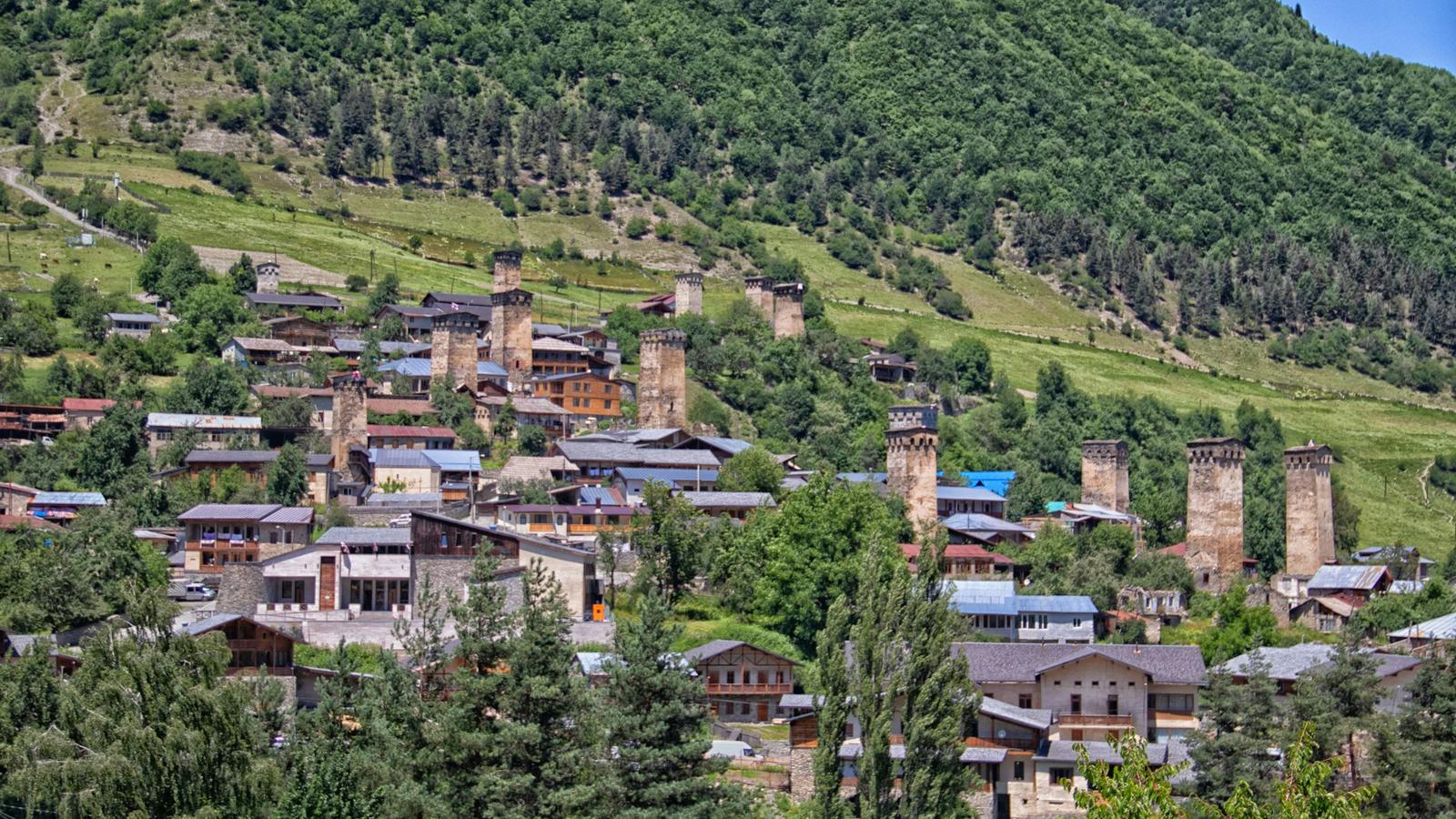
Most guesthouses in Mestia, Ushguli, and Stepantsminda advertise Wi-Fi, and technically they have it. The reality is harsher:
- One shared channel for everyone: 5–10 simultaneous guests drop the speed to 1–2 Mbps – video calls are off the table.
- 3–15 Mbps at best – fine for messaging and email, marginal for Zoom or Teams.
- Provider sometimes shuts off at night: on rare occasions in remote villages, the local link goes down until morning.
- In Ushguli, fixed-line internet often doesn't exist: some guesthouses share Wi-Fi via a Magti mobile router, with quality depending on load.
Travelers consistently report that for serious remote work from Mestia, the most reliable option is renting an apartment with its own Magti or Silknet mobile router, or bringing a portable hotspot with a local SIM. Cost: 8–12 $ for 100 GB per month – cheaper than an eSIM unlimited plan.
Trekking strategy: going offline
When even Magti has no signal, preparation is the only fallback.
Pre-trek checklist:
- Download offline maps: Google Maps (Caucasus region), maps.me (detailed trails), AllTrails Pro (if you go without a guide).
- Download an offline translator: Google Translate with the Georgian pack (135 MB) – on the trail you'll meet shepherds who speak neither English nor Russian.
- Agree on check-in protocols: each evening from your overnight – one message in the group chat, "made it, all good."
- Save emergency numbers: 112 is the unified emergency line and routes through any available network – it sometimes connects where regular calls don't.
- Carry a power bank: cold drains batteries roughly twice as fast; for a 3-day trek, a 20 000 mAh power bank is the minimum.
Critical warning: on the Mestia – Ushguli trail, hikers have drained their phones trying to chase a one-bar signal. If your battery dies at the wrong moment, the 112 emergency call won't go through. Conserve charge.
For serious trekking in Svaneti (Tetnuldi, Lyla, Guli Pass) or summits on Mount Kazbek, renting a satellite tracker (Garmin inReach Mini) makes sense – several alpine clubs in Tbilisi rent them for 10–15 $ per day.
Car rental and connectivity on the Georgian Military Highway
If you drive from Tbilisi to Stepantsminda (Kazbegi) via Gudauri, Magti holds the network for almost the entire route, except for short stretches in gorges near Ananuri Fortress and around Friendship Monument on foggy days. For renting and navigating mountain roads, Localrent works well – plenty of local 4WD operators for Svaneti, and bookings communicate via WhatsApp/Viber, which matters if something goes wrong in the mountains.
Driving into Svaneti is harder: the Zugdidi – Mestia road (130 km, 3.5 hours) runs largely through gorges, and Magti drops every 10–15 km. Past Mestia toward Ushguli is a dirt track – 4WD only, and ideally with a local driver.
Frequently asked questions
Does mobile internet work on the slopes of Gudauri in winter? Yes – on the main pistes, Magti holds 4G; signal weakens to 3G on the upper lifts. On backcountry routes (off-piste), there is no signal – heading out without a guide and offline maps is dangerous. Wi-Fi is available in most resort hotels and restaurants.
Can you work remotely from Mestia? Yes, but not in peak season. From December to March (ski season) and July to August (peak trekking), guesthouses are full and shared Wi-Fi runs at 1–3 Mbps – Zoom won't hold. Shoulder seasons (April–May, October) are far better, but still: rely on your own Magti modem with the unlimited 12 $ plan.
Which eSIM is best if I'm only going to Svaneti? No international eSIM beats a local Magti SIM in Svaneti. If you really need eSIM, choose Airalo with the 10 GB / 30 days pack – it roams onto the Geocell/Silknet network, which is sufficient in populated villages. For trekking it won't help – nothing works there.
Where can I buy a Magti SIM if I'm flying into Kutaisi and going straight to Mestia? In Kutaisi, take a taxi or marshrutka to the center; there's a Magti store on Chavchavadze Street and inside Maggie shopping center. If you head directly to Zugdidi, there are several Magti stores there. There's no Magti store in Mestia itself, though some guesthouses sell starter packs informally – be cautious, the SIM may not be registered in your name.
Does the 112 emergency call work in mountain areas, and what does it cost? The 112 call is free and works even without an active SIM, as long as the phone sees at least one cell tower from any operator. On most Svaneti trails, signal is reachable on ridges and summits but absent in gorges. For serious routes, register with Georgia's Mountain Rescue Service – it's free, and they track parties by their stated itinerary.
Bottom line
In Georgia's mountains, the operator choice is decisive: Magti is reliable in Mestia, Ushguli, on the Georgian Military Highway, and at Gudauri; Silknet works in towns but fails in gorges and Svaneti; Cellfie is mostly useless outside cities. A local Magti SIM is 3–4× cheaper per gigabyte than international eSIM, with better coverage. eSIM is best as a backup or for short city-focused trips. On the trails, no operator has signal – offline maps, check-in agreements, and a charged power bank matter more than any plan.
Sources
- MagtiCom – official tariffs and coverage
- Silknet – operator plans
- OpenSignal Georgia – speed and coverage measurements
Places to see in Georgia

You may also like
Best eSIM for Georgia: 9 Providers Compared with Real Prices
A local SIM costs from $4, while eSIMs start at $1.79. We compare 9 providers on price per GB, coverage, and convenience – and explain when eSIM beats a local SIM, and when it doesn't.
March 09, 2026
How to Choose an eSIM Based on Trip Length: From a Weekend to Months Abroad
A practical eSIM selection framework by trip duration: how much data you need, which validity periods make sense, and when regional or global plans are worth it.
January 08, 2026Mobile Internet in Georgia – How to choose a SIM Card
Compare local SIM cards from Magti, Silknet and Cellfie, eSIM plans from international providers, and practical tips for staying connected in Georgia. Prices, coverage, where to buy.
February 23, 2026
eSIM Providers for Travel: Which One Offers the Best Value?
We compare popular eSIM providers for travelers. Find out which one offers the best value and where you can get the cheapest data plans – all in this guide.
July 16, 2025
What Are the Advantages of eSIM Compared to a Regular SIM?
eSIM is a modern alternative to physical SIM cards, already supported by many newer smartphones. In this article, we explain why eSIM is more convenient than a traditional SIM – from instant activation without visiting a store to the ability to use multiple numbers on a single device. We’ll cover the key advantages of eSIM for both travel and everyday life, and why more and more people are making the switch.
June 19, 2025
eSIM for Travel: How to Save on Roaming Charges
Tired of outrageous roaming fees? Learn how eSIM can help you stay connected abroad – quickly, easily, and without overpaying.
June 08, 2025