In detail
What's here
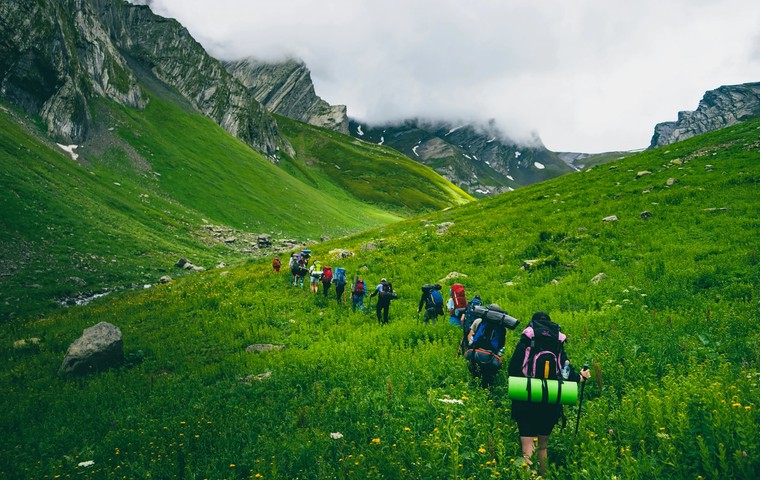
The trail begins at a suspension bridge over the Mestiachala River. The bridge sways underfoot while a milky-turquoise torrent of meltwater churns below. Just past the bridge sits a military border post (carry your passport). The first section leads through a coniferous forest: tall pines, soft needles underfoot, the smell of resin. The sound of the Chalaadi River grows louder to the right.
After 30–40 minutes the forest ends, and the path emerges onto a moraine – a field of light-grey boulders. The glacier comes into view: a massive wall of blue-grey ice filling the gorge, with cold air rolling off its surface. The scale is striking – the ice tongue is several dozen metres thick. On clear days, the snow-covered peaks of Ushba are visible above the glacier.
You can walk closer across the moraine, but approaching the ice wall is not recommended – rockfalls and ice collapses happen regularly, and fatalities have occurred. The safe viewing point is 100–150 m from the ice edge.
Highlights
Why visit
Accessibility – one of the closest glaciers to civilisation in the Caucasus, 12 km from Mestia
Trail elevation – from 1,670 to 1,950 m, only 280 m elevation gain
Glacier length – approximately 6 km, descending from Ushba (4,710 m) and Chatyn-Tau
Time required – 1.5–2 hours from the bridge and back; 3–4 hours including transfer
Season – June–October, no special equipment needed
History
Past & present
Chalaadi Glacier formed over millennia, fed by the snows of Ushba and Chatyn-Tau. The Chalaadistskali River, originating directly from the melting ice, flows into the Mestiachala and then into the Enguri, one of western Georgia's main rivers. Until the late 20th century, the glacier extended much further down the valley, and its tongue could be reached in 20 minutes from the bridge.
In recent decades, the glacier has been retreating due to climate change, losing several metres annually. The moraine in front of it keeps growing. Construction of a small hydropower plant on the Mestiachala in the 2010s transformed the surrounding area – the dirt road from Mestia to the bridge became busy with trucks, making the walk along it far less appealing. Taking a taxi to the bridge is now strongly recommended.