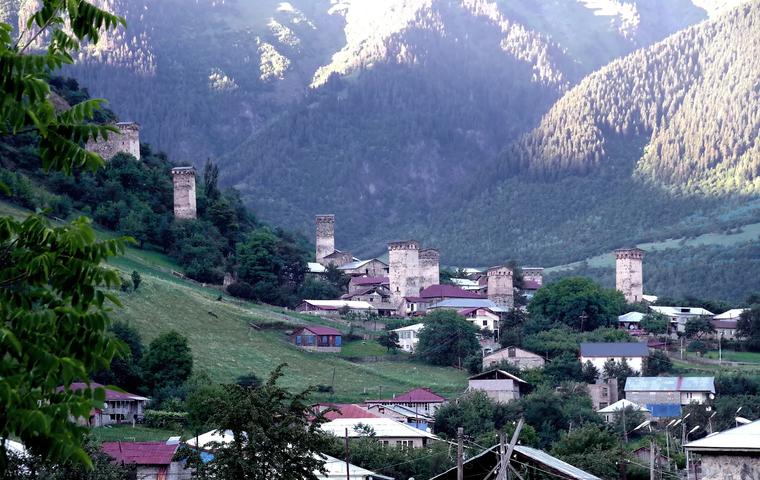
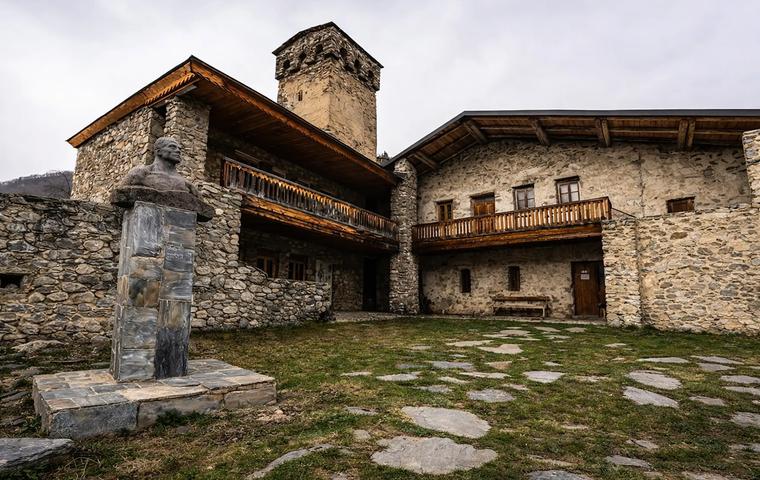
The Svaneti Museum of History and Ethnography is the region's principal museum, founded in 1936. Since 2004, it has been part of the Georgian National Museum system. In 2013, a new building designed by architect Gaga Kiknadze opened – a modern two-storey structure with climate control that fits seamlessly among the medieval Svan towers. The collection holds over 4,000 items.
The museum is centrally located in Mestia at 7 Avtandil Ioseliani Street – 3 minutes' walk from the central square. Look for the modern building with a medieval-style stone fence.
Entry is 20 GEL (~$7/€7). Allow 1–1.5 hours. Guided tours available in Georgian and foreign languages. On-site café, media library, and souvenir shop.