Tickets & prices
Free access. The bridge is open 24/7.
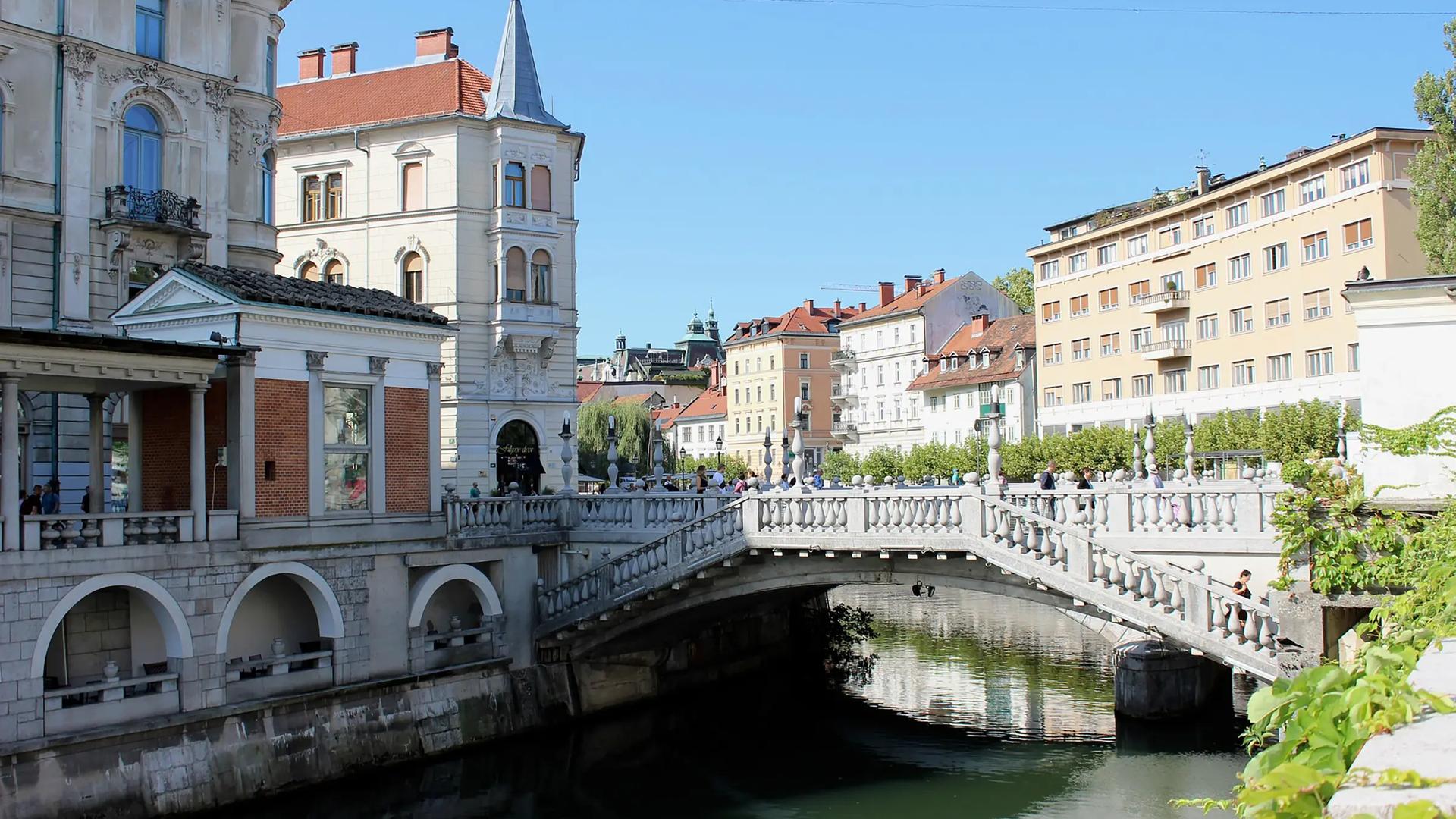
Tromostovje
Three bridges across the Ljubljanica by Jože Plečnik – a UNESCO Heritage Site since 2021
The Triple Bridge (Tromostovje) is an architectural ensemble of three bridges spanning the Ljubljanica River in central Ljubljana. The central stone bridge was built in 1842, replacing a medieval wooden bridge first documented in the 13th century. In 1931–1932, architect Jože Plečnik added two pedestrian bridges at slight angles on each side, creating the fan-shaped composition that has become a city icon.
The bridge connects Prešeren Square with the Old Town and the Central Market. It has been part of the pedestrian zone since 2007 – no car traffic. Distance from Ljubljana bus station – 600 m, an 8-minute walk.
A visit takes 10–15 minutes. Free access, open 24/7. In 2021, the Triple Bridge was inscribed on the UNESCO World Heritage List as part of Plečnik's architectural legacy in Ljubljana.
The Triple Bridge resembles an opening fan: two side pedestrian bridges angle outward from the central bridge, funnelling foot traffic from Prešeren Square toward the medieval streets across the river. The central bridge is a stone arch, roughly 7 m wide. The side bridges are narrower at about 5 m each, built from Glinica limestone and concrete. All three feature massive stone balustrades (642 balusters in total) and decorative lamp posts on pillars – a hallmark of Plečnik's style.
From each side bridge, stone staircases descend to terraces at the water's edge – a detail inspired by Venetian bridges. Plečnik deliberately sought to give Ljubljana a Mediterranean character. The terraces are planted with poplar trees and serve as café seating in warmer months. The bridges offer views of the Ljubljanica River, the willow-lined embankments, and Ljubljana Castle on its hilltop.
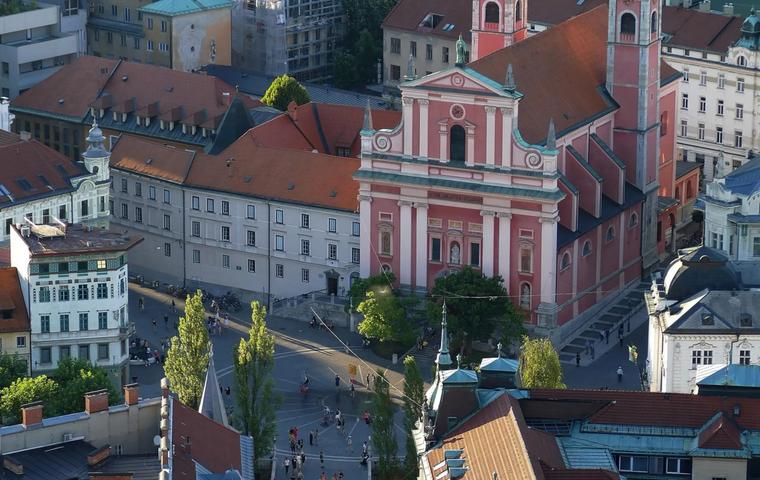
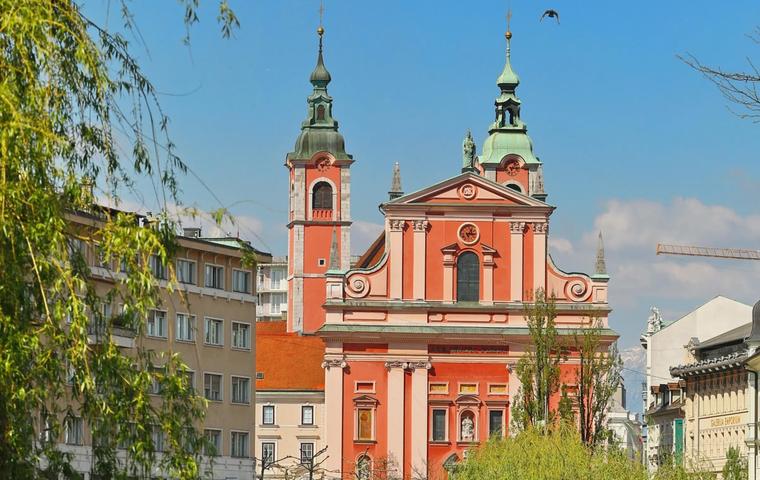
On the right bank, at the bridgehead, a small flower shop is part of Plečnik's market colonnade. On the left bank stands Prešeren Square with the pink Franciscan Church and a bronze statue of poet France Prešeren. In the evening, the bridges are illuminated, and on weekends, street musicians perform here.
Age – a wooden bridge at this site is documented from 1280; the stone central bridge dates to 1842; Plečnik's side bridges were completed in 1932
UNESCO – inscribed on the World Heritage List in 2021 as part of Jože Plečnik's legacy in Ljubljana
Construction – 642 stone balusters, decorative lamp posts, Venetian-style staircases leading to riverside terraces
Architect – Jože Plečnik (1872–1957), Slovenia's most influential 20th-century architect, who envisioned Ljubljana as a 'new Athens'
Pedestrian zone – since 2007, all three bridges are car-free, open only to pedestrians
The first bridge on this site – a wooden structure – is documented from 1280. Known as the Old Bridge (Stari most), it was the sole river crossing in the medieval city centre. The bridge served trade routes connecting northwestern Europe with the Balkans via Ljubljana. In 1842, the wooden bridge was replaced by a stone arch bridge designed by Italian architect Giovanni Picco. It survived the devastating 1895 earthquake and by the early 20th century had become a bottleneck for the city's growing traffic.
In 1929, Jože Plečnik proposed expanding the bridge by adding two pedestrian bridges on either side – not parallel, but at slight angles, creating a fan-shaped composition that funnels the space of Prešeren Square across the river toward the Town Square. Construction took place between 1931 and 1932. Plečnik removed the metal railings from the central bridge and replaced them with stone balustrades matching the new side bridges. In 1992, the bridges underwent a thorough renovation. Since 2007, the Triple Bridge area has been fully pedestrianised. In 2021, the ensemble was inscribed on the UNESCO World Heritage List.
Free access. The bridge is open 24/7.
No restrictions. Photography is unrestricted. The bridge is in a pedestrian zone – cyclists should dismount. The stone surface can be slippery in wet or icy conditions.
Nearby:
Cafés and restaurants on both banks of the Ljubljanica – dozens of venues along the embankments (average lunch €10–20 / ~$11–21)
Central Market – 100 m (farmers' produce; Open Kitchen food market on Fridays)
Toilets – at the Central Market (€0.50)
Tourist Information Centre – on Prešeren Square
Accessibility: The central bridge is completely flat with no steps – fully accessible for wheelchairs and pushchairs. The side bridges have staircases to the riverside terraces, but the main walking surface is also level.
Location: Central Ljubljana, between Prešeren Square and Town Square (Mestni trg). GPS: 46.0512, 14.5058.
On foot:
– From Ljubljana train station – 700 m, 10 minutes along Miklošičeva cesta
– From the bus station – 600 m, 8 minutes
By public transport:
– Bus to Tromostovje or Prešernov trg stop
– Single ticket – €1.30 with an Urbana card
By car:
– Nearest parking – underground at Congress Square (Kongresni trg), 300 m, from €1.80/hour. The city centre is a restricted-traffic zone.
Season: Year-round. In summer (June–August), riverside cafés operate on terraces near the bridge; Open Kitchen food market runs on Fridays.
Time of day: Evening – the bridges are illuminated, and the riverside atmosphere is most vibrant. At sunrise – the bridge is virtually empty, ideal for photos.
Duration: 10–15 minutes for the bridge itself. Combine with a walk through the Old Town and along the embankments.
Avoid: Nothing in particular. The stone surface is slippery in the rain.
Practical answers about visiting, routes and time on site.
No, it's free. The bridge is in a pedestrian zone and accessible 24/7 year-round.
The ensemble consists of three bridges: the central stone bridge (1842) and two pedestrian bridges added by architect Plečnik in 1932. The side bridges are set at angles, forming a fan shape.
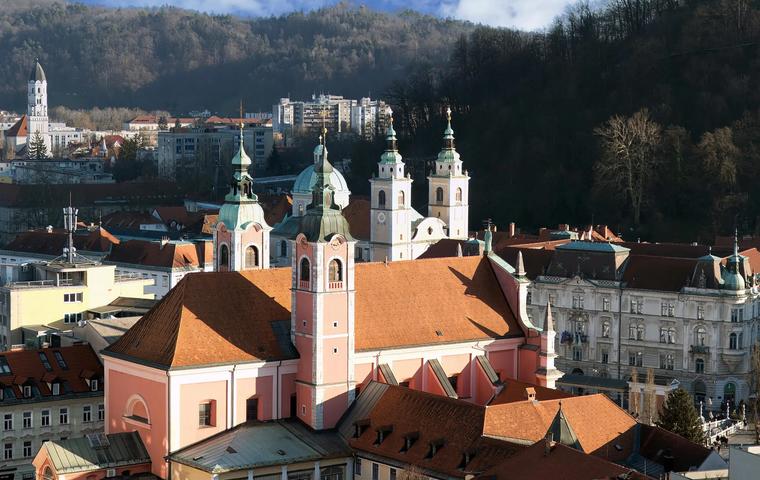
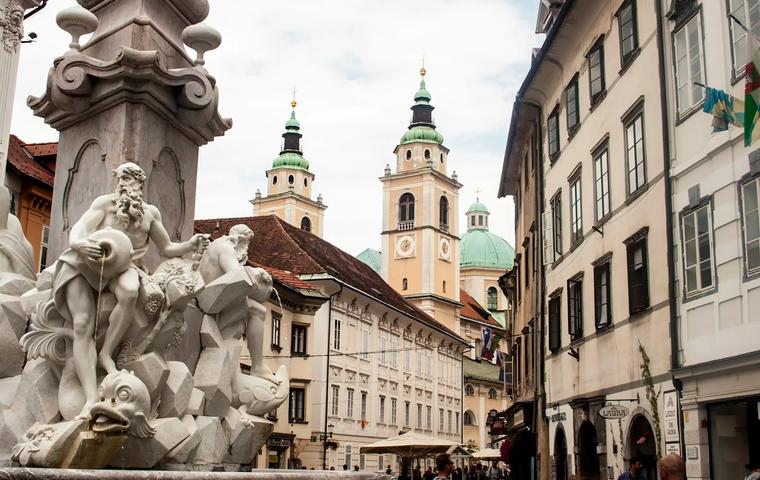
On one bank – Prešeren Square with the Franciscan Church. On the other – the Central Market, St. Nicholas Cathedral, and the path to Ljubljana Castle.
Yes, since 2021 – as part of Jože Plečnik's architectural heritage in Ljubljana. Several other Plečnik works in the city are also listed.
Yes. Stone staircases from each side bridge lead to terraces at river level. Cafés operate there in summer. The terraces are free to access.
The main surface of all three bridges is flat and wheelchair-accessible. The staircases to the riverside terraces are not. An alternative ramp to the embankment is available 100 m away.
Sunrise – the bridge is empty with soft light. Evening after dark – the bridges and embankments are illuminated. Daytime is always busy.
The best angle is from the embankment downstream (toward the Dragon Bridge), where all three bridges are visible at once, and from the riverside terraces below.