The Old Town sits in the centre of Ljubljana, a 10-minute walk from the main railway station. The district is entirely pedestrianised – vehicle access is restricted. Bus stops are positioned around the perimeter.
Exploring the main sights takes 2–3 hours. Entry to the district is free. For a complete experience, add a trip up to Ljubljana Castle (funicular: €6 return with ticket).
Transport
Travel time
On foot from Ljubljana center9–14 min.800 m
By car from Ljubljana3 min.1 km
From the airport Ljubljana Airport (LJU) · LJU30 min.27 km
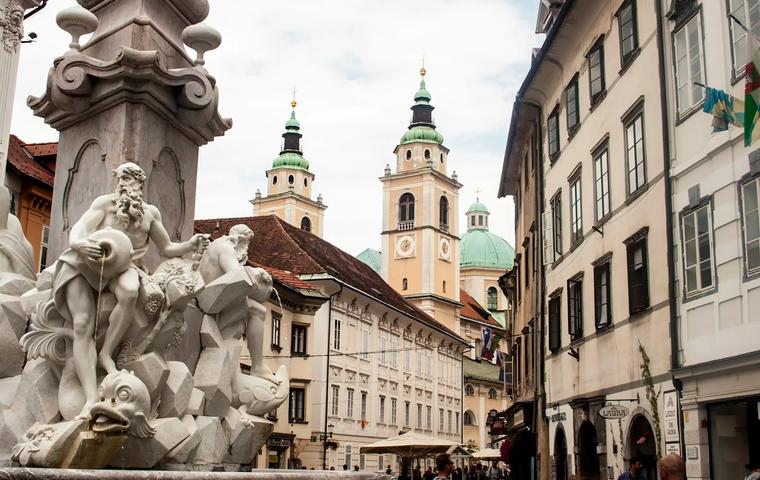
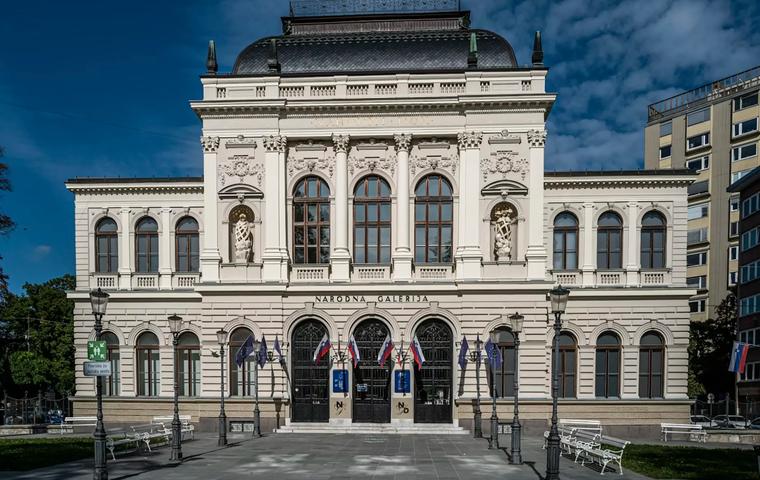
The Old Town divides into three historic quarters. The left bank of the Ljubljanica – the Mestni trg (Town Square) and Stari trg (Old Square) area – features narrow winding streets and Baroque facades from the 17th–18th centuries. Here stands the Town Hall with its Venetian-style balcony, fronted by a replica of the Robba Fountain (the original is in the National Gallery). Stari trg leads into Gornji trg – the quietest stretch, with antique shops and artisan workshops.
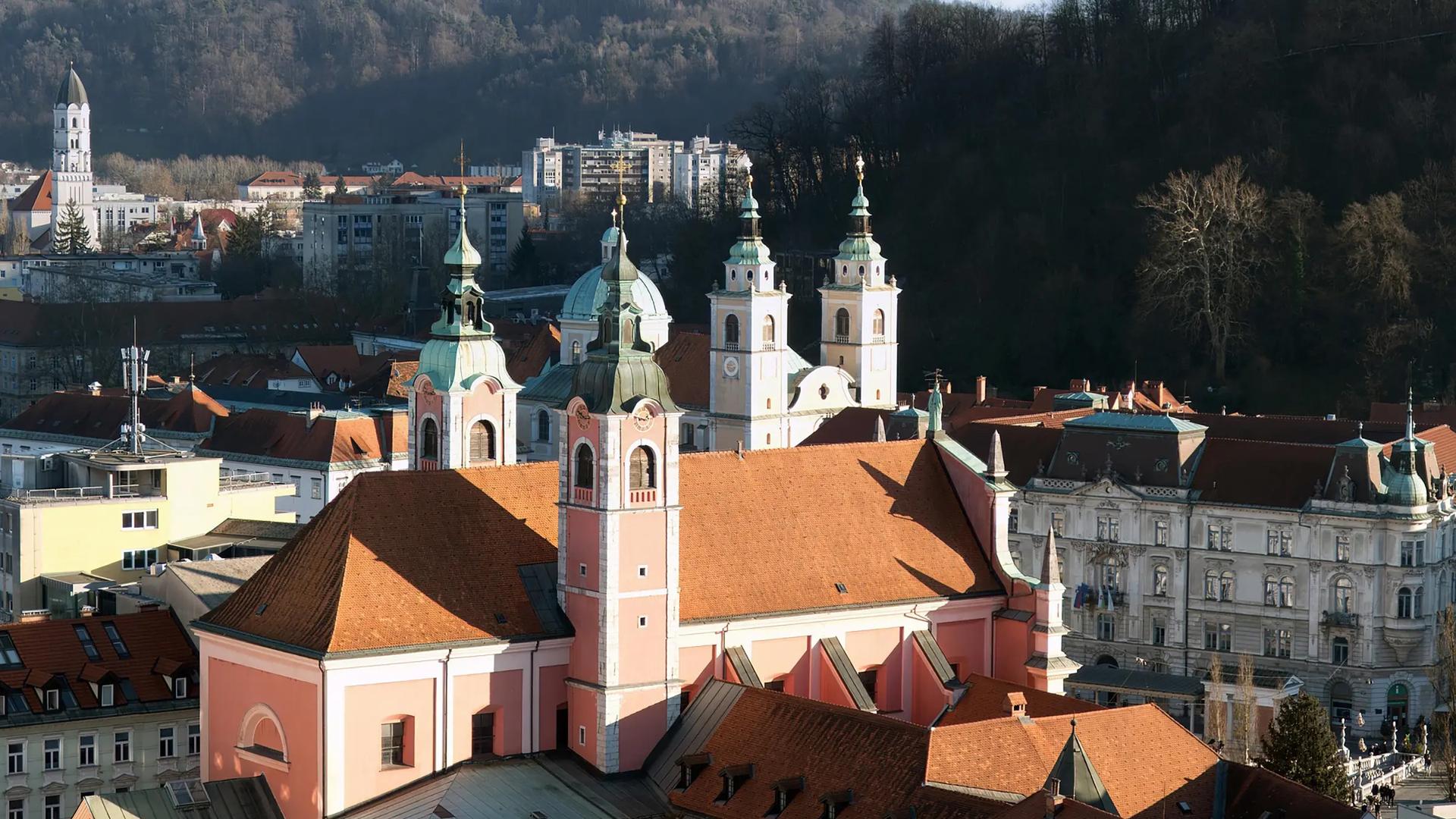
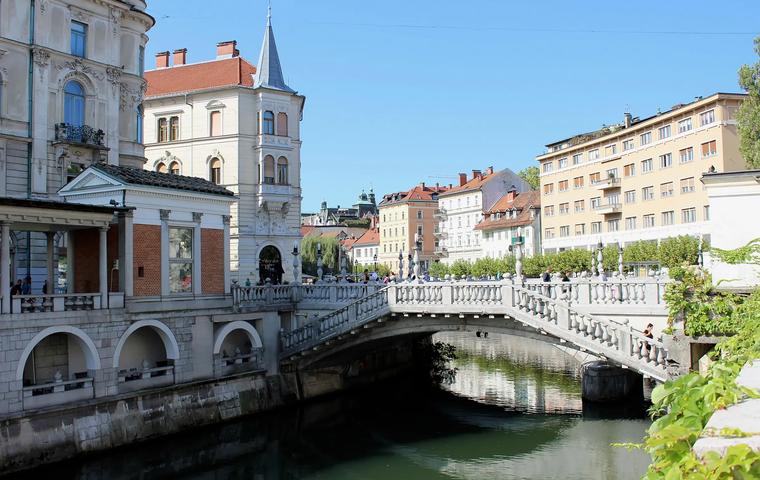
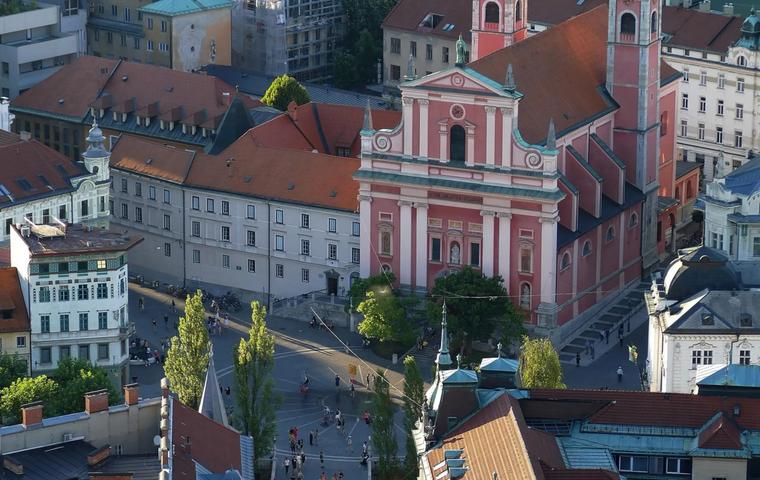
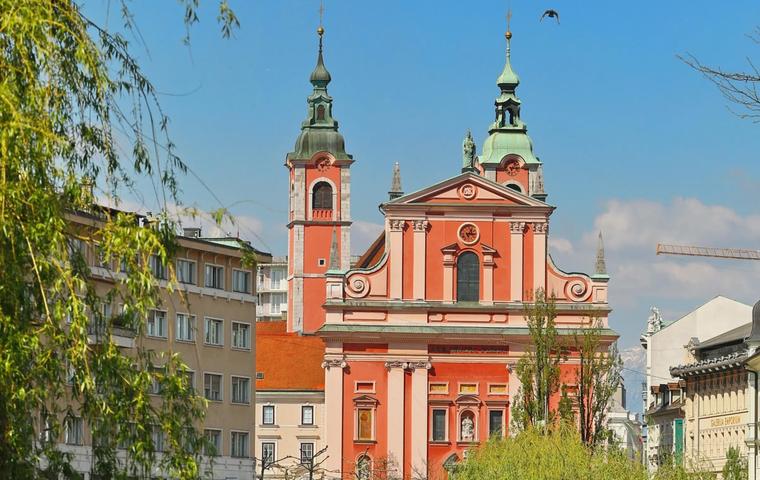
The right bank centres on Prešeren Square with the pink Franciscan Church (17th century), Vienna Secession buildings (rebuilt after the 1895 earthquake), and a riverside promenade lined with cafés. The embankment was designed by architect Jože Plečnik, who also created the Triple Bridge, the Central Market colonnade, the Cobblers' Bridge (Čevljarski most), and the National and University Library.
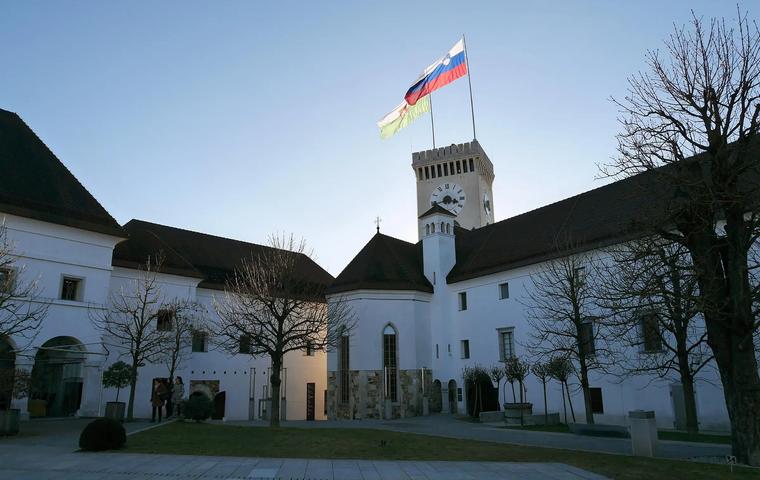
Castle Hill (366 m) with Ljubljana Castle rises above the district. The funicular departs from Krek Square opposite the market (1-minute ride). In the evening, the embankments are illuminated, cafés set tables on the bridges, and the atmosphere transforms completely. On Fridays from March to October, the market hosts Open Kitchen – a street food festival with dozens of stalls.
Prešeren Square – the central square with a monument to the national poet and the Franciscan Church
Ljubljanica River – embankments with cafés, willows, and boat tours (€10–12, 1 hour)
Castle Hill – funicular to the castle in 1 minute, city and Julian Alps panorama from the tower
Open Kitchen – Friday street food festival (March–October) at the Central Market
Vienna Secession – building facades rebuilt after the 1895 earthquake
History
Past & present
Medieval Ljubljana appears in written records from the 12th century (as Luwigana). By the 13th century, the settlement beneath Castle Hill had grown into a proper town with market rights and a city wall that withstood an Ottoman siege in the early 15th century. The 1511 earthquake destroyed parts of the town, which was rebuilt in the Baroque style following Italian, particularly Venetian, models. This period produced the Cathedral of St. Nicholas, the Town Hall, and the Robba Fountain.
The 1895 earthquake (magnitude 6.1) damaged about 10% of buildings. Mayor Ivan Hribar organised a major reconstruction: damaged quarters were rebuilt in the Vienna Secession style, electric lighting and a tram were introduced. In the 1920s–1930s, architect Jože Plečnik created the key elements of the modern cityscape: the Triple Bridge, the embankments, the market colonnade, and the library. In 1991, Ljubljana became the capital of independent Slovenia. In 2007, the centre was closed to cars, converting the Old Town into a pedestrian zone. In 2016, Ljubljana was named the European Green Capital.
For visitors
Visitor information
Tickets & prices
Entry to the Old Town is free – it is an open pedestrian district.
Ljubljana Castle (on Castle Hill):
- Castle ticket (tower + museum + exhibitions): €10 adults, €7 children 7+
- Castle + funicular (return): €16 adults, €11 children
- Funicular only (return): €6
- Online purchase 10% off: ljubljanskigrad.si
Free walking tours:
- Ljubljana Free Tour – daily from the Franciscan Church steps, 2 hours, tip-based
Paid tours (Visit Ljubljana):
- Group walking tour: €15 adults
- Private tour: from €80/hour
Rules & restrictions
The Old Town is an open pedestrian zone with no formal restrictions. For visiting the Cathedral of St. Nicholas: covered shoulders and knees, silence during services. Photography in the cathedral without flash. Bicycles are allowed but difficult to use during peak hours (11:00–15:00 in summer) due to pedestrian crowds.
On-site facilities
Food and drink:
- Dozens of cafés and restaurants along the embankment and in the squares
- Average lunch: €10–18 for a main course
- Cappuccino: €2–3
- Open Kitchen (Friday, March–October): street food from €5
Toilets: Public facilities near the market and Prešeren Square (€0.50–1). Free in restaurants with an order.
Wi-Fi: Free city Wi-Fi "WiFree Ljubljana" covers main squares and embankments.
Accessibility: Embankments and squares are level, suitable for strollers. Stari trg and Gornji trg streets are cobblestoned, less comfortable. Castle Hill – by funicular only (wheelchair accessible).
Getting there
Transport & directions
From Ljubljana railway station (10 minutes on foot):
– South along Miklošičeva cesta to Prešeren Square – the main entrance to the Old Town
From the bus station (10 minutes on foot):
– The bus station is next to the railway station, same route
By bus:
– Stops around the Old Town perimeter: "Prešernov trg", "Tromostovje", "Zmajski most"
– Fare: €1.30 with Urbana card
Urban tourist train:
– Route through the Old Town, departing from Congress Square
– Adults: €12, children: €6, journey time – 1 hour
By car:
– Vehicle access to the Old Town is restricted. Nearest car parks: Kongresni trg (underground) and NUK (by the library)
Season: April–October for warm weather, riverside cafés, and Open Kitchen. December for Christmas markets and festive lights. January–February is quiet and cool but crowd-free.
Time of day: Morning (8:00–10:00) – empty streets, good light for photography. Evening (after 19:00 in summer) – illuminated bridges, atmospheric embankments. Midday (12:00–14:00) – peak tourist traffic at the market and bridges.
Duration: 2–3 hours for the main sights. With the castle – 4–5 hours. A full day with museums, a boat trip, and lunch.
Avoid: July–August, 11:00–16:00 – peak crowds at the Triple Bridge and Prešeren Square. Cobblestone streets are slippery in rain.
Questions & answersFAQ
Popular questions
Practical answers about visiting, routes and time on site.
How much time do I need for the Old Town?+
2–3 hours for the main sights (bridges, squares, embankments). With Ljubljana Castle – 4–5 hours. A full day with museums and lunch.
Do I need to buy tickets?+
The Old Town is a free, open pedestrian zone. Only Ljubljana Castle (€10–16) and certain museums have admission fees.
How do I get up to the castle?+
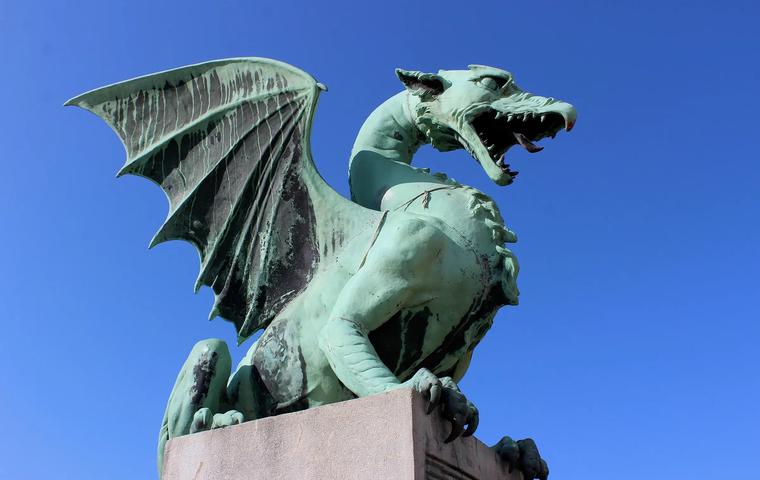
Funicular from Krek Square – 1-minute ride (€6 return, €16 with castle admission). On foot – 15–20 minutes via a trail from the Dragon Bridge or the embankment.
Where should I eat in the Old Town?+
Riverside restaurants – about €10–18 for a main course. On Fridays (March–October), Open Kitchen at the market serves street food from €5. At the castle – Gostilna na Gradu (Slovenian cuisine, about €20–30).
Can I drive into the Old Town?+
No, the centre is closed to cars. Nearest car parks are Kongresni trg (underground) and Tivoli. The centre is compact – everything is walkable within 20 minutes.
Are there free walking tours?+
Yes, Ljubljana Free Tour runs daily English-language walking tours (2 hours, meeting at the Franciscan Church, tip-based). Tours are available in several languages.
Is the Old Town suitable for children?+
Yes. The embankments are level, the funicular to the castle is fun for kids, and the castle has Escape Castle quest and a Puppet Museum. A playground is in Tivoli Park, 10 minutes away.
What can I see in the evening?+
The embankments and bridges are illuminated at night. Cafés set tables by the water. In summer, Ljubljana Castle hosts open-air cinema (Film under the Stars). The castle's jazz club runs year-round.
Do I need mobile data in the Old Town?+
Free Wi-Fi "WiFree Ljubljana" covers main squares and embankments. 4G works throughout the area. Slovenia is in the EU roaming zone.