In detail
What's here
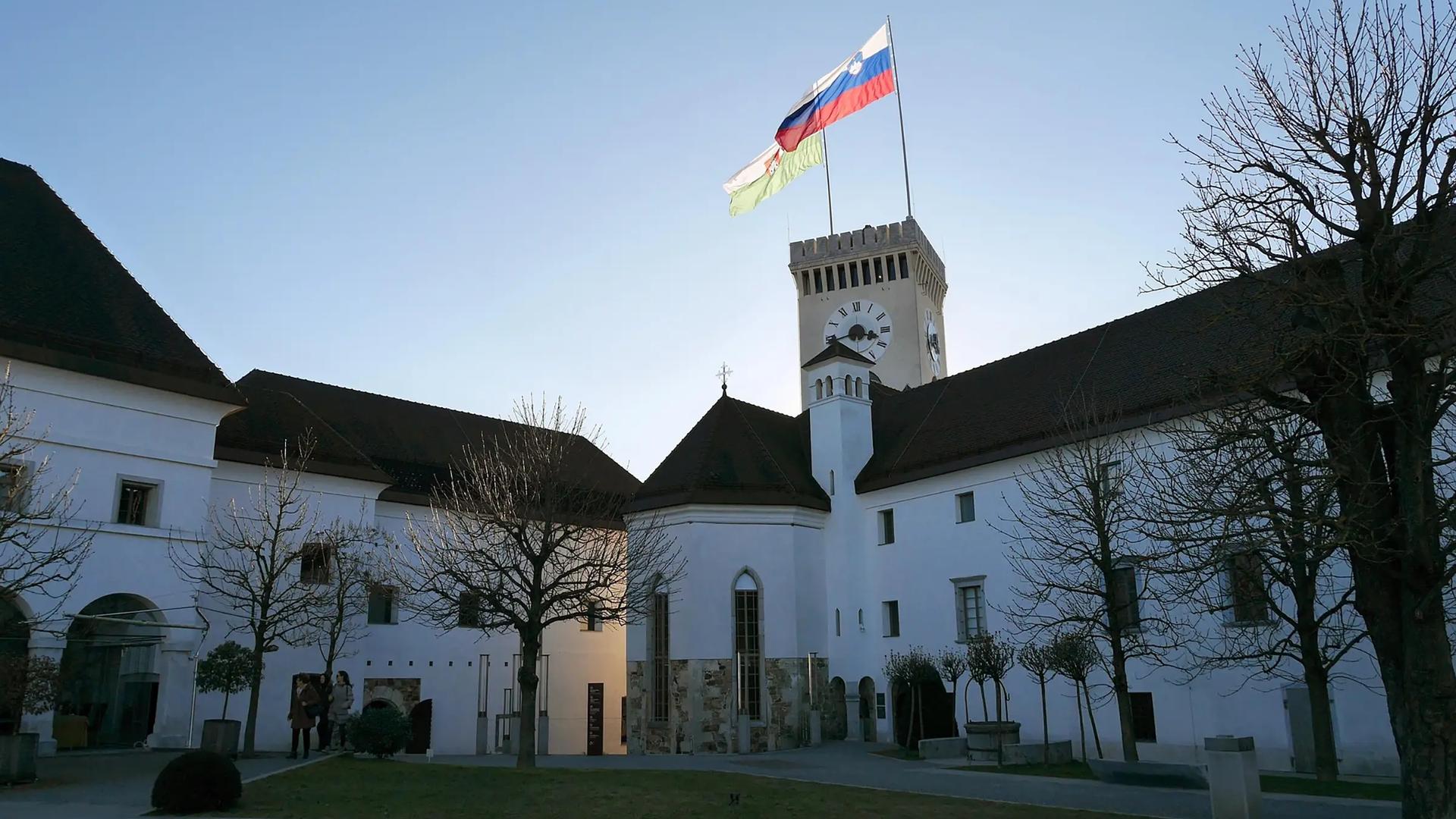
The castle complex occupies the entire hilltop. Entering through a 17th-century stone bridge, you step into the central courtyard – a paved area enclosed by limestone and brick walls. In summer, the courtyard hosts open-air cinema screenings and concerts. To the left stands a modern building with a wedding hall and café Lolita overlooking the courtyard. To the right is the museum wing: the Slovenian History Exhibition on the lower floor spans 200,000 years of the territory's past. One floor up, the Museum of Puppetry was created in partnership with the Ljubljana Puppet Theatre.
The Viewing Tower is the castle's main vantage point. From the top, you get a full 360° view of the Old Town rooftops, the Ljubljanica River, Tivoli Park to the west, and the snow-capped Kamnik–Savinja Alps to the north. On clear days, visibility extends 40–50 km. The Chapel of St. George (1489) is the oldest surviving room in the complex, with walls covered in frescoes featuring the coats of arms of the Dukes of Carniola. Nearby is the medieval prison – a narrow gap between the fortress wall and bedrock where inmates were lowered in by rope.
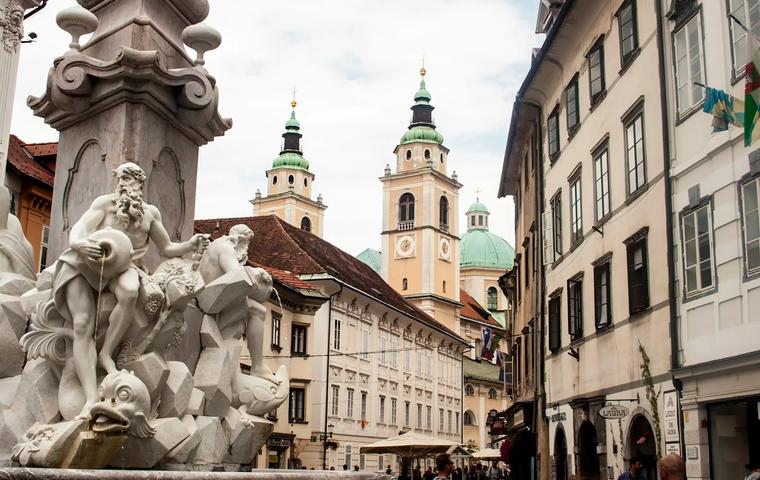
Two restaurants operate on-site: Gostilna na Gradu (Slovenian cuisine, lunch from €15–20) and Strelec (fine dining, Michelin Plate). The Castle Wine Bar & Shop offers tastings of Slovenian wines. The glass-walled funicular is an attraction in itself – during the 1-minute ascent, passengers see the city panorama through transparent walls and floor. The lower station sits next to the Central Market and St. Nicholas Cathedral.
Highlights
Why visit
Age – the first fortifications on the hill date to 1200 BC; the stone fortress was built in the 11th century, with the current appearance shaped in the 15th–17th centuries
Viewing Tower – a 360° panorama of the Old Town, Julian Alps, and Kamnik–Savinja Alps, with visibility up to 50 km on clear days
Funicular – a glass cabin covers a 70 m elevation change in 1 minute; over 6 million passengers carried since 2006
Chapel of St. George – built in 1489, frescoed with the coats of arms of the Dukes of Carniola, the oldest room in the complex
Dining – restaurant Strelec holds a Michelin Plate; the wine bar offers tastings of Slovenian wines
Visitor numbers – over 1.2 million visits in 2025, Ljubljana's most popular attraction
History
Past & present
Archaeological finds confirm that Castle Hill was settled from the 13th century BC by Bronze Age urnfield culture communities. The Romans founded the city of Emona on the banks of the Ljubljanica (1st century BC), though no confirmed Roman structures exist on the hilltop. The first medieval wooden fortress likely appeared in the 11th century. Written sources first mention the castle in 1144 as the seat of the Carinthian Spanheim dynasty. In 1335, the Habsburgs took control, making it the residence of the Governors of Carniola. In the late 15th century, Duke Frederick III ordered the old fortress demolished and a new one built – with thick walls, towers, and a drawbridge – to defend against Ottoman raids.
The castle's military importance faded in the 19th century. During the Napoleonic Wars (1809–1813), it served as barracks and a military hospital. From 1815 to 1895, it functioned as a prison holding political inmates, including the Slovenian writer Ivan Cankar. After the 1895 earthquake, the prison closed, and in the early 20th century, impoverished families were housed inside. The municipality purchased the castle in 1905 for 60,200 Kronen. A major restoration began in the 1960s and lasted over 35 years. The funicular opened in 2006, and by the 2010s the castle had established itself as the capital's primary cultural centre.
Getting there
Transport & directions
On foot from central Ljubljana (15–20 minutes):
– From Prešeren Square or the Old Town – several forest trails lead up the hill. The main route starts from Študentovska ulica; signs are posted.
– The climb is steep; comfortable shoes are essential.
By funicular (1 minute):
– Lower station at Krek Square (Krekov trg), next to the Central Market and the Puppet Theatre.
– Departures every 10 minutes; continuous during peak hours.
– Hours: Jan–Apr & Oct–Dec 9:00–19:00; May–Sep 9:00–22:00.
By bus:
– City bus No. 32 to the Ljubljanski grad stop.
By car:
– Navigate to Grajska planota 1, 1000 Ljubljana. Parking: 40 spaces, €2/hour. Not recommended on weekends and in summer – limited spaces.