Blog · Transport
Petrol in Montenegro: Fuel Prices, Which Brands to Trust, Where Tourists Get Scammed
 Transport
In this article
- 01Key takeaways
- 02Fuel prices in Montenegro – what you'll actually pay
- 03Which fuel networks to use – and which to skip
- 04Payment methods – cards, cash, and the international card situation
- 05How not to get scammed – classic tricks and how to block them
- 06Where to fuel up by route
- 07FAQ
- 08Bottom line
- 09Read also
- 10Sources
Some links are affiliate links. You pay the same, and we may earn a commission.
Fuel prices in Montenegro, autumn 2026: €1.75 for 95-octane, €1.95 for diesel. Which networks won't cheat you, where cards work, and why the cheapest pump is rarely the best one.
A liter of 95-octane petrol in Montenegro costs €1.75, and diesel sits at €1.95 (price caps for 29 September – 5 October 2026). Prices are state-regulated – the government recalculates the caps every week (on Monday, new prices from Tuesday), so the spread between networks is rarely more than 1–2 cents per liter. The real question for a road-tripping tourist isn't "where is it cheapest" but "where won't they short-pour me" and "will my card actually work". Below is the practical map of Montenegro's fuel landscape, including the post-October-2025 reality where Lukoil and Gazprom-owned NIS stations are now under US sanctions.
Key takeaways
- Petrol in Montenegro is more expensive than the rest of the Balkans but cheaper than Croatia or Italy. Price caps for 29 September – 5 October 2026: €1.75 for 95-octane, €1.95 for diesel; LPG was about €0.75 in April 2026 (not capped).
- Prices are state-regulated and revised every week. The gap between networks rarely exceeds €0.02 per liter – there's no point hunting for "cheaper" stations.
- The biggest network is EKO (Jugopetrol). 46 stations nationwide, owned by Greek HELLENiQ ENERGY, consistent quality across all locations.
- Lukoil and NIS stations are under US sanctions since October 2025. They physically operate, but card processing is unreliable and ownership transfers are pending.
- Cards work almost everywhere, but in the mountains – often cash only. Fill up before heading into Durmitor or Biogradska Gora.
- Self-service barely exists – an attendant pumps for you. This is fertile ground for the classic short-pour, wrong-octane and missing-change scams.
- Stations are spaced 20–70 km apart on the coast, much sparser inland. Some Durmitor segments run 50+ km without a reliable pump.
Fuel prices in Montenegro – what you'll actually pay
Montenegro imports 100 % of its fuel – there's no domestic refining. Prices are sensitive to global oil markets but capped by the Ministry of Economy, with reviews every other Monday. According to local drivers' reports, real-world price variation between stations on the same day rarely exceeds 1–2 euro cents per liter.
| Fuel type | Price per liter (cap, 29 Sep – 5 Oct 2026) | Pump label |
|---|---|---|
Eurosuper 95 | €1.75 | BMB 95 / Eurosuper 95 |
Eurosuper 98 | €1.79 | Eurosuper 98 |
Eurodiesel | €1.95 | EuroDiesel / EVO Diesel |
Premium diesel | above Eurodiesel (not capped) | EKO Diesel Avio / V-Power |
LPG (autogas) | ~€0.75–0.80 (April 2026, not capped) | Autogas / TNG |
(Updated: October 2026)
For comparison: the global average for 95-octane is around $1.44/L, Croatia sits at €1.71, and Italy is roughly €1.80. So if you're driving into Kotor or Budva from Croatia, fill up on the Montenegrin side – on a typical 50-liter tank you'll save €8–12 just on the border crossing.
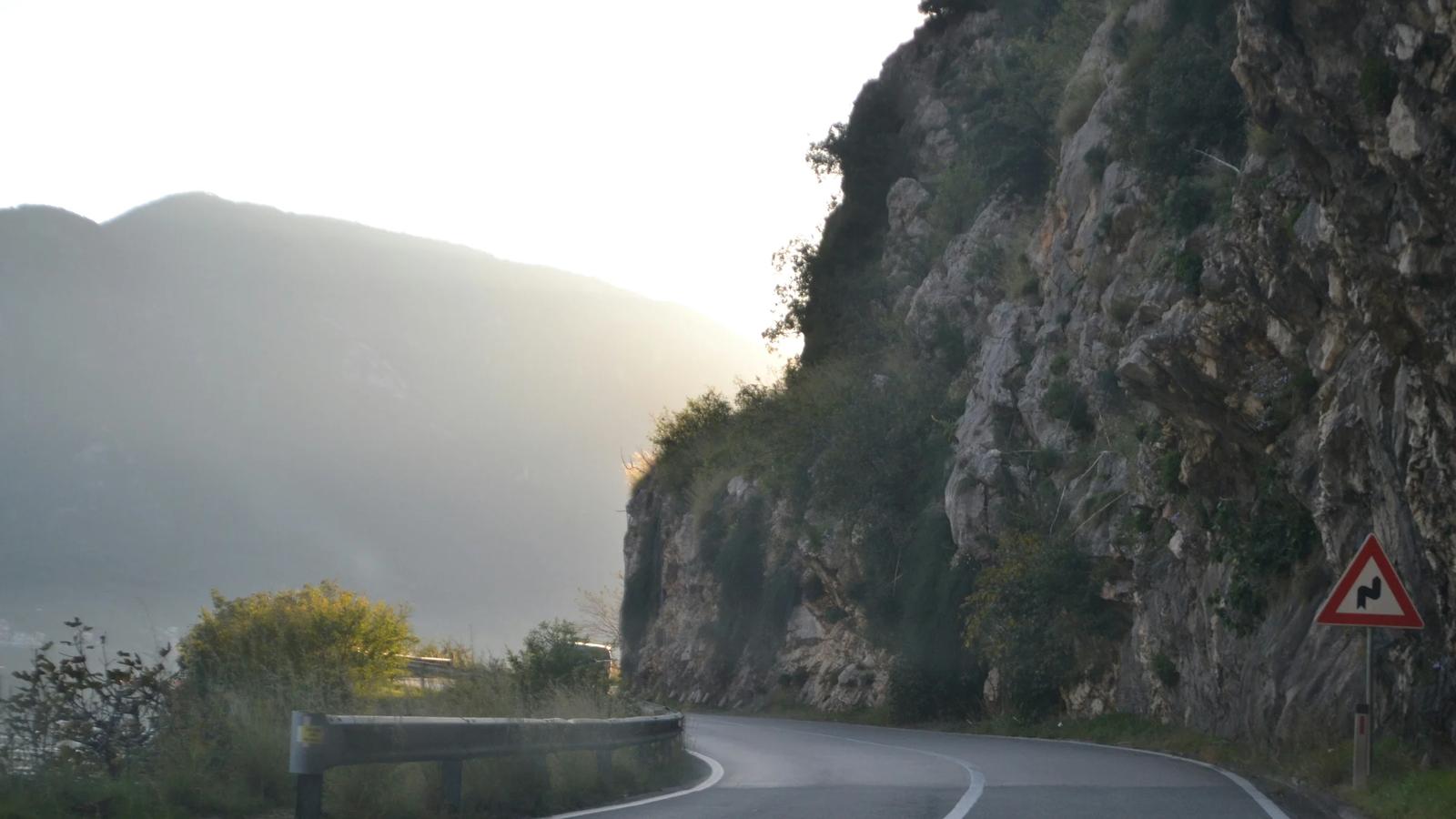
Mountain fuel consumption matters. On serpentine roads (Kotor – Cetinje, the climb to Žabljak) consumption rises 25–35 % above urban cycle. If your car normally drinks 7 L/100 km on the flat, budget 9–10 L for the mountains.
Which fuel networks to use – and which to skip
Montenegro has roughly 250 petrol stations, of which about 60 % belong to branded chains. The rest are small private or single operators – approach these with caution, fuel quality is unpredictable.
EKO (Jugopetrol AD) is the country's largest network with 46 stations. It has been owned by Greek HELLENiQ ENERGY since 2002, with fuel sourced from Greek refineries. EKO is the only network with stations in nearly every municipality, from Herceg Novi to Žabljak. Cards are accepted everywhere, receipts are issued automatically, and larger stations have cafés and Wi-Fi.
Petrol is a Slovenian chain with around 13 stations, concentrated on the coast and in Podgorica. According to local drivers and tour operators, it's considered the top choice for fuel quality – especially diesel. Prices match EKO but stations are scarce, so top up before heading north.
INA is the Croatian chain with about 20 stations in Montenegro. Solid European standard, no quality complaints. Common on the highways between Budva and Podgorica.
NIS Petrol / Gazprom is the Serbian chain owned by Gazprom Neft, with about 30 stations in Montenegro. Under US sanctions since October 2025. The pumps physically work and fuel is available, but ownership transfer is in progress and international card processing may fail intermittently. Quality of fuel itself remains decent – pay cash to avoid card hassles.
Lukoil Montenegro is the Russian chain with about 25 stations. Under US sanctions since October 2025; in January 2026 Lukoil announced the sale of its international assets to American Carlyle Group. Until the deal closes, foreign banks may decline transactions – Visa/Mastercard processing is hit-and-miss. Locally the chain has a good reputation for fuel quality, but with the sanctions cloud, EKO or Petrol are the safer bets.
Smaller local chains – Pavgord, Mivis, Vuk Petrol, Hifa Oil – appear in smaller towns. Quality varies, reviews are mixed. Diluted fuel and short-pouring incidents are reported more often here than at the major chains.
Payment methods – cards, cash, and the international card situation
Most chain stations accept Visa, Mastercard, Maestro and Amex. Apple Pay and Google Pay work at EKO, Petrol and INA. At private and standalone stations – especially upcountry – cash is often the only option. Carry €30–50 in cash as a buffer.
Sanctions side-effect. Lukoil and NIS Petrol stations have been intermittently declining European bank cards since late 2025 due to acquirer bank issues. If you plan to pay by card, stick with EKO, Petrol, or INA – no problems there.
Check visa and customs requirements for your nationality before driving across borders – fuel restrictions on international travel can apply (most countries allow only the fuel in the tank, no jerry cans).
How not to get scammed – classic tricks and how to block them
Self-service is rare in Montenegro. At 95 % of stations an attendant pumps for you, and that's where the classic tricks happen. Based on local drivers' and rental companies' reports, three patterns dominate.
Short pour. The attendant doesn't wait for the pump's automatic cut-off and yanks the nozzle early. Display says "50 liters", you got 47–48. Defense: ask for a fixed amount ("€20", "full tank"), stay at the pump, watch the display until the count stops.
Wrong octane charge. When paying by card, the attendant "accidentally" rings up 98-octane instead of 95. Defense: always take the receipt and check the fuel type printed on it.
Wrong change. Cash classics: "no change", "rounded up", "forgot the fiver". Defense: count your change at the pump, before driving off.
Golden rule. Never hand over money before pumping is finished and the counter has stopped. Pay by what's on the screen, not by what the attendant tells you.
Where to fuel up by route
Coastal road (Herceg Novi – Ulcinj). Stations every 20–30 km on average. No need to plan ahead – fill when convenient. Top picks: EKO in Tivat (airport exit), Petrol on the Budva entry road, EKO in Bar.
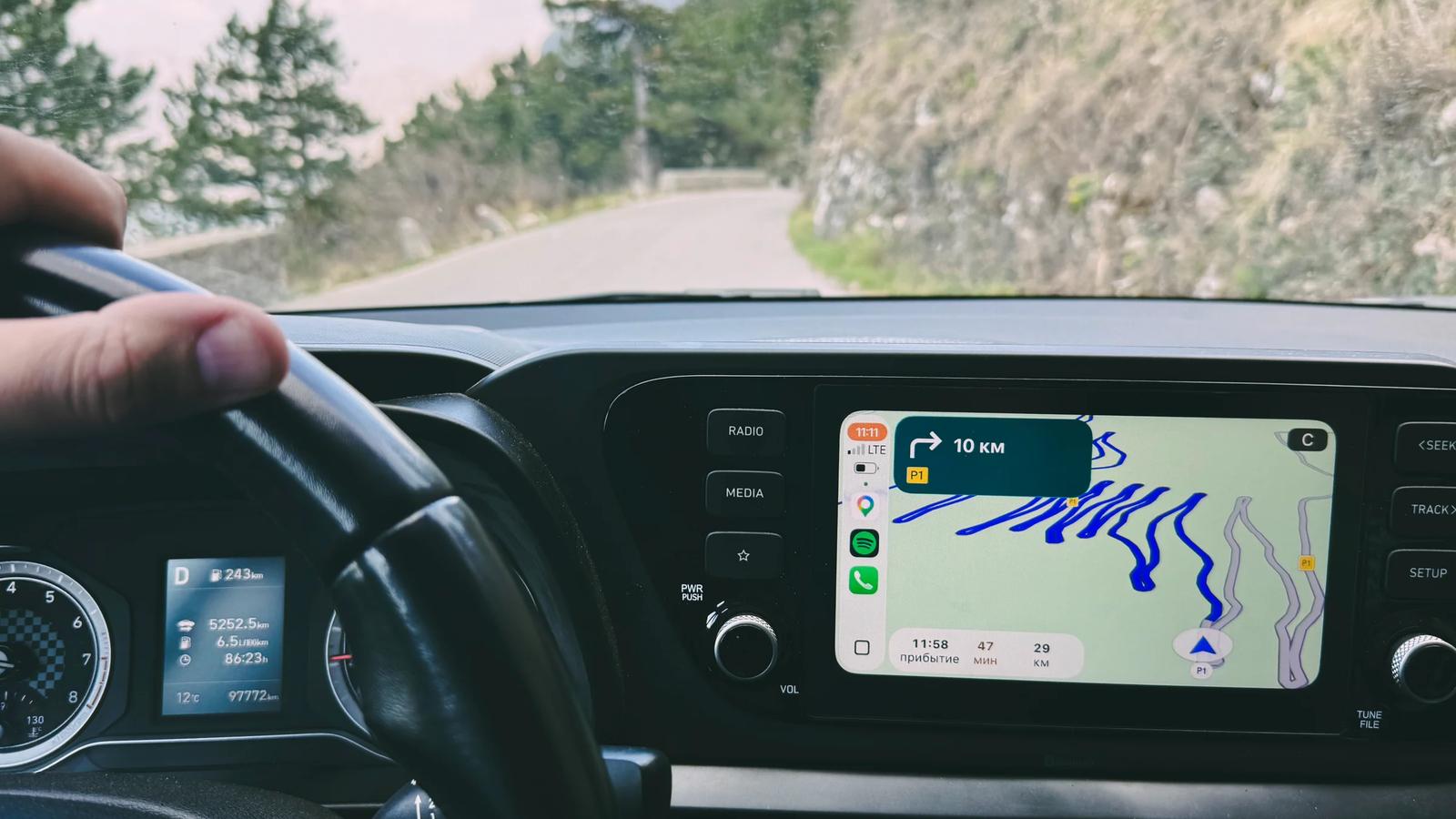
Northern run (Podgorica – Žabljak – Durmitor). Different game entirely. After Kolašin, stations get scarce – the M-3 serpentine from Mojkovac to Žabljak runs 70 km without a reliable pump. Fill the tank in Podgorica or Kolašin.
Lake Skadar and Virpazar. Between Podgorica and Bar via the old highway you'll find 1–2 EKO stations. There are no stations at the lake itself – plan with a buffer.
Cross-border drives. Filling on the Montenegrin side before crossing into Croatia saves up to €0.15/L; before Albania it saves up to €0.55/L (Albania has some of the priciest fuel in the Balkans).
If you're still deciding whether you actually need a rental car, see our breakdown "Do You Need a Car in Montenegro? Pros and Cons of Renting a Vehicle". For a transparent rental with no deposit traps, Localrent works with local agencies and accepts pay-on-arrival.
FAQ
1. How much does a full tank cost on an average car in Montenegro? About €65–80 for a petrol car (45–50 L tank). About €80 for a diesel SUV with a 60 L tank. €70 covers a typical mid-size sedan on average.
2. Can I still use Lukoil stations in 2026? Yes, the pumps physically work and the fuel quality is unchanged. Due to US sanctions we recommend cash or a card from a non-European bank – some international cards may be declined because of the sanctioned acquirer. For most tourists, EKO or Petrol is the simpler choice.
3. Which octane should I put in a rental car? Default is Eurosuper 95 – the European standard that fits 95 % of modern cars. If your rental contract specifies 98 (premium segment, BMW, Mercedes E-class), use 98 – the €0.05–0.10/L premium pays back in engine longevity.
4. Do petrol stations open 24/7? Most chain stations (EKO, Petrol, INA) run 24/7 on main routes and in major cities. In the mountains and small villages they often close around 21:00–22:00. Fuel up in advance for any night drive into Durmitor or Biogradska Gora.
5. Is there ethanol-blended or "low-quality" fuel I should avoid? Montenegro uses standard European Eurosuper 95/98 and Eurodiesel – no E85 or similar variants. Reports of diluted fuel exist mainly at small standalone stations, not at the chain operators (EKO, Petrol, INA). Stick with the chains and you'll be fine.
Bottom line
Montenegro's fuel market is transparent and regulated – there are no real savings to be found by hunting for a cheaper brand, the gap between EKO and a roadside station is 1–2 cents per liter. What matters is fuel quality and protection from the classic attendant tricks: watch the pump to the end, get the receipt, pay against what the screen actually shows. For peace of mind, stick with EKO, Petrol, or INA – consistent quality and reliable card processing. Lukoil and NIS are functional but sanctions-impacted in 2026.
Read also
- Car Rental in Montenegro: Everything Tourists Need to Know
- Parking in Montenegro: Where You Can Leave Your Car and How Much It Costs
- Montenegro Prices in 2026: How Much Does a Week Really Cost
- How to Get from Tivat or Podgorica Airport to Your Resort
Sources
- GlobalPetrolPrices – Montenegro gasoline prices
- GlobalPetrolPrices – Montenegro diesel prices
- Tolls.eu – European fuel prices
- HELLENiQ ENERGY – Jugopetrol AD profile
- Al Jazeera – US sanctions on NIS and Lukoil
- Lukoil press release – Carlyle international assets sale
Places to see in Montenegro
You may also like
Do You Need a Car in Montenegro? Pros and Cons of Renting a Vehicle
We explain when renting a car in Montenegro is truly worth it, when you can do without one, which routes are easier to explore by car, and what challenges to expect. A helpful guide for travelers planning an independent trip.
July 18, 2025
Montenegro – Albania Border Crossing: 3 Checkpoints, Wait Times & What Documents You Need
Three crossings, wildly different queues. Which one to pick, what papers border guards actually check, and how to skip the summer gridlock – a practical breakdown.
March 20, 2026
Bar, Montenegro: Ancient Ruins, 2 000-Year-Old Olives & a Working Port
Bar is Montenegro's only ferry port to Italy and the terminus of the Belgrade–Bar railway. Stari Bar fortress, a 2 000-year-old olive tree, quiet beaches, and prices 30% below Budva.
March 21, 2026
Scooter & Motorcycle Rental in Montenegro: Traffic Rules, Prices and the 5 Best Rides
Scooters from €15/day, motorcycles from €40. License requirements, hidden costs, real fines – and 5 routes that make two wheels better than four.
April 02, 2026
Montenegro to Croatia by Car: Border Crossings, Documents & What No One Tells You
The Montenegro–Croatia border is just 25 km long, but summer queues stretch to 3 hours. Which crossing to pick, what paperwork your rental car needs, and the alternative route through Vitaljina.
March 07, 2026
Driving in Montenegro 2026: Toll Roads, Sozina Tunnel Price and Real Fines
Montenegro's roads are stunning but tricky – switchbacks without guardrails, aggressive local drivers, and fines up to €2,000. Speed limits, toll costs, and 9 things guidebooks don't mention.
March 06, 2026