In detail
What's here
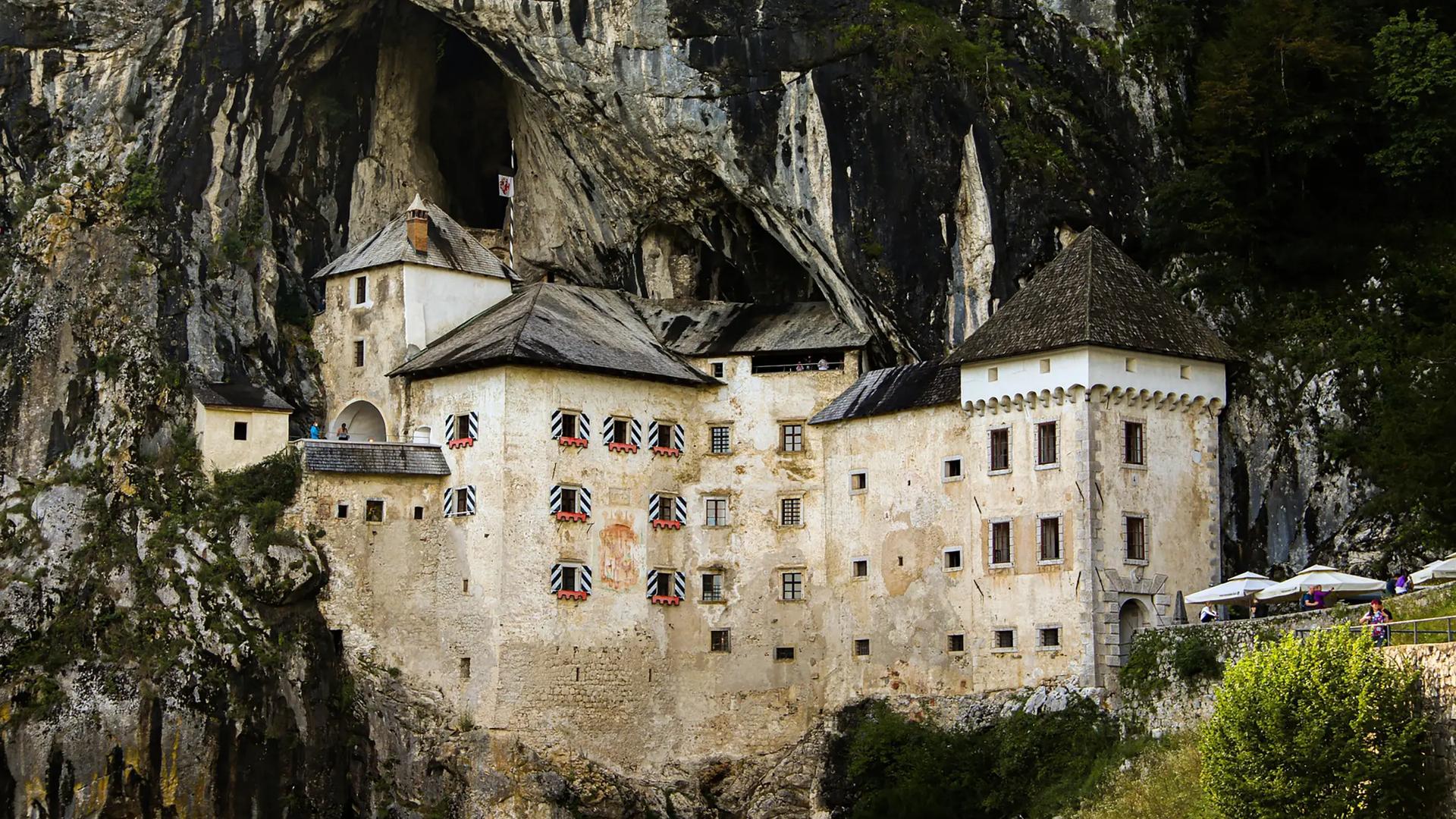
The castle is literally embedded in the rock: the façade projects from a 123-metre cliff while the rear disappears into a natural cave. The building occupies five floors connected by steep stone staircases and passages, some carved directly into the rock. The grey limestone walls merge seamlessly with the cliff – from a distance, it's hard to tell where stone ends and castle begins.
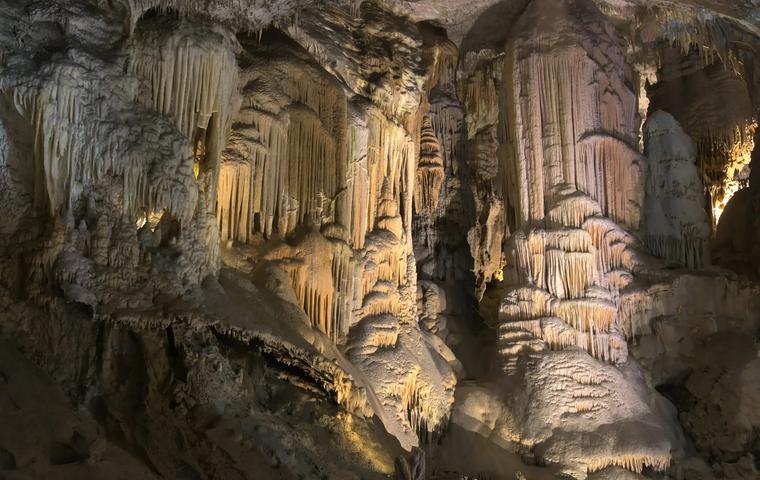
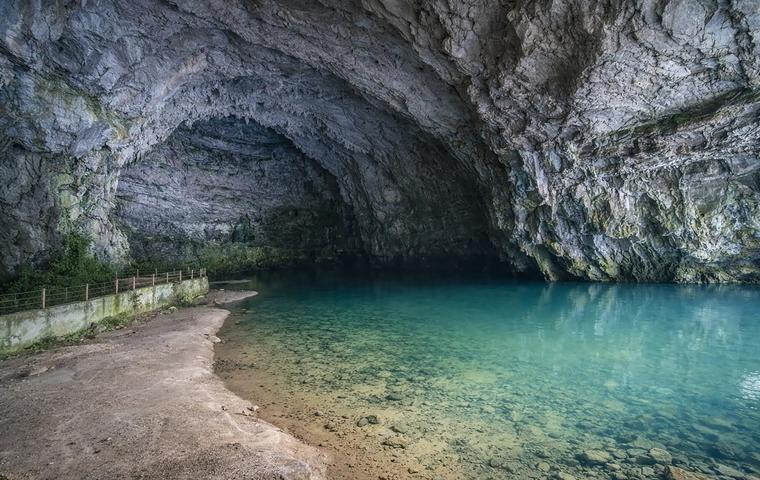
Inside, the exhibition covers medieval life: an armoury with 15th–16th century armour and swords, a knights' hall with a long oak table, a chapel with frescoes, and a prison cell cut into the rock. Upper-floor windows look out over the valley and forested hills. In the lower section, a 700-metre cave system served as a secret supply route during sieges.
In summer, the inner courtyard hosts an annual jousting tournament (usually July): mounted combat, swordfighting, medieval music, and a craft fair. Evening performances are lit by torches. A colony of bats inhabits the castle wall – in summer, they can be seen at sunset.
History
Past & present
The castle is first mentioned in 1202, though fortifications on this site predate that record. Construction occurred in several phases: the original 13th-century Gothic structure was expanded in the 15th–16th centuries. The most famous owner was the knight Erazem of Predjama (Erazem Lueger), who in the late 15th century waged a guerrilla campaign against Emperor Frederick III. The castle withstood a siege for over a year thanks to a secret passage through the cave behind it, which was used to bring in supplies. According to legend, Erazem was killed by a cannonball after a treacherous servant signaled the besiegers.
After Erazem's death, the castle was rebuilt several times. Its current appearance dates from a 16th-century Renaissance reconstruction. In the 18th–19th centuries, it passed through several noble families and gradually deteriorated. A major restoration was completed in the 1990s, after which it opened as a museum. Since 2008, it has been part of a unified tourism complex with Postojna Cave.
Getting there
Transport & directions
From Postojna / Postojna Cave (9 km, 10 min):
– By car via regional road, follow signs to Predjama. Road is narrow but paved
– Free shuttle bus runs from Postojna Cave in summer (check schedule on the website)
– Taxi from Postojna – €15
From Ljubljana (62 km, 50 min):
– By car via A1/E61, exit Postojna, then 9 km on a regional road
– No public transport to the castle. Train/bus to Postojna + taxi
– Car rental is the best option for the "Postojna Cave + castle" route
On-site:
From the car park to the castle entrance – 3-minute walk up a paved path.