In detail
What's here
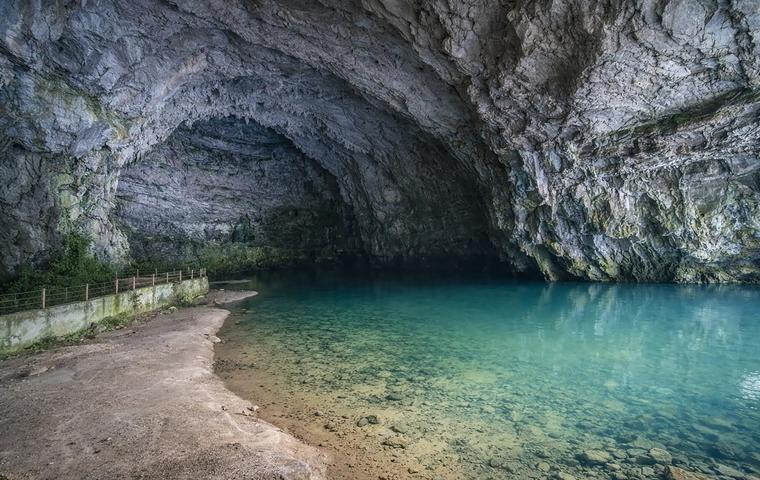
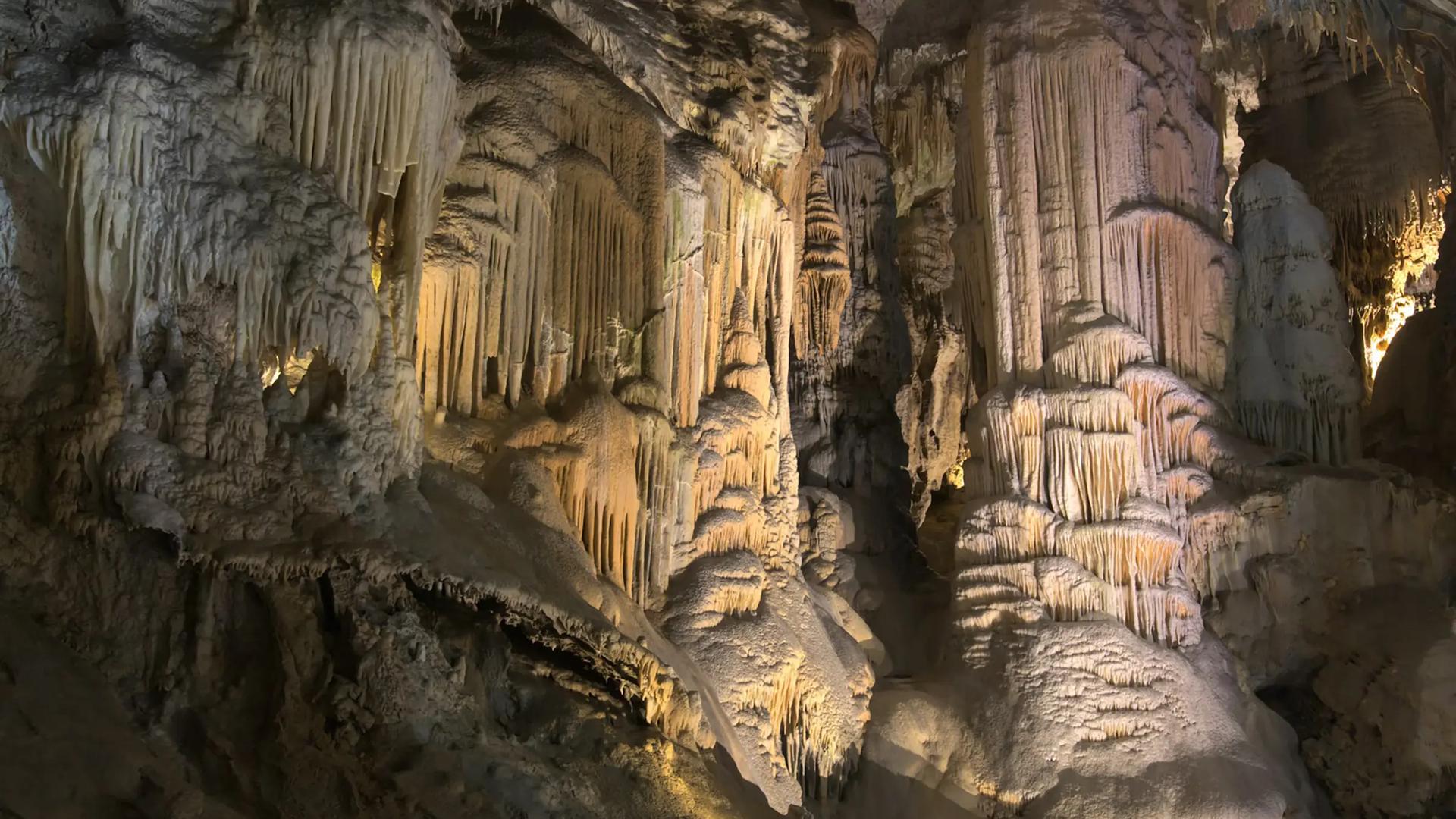
The tour begins at the 4-metre entrance portal, where the underground train takes visitors 2 km deep into the cave in 10 minutes. The carriages pass through halls with ceilings up to 40 metres high, past columns of stalactites and stalagmites formed over millions of years. The temperature inside is a constant +10 °C year-round, with humidity at 95–100%. After the ride, the group continues on foot along a 1.5 km lit walkway.
Key halls along the route include the Concert Hall (Dvorana, 40 m high) where balls were held in the 19th century; the White Hall (Bela Dvorana) with a ceiling of pure white stalactites; and the Concert Hall seating 10,000, which hosts annual live music events. The most famous stalagmite is "Brilliant" – a five-metre column of perfect form that has become the cave's symbol.
In a separate vivarium near the exit lives the olm (Proteus anguinus) – a blind, white salamander up to 30 cm long, endemic to karst caves. This is the only place in the world where the "human fish" can be observed in controlled conditions. In 2016, olm babies hatched here in captivity for the first time – the event was broadcast live worldwide.
Highlights
Why visit
Length – 24.3 km of passages, 5.3 km open to visitors
Underground railway – operating since 1872, 3.7 km route (2 km by train + 1.5 km on foot)
Temperature – constant +10 °C / 50 °F year-round, humidity 95–100%
Olm – blind cave salamander up to 30 cm long, endemic to Dinaric karst
Age – cave formation began approximately 2 million years ago
Visitors – over 40 million since 1818, Europe's most visited show cave
History
Past & present
The cave was known to locals long before its official discovery – the earliest inscriptions on the walls date to 1213. Systematic exploration began in 1818 when warden Luka Čeč discovered the inner chambers while preparing for a visit by Austrian Emperor Franz I. The cave opened to visitors in 1819, and in 1872 the world's first underground tourist railway was built – initially carts were pushed by hand, with gas engines introduced from 1884.
During World War II, German occupiers used the cave as a fuel depot – in 1944, partisans set it on fire, damaging stalactites in several chambers. Soot marks remain visible today. Post-war restoration began immediately; the railway was electrified in 1957. In 2016, the cave gained worldwide attention when olm babies hatched for the first time in the cave's vivarium. Today, Postojna Cave is Europe's most visited karst cave with modern infrastructure and facilities.
Getting there
Transport & directions
From Ljubljana (53 km, 50–60 min):
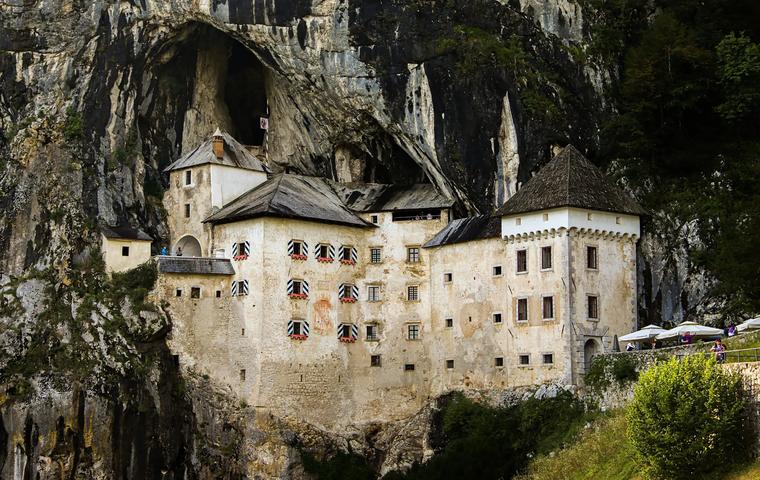
– By car via A1/E61 motorway, exit Postojna. Car rental is convenient for combining with Predjama Castle. eVinjeta (road vignette) required on the motorway (from €15/week)
– SŽ train – 1 hour, ticket ~€8. From Postojna station, 2 km walk or taxi (€5)
– Bus from Ljubljana bus station – about 1 hour, ticket €6–8
From Piran / the coast (80 km, 1 hour):
– By car via E61 through Kozina
– Bus with transfer in Kozina or Koper
On-site:
From the car park to ticket office – 3-minute walk. From tickets to the cave entrance – 5 minutes along a paved path.