In detail
What's here
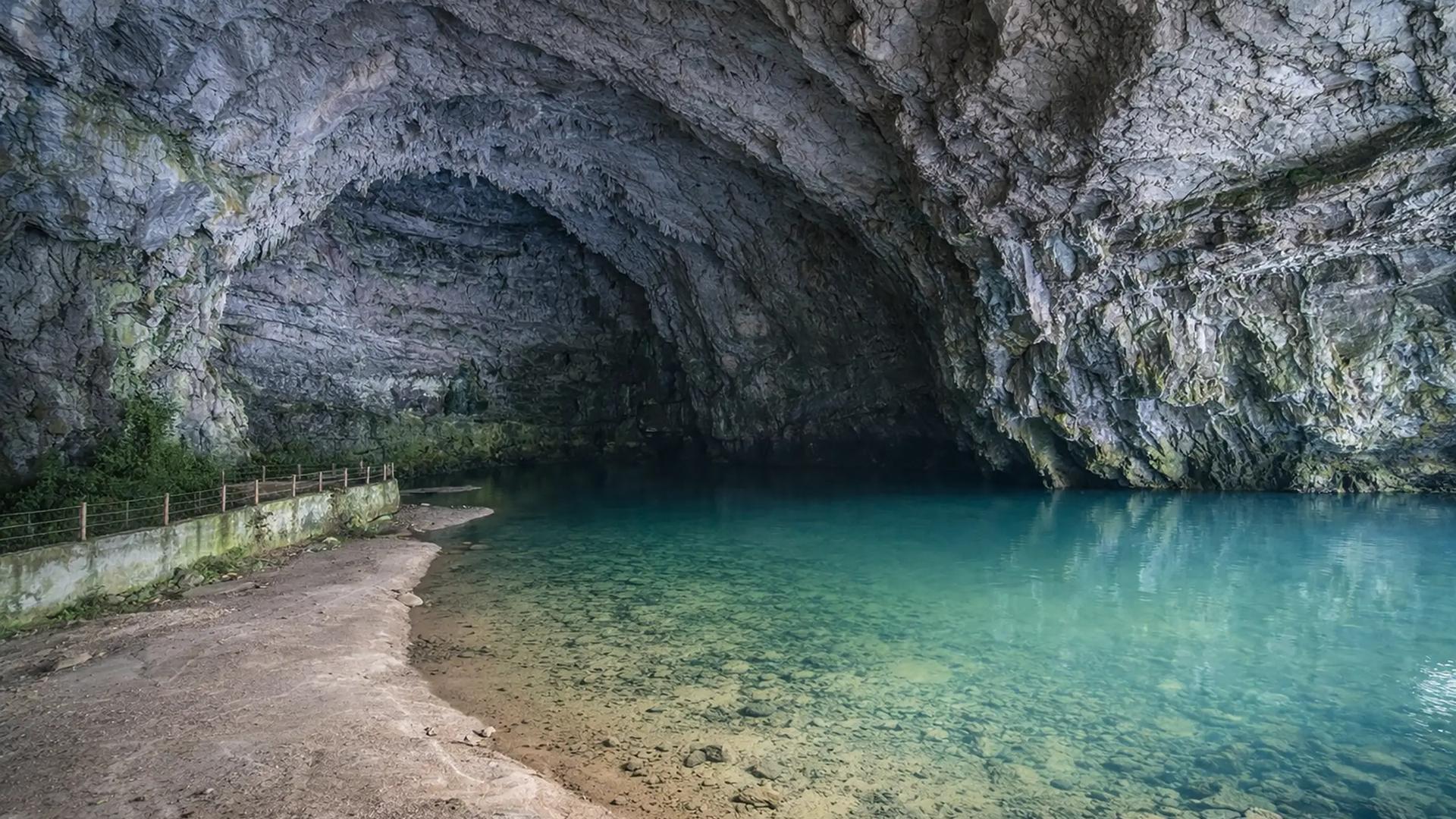
The cave entrance is a portal 40 metres wide and 8 metres high – one of the largest cave entrances in Slovenia. The Unica River flows out of the portal, formed inside the cave by the merging of the Rak and Pivka rivers. In summer, water levels are low and the entrance looks like a massive rock arch; in spring after rainfall, the river fills the portal almost completely.
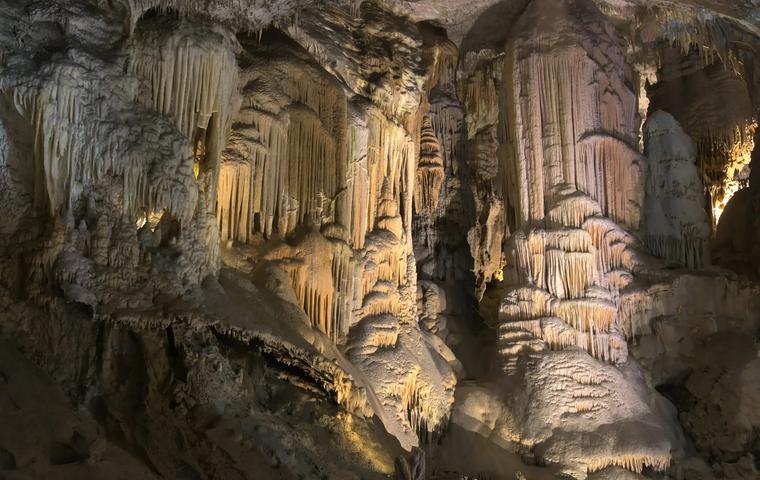
The tourist route follows a lit path of about 900 metres along the underground riverbed. Ceilings reach 30 metres, and walls are covered in ochre and white flowstone formations. The main highlight is the confluence point, where two rivers of different temperatures and colours meet in a single chamber. The temperature inside is +8–10 °C / 46–50 °F.
The cave is home to a population of olms (Proteus anguinus) – the same blind salamanders found in Postojna Cave, but here they live in their natural habitat rather than in a vivarium. Several bat species also inhabit the cave, including the greater horseshoe bat.
History
Past & present
The cave has been known since the 17th century – the first documented mention dates to 1689 when Slovenian polymath Janez Vajkard Valvasor described it in his work "The Glory of the Duchy of Carniola." Systematic exploration began in the 19th century, in parallel with research at nearby Postojna Cave. Speleologists gradually mapped the underground rivers and established connections between surface and underground waterways in the region.
In the 20th century, the cave became an important site for karst hydrology research. A tourist trail along the underground river was developed in the 1970s. In 2004, the cave received natural monument status in Slovenia. Today, Planina Cave remains a key site for studying karst processes and underground fauna, while tourist traffic stays minimal.