Hero background

Ptuj Castle

Ptujski grad

An 11th-century hilltop castle above the Drava – the main museum of Slovenia's oldest town

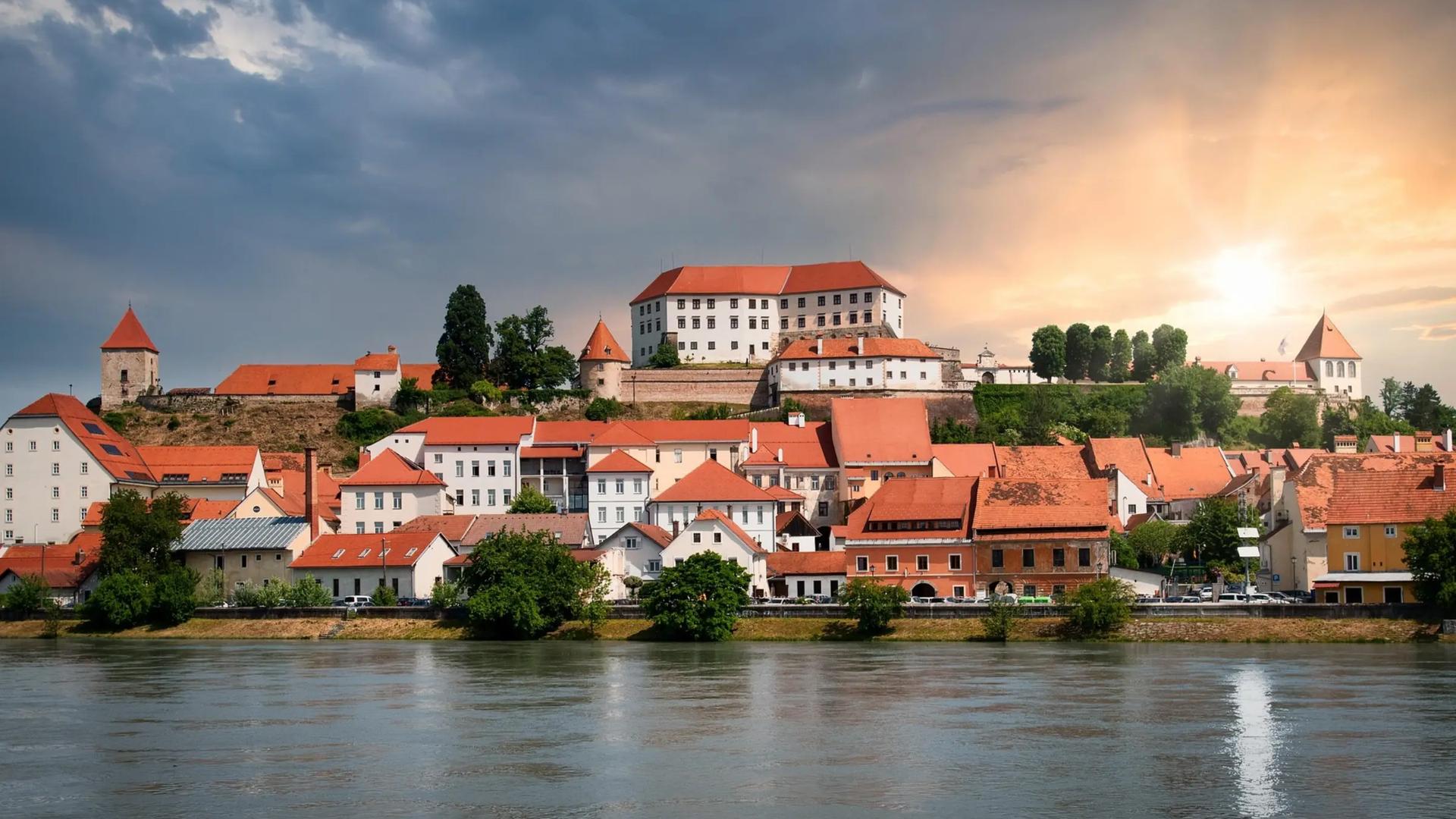
Ptuj Castle (Ptujski grad) is the principal landmark of Ptuj, standing on a hill above the Drava River. The castle hill has been settled since the 5th millennium BC, and the medieval fortress dates to the 11th century. Today it houses the Ptuj–Ormož Regional Museum (PMPO) with collections of arms, musical instruments, traditional Kurent carnival masks, and stately rooms from the 17th–19th centuries.

From the central Slovenski trg square, the walk uphill takes 10–15 minutes along Grajska ulica through the Renaissance Peruzzi Portal (1570). From Maribor, Ptuj is 30 km away – 25 minutes by car or 35–40 minutes by train.

Allow 1.5–2.5 hours for the museum collections. Admission is €10 for adults, €5 for students. The courtyard and the viewpoint overlooking Ptuj's tiled rooftops are open during museum hours.

Location

On the Map

About

What's Here

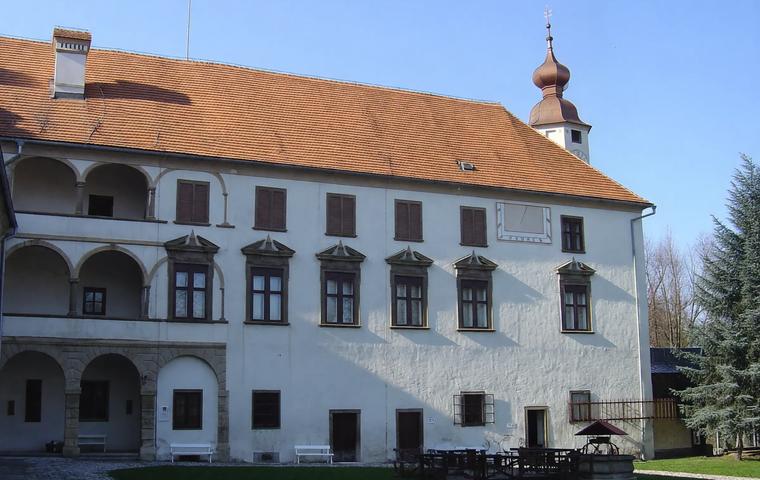
The castle is a complex of buildings from the 14th–18th centuries arranged around an inner courtyard. Entering through the main gate, visitors can see the red marble tombstone of Frederick IX, the last Lord of Ptuj (died 1438), embedded in the wall to the right. The inner courtyard features three-storey Renaissance arcaded galleries typical of Styrian architecture. Roman reliefs and inscriptions from ancient Poetovio are built into the castle walls: lion-head finials, dedication stones to Jupiter, and tombstone fragments.

The former stables on the ground floor hold the main collection of Kurent masks and costumes – the iconic figures of the Kurentovanje Shrovetide carnival (UNESCO Intangible Heritage). Next door is an armoury with 500 weapons: swords, crossbows, and suits of armour from the 15th–18th centuries. Opposite is the collection of historical musical instruments – the largest in Slovenia – including a Roman double flute (tibia) from the 2nd–3rd century AD, made of bone with bronze and brass sheeting.

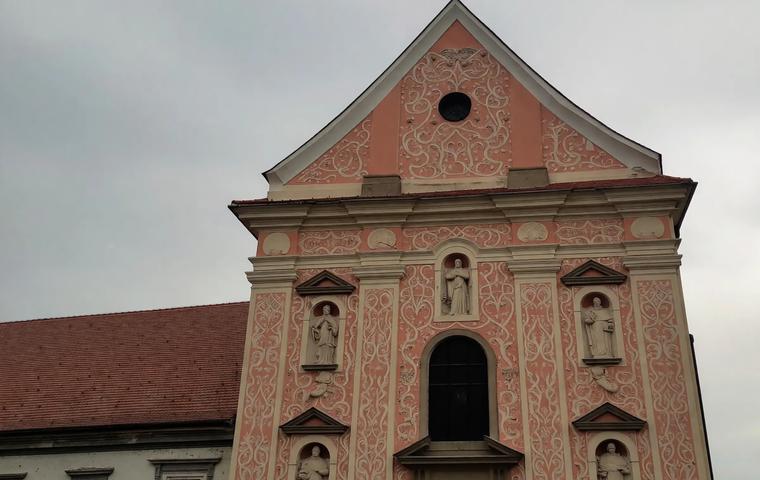
The first floor holds period rooms with original tapestries, painted wall canvases, portraits, and furniture left by the last owners, the Herberstein family (1873–1945). The castle chapel preserves the coat of arms of the Leslie family – a Scottish-Austrian clan who held the castle from 1656 to 1802. From the viewpoint near the entrance, the panorama spans Ptuj's old town rooftops, the Drava River, and the {City Tower[PLACE_CITY_TOWER_PTUJ]} with its baroque dome.

Why Visit

The Highlights

Age – castle hill settled since the 5th millennium BC; medieval fortress built in the 11th century

Kurent collection – the largest assembly of carnival masks and costumes from the Kurentovanje festival (UNESCO)

Armoury – 500 weapons and suits of armour from the 15th–18th centuries

Musical instruments – the largest collection in Slovenia, including a Roman tibia from the 2nd–3rd century AD

Period rooms – original 17th–19th century interiors with tapestries, portraits, and furniture of the Leslie and Herberstein families

Panorama – view from the castle hill over Ptuj's old town, the Drava River, and surrounding vineyards

History

Past & Present

The hill above the Drava was settled in the Neolithic period. During Roman times, temples and public buildings of the city of Poetovio stood here, and in the early Middle Ages the site served as a burial ground. The medieval fortress appeared in the 11th century when the castle and town belonged to the Archdiocese of Salzburg. In 1132, the archbishops granted the castle as a fief to the Lords of Ptuj, who managed it for over 300 years, founding the Dominican and Minorite monasteries and building a pilgrimage church at Ptujska Gora.

After the Ptuj family line died out in 1438, the castle passed through several owners. The Scottish-Austrian Leslie counts held it from 1656 to 1802, followed by the Herberstein counts (1873–1945). In 1945 the castle was nationalised and handed over to the regional museum. Today the PMPO (Pokrajinski muzej Ptuj–Ormož) manages the castle, running permanent exhibitions, restoration projects, and educational programmes.

For Visitors

Visitor Information

Tickets & Prices

All castle collections:

Adults: €10

Seniors: €9

Students/pupils: €5

Preschool children: free

Family ticket: €20

Single collection:

Adults/seniors: €3

Students/pupils: €2

Guided tours (Slovenian, English, or German):

Group up to 15 people: €45

Group over 15 people: €3/person

Booking required at least 3 days in advance by phone.

Free admission days: February 8 (Slovenian Cultural Day), May 18 (International Museum Day), December 3 (Merry Day of Culture), Museum Summer Night (18:00–24:00).
Rules & Restrictions

Photography is permitted in all halls. Comfortable shoes recommended – the cobblestone path uphill is steep. Pets are not allowed in museum halls. Large backpacks should be left at the cloakroom near the ticket office.

On-Site Facilities

On site:

Ticket office and souvenir shop at the entrance

Toilets on castle grounds

Parking: Free lot at the foot of the hill (Raičeva ulica 7), 10-minute walk to the castle.

Wi-Fi: Not available. 4G signal is stable.

Accessibility: Steep cobblestone road and steps to reach the castle. No lifts or ramps – difficult access for visitors with limited mobility.

Getting There

Transport & Directions

From Maribor (30 km, 25–40 min):

– Train (SŽ) – 35–40 min, €4–11, every 4 hours

– Bus (Arriva) – 40 min, €3–5

– By car – 25 min, free parking at the base

From Ljubljana (130 km, 1.5–2.5 hours):

– Direct train (SŽ) – 2 h 15 min, €12–28, 2 departures daily

– By car via A1 motorway + regional road – about 1.5 hours. eVinjeta (road vignette) required

Within Ptuj:

From Slovenski trg square – 10–15 min walk uphill along Grajska ulica. From the bus station – 15–20 min on foot. Taxi from the station – approx. €4.

When to go

Best time to visit

Season: April–October for warm weather and longer hours. In winter the museum is open but closes at 4 PM.

Time of day: Morning (before 11 AM) – fewer visitors. Summer evenings (open until 8–9 PM) – soft light for panoramic photos.

Duration: 1.5–2.5 hours for museum collections. With the walk up and photos – up to 3 hours.

Avoid: Mondays – museum closed (except July–August). The cobblestone path is slippery in rain.

FAQ

Common Questions

A full ticket for all collections costs €10 for adults, €5 for students, and €20 for families. A single collection is €3. Preschool children enter free.

Allow 1.5–2.5 hours for all museum collections. Add the uphill walk and photos and it's up to 3 hours total.

Mondays (except July–August), plus January 1, November 1, December 25, and Easter. Winter hours (Oct 16 – Apr 14): until 4 PM. Summer hours vary from 6 PM to 9 PM depending on the month.

Parking is at the foot of the hill (Raičeva ulica 7). From there it's a 10-minute walk up. There is no vehicle access to the castle itself.

Yes, guided tours are available in Slovenian, English, and German. Book at least 3 days in advance by phone. Museum displays are labelled in Slovenian and English. A multimedia guide is available on the museum website.

Yes. The Kurent mask collection and armoury appeal to children aged 5+. Preschoolers enter free. The museum runs educational workshops for school groups (€1–2/pupil + entry fee).

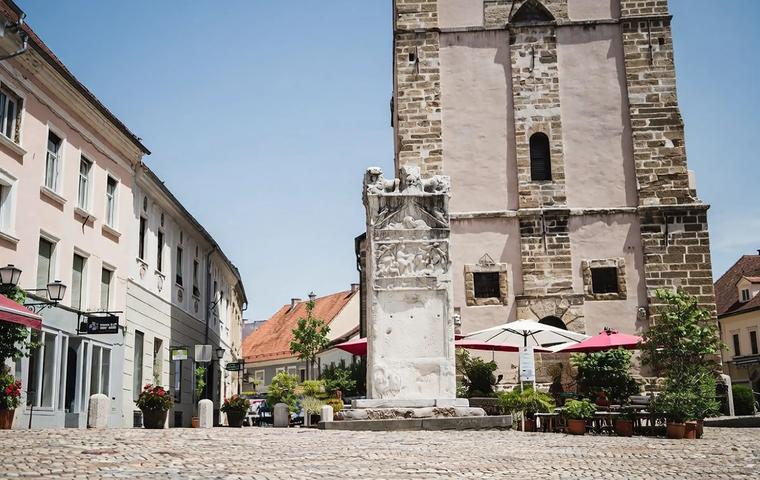
At the base of the castle hill – the City Tower and the Orpheus Monument on Slovenski trg square. A 5-minute walk away is the Dominican Monastery (1230). Outside town – Terme Ptuj thermal spa.

Yes: February 8, May 18, December 3, and during Museum Summer Night. On these days individual visitors enter free; groups still pay.

Social

Share