In detail
What's here
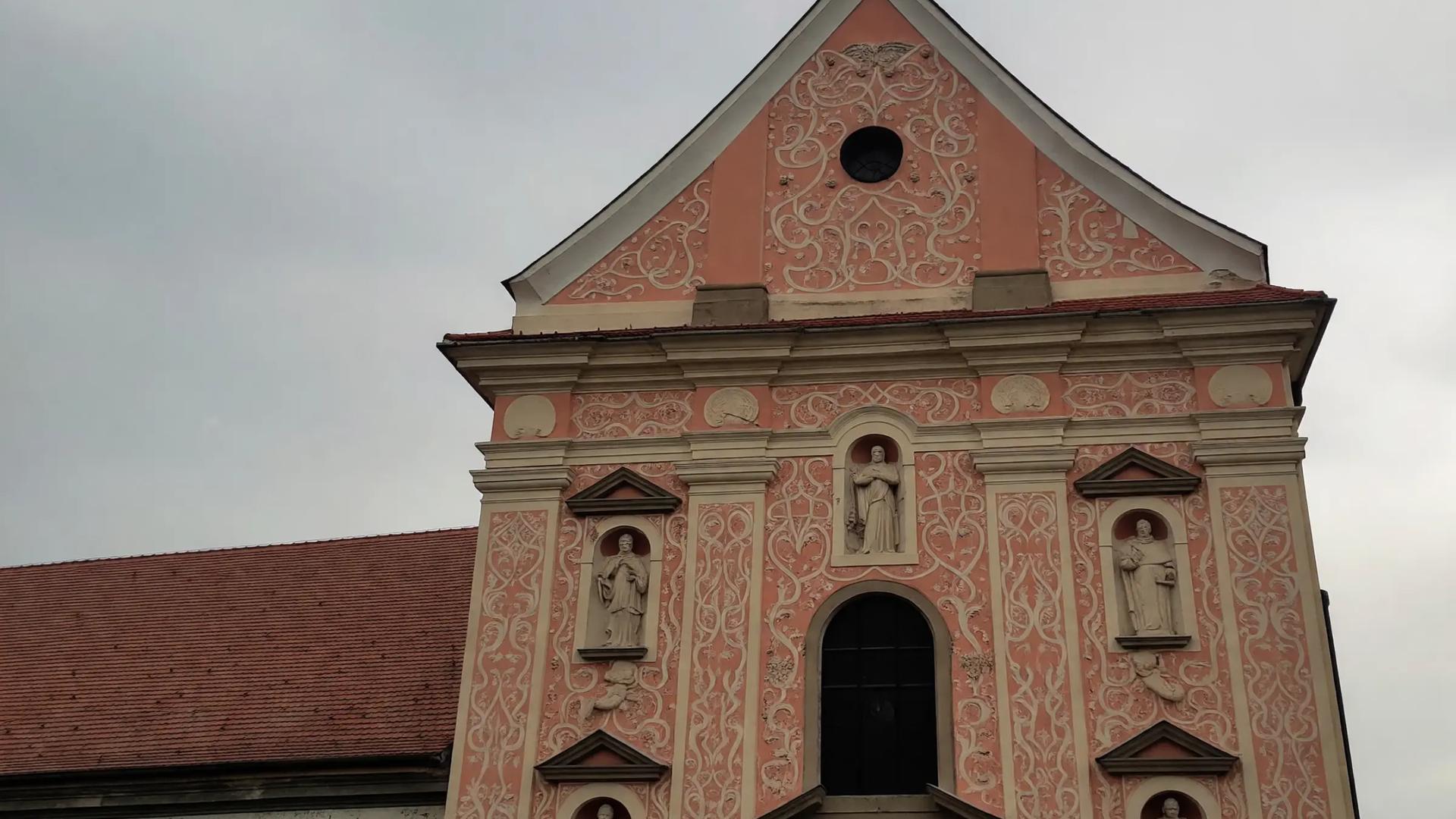
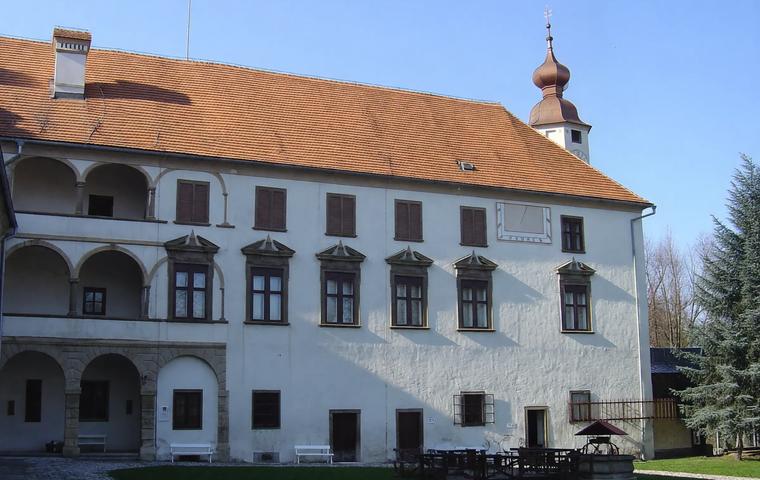
The complex blends a Gothic core from the 13th–14th centuries with Baroque additions from the 17th–18th centuries. The main façade facing the town is covered in pink plaster with white stucco ornamentation and sculptures in Baroque style – one of Ptuj's most photographed walls. The inner courtyard cloister with Gothic arcades retains fragments of medieval frescoes on the walls of the eastern wing.
The refectory is the main Baroque interior. Its ceiling features ornamental plasterwork and colourful murals, with walls in warm tones. Following a major renovation from 2011 to 2014 (designed by Enota Architects, the project received international awards), the former church nave was transformed into a concert hall seating several hundred. The contrast between the black contemporary floor and white historic walls references the black-and-white habit of the Dominican Order.
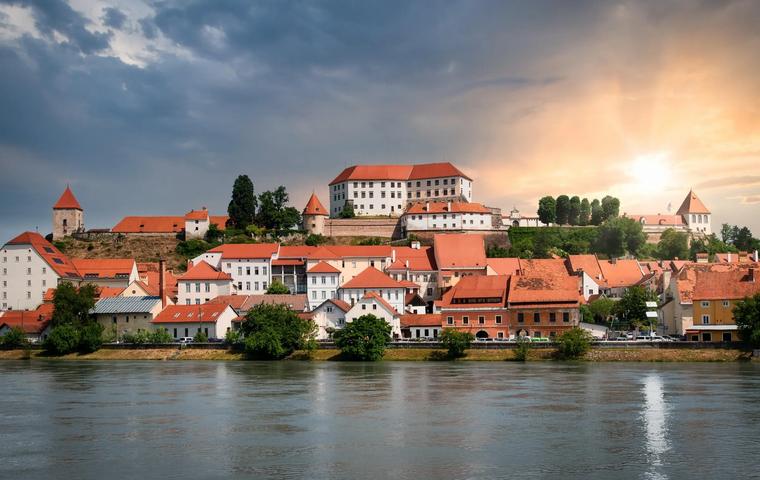
The monastery park at the rear offers views over the Drava River and the surrounding valley. In summer, wine festivals are held here – every May, the Gothic cloister hosts Salon Sauvignon, an international white wine festival. In winter, the complex is closed to tourists but continues operating as a congress centre.
Highlights
Why visit
Age – founded in 1230, one of the earliest Dominican monasteries in Slovenia
Size – over 4,000 m² on the ground floor, with equal space on the upper floor and basement
Architecture – 13th–14th century Gothic cloister with surviving frescoes and 18th-century Baroque refectory
Renovation – completed in 2014 by Enota Architects, received international architecture awards
Façade – pink plaster with white Baroque stucco and sculptures, one of Ptuj's most recognisable views
Events – Salon Sauvignon (May), concerts, exhibitions, and conferences in the converted church nave
History
Past & present
The monastery was founded in 1230 by Mehtildis, widow of Friedrich III of Ptuj, with the approval of the Archbishop of Salzburg. Dominican friars arrived from Friesach (Carinthia) and built a two-storey complex with a cloister. In 1302, the monastery burned down; reconstruction lasted until the mid-14th century. Further alterations continued through the 15th–16th centuries, and in the 17th–18th centuries the monks added Baroque elements: stucco on the façade, murals in the refectory, and sculptural decoration.
Following the reforms of Joseph II, the monastery was dissolved in 1785 and the buildings were converted into barracks. In the early 20th century, the finest rooms were turned into museum spaces. A comprehensive restoration from 2011 to 2014 transformed the complex into a modern congress and cultural centre. The former church nave became the main hall, with auxiliary spaces arranged around the cloister. Today, the monastery is one of the main cultural venues in eastern Slovenia.
Getting there
Transport & directions
From Maribor (30 km, 25–40 min):
– SŽ train – 37 min, €4–11, departures every 4 hours
– Arriva bus – 40 min, €3–5
– By car via A4/E59 – 25 min. Motorway vignette required
From Ljubljana (130 km, 1.5–2.5 hrs):
– Direct SŽ train – 2 hrs 15 min, €12–28, 2 departures daily
– By car via A1 through Celje – 1.5 hrs
On site:
From Ptuj railway station – 10-minute walk to the monastery. From the castle – 3-minute walk downhill.