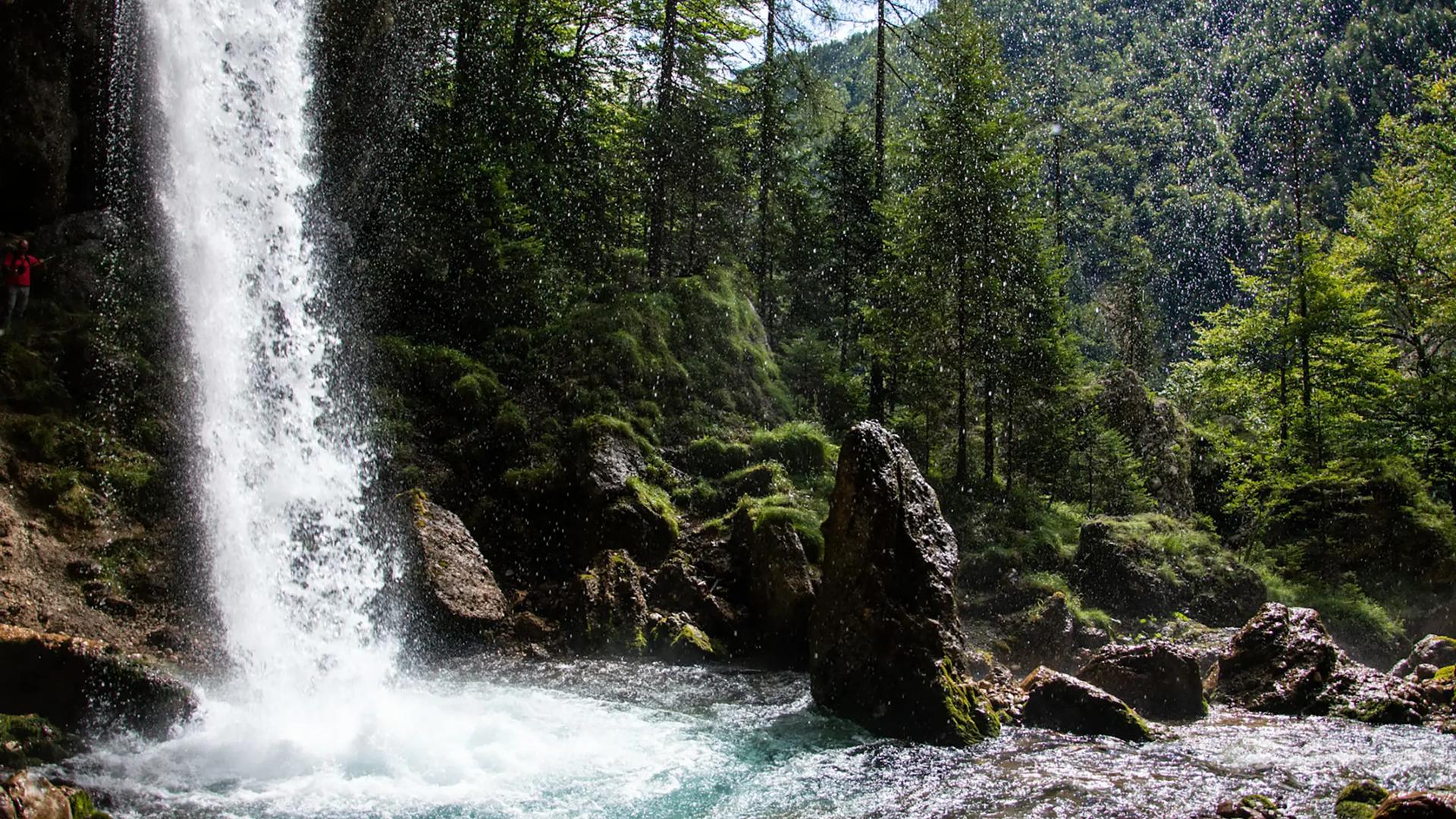
Peričnik Waterfall (Slap Peričnik) is the most famous waterfall in Triglav National Park, located in the glacial Vrata Valley near the village of Mojstrana. It consists of two cascades: the lower drop is 52 m (one of the tallest in Slovenia), the upper drop is 16 m. Trails behind both cascades let you walk directly behind the curtain of water.
From Kranjska Gora, the waterfall is 20 km (25 minutes by car via Mojstrana). From Bled – 30 km (35 minutes). Since 2024, a gate system limits the Vrata Valley to 195 vehicles at any one time. In summer (June–September), a free shuttle bus runs from Mojstrana.
Entry to the waterfall is free. Parking at the Koča pri Peričniku mountain hut costs €5 (~$5.50) for 2 hours. The walk from the parking lot to the lower cascade takes 10 minutes; the upper cascade is another 15 minutes uphill.
Transport
Travel time
By car from Kranjska Gora15 min.7 km
From the airport Ljubljana Airport (LJU) · LJU1 h 23 min.75 km
The trail to the lower cascade starts from the Koča pri Peričniku mountain hut, where you can eat and purchase a parking ticket. After a 10-minute gentle climb through forest, crossing a bridge, you arrive at the base of a 52-meter wall of water. The conglomerate rock has been undercut by centuries of erosion, forming a natural overhang – a sandy path leads behind the waterfall, placing you between the rock face and the curtain of falling water. Expect to get splashed.
From the lower cascade, a steeper trail (moderate difficulty, 15 minutes) leads to the 16-meter upper waterfall. You can walk behind this one too. The upper cascade sees fewer visitors and feels more secluded. The trail offers views of the Vrata Valley and the Špik mountain range. In spring, when snow melts, the water volume peaks – the falls roar and spray covers the entire viewing area. In summer, the flow is gentler but still impressive.
In winter, the waterfall partially or completely freezes, creating towering ice columns and stalactites – a spectacular sight, though the path behind the falls is typically closed due to falling ice risk. The setting is pure alpine silence: rushing water, fir trees, and mountain walls.
Highlights
Why visit
Height – lower cascade 52 m, upper cascade 16 m – combined 68 m
Walk behind the falls – trails exist behind both cascades; the eroded conglomerate creates a natural overhang
Age – one of Slovenia's youngest waterfalls, formed after the last Ice Age
Vrata Valley – glacial valley leading to the north face of Triglav (2,864 m), Slovenia's highest peak
Free shuttle – a free bus runs from Mojstrana to the waterfall hut in summer (June–September)
Winter ice – in freezing conditions, the waterfall wall becomes covered in ice stalactites tens of meters tall
History
Past & present
Peričnik Waterfall formed after the last Ice Age, when the glacier carved the Vrata Valley – the largest glacial valley in the Julian Alps. Water cascades over a conglomerate ledge below Mount Sleme. The waterfall is constantly eroding the rock beneath it: the force of the water undercuts the soft base until the harder conglomerate overhang collapses under its own weight. Deep grooves in the rock wall show that the waterfall has changed direction multiple times.
The waterfall is a protected natural heritage site in Slovenia. Plans once existed to harness its power for electricity generation, but these were abandoned to preserve the natural environment. Today, Peričnik is one of the most visited sites in Triglav National Park. Since 2024, a regulated vehicle entry system has been in place for the Vrata Valley to protect the ecosystem.
For visitors
Visitor information
Tickets & prices
Waterfall entry is free.
Parking (at Koča pri Peričniku):
Summer (15 June – 15 September): €5 (~$5.50) for 2 hours
Spring/Autumn (16 March – 14 June, 16 September – 15 November): lower rates
In winter, the road may be blocked 2.5 km before the waterfall – expect to walk
Shuttle:
Free bus from Mojstrana to Vrata Valley – June–September
Electric van from Alpine Museum to waterfall: daily 9:00–16:00 (late June to late August)
Rules & restrictions
Non-slip hiking boots required – the path behind the falls is sandy and slippery. Children behind the waterfall – only with supervision. In winter, the path behind the falls is usually closed due to falling ice. Expect to get wet at the lower cascade. The upper cascade trail is moderately difficult and not recommended for young children.
On-site facilities
On site:
Koča pri Peričniku mountain hut (food and drinks) – at the parking area
Toilet at the hut
Parking: Regulated; maximum 195 vehicles in the valley at once. Real-time availability displayed on boards near Mojstrana and at the entry gate.
Connectivity: 4G unreliable in the valley.
Accessibility: The trail to the lower cascade involves uphill walking on uneven terrain (roots, rocks). Not suitable for visitors with mobility issues. Not stroller-accessible.
– By rental car via A2 to Jesenice exit, then through Mojstrana
On site:
From the parking lot to the lower cascade – 10 minutes on foot (uphill). To the upper cascade – another 15 minutes (steep trail).
When to go
Best time to visit
Season: Spring (April–May) – maximum water volume after snowmelt, the falls are at their most powerful. Summer – comfortable weather, free shuttle running. Winter – the frozen waterfall is spectacular, but the path behind it is closed.
Time of day: Morning (before 10:00) – fewer visitors, parking available. By midday in summer, the parking lot fills.
Duration: 1–1.5 hours to see both cascades with photos.
Avoid: Summer weekends after 10:00 – parking queues. Winter after a thaw – risk of falling ice.
Questions & answersFAQ
Popular questions
Practical answers about visiting, routes and time on site.
How much does it cost to visit the waterfall?+
Entry is free. Parking at the mountain hut costs €5 (~$5.50) for 2 hours. In summer, you can take a free shuttle from Mojstrana.
Can you really walk behind the waterfall?+
Yes, behind both cascades (the 52 m lower and 16 m upper falls). The path behind the lower cascade is sandy and slippery – hiking boots essential. You will get wet from spray – bring a rain jacket.
How long does a visit take?+
1–1.5 hours for both cascades. From the parking lot to the lower falls – 10 minutes; to the upper falls – another 15 minutes.
How do I get there without a car?+
In summer (June–September), a free shuttle runs from Mojstrana to the Vrata Valley. Reach Mojstrana by bus from Jesenice (€3.50) or by tourist bus from Kranjska Gora (€3/day).
Can I visit in winter?+
Yes, the waterfall is accessible year-round. In winter, the wall freezes into spectacular ice formations. The path behind the falls is closed due to falling ice risk. The road may be blocked 2.5 km before the waterfall – expect an additional walk.
Is it suitable for children?+
The lower cascade – yes, the trail is manageable (10 minutes). Behind the waterfall – only with older children in non-slip shoes. The upper cascade trail is steep and not recommended for young children.
What shoes and clothing should I bring?+
Hiking boots with non-slip soles are essential. A thin rain jacket or waterproof layer – spray is intense, especially in spring. In summer, wear clothes you don't mind getting wet.
What else can I see in the Vrata Valley?+
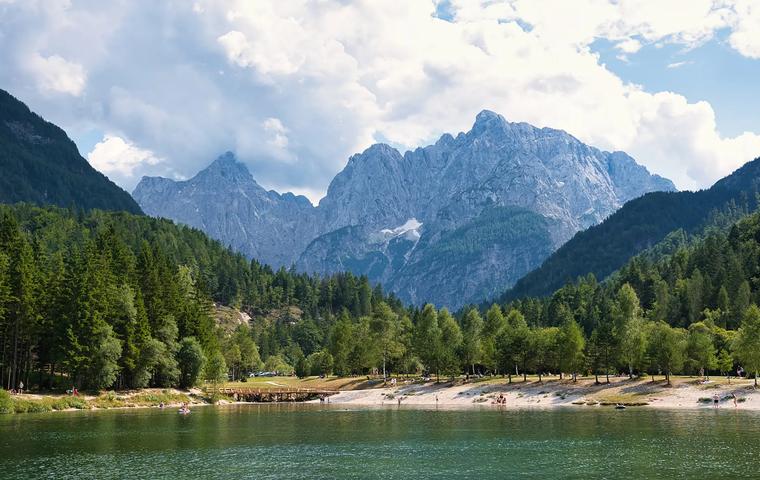
The valley leads to Aljažev dom – a mountain hut at the base of Triglav's north face, Slovenia's highest peak (2,864 m). In Mojstrana – the Slovenian Alpine Museum. Nearby: Lake Jasna and Zelenci Nature Reserve.