Blog · Tours
Kutaisi – What to See & Is It Worth Visiting? A Guide to Georgia's Second City
 Tours
ToursIn this article
- 01What to See in the City
- 02Nature Around Kutaisi: Canyons & Caves
- 03Tours from Kutaisi
- 04Abandoned Sanatoriums of Tskaltubo
- 05Where to Stay
- 06Food & Prices
- 07Getting to Kutaisi
- 08Getting Around
- 09Insurance
- 10Who Should Visit – and Who Shouldn't
- 11Frequently Asked Questions
- 12Conclusion
Some links are affiliate links. You pay the same, and we may earn a commission.
Kutaisi isn't a resort – it's a 3,000-year-old city with UNESCO monasteries, epic canyons 30 minutes away, and prices half of Tbilisi. Here's who should visit and who should skip it.
Kutaisi is Georgia's second-largest city and the ancient capital of the Colchis kingdom – the very place where, according to Greek mythology, Jason and the Argonauts sailed in search of the Golden Fleece. But legends aside, the practical question is: should you dedicate separate days to Kutaisi, or is a layover at the airport enough? Short answer – it's worth it, but not for the city alone. Kutaisi works as a perfect base for the canyons, caves, and monasteries of western Georgia, while the city itself adds a cosy old town, a market with local prices, and Imeretian cuisine that differs noticeably from what you'll find in Tbilisi.
Key Facts
- A base camp, not a resort. Kutaisi's real draw lies within 20–70 km: Prometheus Cave, Martvili Canyon, Okatse Canyon, Sataplia Nature Reserve.
- Plan for 2–3 full days. One day for the city, one to two for the nature around it.
- Prices are 30–40% below Tbilisi. A café lunch costs $9–12, guesthouses start at $15 for a double, hotels rated 8+ on Booking start at $25–40.
- Its own airport (Kutaisi Airport (KUT)). Served by Wizz Air and other low-cost carriers from across Europe.
- Travel insurance is mandatory for all foreign nationals entering Georgia since January 1, 2026 (minimum coverage: 30,000 GEL). Policies available through Ekta.
- Best time to visit – April through October. Canyons and caves are open year-round, but boat rides at Martvili depend on water levels.
What to See in the City
Kutaisi is compact – you can cover the main sights on foot in half a day. It's not a city of endless museums; it's a place best enjoyed by wandering without a rigid plan.
Bagrati Cathedral
Bagrati Cathedral sits on Ukimerioni Hill and has been the symbol of Kutaisi since the 11th century. It was heavily damaged by Ottoman forces in the 17th century and controversially restored in the 2000s – controversially enough that UNESCO revoked its World Heritage status over the modernised elements. No frescoes inside (unlike most Georgian churches), but the hilltop offers the best panorama of the city and the Rioni River valley. Free entry, open 10:00–20:00 daily.
Gelati Monastery
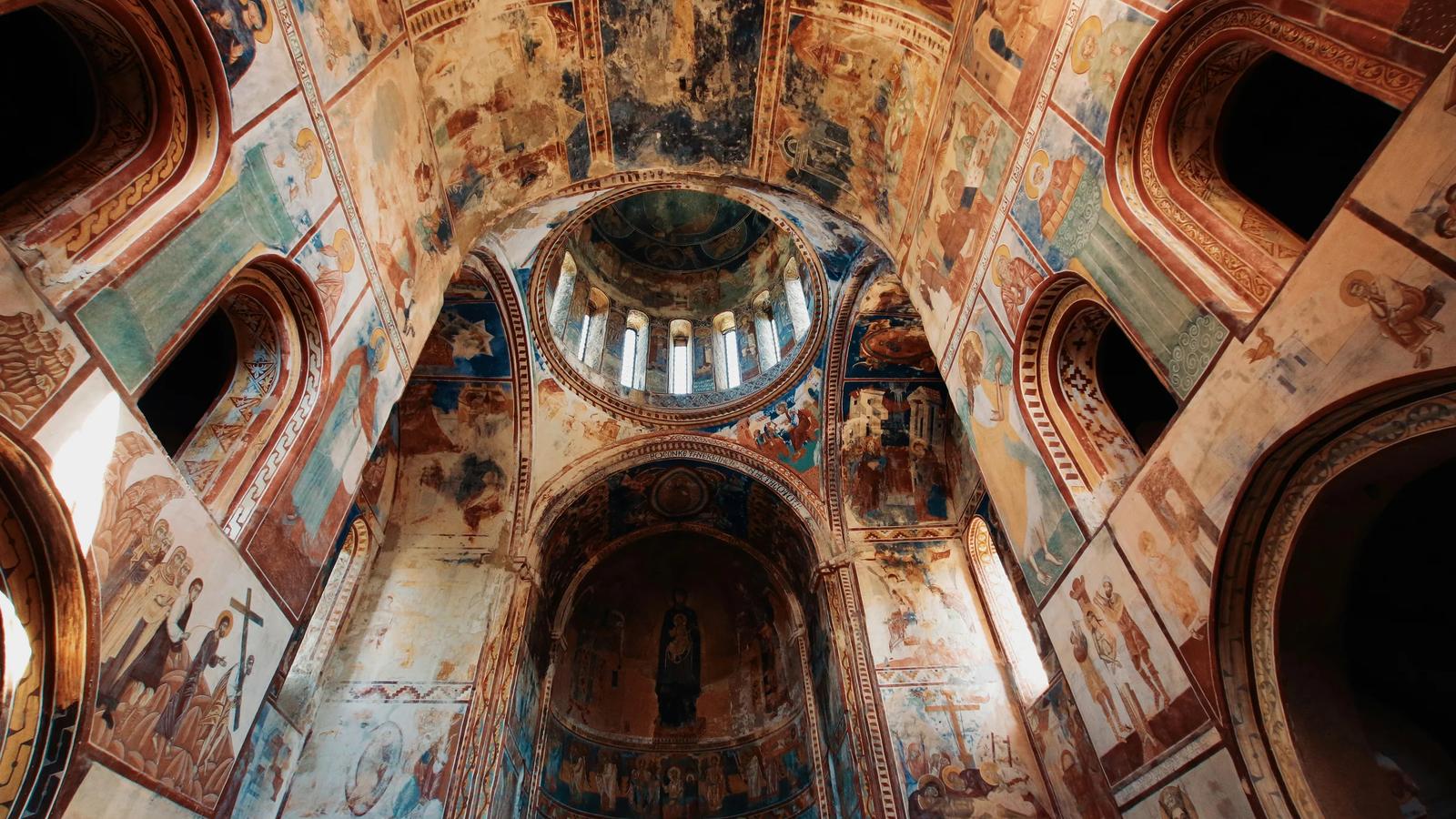
Gelati Monastery is the region's marquee historical site and an active UNESCO World Heritage Site. Founded by King David IV ("The Builder") in 1106, it served as both an academy and a spiritual centre during Georgia's Golden Age. The Byzantine mosaics and frescoes inside are among the finest in the Caucasus. Located 11 km from central Kutaisi; a Bolt taxi costs 8–12 GEL. Entry is 1 GEL. Women should cover their heads (scarves available at the entrance).
Motsameta Monastery
Motsameta Monastery perches on a cliff above a river gorge en route to Gelati Monastery. It's small but photogenic – 20–30 minutes is usually enough. Easy to combine with Gelati in one trip.
City Centre: Colchis Fountain, Market, Old Quarter
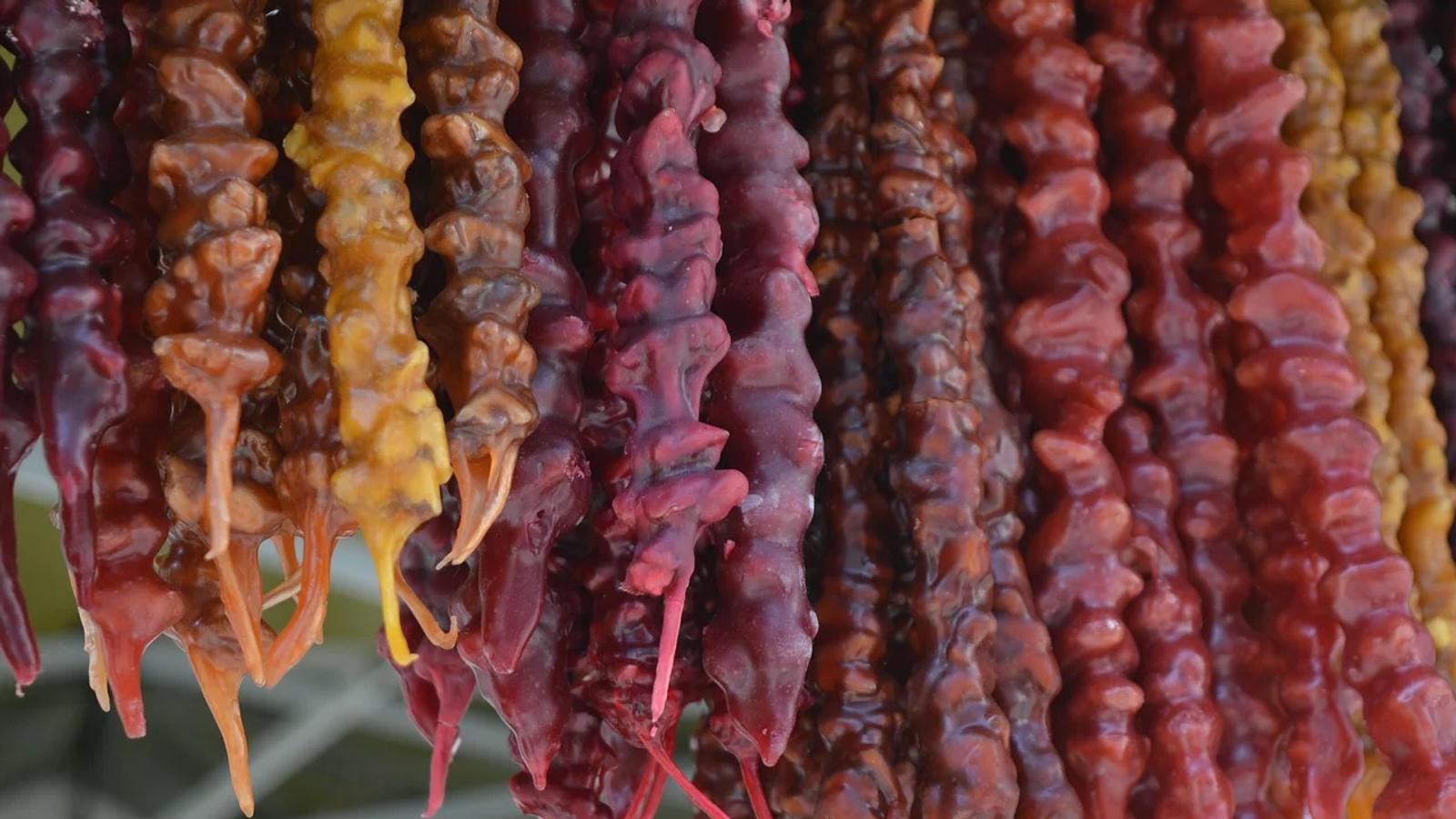
Kutaisi's central square features the Colchis Fountain – topped with enlarged replicas of Colchian gold artifacts, including the iconic Tamada (toastmaster) figure. Walk from here to the Green Bazaar, a massive market where locals buy spices, churchkhela, suluguni cheese, and homemade wine. The 210 m² Soviet-era mosaic on the bazaar's exterior wall is an attraction in its own right.
The Old Quarter (Royal Quarter) near the bazaar has cobblestone streets, late-19th-century Art Nouveau facades, and an ambiance often described as "a small Western European town with Georgian character." The Botanical Garden (5 GEL entry) is worth a detour for the chapel carved inside a hollow oak tree – arguably the most unusual church in Georgia.
Nature Around Kutaisi: Canyons & Caves
This is the primary reason to visit Kutaisi. All natural attractions are 20–70 km away and can be covered in one or two days.
Prometheus Cave
Prometheus Cave is the largest tourist-accessible cave in Georgia. A 1.4 km underground route passes through six halls filled with stalactites, stalagmites, and coloured lighting. Guided tours (~45 minutes) depart every 30 minutes in Georgian, English, and Russian. An optional boat ride along the underground river is available.
| Detail | Info |
|---|---|
Distance from Kutaisi | ~22 km (30 min by car) |
Adult entry | 23–25 GEL (~$8) |
Boat ride | 17–20 GEL (~$6) |
Hours | 10:00–18:00 (to 19:00 in summer), daily |
Temperature inside | +14°C, humidity 96–98%. Bring a jacket |
(Updated: March 2026)
Martvili Canyon
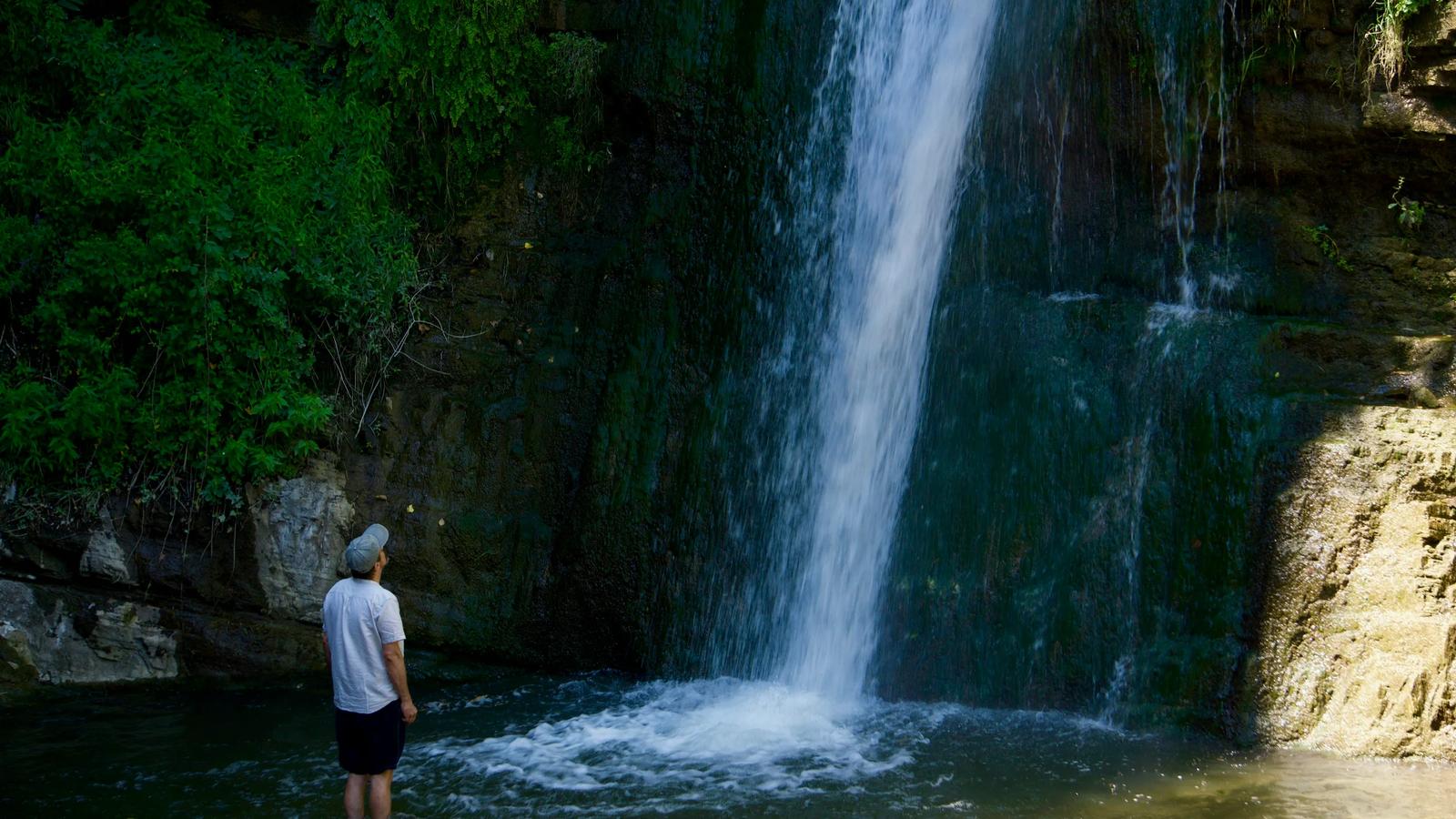
Martvili Canyon is a narrow gorge with emerald water and cascading waterfalls. The walking trail is 700 m; the boat ride covers 300 m one way. Entry costs 20–33 GEL, the boat is an extra 20 GEL. Distance from Kutaisi – 55 km. Road quality is fair, with potholes and occasional livestock on the highway. Closed on Mondays.
Okatse Canyon
A 780-metre suspended walkway over the canyon at 140 m height – adrenaline without climbing gear. Ends with a panoramic viewing platform. Entry – 15–17 GEL. Closed in bad weather and during winter.
Sataplia Nature Reserve
Sataplia Nature Reserve features a small cave, dinosaur footprints, and a glass viewing platform over a cliff edge. A solid half-day option, especially with children. Entry – 15–17 GEL.
Pro tip: The most efficient format is a day tour from Kutaisi combining 2–3 sites. Group tours cost from 80 GEL (~$28) per person, excluding entry fees. Visiting more than one site per day on public transport is practically impossible.
Tours from Kutaisi
For travellers who want to see the canyons and caves without the hassle of marshrutkas and taxis, a guided tour is the best approach.
The most popular option is CANYONS & CAVE Tour from Kutaisi – Okatse, Martvili & Prometheus – a full-day group tour from $35 per person (rating 4.7, 300+ reviews) covering all three major natural sites.
Alternatively, for a day trip from Tbilisi that includes Kutaisi: Kutaisi Canyons and Caves from Tbilisi Full Day Tour costs from $65 per person (rating 4.9, 448 reviews) – a long but rewarding day if Kutaisi doesn't fit your itinerary as an overnight stop.
Abandoned Sanatoriums of Tskaltubo
The town of Tskaltubo, 20 minutes from Kutaisi, deserves its own mention. During the Soviet era, it was an elite spa resort; today it's a collection of abandoned sanatoriums with monumental architecture. One of the most impressive is Sanatorium Shakhtiori (entry ~5 GEL, find the guard nearby). Atmospheric but not for everyone – buildings are in disrepair, so visit at your own risk.
Where to Stay
Kutaisi is one of the most budget-friendly cities in Georgia for accommodation – 1.5 to 2 times cheaper than Tbilisi.
| Accommodation type | Price per night (8+ rated on Booking) | Notes |
|---|---|---|
Guesthouse / hostel | $15–25 | Often with homemade breakfast |
3-star hotel | $25–45 | City centre, Wi-Fi, breakfast included |
4-star hotel | $45–70 | Kutaisi Inn, Best Western – with restaurants and views |
Apartment | $20–35 | Kitchen, washing machine – good for longer stays |
(Updated: March 2026)
Book through Booking.com. Check visa requirements for your nationality before travelling.
Best hotels in Kutaisi:
- Best Western Kutaisi City Center (or book on Trip.com)
- Grand Opera Hotel (or book on Trip.com)
- Hotel Terrace Kutaisi (or book on Trip.com)
- Boutique Hotel Tuta (or book on Trip.com)
- Central Hotel Kutaisi (or book on Trip.com)
Where to stay for canyon trips? If you're planning nature excursions, choose a hotel closer to the bus station (west bank of the river) – it's easier to connect with tour pickups and transport.

Food & Prices
Imeretian cuisine stands apart from what you'll find in eastern Georgia. The khachapuri here is round and closed (not boat-shaped), the khinkali have a different fold, and there's an abundance of fresh herbs.
| Item | Price |
|---|---|
Café lunch (one dish) | $9–12 |
Dinner for two at a restaurant | $25–40 |
Imeretian khachapuri | 4–7 GEL |
Khinkali (5 pieces) | 5–8 GEL |
Cappuccino | 5–8 GEL |
Homemade wine (1 litre, at the market) | 5–10 GEL |
Local beer (0.5 L) | 3–5 GEL |
(Updated: March 2026)
Tip: Look for places called "sasadilo" (workers' canteen) – huge portions, minimal prices (full lunch for 5–8 GEL).
Getting to Kutaisi
From Tbilisi
| Transport | Travel time | Cost | Notes |
|---|---|---|---|
Marshrutka | 4–4.5 hrs | 20 GEL (~$7) | From Didube station, departures every 30 min |
Coach bus (City Bus) | 3.5–4 hrs | 20–25 GEL | More comfortable, Wi-Fi, USB |
Train | 3.5–4 hrs | 9–16 GEL | From Rioni Station, then taxi to centre (~10 GEL) |
Transfer via KiwiTaxi | 3–3.5 hrs | from $60 | Door-to-door, convenient with luggage |
Rental car via Localrent | 3–3.5 hrs | from $25/day | New Rikoti Highway (opened Dec 2025) – smooth driving |
From Kutaisi Airport
Kutaisi Airport (KUT) is 22 km from the city centre. Shuttle buses by Georgian Bus and Omnibus are synced with flights (25 GEL to Tbilisi, ~5 GEL to the city). A Bolt taxi costs 15–20 GEL to central Kutaisi.
Getting Around
Within Kutaisi, Bolt or Maxim taxis cost 3–5 GEL for in-city rides. City buses are 0.60 GEL (card payment only). For canyon and cave trips, you have three options: rent a car through Localrent (full route flexibility), join a day tour, or cobble together marshrutkas and taxis (time-consuming and not always feasible).
Important: Visiting more than one natural site per day on public transport is realistically impossible – connections are infrequent and taxis from main roads to canyon entrances add up quickly.
Insurance
Since January 1, 2026, travel insurance is mandatory for all foreign nationals entering Georgia. Minimum coverage is 30,000 GEL (~$11,000). Policies are available through Ekta. For details, see our guide: Georgia Travel Insurance.
Who Should Visit – and Who Shouldn't
Visit if you: love nature and canyons, want to see non-touristy Georgia, are planning a Tbilisi – Kutaisi – Batumi route, or are flying into Kutaisi Airport (KUT) on a budget carrier.
Skip if: you only have 5–7 days in Georgia and your priorities are Tbilisi + Kakheti + Kazbegi. In that case, Kutaisi doesn't fit logistically.
Frequently Asked Questions
1. How many days should I spend in Kutaisi? Two to three full days is ideal. One day for the city (Bagrati Cathedral, Gelati Monastery, bazaar, old town), one to two for canyons and caves. If pressed for time, 1.5 days works with an early start.
2. Can I visit the canyons without a tour? Yes, with a rental car via Localrent. On public transport, you'll realistically manage one site per day due to infrequent connections. A group tour from Kutaisi (from 80 GEL) is the most practical option for most travellers.
3. Is Kutaisi safe? Yes, Kutaisi is a calm city with low crime. Standard precautions at the market and on public transport are sufficient. Georgian driving culture is more aggressive than in Western Europe – factor this in if renting a car.
4. Which airport is closer to the canyons – Kutaisi or Tbilisi? Kutaisi Airport (KUT), without question. Prometheus Cave is 22 km away, Martvili Canyon is 55 km. From Tbilisi, the same sites are 230+ km and 3.5 hours one way.
5. Is there much to do in the city itself? Kutaisi is charming but small. The city sights fill about half a day. The real value lies in its role as a base for western Georgia's natural attractions. If you only care about urban experiences, Tbilisi will deliver more.
Conclusion
Kutaisi isn't a replacement for Tbilisi, and it's not a resort in any conventional sense. It's a compact, affordable, and charming city that serves as the gateway to some of Georgia's most spectacular natural attractions. If your itinerary has 2–3 spare days, Kutaisi with its canyons and caves will be one of the trip's highlights.
Read also:
- First Time in Georgia – What You Need to Know
- Car Rental in Georgia – A Guide
- Internet and Mobile in Georgia
- How to Get to Georgia – All Options
Sources
- National Parks of Georgia – Official Prometheus Cave information
- Georgian Railway – Schedules and tickets
- Kutaisi Airport – Official website
Places to see in Georgia
You may also like
Georgia in July: +30 °C Heat, +26 °C Sea & Real Trekking Conditions
Tbilisi hits +34 °C, Batumi gets thunderstorms, and mountain snow cleared a week ago. Where to actually go, what it costs in 2026, and what to skip.
April 21, 2026
Tbilisi to Batumi Train: How to Buy Tickets Online for €12 and Skip the Queue
Stadler KISS runs the route in 5 hours from 35 GEL in 2nd class. Where to book online, which class is actually worth it, and why the morning train beats the evening one.
April 26, 2026
Georgia in June: +27°C, Early Season Prices & What to Really Expect
June is Georgia's sweet spot – warm weather without peak crowds, Batumi sea reaching 23°C, and hotel prices 20–30% below midsummer peaks. Here's the honest picture.
March 20, 2026
Best Day Trips from Tbilisi: 7 Tours from $13 (2026 Guide)
Kazbegi, Kakheti wine country, Mtskheta, Vardzia – the day trips locals actually recommend, with honest prices, timing and pitfalls most guides skip.
April 21, 2026
Best Mountain Hotels in Georgia – Where to Stay in Gudauri, Kazbegi, Bakuriani and Svaneti
Curated guide to mountain hotels in Georgia for 2026 – from budget guesthouses to premium resorts in Gudauri, Kazbegi, Bakuriani, Borjomi and Mestia. Prices, features and practical tips.
February 26, 2026
Georgia Road Trip 2026 – 4 Routes from Kazbegi to Svaneti
The best Georgia road trip depends on days available: 3 days covers the Military Highway to Kazbegi, 7 days adds Kakheti and the west, 10+ reach Svaneti. Actual 2026 prices, winter closures, and pitfalls explained.
April 24, 2026