Hero background

Sečovlje Salt Pans

Sečoveljske soline

A 650-hectare landscape park with active 14th-century salt works on the Slovenia–Croatia border

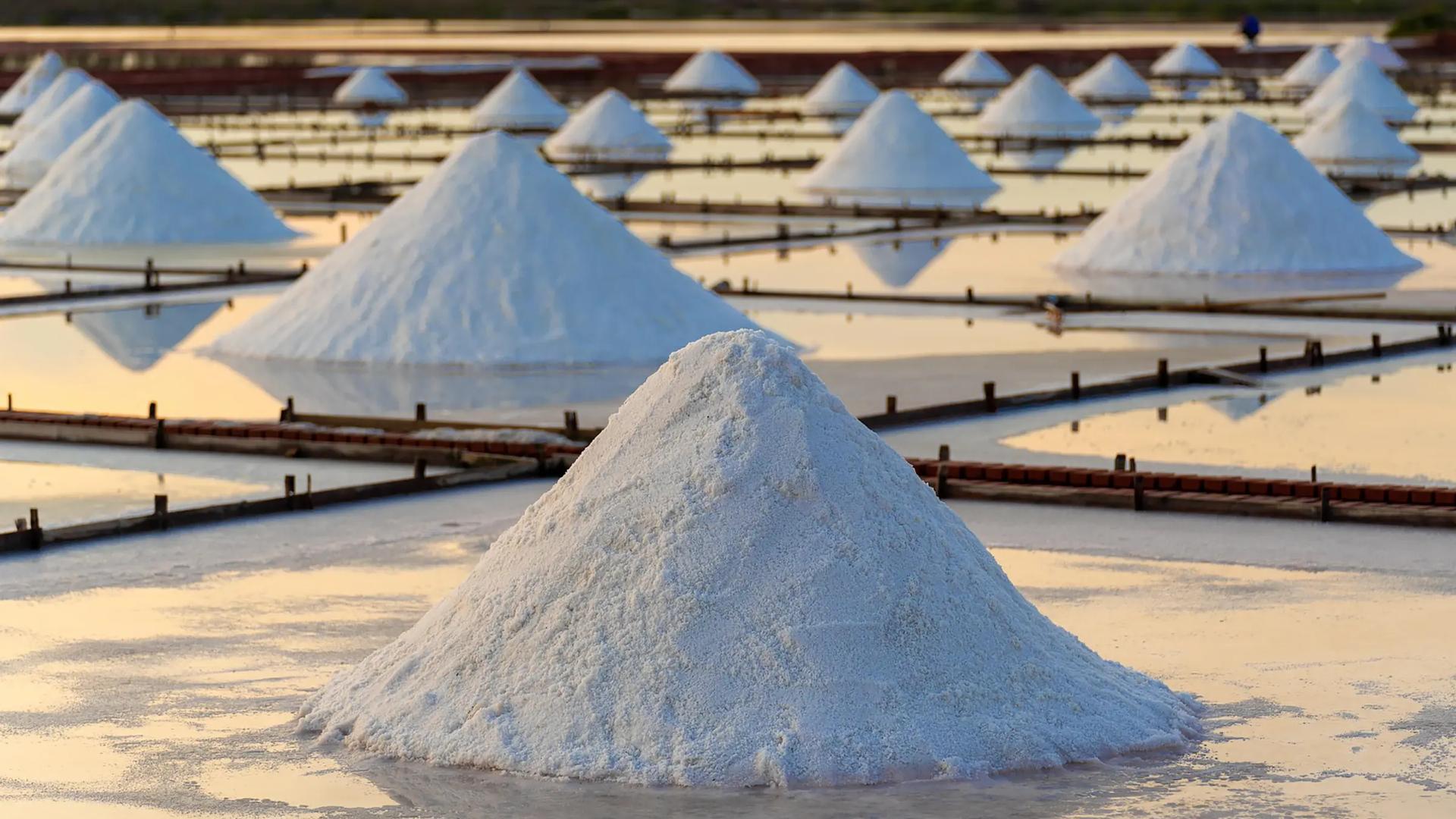
Sečovlje Salina Nature Park (Krajinski park Sečoveljske soline) houses the largest active salt pans in Slovenia and one of the last in the Mediterranean where salt is harvested by hand using a 14th-century method. The park covers 650 hectares at the mouth of the Dragonja River, on the country's southwestern tip at the Croatian border.

From Portorož – 5 km by car (10 minutes) or 20 minutes by bicycle. From Ljubljana – 130 km via the A1 motorway through Koper (1.5 hours by rental car). By public transport, take a bus to Portorož, then a taxi or bicycle.

Admission is €7 (~$8) for adults. A free bicycle is included in the ticket price for exploring the park. Allow 2–4 hours for a visit. The park is open year-round, though the main season runs April through October.

Location

On the Map

About

What's Here

The park is split into two sections. The northern part – Lera – contains the active salt pans where, from April through September, workers in traditional clothing harvest salt by hand using wooden tools. Here you'll find a visitor center with an interactive model of the salt pan water system, a viewing platform with a panorama of the entire site, the Lera shop selling Piran salt and cosmetics, and the Fioret café. The crystallization pools, divided by narrow dykes, form geometric patterns – from above, the salt fields appear as a mosaic of shades from white to pink.

The southern section – Fontanigge – is an abandoned salt works gradually being reclaimed by salt-marsh vegetation. Ruins of salt workers' houses line the canals, and one restored building hosts the Salt-Making Museum. Fontanigge is the area for quiet walks and birdwatching: the park has recorded over 296 species. Migration seasons (spring and autumn) bring flamingos, herons, and waders. Tiny red brine shrimp inhabit the saltiest pools.

Between the two sections, within Lera, operates the Lepa Vida Thalasso Spa – Slovenia's only open-air spa set directly among the salt fields. Treatments use salt-pan mud, brine (aqua madre), and sea salt.

Why Visit

The Highlights

Area – 650 hectares of salt pans, the largest in Slovenia

Tradition – salt harvested by hand using a 14th-century method with petola (biosediment cultivated on the pool floors)

Birdlife – over 296 recorded species, Natura 2000 protected area

Salt-Making Museum – in a restored salt worker's house in the Fontanigge zone

Lepa Vida Spa – Slovenia's only open-air spa located on salt pans

Bicycles – free with admission (April–October)

History

Past & Present

Salt pans at the Dragonja estuary may date to the Roman period, though documented salt production here goes back to the year 804. In the Middle Ages, Piran salt became a strategic commodity – the subject of political disputes and wars. At peak production, Piran's salt works included the areas of present-day Sečovlje, Lucija, and Strunjan. Salt was essential for food preservation and gunpowder manufacturing.

The southern section (Fontanigge) ceased production in the mid-1960s – the salt workers' houses were abandoned and now stand as canal-side ruins. The northern section (Lera) continues operating. In 2001, the area gained landscape park status, and in 2003, management was transferred to Soline d.o.o. Since then, sustainable tourism has developed alongside the Piran salt brand and the Lepa Vida cosmetics line based on salt-pan mud.

For Visitors

Visitor Information

Tickets & Prices

Admission (April–October):

Adults: €7 (~$8)

Students/seniors: €5 (~$5.50)

Children under 6: free

Family ticket: €16 (~$17)

Admission (November–March):

Adults: €6 (~$6.50)

Students/seniors: €4 (~$4.50)

Children under 6: free

Family ticket: €14 (~$15)

Guided tours:

Group tour of Lera (15+ people) – mandatory, book 7 days ahead

Individual guided tour – available subject to guide availability, surcharge at the ticket desk

Languages: Slovenian, English, German, Italian, French, Serbo-Croatian

Birdwatching tour: 3 hours, up to 12 participants, advance booking required

The ticket includes a free bicycle (April–October) and covers both park sections – Lera and Fontanigge.
Rules & Restrictions

Movement within the park is on foot or by bicycle (free at the entrance). Cars are not allowed past the gate. Keep noise to a minimum – this is a protected nature park with nesting birds. Dogs are not permitted in the Lera area. Photography is allowed. A hat and sunscreen are recommended – there is no shade on the salt pans. Sturdy shoes advisable – paths are unpaved.

On-Site Facilities

On-site (Lera):

Lera shop (Piran salt, Lepa Vida cosmetics)

Gallery in the shop building

Fioret café by the viewing platform (drinks, light snacks)

Restrooms at the visitor center

Fontanigge:

Salt-Making Museum

Minimal infrastructure – restrooms, nothing else

Parking: Free lot at the Lera entrance (approximately 15 spaces). Second lot at the Fontanigge entrance.

Wi-Fi: None. 4G coverage is patchy (border zone). Download the park map in advance.

Accessibility: Paths are flat but unpaved. Most of the park is accessible by bicycle. Limited accessibility for visitors with mobility impairments.

Getting There

Transport & Directions

From Portorož (5 km, 10 minutes):

– By car – via the road through Seča toward the Sečovlje border crossing, turn right to the Lera entrance

– By bicycle – 15–20 minutes along the coastal road

– Taxi – €5–8 (~$5–9)

From Piran (8 km, 15 minutes):

– By car through Portorož and Lucija

– By bicycle – 25–30 minutes

From Ljubljana (130 km, 1.5 hours):

Rental car – via A1 through Koper, vignette required

– Bus to Portorož (2.5–3 hours), then taxi or bicycle

On-site:

From the parking lot to the Lera entrance – 2-minute walk. Inside the park – on foot or free bicycle. The Salt-Making Museum (Fontanigge) has a separate entrance.

When to go

Best time to visit

Season: April–October – main season with all facilities open and bicycles available. Salt harvesting: June through September (you can watch the process). November–March – the park is open but with minimal infrastructure.

Time of day: Morning (9:00–11:00 AM) – cooler, fewer visitors. Midday on the salt pans is hot with no shade. Sunset is scenic, but gates close at 5:00 PM (you can drive out after closing).

Duration: 2–3 hours for Lera. With Fontanigge and the museum – 4–5 hours.

Avoid: Midday sun in summer (no shelter). Windy days – dust on unpaved paths.

FAQ

Common Questions

€7 (~$8) for adults, €5 (~$5.50) for students/seniors, free for children under 6. Family ticket: €16 (~$17). November–March prices are €1–2 lower. A free bicycle is included.

2–3 hours for the main section (Lera) with the visitor center and salt harvesting observation. With Fontanigge and the museum – 4–5 hours. Cycling is faster than walking.

June through September in the Lera zone. Workers harvest salt by hand with wooden tools – you can watch from the paths.

Dogs are not allowed in the Lera area (active salt works). For Fontanigge, check at the entrance.

An open-air spa on the salt pans offering treatments with salt-pan mud, brine, and sea salt. Open seasonally (May–September). Minimum age: 12 years. Advance booking required.

From Portorož – 20 minutes by bicycle or a taxi for €5–8 (~$5–9). No public transport runs directly to the park.

The park is open, but no salt is harvested, bicycles aren't available, and the spa is closed. Winter is good for birdwatching – some species overwinter at the salt pans. Admission drops to €6 (~$6.50).

At the Lera shop inside the park – full range: Piran salt, fleur de sel, traditional sea salt, Lepa Vida cosmetics. Also at Piranske soline shops in Piran and Portorož.

Distance

Travel Time

From Portorož by taxi or transfer ~10 min.
From Piran by car ~16 min.
From Postojna by car ~1 h 24 min.
From POW airport (Portorož Airport (POW)) by car ~6 min.
From LJU airport (Ljubljana Airport (LJU)) by car ~2 h 35 min.
Social

Share