Djurdjevic Tara Bridge
Đurđevića Tara
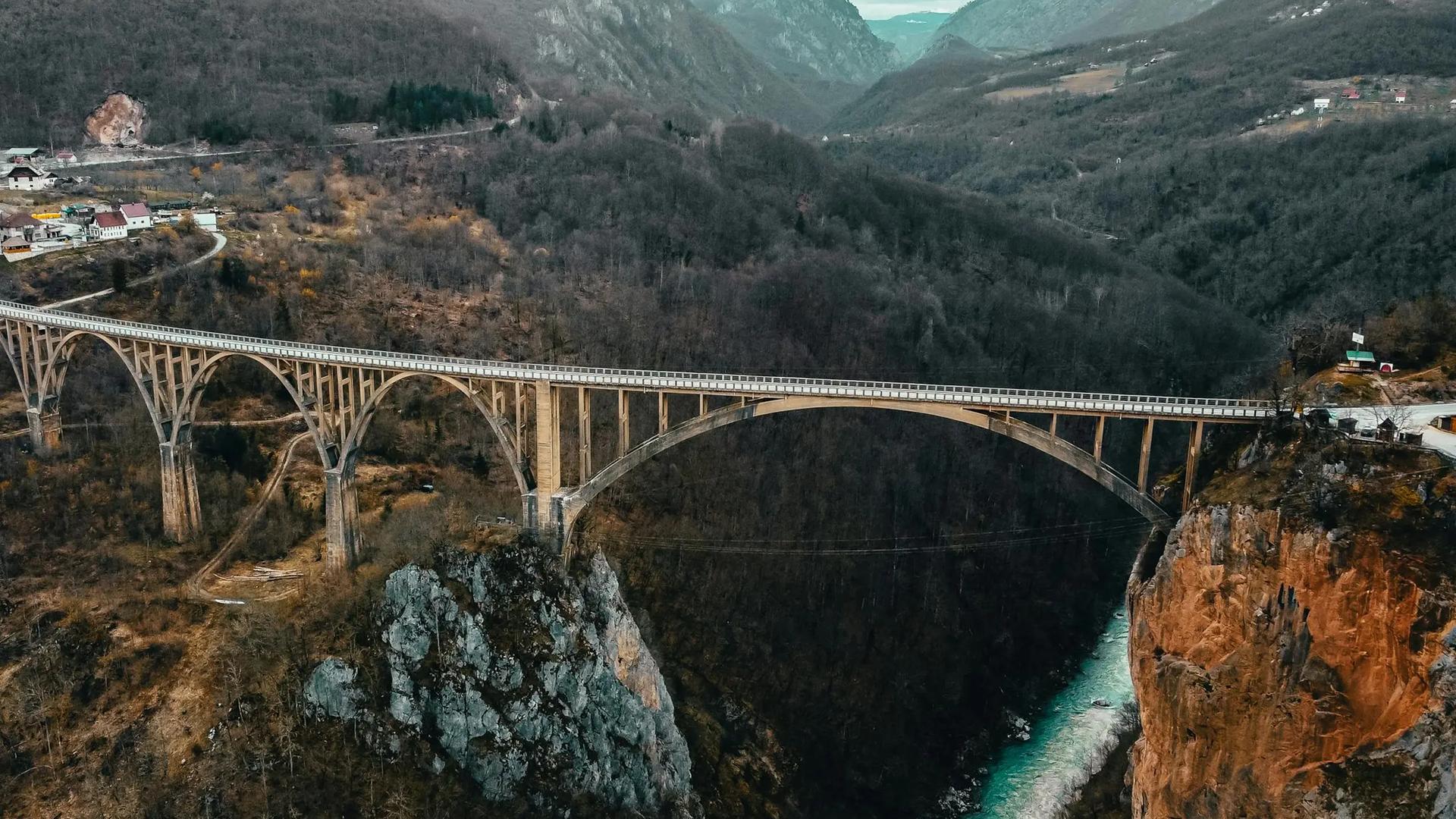
1940 concrete arch bridge over the Tara Canyon. Five spans and a lofty deck above the river.
About
The bridge stretches about 365 meters with a 116-meter main span and stands roughly 170 meters above the river. It is an emblem of the region and a prime vantage over the canyon.
Transport
Travel time
By car from Žabljak21 min.19 km
From the airport Tivat · TIV3 h 35 min.128 km
On the map
Location
In detail
What's here
What is this place
The Đurđevića Tara Bridge is a reinforced-concrete arch road bridge over the Tara River in northern Montenegro. It was designed by engineer Mijat Trojanović, and opened to traffic at the end of 1940.
Key features
- Reinforced-concrete arch structure – at completion it was considered the largest road arch bridge in Europe.
- Design and construction: 1937–1940 – a classic of pre-war engineering in the Durmitor region.
- Estimated cost 11.5 million dinars, increased by about 1 million more – showing the project’s scale for the time.
- WWII role – a strategic site; episodes from that period inspired the film The Bridge (1969).
- Post-war repair in 1946 and a film career – location for the British action movie 1978 Force 10 from Navarone.
What to see
- The five-arch silhouette spanning the Tara canyon and views of the rock walls.
- Pedestrian walkways on the bridge and small viewpoints by the verges.
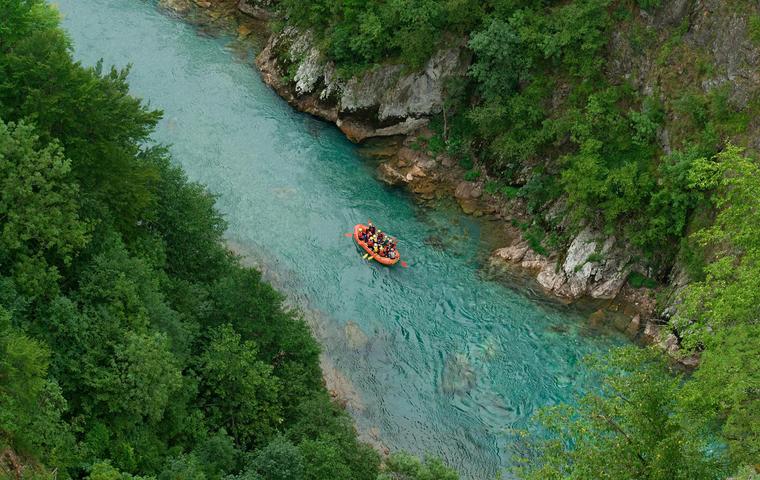
- The Tara riverbed and forested slopes of Durmitor National Park.
History
Construction began in 1937: the project was by engineer Mijat Trojanović. Works finished in autumn 1940, the bridge opened to traffic by year’s end; formal load testing and the inauguration were planned for spring 1941.
During the Second World War the bridge came under occupation forces and played a notable role in the fighting. After the war the structure was repaired in 1946. The bridge’s story and image feature in the film The Bridge (1969), and in 1978 it was a filming location for Force 10 from Navarone.
Practical information
Location: northern Montenegro, Tara River canyon, near the settlement of Đurđevića Tara.
Getting there: mountain roads from Žabljak or from Plužine/Pljevlja; drive right up to the bridge, then walk along the sidewalk.
Access: open at all times; pedestrian access along the bridge—observe road safety.
Visiting hours: daytime for panoramas; in winter expect snow/ice.
Visit duration: 30–60 minutes for views and photos.
Best time: morning or golden hour for soft light on the arches and canyon.
Notes: limited parking lay-bys; keep behind railings and do not step into the carriageway.
Djurdjevic Tara Bridge
Articles about this place
Transport
Scooter & Motorcycle Rental in Montenegro: Traffic Rules, Prices and the 5 Best Rides
Scooters from €15/day, motorcycles from €40. License requirements, hidden costs, real fines – and 5 routes that make two wheels better than four.
April 02, 2026
Tours
Albania vs Montenegro – Which Country to Choose for Your Vacation
Detailed comparison of Albania and Montenegro for holidays: prices, beaches, visas, transport, and infrastructure. An honest breakdown of each country's pros and cons.
February 25, 2026
Tours
Kolašin in Summer: Why Visit a Ski Town When There's No Snow
While the coast hits 35 °C, Kolašin sits at a cool 15–25 °C with ancient forests, alpine lakes and rafting. Prices 40% lower than the Riviera – here's the practical breakdown.
March 25, 2026
Tips
Montenegro in May: +27°C, Warming Sea & No Summer Crowds
May is Montenegro's sweet spot — 22–27°C days, a sea warming to 20°C, prices well below July and no crowds yet. Best routes, beaches and tips.
February 24, 2026
Accommodation
Best Family-Friendly Hotels in Montenegro: Resorts, Prices, and Tips
Where to stay with kids in Montenegro – a detailed guide to family hotels on the Budva Riviera. Resort comparison, accommodation prices, booking tips, and practical advice.
October 24, 2025
Accommodation
Best Hotels in Montenegro for a Peaceful Escape
A curated guide to hotels in Kolašin, Žabljak and Virpazar – ski resorts, national parks and Lake Skadar. Prices, features and tips.
October 21, 2025Nearby