Blog · Tours
Ostrog Monastery: How to Reach the Cliff-Carved Shrine Without Hitting the Saturday Crowds
 Tours
ToursIn this article
Some links are affiliate links. You pay the same, and we may earn a commission.
Ostrog is carved into a vertical cliff at 900m – but the real challenge isn't the road, it's timing. Here's how to get there, what it really costs, and the visiting window most guides miss.
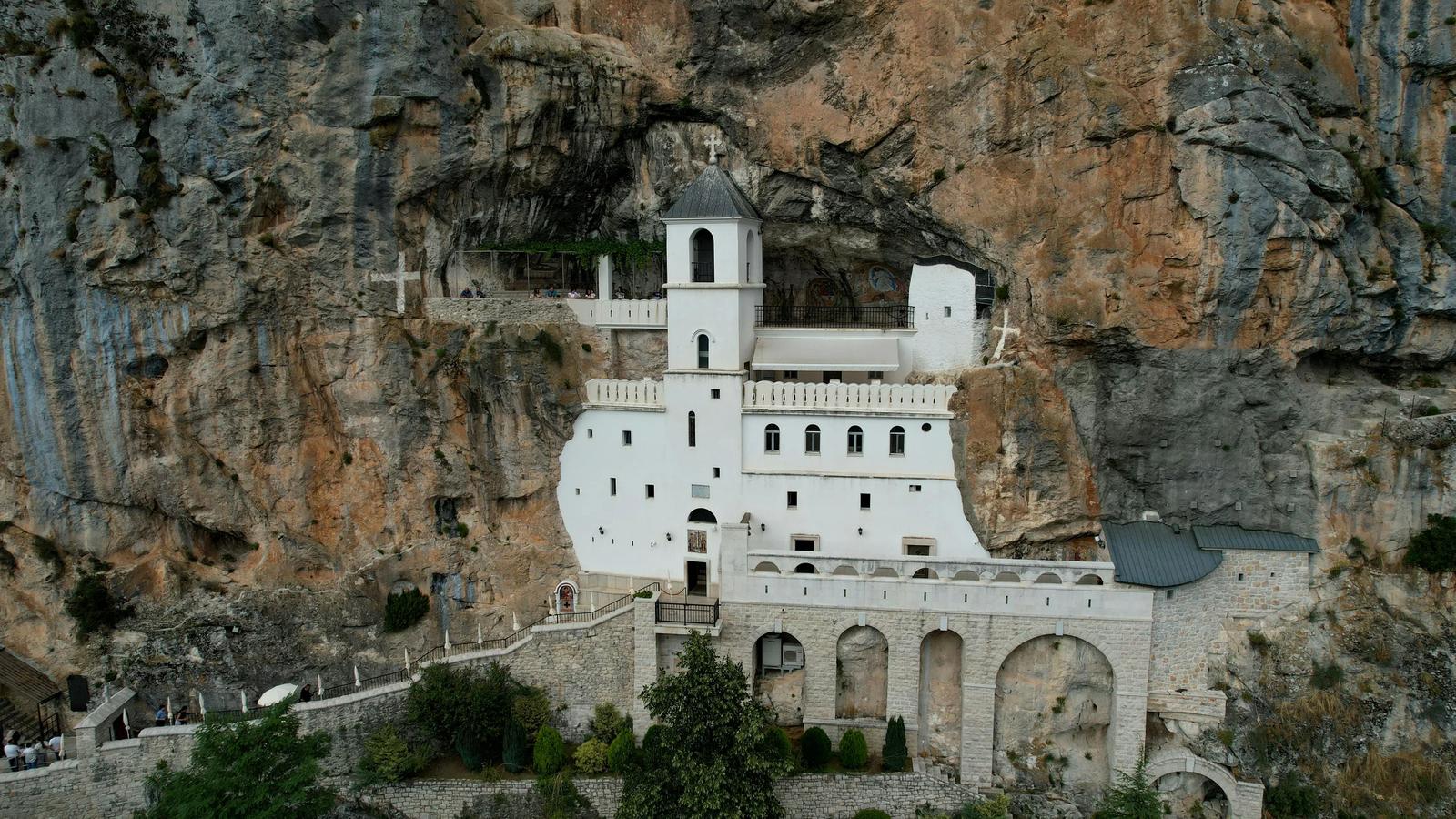
Ostrog Monastery is Montenegro's most revered Orthodox shrine, carved directly into a vertical cliff at 900 metres between Podgorica and Nikšić. You can reach it from anywhere in the country in 1–2.5 hours, but most visitors arrive at the worst possible time – Saturday between 10 AM and 2 PM, when the queue to the relics of St. Basil can stretch to two hours. This guide covers every working route (car, bus, train, tour), real prices, visiting rules, and the practical trade-offs tour operators won't mention.
Key takeaways
- Two separate monasteries: Lower (19th c.) and Upper (17th c.). The actual shrine is in the Upper, inside a rock niche.
- 5 km of winding road between them, or a 20–25 minute hike on a shortcut forest trail.
- Entry is free, and so is parking at the Lower Monastery.
- Strict dress code: shoulders and knees covered for both men and women. No exceptions at the church door.
- Best timing: weekdays before 10 AM or after 4 PM. Saturdays draw pilgrims from across the Balkans.
- May 12 is the feast day of St. Basil – unique atmosphere, but a packed site and overnight liturgy.
- Overnight stays are possible in the Lower Monastery's pilgrim dormitories – donation-based, not commercial lodging.
Location and what's inside
Ostrog sits in the Danilovgrad municipality, roughly 35 km from Nikšić and 43 km from Podgorica. From the E762 highway, the turn-off is at Bogetići – then 10 km of mountain switchbacks.
The complex has two parts:
- Lower Monastery (Donji manastir) – 19th-century Holy Trinity church, icon shop, toilets, free parking (~80 spots), and a small café. A tiny chapel of the martyr Stanko lies between the two, holding his relics.
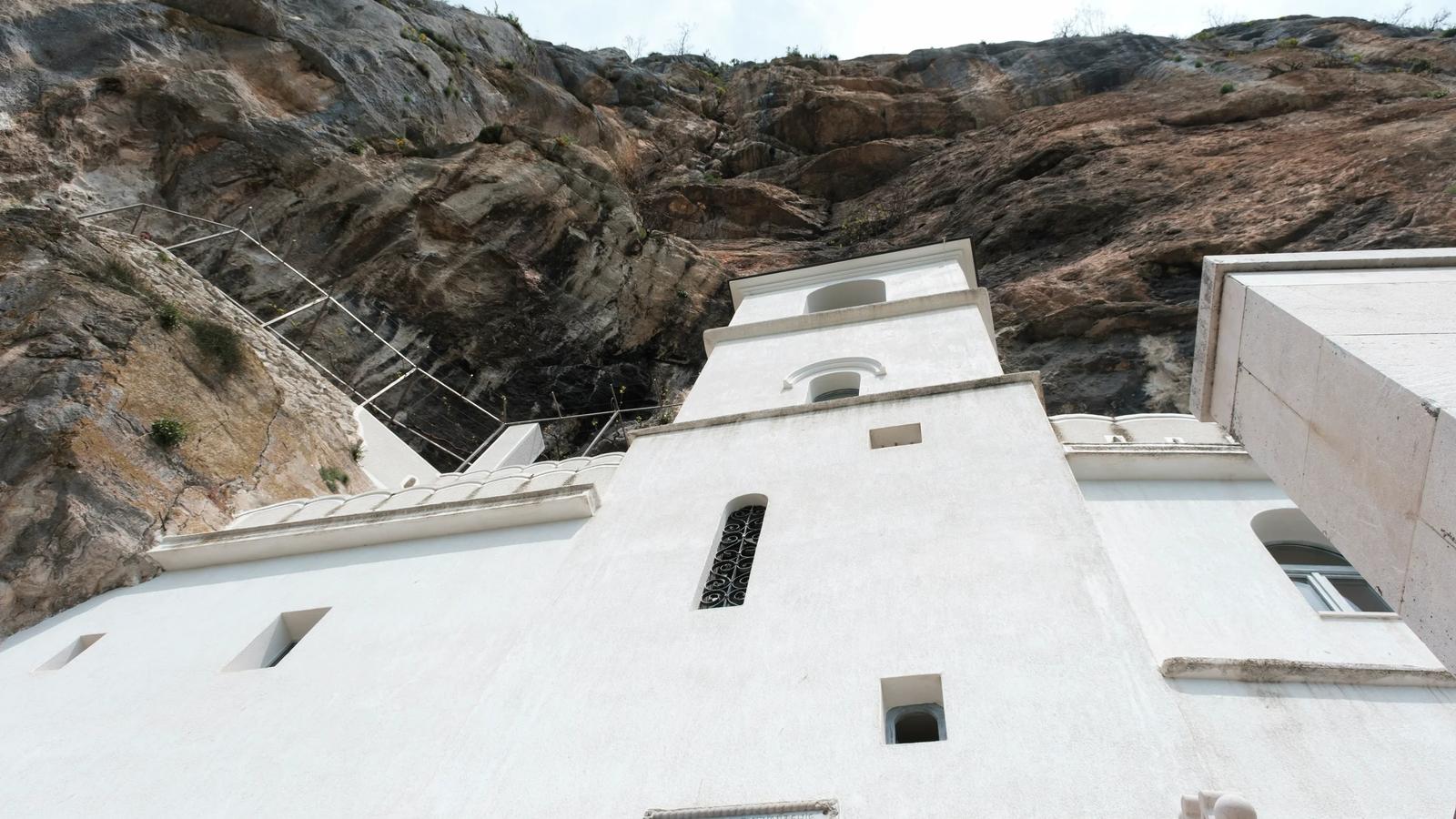
- Upper Monastery (Gornji manastir) – the one carved into rock and featured on every postcard. Two-level, with the Church of the Holy Cross (1665) and the Presentation Church (17th c.). The relics of St. Basil of Ostrog rest here.
Getting there: 5 real options
| Method | From | Travel time | Price (per person) | Caveat |
|---|---|---|---|---|
Rental car | Anywhere | 1–2.5 h | from 25 € / day + fuel | Maximum flexibility, but mountain roads demand confident driving |
Group tour | Budva, Herceg Novi, Kotor | 8–10 h | 20–35 € | Cheapest turnkey option, usually bundled with 1–2 more stops |
Private tour | Any city | 6–8 h | from 165 € per 1–6 pax group | Flexible schedule, can drive right up to Upper Monastery |
Taxi / transfer | Podgorica, Nikšić | 1–1.5 h | 60–90 € one way | Return leg must be arranged in advance – no taxis at Ostrog |
Train + walk | Podgorica | 45 min + 1 h hike | 2 € ticket | Cheapest, but slow. Get off at Ostrog (Dabovići) station |
By rental car
The most convenient and flexible option. From Podgorica it's about an hour, from Kotor 2–2.5 hours, from Budva around 2 hours.
The road from Bogetići up to the Lower Monastery is a narrow serpentine – two supposedly two-way lanes that barely pass each other in practice. In winter the surface gets slippery after rain or snow. For inexperienced drivers this stretch is genuinely stressful.
Important: The final 5 km from Lower to Upper Monastery is even narrower, effectively one-lane. In high season (July–August), a traffic warden and barrier limit access – most cars are sent back to the Lower parking. Leaving the car at the Lower lot and taking the shuttle or walking up is usually the only option.
For car rentals, check international providers – EconomyBookings aggregates most major brands for cross-border searches.
Group tours from coastal resorts
Pre-packaged tours from Budva, Kotor, Tivat, or Herceg Novi run 20–35 € per adult. Coach buses for 30–50 people, English-speaking guide. Ostrog is usually combined with Cetinje Monastery or the Njegoš Mausoleum on Lovćen.
Honest downside: you get 1.5–2 hours at Ostrog, half of that eaten by the relic queue. You can't linger – the bus leaves on schedule.
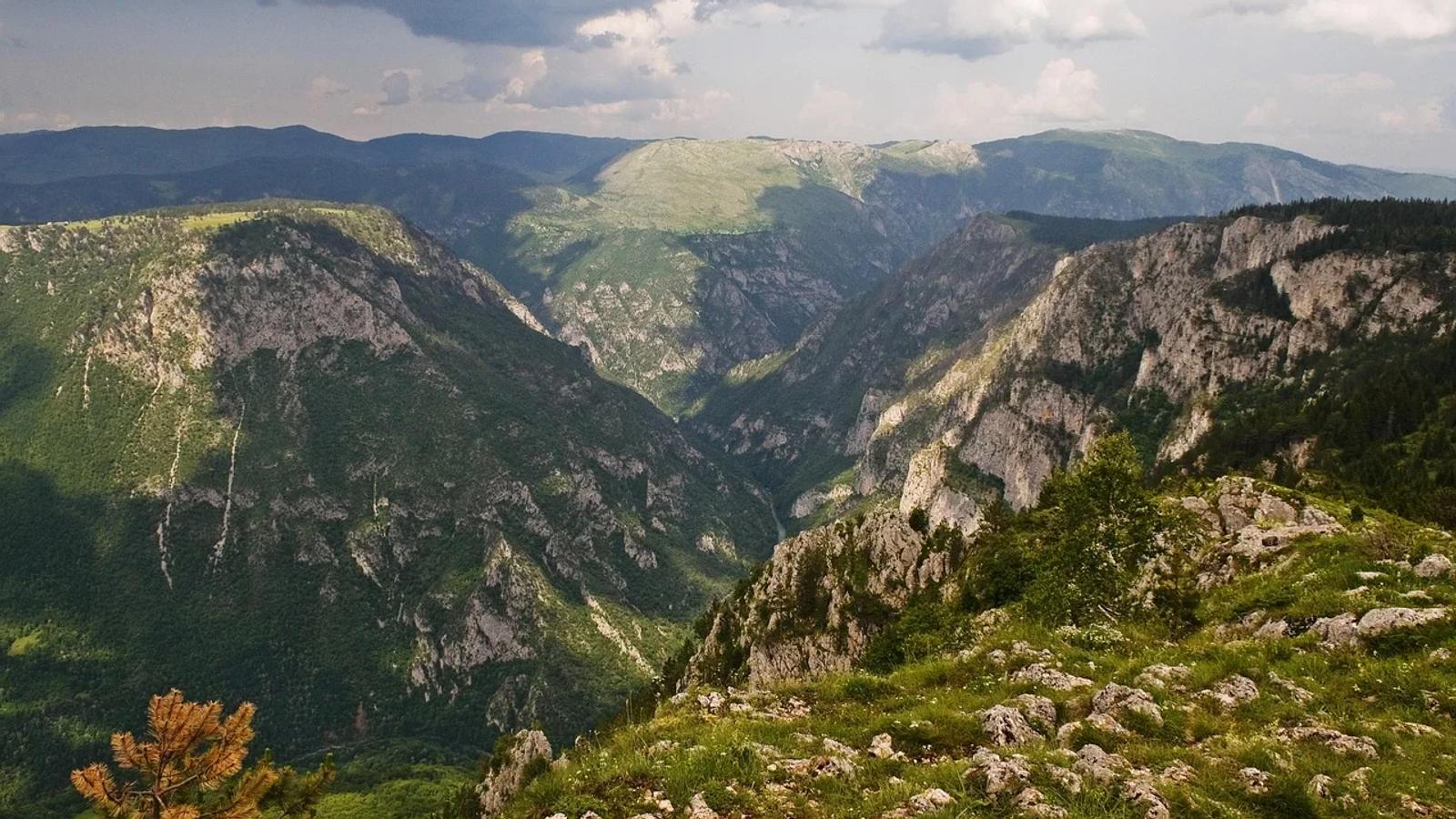
A popular combined option is the North Montenegro, Durmitor, Tara & Ostrog Tour – from 84 € per person, full day, small group, covers Ostrog plus the Tara Canyon and Durmitor National Park.
By bus (cheap but slow)
There's no direct bus to Ostrog. The working workaround:
- From Podgorica or Budva, take any bus towards Nikšić.
- Ask the driver to drop you at Bogetići village.
- From Bogetići to the Lower Monastery is 10 km uphill. Walking isn't realistic. Options: hitchhike (pilgrims often give rides) or wait for a taxi.
Bus Podgorica–Nikšić costs 3–5 €, from Budva 7–9 €. Total travel time to Bogetići is at least 2.5 hours one way.
By train
An underrated option. A regional train runs from Podgorica to Nikšić seven times a day; ticket is around 2 €. Get off at Ostrog (Dabovići) station. From there it's a 4 km paved panoramic road, 45–60 minutes uphill on foot. A couple of wineries and konobas along the way make for natural rest stops.
Taxi and transfer
Taxi from Podgorica runs 60–80 € one way, from Budva 120–150 €. The problem is the return leg: there are no taxi stands at Ostrog and ride-hailing apps don't work up there. Either arrange a return in advance or book a private transfer with waiting time through KiwiTaxi – more expensive but guaranteed.
Opening hours and best timing
| Season | Hours | Crowd level |
|---|---|---|
May – September | 06:00 – 17:00 | High, especially weekends |
October – April | 05:00 – 16:00 | Moderate, weekdays nearly empty |
When to come:
- Weekdays before 9 AM – monks have just opened the church, tour buses haven't arrived, no queue to the relics.
- After 4 PM in-season – tour groups have left, only locals remain.
- November to March, excluding Orthodox holidays – quietest window, though the church gets cold and the upper road may ice over.
When to avoid:
- Saturday and Sunday, 10 AM – 2 PM – peak pilgrim traffic from across the Balkans. Queue to the relics: up to 2 hours.
- May 12 – feast of St. Basil, overnight liturgy, tens of thousands of pilgrims. Unique atmosphere, but impossible for a calm visit.
- Orthodox Christmas (January 7), Easter, Pentecost – same.
Visiting rules: what's allowed and what isn't
Dress code. Shorts, miniskirts, tank tops, or bare shoulders won't get you into the Upper Monastery. Men: long trousers and a sleeved shirt. Women: skirt or trousers below the knee, shoulders covered. Headscarf is optional, not required. No wraps or cover-ups are handed out on site, so bring your own or change at the parking lot.
Photography. Outside – absolutely, the views are extraordinary. Inside the churches – forbidden, especially near the relics of St. Basil. Monks do monitor.
Conduct. Keep your voice down, no wide gestures, don't touch icons unless a priest invites you to. Approach the relics in silence; women are asked to wipe off lipstick before kissing the reliquary.
Candles. Placed in sand-filled water trays – standard across Montenegro. One side for the living, the other for the departed. Candles are sold in the shop for 0.50–2 € each.
Critical: Entry, parking, and access to the monastery are completely free. Anyone demanding money at the entrance is a scammer, not a monk. Donations go only into boxes inside the churches or to the shop attendant.
Lower to Upper: how to get up
Three options:
- On foot via the forest trail – 20–25 minutes uphill, free. The path is rocky, steep in places, and slippery when wet. Fine with average fitness.
- Shuttle minivan – 2 € one way, runs every 15–20 minutes in-season. 10-seat vans, fills quickly.
- Your own car – only if the road isn't blocked (check on arrival). The Upper parking holds ~20 cars and fills fast in summer.
Food and lodging nearby
A modest konoba at the Lower Monastery serves home-style Montenegrin food: čorba, lamb, local cheese – 10–15 € for a main. That's average for a tourist site; in villages towards Nikšić the same dishes run 30–40 % cheaper.
Pilgrims can sleep in guest cells at the Lower Monastery. It's donation-based, no online booking – arrive ahead and arrange directly with the hieromonk. Rooms are basic, 8–10 beds, shared facilities.
No commercial hotels sit directly at Ostrog. Nearest options are in Nikšić or Danilovgrad, 15–20 km away. Properties rated 8.0+ on booking platforms start around 40–55 € for a double in low season and 60–80 € in summer.
Best hotels in Nikšić:
- Garni Hotel Atrium (or book on Trip.com)
- Grahovac 1858 (or book on Trip.com)
- Etno selo Tačevine
Insurance and preparation
The mountain road is narrow and accidents do happen on the way up. Travel insurance with at least 30 000 € medical cover is the realistic minimum – and double-check your rental car CDW policy covers gravel and mountain roads, which some standard packages exclude.
Frequently asked questions
Q1: How much does Ostrog cost to visit? Entry and parking are free. The only costs are the shuttle between monasteries (2 €) and candles in the shop.
Q2: Can I visit Ostrog without a tour? Yes, easily. A rental car is ideal. Public transport works but requires effort: bus to Nikšić with a drop-off at Bogetići, or train to Ostrog station followed by a 4 km hike.
Q3: How long does a visit take? 2–3 hours on-site (both levels plus the relic queue), plus travel. From the coast that's a 5–6 hour round trip; from Podgorica, 3–4 hours.
Q4: Is it suitable for children? Yes, with caveats: the road is winding (motion sickness), the walk between monasteries is uphill, and silence is expected inside. Under-5s find it tough; from age 6–7 it's manageable if rules are explained.
Q5: Do I need to book a tour in advance? In high season (July–August), 2–3 days ahead is smart. Off-season, groups fill slower and same-day booking usually works. Private tours need 3–5 days lead time.
Final word
Ostrog earns the visit – it's a living shrine, a 17th-century feat of stonework, and a viewing balcony over the Bjelopavlići plain all at once. The mistake most travellers make is arriving by coach on a Saturday, losing an hour in the relic queue, and rushing off before seeing the churches properly. Pick a weekday, come early or late, move at your own pace – and the site shows itself entirely differently.
Read also
- Popular Itineraries in Montenegro: What to See in 1 to 7 Days?
- Car Rental in Montenegro: Everything Tourists Need to Know
- Where to Book a Tour in Montenegro?
- Travel Insurance in Montenegro: Do You Need It and How to Choose
Sources
- Manastir Ostrog – official monastery website
- Montenegro Railways – train schedules
- Municipality of Danilovgrad – tourist information
Places to see in Montenegro
You may also like
Solo Female Travel in Montenegro: Real Safety Stats, Dress Codes & Hidden Traps
Montenegro ranks #14 globally for female solo travel safety. Honest take on what works, where to watch out, and why Ostrog Monastery turns away tourists in shorts.
April 25, 2026
Bar, Montenegro: Ancient Ruins, 2 000-Year-Old Olives & a Working Port
Bar is Montenegro's only ferry port to Italy and the terminus of the Belgrade–Bar railway. Stari Bar fortress, a 2 000-year-old olive tree, quiet beaches, and prices 30% below Budva.
March 21, 2026
Travel Apps for Montenegro 2026: No Uber, No Wolt, Glovo Delivers, eSIM Saves
Uber and Bolt don't work in Montenegro, Wolt left, Google Maps gets addresses wrong. The 7 apps that actually work in 2026, with prices and local quirks.
April 26, 2026
Wild & Secret Beaches of Montenegro: Where Crowds Actually Disappear
300 km of coast, but most of it is sunbeds and crowds. 12 beaches where logistics beat popularity – and why Montenegro's "untouched beach" is mostly a myth.
April 24, 2026
Montenegro Markets (Pijaca): How to Buy Real Cheese at €8/kg, Kajmak and Wine
Budva's market is 1.5–2× more expensive than supermarkets, while Podgorica sells the same cheese at half price. Where to buy real Njeguški cheese, kajmak, pršut and Vranac without the tourist markup.
April 30, 2026
Lake Skadar: €5 Kayaks, Pelicans, and the Real Virpazar Fish Dinner
The Balkans' largest lake, one hour from Budva: group boats from €15, kayaks from €5/hr. Where to eat fresh carp, when pelicans actually show up, and what to skip.
April 22, 2026