Blog · Tours
Top 10 Blue Flag Beaches in Montenegro: Where to Find the Cleanest Water
 Tours
ToursIn this article
- 011. Bečići Beach – The Riviera's Flagship Resort Beach
- 022. Jaz Beach – Five Blue Flags and Every Vibe Imaginable
- 033. Plavi Horizonti – The Best Sandy Beach for Families
- 044. Drobni Pijesak – A Hidden Cove Worth the Steep Drive
- 055. Kamenovo Beach – Party Beach with Blue Flag Standards
- 066. Lučice – A Pine-Fringed Cove Near Petrovac
- 077. Mogren Beaches – Budva's Postcard-Perfect Icon
- 088. Dobreč Beach – The 70-Meter Blue Flag Wonder
- 099. Velika Plaža (Ulcinj) – 12 km of Sand and Kitesurfing
- 1010. Petrovac Town Beach – Relaxed Riviera Classic
- 11Beach Comparison Table
- 12How the Blue Flag Works in Montenegro
- 13Practical Tips
- 14Frequently Asked Questions
Some links are affiliate links. You pay the same, and we may earn a commission.
Montenegro has nearly 40 Blue Flag beaches – but not all are equal. We rank the 10 best by water quality, surface, crowd levels, and practical tips.
Montenegro holds nearly 40 Blue Flag certifications along its 293 km coastline – a remarkable number for a country this size. The award, issued annually by the Foundation for Environmental Education (FEE) in Copenhagen, evaluates 33 criteria covering water quality, safety, environmental management, and accessibility. But a Blue Flag alone doesn't tell you whether a beach is worth your time – some flagged zones are stunning hidden coves, others are overbuilt resort strips. Here are the 10 that actually deliver.
Key facts:
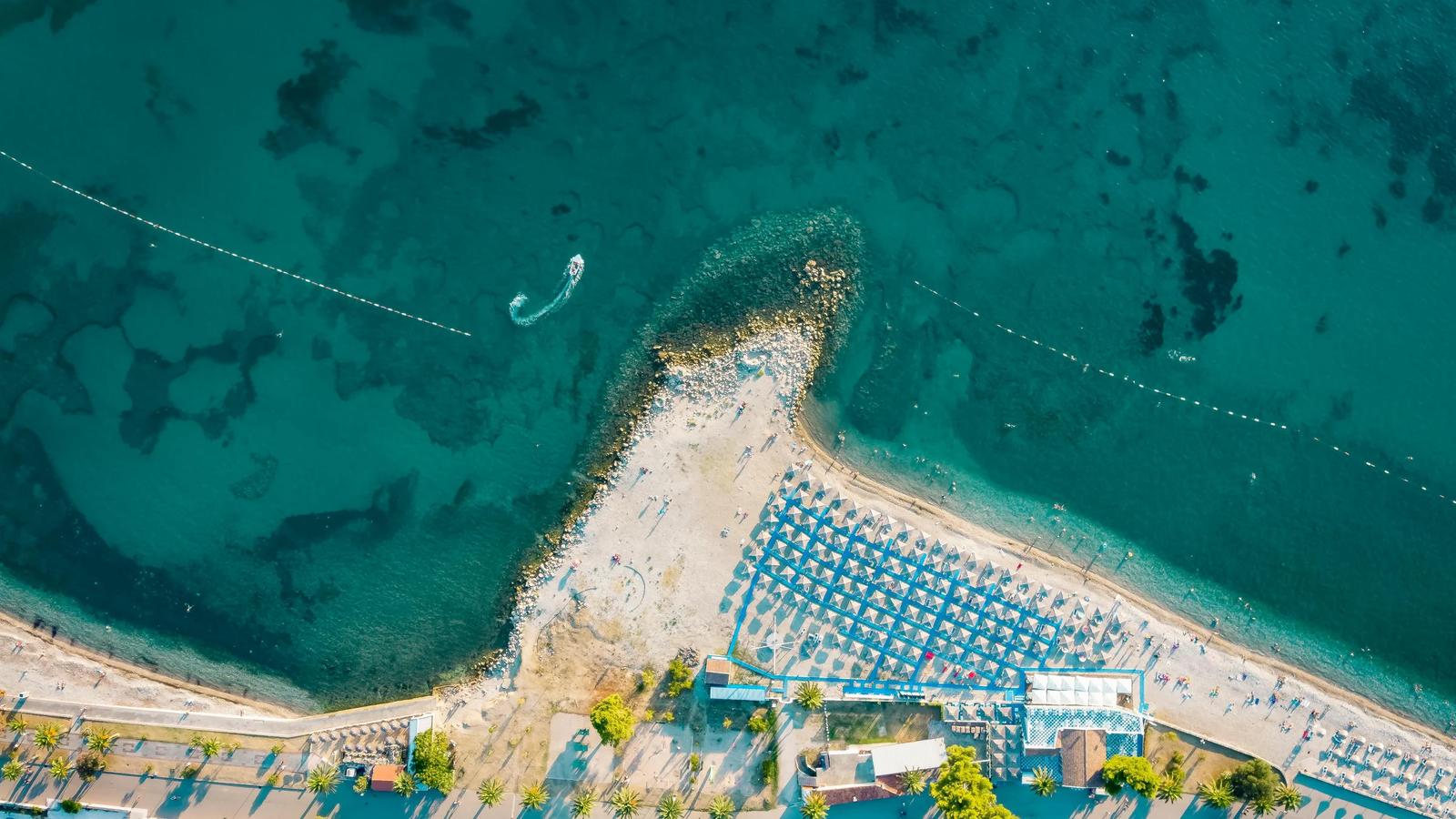
- Nearly 40 beaches hold Blue Flag status in the 2025–2026 season.
- The Budva Riviera dominates, with over half of all certified zones.
- Flags are awarded to specific zones, not entire beaches – one beach can have 5 flagged sectors and 3 without.
- Sunbed rental runs €10–30 per set (2 loungers + umbrella), depending on location and season.
- Free access zones exist everywhere – Montenegrin law requires every beach to maintain a public area without sunbeds.
- Best months for swimming: June and September – fewer crowds, water at 22–25 °C.
- Water shoes are essential on most beaches – the coastline is predominantly pebble.
1. Bečići Beach – The Riviera's Flagship Resort Beach
Becici Beach stretches nearly 2 km from the Zavala Peninsula to Rafailovići and is one of the most spacious shores on the entire Adriatic. The surface is fine, multi-colored pebbles with patches of sand, and the entry slope is gentle. The beach consistently maintains Blue Flag status and offers full infrastructure: showers, changing rooms, lifeguards, and water sports.
What to know: Bečići is a high-volume beach. In July–August, free zones fill up by 10 AM. Sunbeds cost €10–20 per set, but prices drop as you walk south toward Rafailovići, where the atmosphere is calmer and the seafood restaurants are better.
Best for: families with children, water sports enthusiasts (parasailing, kayaking, SUP). Water taxis run to St. Nicholas Island – locally nicknamed "Hawaii."
Getting there: walk from Budva Old Town through the Zavala tunnel (30 minutes) or take the Mediteran Express bus.
2. Jaz Beach – Five Blue Flags and Every Vibe Imaginable
Jaz is one of Montenegro's three largest beaches, located 2.5 km from Budva. What makes it unique is variety: Jaz 2 (left side) is wild and undeveloped, while Jaz 1 (right side) is lined with beach bars, restaurants, and water sports rentals. At the far end of Jaz 1, you'll find a rare stretch of fine sand. The beach holds five separate Blue Flag certifications.
What to know: the free parking lot is large but fills up by noon in peak season. A campsite behind the beach keeps mornings quiet. There's a nudist section at the far end of Jaz 2. The sea entry is a comfortable mix of pebbles and sand with exceptionally clear water.
Best for: travelers who want options – from lively beach clubs to total solitude, all on one shore. Great for snorkeling along the rocky edges.
Getting there: taxi from Budva (5 minutes, €5–7) or by car.
3. Plavi Horizonti – The Best Sandy Beach for Families
Plavi Horizonti sits in a sheltered bay on the Luštica Peninsula and is one of the few entirely sandy beaches in Montenegro. The name translates to "Blue Horizons" – and it delivers. Water visibility is exceptional, and the sea floor slopes so gently that the water barely reaches your waist 50 meters from shore.
What to know: the bay is protected from wind and waves, so the water warms earlier in the season than at open beaches. Facilities include showers, changing rooms, and a café. The surrounding pine forest provides natural shade. Sunbeds from €10 per set.
Best for: families with small children, snorkeling enthusiasts (clarity here is among the best in the country).
Getting there: car or taxi from Tivat (15 minutes). No public transport serves this beach. Renting a car is recommended – services like Economybookings offer competitive rates.
4. Drobni Pijesak – A Hidden Cove Worth the Steep Drive
Drobni Pijesak regularly appears on international lists of Europe's best beaches, and for good reason. This small cove between Budva and Petrovac features white fine pebbles and emerald-green water. The Pura Vida swimming zone here holds a Blue Flag. A spring-fed stream runs directly into the sea on the beach.
What to know: the access road from the main highway is narrow with extremely steep switchbacks – not recommended for inexperienced drivers or large vehicles. The alternative is a water taxi from Budva or Petrovac (running regularly in season).
Best for: couples, photographers, anyone willing to trade a challenging drive for one of the most beautiful coves on the Adriatic.
5. Kamenovo Beach – Party Beach with Blue Flag Standards
Kamenovo Beach sits between Bečići and Rafailovići, reachable on foot through a pedestrian tunnel from Bečići. A unique sand composition gives the water an intense turquoise hue that shifts with the sun. The beach is Blue Flag certified and considered one of the most photogenic on the coast.
What to know: Kamenovo doubles as a nightlife zone, with cocktail bars and live DJs in the evening. Sunbeds from €8. Facilities include a children's playground, volleyball nets, and showers.
Best for: younger travelers and couples who want beach by day and atmosphere by night.
6. Lučice – A Pine-Fringed Cove Near Petrovac
Luchica Beach is a sheltered cove 15 minutes on foot from Petrovac center, surrounded by pine trees. Water clarity here is among the best on the Budva Riviera, confirmed by consistent Blue Flag status.
What to know: the beach is small and fills up quickly in peak season – arrive early. Unusually for a secluded cove, it has a decent on-site café. The surface is fine pebbles with a gradual depth increase.
Best for: those staying in Petrovac who want a quieter alternative to the main town beach.
7. Mogren Beaches – Budva's Postcard-Perfect Icon
Mogren Beaches are two beaches connected by a rock tunnel, just 150 meters from Budva Old Town. Towering cliffs, caves, golden pebbles, and crystalline water make this the scenery you see on every second Montenegro postcard. Mogren has held Blue Flag certification since 2004.
What to know: sunbeds cost around €15 per set (2 loungers + umbrella). Proximity to the Old Town means crowds are constant, especially on Mogren 1. Mogren 2 is quieter and more scenic but requires the tunnel walk.
Best for: anyone combining beach time with an Old Town stroll. Cliff-jumping enthusiasts use the rocks between the two beaches.
8. Dobreč Beach – The 70-Meter Blue Flag Wonder
Dobreč Beach sits on the Luštica Peninsula near Plavi Horizonti. At just 70 meters long, it's tiny – but it carries a Blue Flag and offers full infrastructure: sunbeds, umbrellas, a café, and lifeguards. The water is crystal-clear over a pebble bottom.
What to know: because of its size, Dobreč fills up first. Arrive before 9 AM or after 4 PM. Sunbeds from €8.
Best for: those staying in the Luštica Bay development who want an intimate beach without crowds.
9. Velika Plaža (Ulcinj) – 12 km of Sand and Kitesurfing
Long Beach is the longest sandy beach on the entire Adriatic: 12 km of fine grey sand with high mineral content. Multiple sectors hold Blue Flag certifications. The beach divides naturally into zones: calm, shallow family areas in the north, and kitesurfing schools in the south where the steady "Maestral" wind blows.
What to know: the sheer scale means you can always find space, even in August. Sand here is considered therapeutic. Sunbeds from €5 per set – significantly cheaper than the Budva Riviera.
Best for: kitesurfers, families with children (northern section), anyone tired of cramped pebble beaches.
Getting there: car from Ulcinj (10 minutes). Bus service is irregular.
10. Petrovac Town Beach – Relaxed Riviera Classic
Petrovac City Beach is a 1 km crescent of reddish sand backed by a pedestrian promenade lined with stone buildings, souvenir shops, and restaurants. Gentle entry, warm calm water, and the picturesque Kastel fortress at the northern end. Multiple sectors hold Blue Flag status.
What to know: Petrovac is one of the most laid-back resorts on the Riviera – no thumping nightclubs, no high-rise hotels. Sunbeds from €8.
Best for: families, couples, anyone seeking a quieter beach holiday without the intensity of Budva.
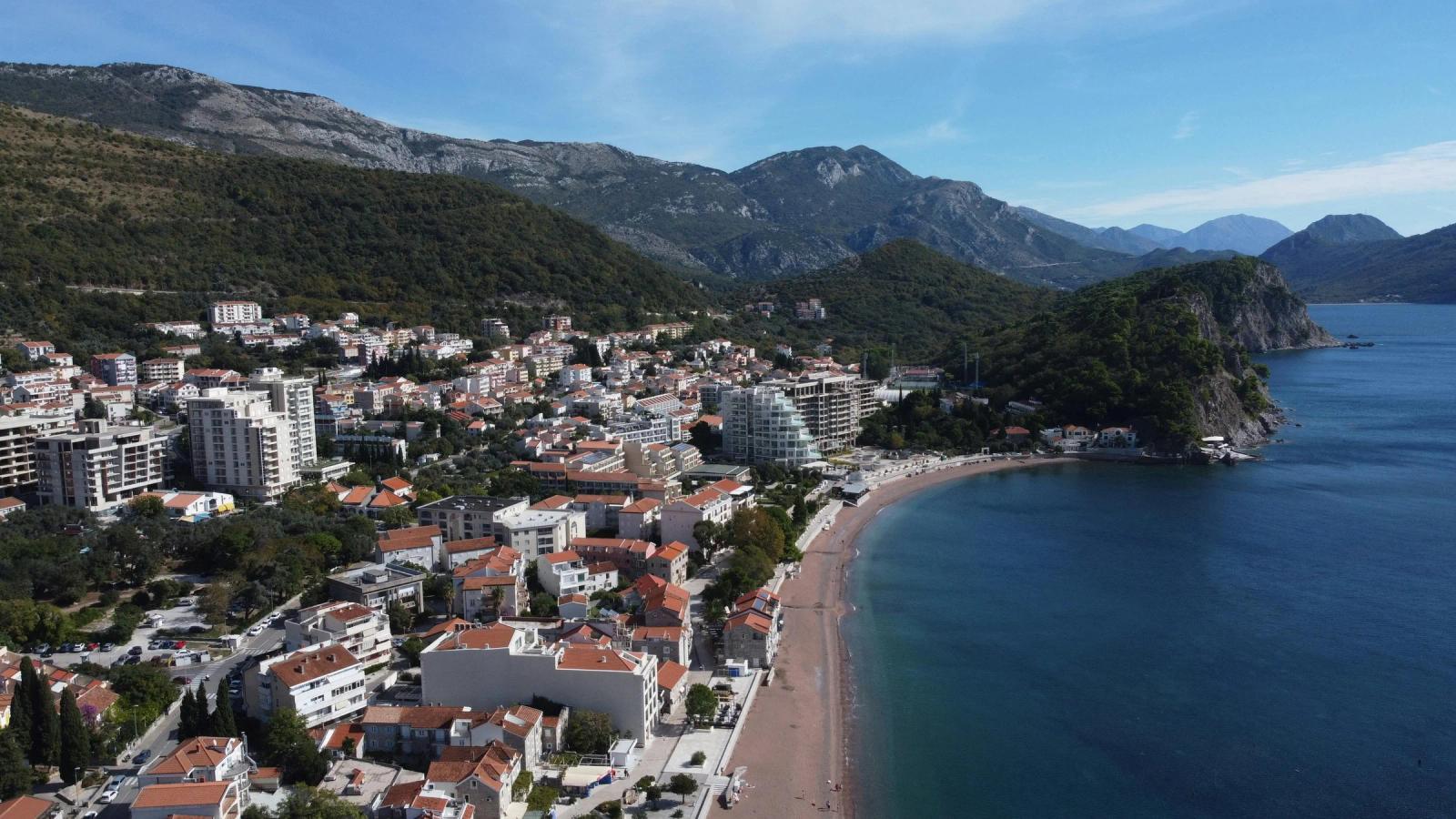
Beach Comparison Table
| Beach | Surface | Length | Sunbeds (€) | Families | Nightlife | Seclusion |
|---|---|---|---|---|---|---|
| Fine pebbles | ~2 km | 10–20 | ★★★★★ | ★★★ | ★★ | |
Jaz | Pebbles + sand | ~1.2 km | 10–15 | ★★★★ | ★★★ | ★★★ |
Plavi Horizonti | Sand | ~300 m | 10–15 | ★★★★★ | ★ | ★★★★ |
Drobni Pijesak | Fine pebbles | ~200 m | 10–15 | ★★★ | ★ | ★★★★★ |
| Sand + pebbles | ~300 m | 8–15 | ★★★ | ★★★★★ | ★★ | |
| Fine pebbles | ~200 m | 8–12 | ★★★★ | ★ | ★★★★ | |
| Golden pebbles | ~300 m | 15 | ★★★ | ★★ | ★★★ | |
Dobreč | Pebbles | ~70 m | 8–10 | ★★★ | ★ | ★★★★ |
| Sand | ~12 km | 5–10 | ★★★★★ | ★★ | ★★★★ | |
| Reddish sand | ~1 km | 8–12 | ★★★★★ | ★★ | ★★★ |
(Updated: March 2026)
How the Blue Flag Works in Montenegro
The Blue Flag is an international program run by the Foundation for Environmental Education (FEE) in Copenhagen. The award goes to specific swimming zones (usually operated by a concession holder), not to entire beaches. A single beach can have multiple flagged zones – Jaz, for instance, has five.
To qualify, a zone must meet 33 criteria across four areas: water quality, safety and services, environmental management, and educational programs. Of these, 28 are mandatory and 5 are recommended.
Important: Blue Flag status is renewed annually based on the previous season's results. If a zone fails to meet criteria, the flag is revoked. The list of certified beaches changes every year.
Montenegro has participated in the program since 2003. The number of certified zones has grown from 16 to nearly 40 – one of the fastest growth rates in Europe. In addition to beaches, Marina Bar holds a Blue Flag – the only marina in the country with this certification.
Practical Tips
Free zones. Under Montenegrin law, all beaches are public property. Even sections managed by hotels must maintain a free access area. Look for signs reading "slobodan pristup" (free access). In practice: lay your towel in the free zone and buy drinks from a nearby bar – it's cheaper than renting a sunbed.
Footwear. Eight out of 10 beaches on this list have pebble surfaces. Water shoes are not optional – they're essential. Available at any beach shop for €5–10.
Timing. Arrive before 10 AM or after 4 PM. Between those hours, expect peak crowds and the most intense sun.
Transport. Most beaches on this list are best reached by car. Check visa requirements for your nationality before traveling. Car rental services like Economybookings offer competitive rates across Montenegro.
Boat tours. One of the best ways to see the coastline is from the water. From Budva, a kayak and SUP tour to coastal caves costs from €45 per person and reveals views you won't get from shore.
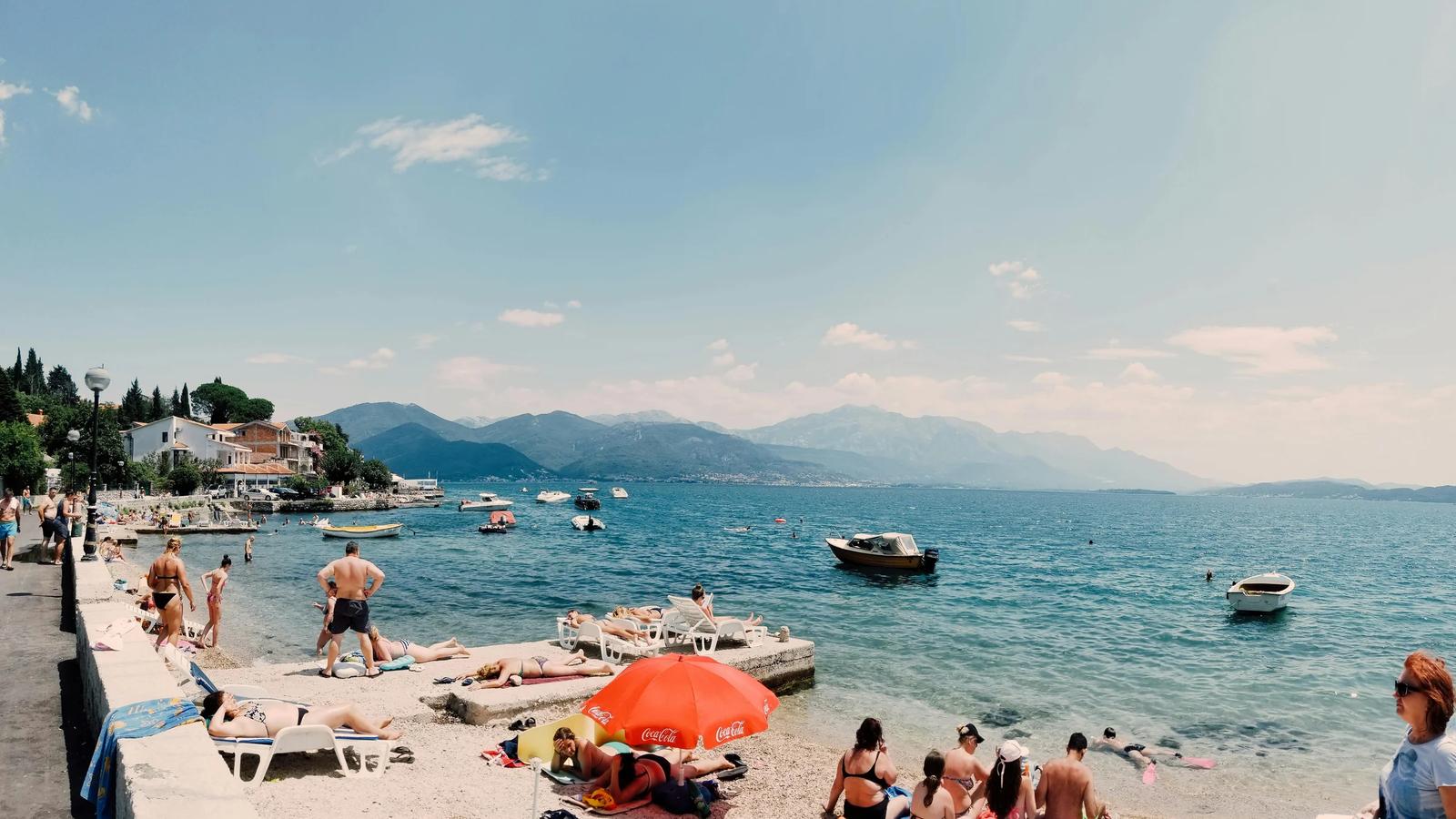
Frequently Asked Questions
1. How many Blue Flag beaches does Montenegro have? Nearly 40 beach zones and one marina (Bar) hold Blue Flag status. The exact number changes annually – certifications are reviewed each year based on the previous season's performance.
2. Which Blue Flag beach is best for families with children? Plavi Horizonti on the Luštica Peninsula – entirely sandy, with a gentle slope and a wind-protected bay. For easier access, Bečići Beach offers a wide shoreline and shallow water.
3. Are there free areas on Blue Flag beaches? Yes. Montenegrin law requires all beaches to maintain free public zones without sunbeds. In practice, the size of these zones varies – on Bečići and Jaz, free areas are generous, while smaller beaches like Dobreč have limited space in peak season.
4. Do international bank cards work in Montenegro? Yes, Visa and Mastercard are widely accepted at beach bars, restaurants, and shops. ATMs are available in all coastal towns. The currency is the euro.
5. When is the best time for a beach holiday in Montenegro? June and September offer the ideal balance: water at 22–25 °C, moderate prices, fewer tourists. July–August brings heat (up to 35 °C) and peak crowds. May and October are good for walks, but the water can be cool (18–20 °C).
Conclusion. Montenegro's Blue Flag status is a genuine indicator of water quality and infrastructure – not marketing decoration. But choosing a beach solely by flag presence is a mistake. Consider the surface, depth, accessibility, crowd levels, and what you actually want from your day: the secluded beauty of Drobni Pijesak or the energy of Kamenovo. The best strategy is to rent a car and visit 5–6 beaches from this list over the course of a week.
Read also:
- Kotor vs Budva: A Detailed Comparison of Montenegro's Two Main Resorts
- Car Rental in Montenegro: Everything a Tourist Needs to Know
- Montenegro Prices in 2026: A Realistic Weekly Travel Budget
Sources:
- Blue Flag (FEE) – international beach certification program
- JP Morsko Dobro – Montenegro coastal zone management
- Visit Montenegro – national tourism portal
- Budva Riviera – beaches of the Budva Riviera
Places to see in Montenegro
You may also like
Montenegro in August: +32 °C, Budva Crowds and Where to Actually Go Instead
Peak season: sea at +26 °C, hotels cost double May rates, Budva is packed. Here's where to stay smarter – Ulcinj, Žabljak, Herceg Novi – and what it really costs.
April 21, 2026
Montenegro in July: +31°C, Peak Prices & What They Don't Tell You
July is Montenegro's hottest and priciest month – 31°C air, 25°C sea, packed beaches. Here's what it actually costs, where to find space, and what to skip.
March 06, 2026Montenegro in June: Weather, Beaches, Prices and What to Do
Montenegro in June 2026 – warm weather before peak crowds. Sea temperature, hotel prices, best beaches and itineraries for a perfect early-summer trip.
March 06, 2026
Montenegro in May: +27°C, Warming Sea & No Summer Crowds
May is Montenegro's sweet spot — 22–27°C days, a sea warming to 20°C, prices well below July and no crowds yet. Best routes, beaches and tips.
February 24, 2026
Bar, Montenegro: Ancient Ruins, 2 000-Year-Old Olives & a Working Port
Bar is Montenegro's only ferry port to Italy and the terminus of the Belgrade–Bar railway. Stari Bar fortress, a 2 000-year-old olive tree, quiet beaches, and prices 30% below Budva.
March 21, 2026
Montenegro or Cyprus for Summer: Price, Beach & Logistics Comparison
Montenegro is 30–40% cheaper, easier to reach, and packed with wild coastline. Cyprus counters with warmer seas and longer season. Here's a point-by-point breakdown.
April 09, 2026