Long beach
Velika Plaža
Twelve kilometres of sand beach east of Ulcinj.
About
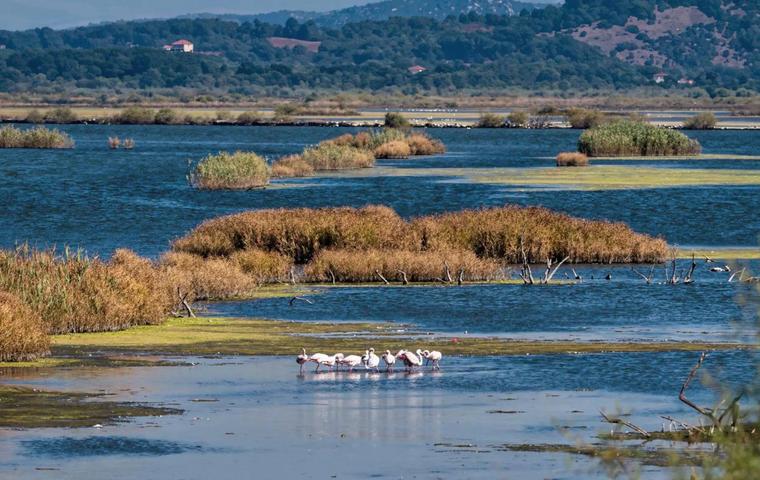
This wide shoreline runs as far as the Bojana mouth. It is valued for open space and an even entry to the water. Dunes and natural patches survive on the fringes.
Transport
Travel time
On foot from Ulcinj center1 h 31 min. – 2 h 17 min.8 km
By car from Ulcinj12 min.11 km
From the airport Tivat · TIV2 h 14 min.100 km
On the map
Location
In detail
What's here
What is this place
Long Beach (Velika plaža) is the longest beach in Montenegro and one of the longest on the Adriatic, a 13 km stretch of sand southeast of Ulcinj. It is a wide, almost continuous shoreline from Port Milena to the Bojana River at the Albanian border, known for its dark sand, shallow sea and reliable winds for kitesurfing.
Key features
- Around 13 km long and on average up to 60 m wide, making it the longest beach in the country and one of the longest in the Mediterranean.
- Covered with very fine sand, roughly 0.1–5 mm in grain size, partly of volcanic origin and rich in minerals, traditionally believed to help with rheumatism and joint problems.
- The seabed slopes very gently and the shallow zone extends for dozens of metres, which suits families with children and less confident swimmers.
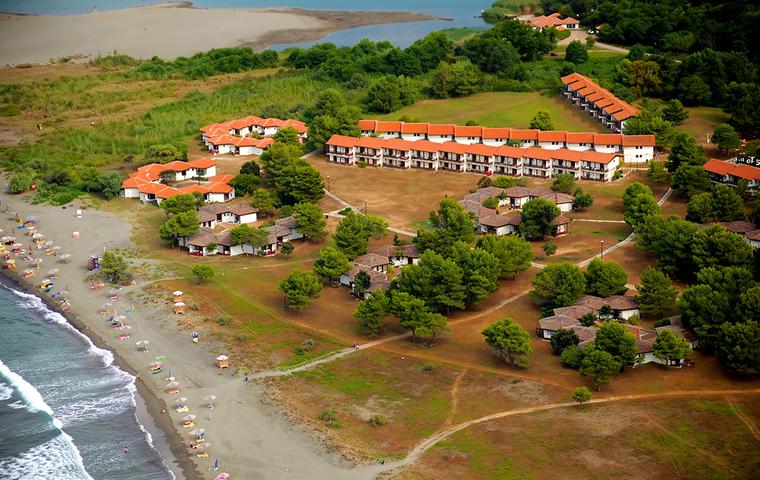
- The coastline is divided into dozens of sectors – from completely undeveloped stretches to serviced beach clubs and kite centres, including family-oriented, party and quiet areas.
- At the southern end it merges into the Bojana estuary and Ada Bojana island with its nudist resort, reinforcing the area’s image as a place of “freedom” and wind sports.
What to see
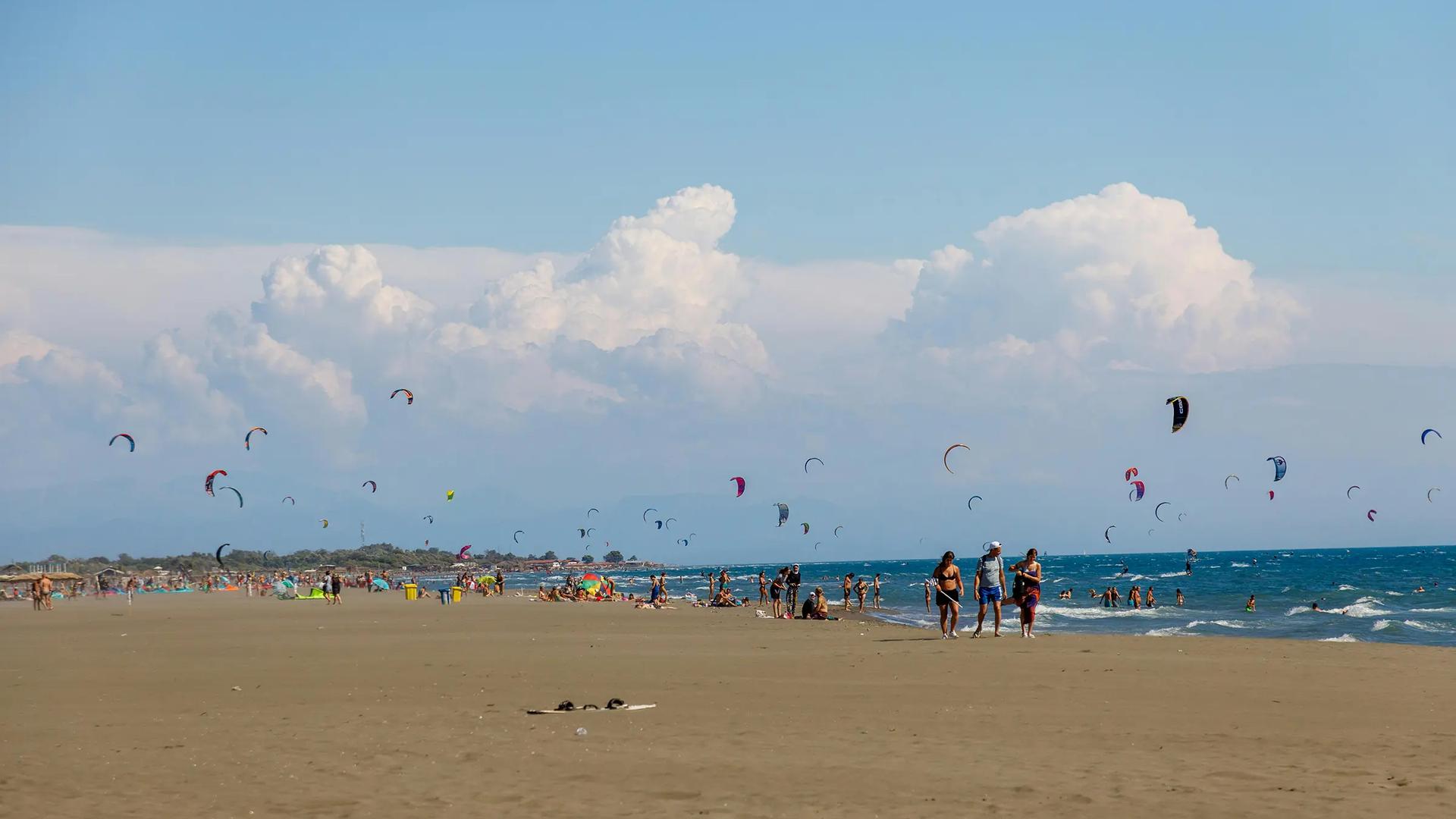
- A very wide strip of dark, almost black sand and an open horizon without cliffs or dense development, especially in the central and southern sections.
- Lines of colourful kites above the water on windy summer days around the kitesurfing schools and launch zones.
- Alternating clusters of beach bars, restaurants, sunbeds and umbrellas with almost empty wild sections backed by low dunes and pine or tamarisk scrub.
History
As a natural formation Velika plaža developed through the build-up of sand and silt from the Adriatic and the Bojana River, and for centuries it served as a fishing and grazing area for local settlements such as Štoj and Ulcinj. Already in the Ottoman and early Montenegrin periods this flat coast was known as a convenient wintering and landing shore for small boats.
Organised seaside tourism began in the second half of the 20th century, when simple bathing areas, campsites and guesthouses appeared along the first kilometres from Port Milena. More distant sections stayed almost wild for a long time, while the hinterland was reserved in planning documents for future “greenfield” resort development.
In the late 2000s and early 2010s the beach entered international travel rankings, including a “places to go” list by The New York Times, and central parts received environmental recognition and Blue Flag awards for water quality. At the same time Velika plaža established itself as one of the premier kitesurfing spots on the Adriatic, attracting schools and riders from across Europe.
Practical information
Location: southern Montenegro on the Ulcinj Riviera; the beach begins about 5 km east of Ulcinj’s centre at the Port Milena canal and runs almost to the Albanian border at the Bojana River mouth.
Getting there: drive, take a taxi or local bus from Ulcinj along the coastal road towards Štoj and Ada Bojana; there are numerous turn-offs to individual beach sectors, with a mix of free and paid parking areas that fill up quickly in high season.
Access: the beach itself is public and free; you only pay for sunbeds, umbrellas, parking or services at specific clubs and campsites, some of which have their own access rules.
Visiting hours: main swimming season runs from mid May to late September; kitesurfers make use of windy days from late spring to early autumn, with the strongest and most reliable winds typically in the afternoon.
Visit duration: a quick swim and walk can take 2–3 hours, but because of its size and variety many visitors spend a full day or several days here, combining beach time with kite lessons and side trips to Ada Bojana.
Best time: June and September when the sea is warm but crowds are lighter; in July and August mornings and late afternoons are more comfortable, and breezy summer evenings are particularly popular with kiters.
Notes: there is little natural shade, so sun protection and drinking water are essential; the dark sand heats up strongly, so beach or water shoes help; near the Bojana estuary the sea can be slightly cooler with some currents, and the southern end is traditionally more liberal in terms of dress code and proximity to nudist areas, something families with children may want to factor in.
Long beach
Articles about this place
Tours
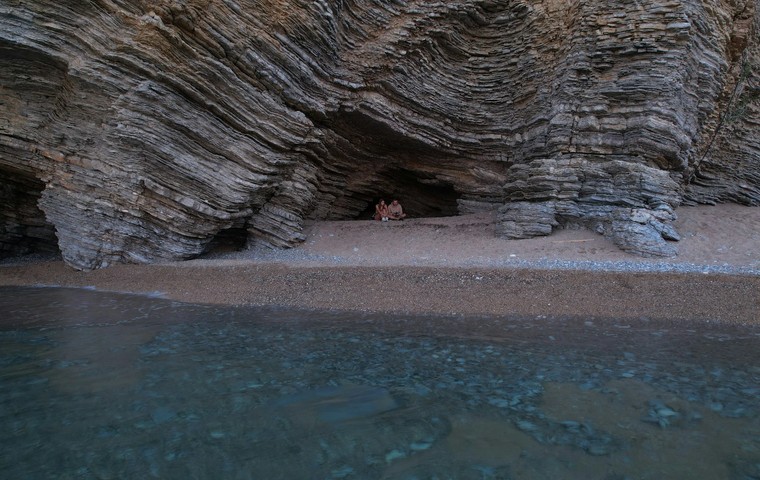
Wild & Secret Beaches of Montenegro: Where Crowds Actually Disappear
300 km of coast, but most of it is sunbeds and crowds. 12 beaches where logistics beat popularity – and why Montenegro's "untouched beach" is mostly a myth.
April 24, 2026
Tips
Montenegro or Cyprus for Summer: Price, Beach & Logistics Comparison
Montenegro is 30–40% cheaper, easier to reach, and packed with wild coastline. Cyprus counters with warmer seas and longer season. Here's a point-by-point breakdown.
April 09, 2026
Tours
Top 10 Blue Flag Beaches in Montenegro: Where to Find the Cleanest Water
Montenegro has nearly 40 Blue Flag beaches – but not all are equal. We rank the 10 best by water quality, surface, crowd levels, and practical tips.
March 29, 2026
Tips
Bar or Ulcinj: Which Southern Montenegro Town Should You Pick?
Bar costs 20% less, but Ulcinj has Montenegro's best sandy beaches. An honest comparison of accommodation, food, sights, and vibe – so you don't regret your choice.
March 28, 2026
Tips
Montenegro in August: +32 °C, Budva Crowds and Where to Actually Go Instead
Peak season: sea at +26 °C, hotels cost double May rates, Budva is packed. Here's where to stay smarter – Ulcinj, Žabljak, Herceg Novi – and what it really costs.
April 21, 2026
Tips
Montenegro with Kids: 8 Shallow-Entry Beaches That Work for Families
Sandy bottom, knee-deep water for 50 metres, sunbeds from €5 – a guide to the best family-friendly beaches in Montenegro.
March 15, 2026Nearby