Hero background

Old Bazaar of Kruja

Pazari i Vjetër i Krujës

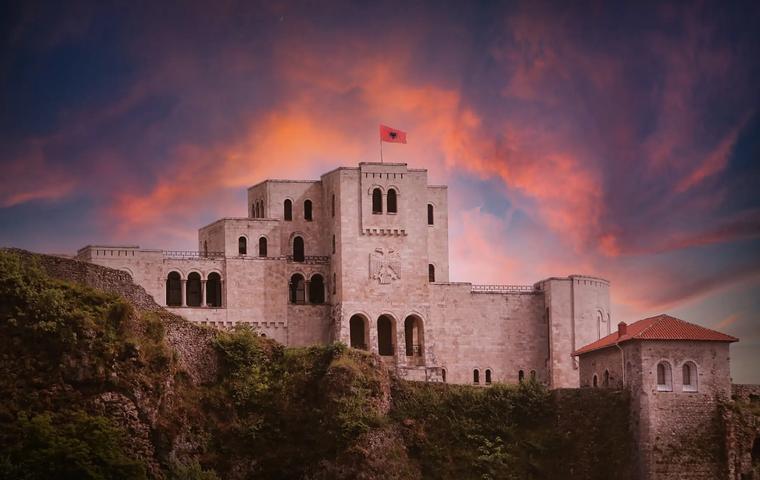
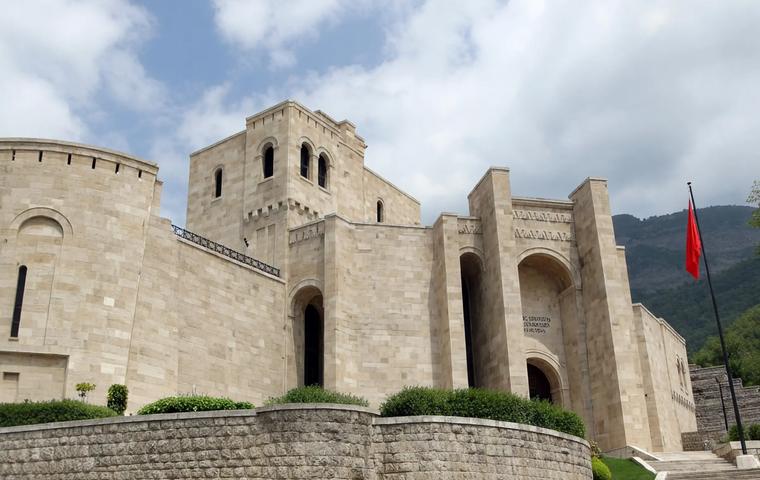
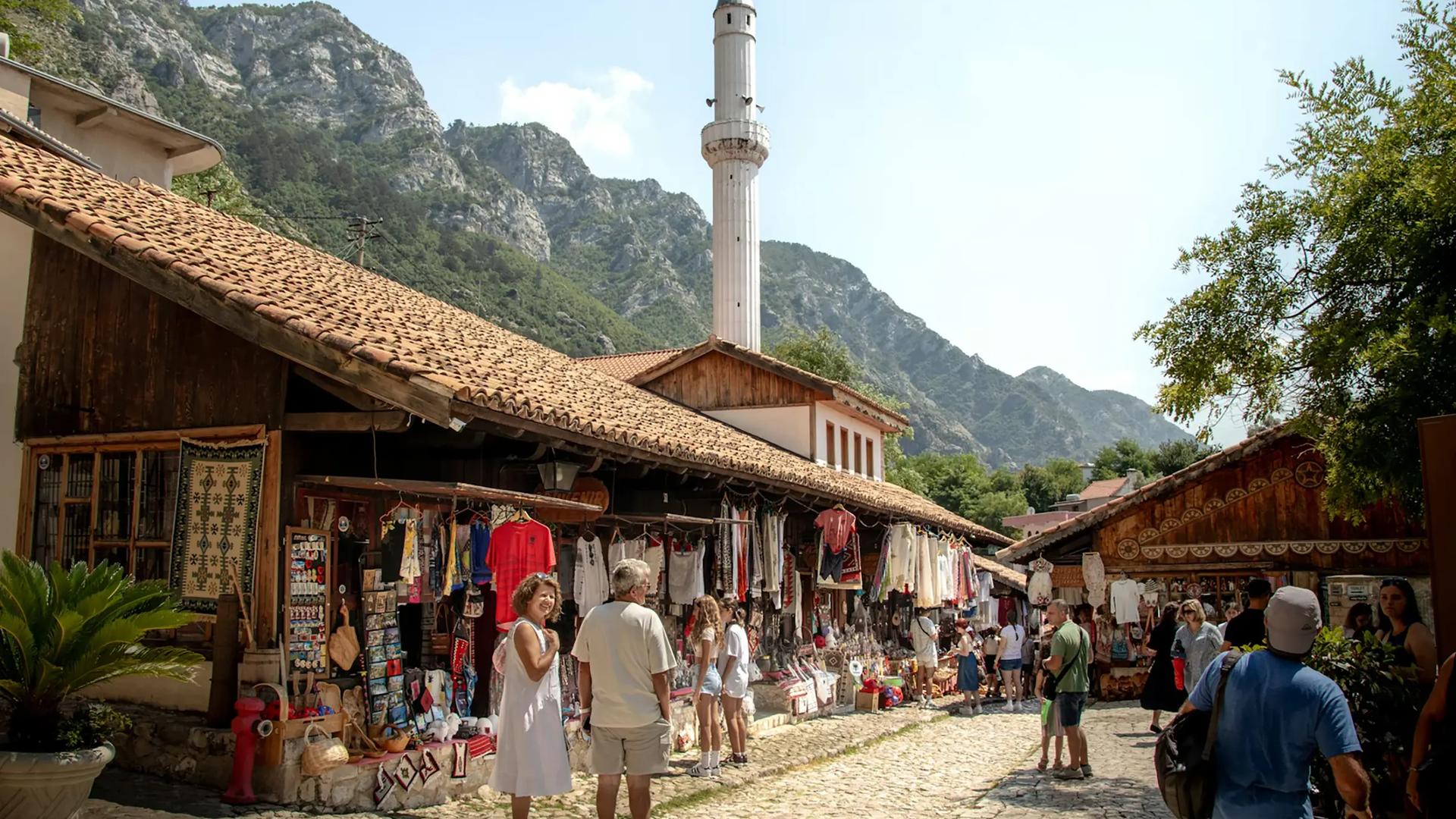
A 17th-century Ottoman marketplace on a cobblestone street below Skanderbeg's fortress

The Old Bazaar of Kruja (Pazari i Vjetër) is one of the best-preserved Ottoman markets in the Balkans. A narrow cobblestone street, roughly 300 m long, climbs from the lower town up to the gates of Kruja Castle. Wooden shop fronts on both sides house craftsmen selling copperware, filigree jewellery, handwoven rugs, embroidery, and traditional clothing.

The bazaar is located 35–40 km from Tirana, in the hillside town of Kruja at about 600 m elevation. Shared minibuses (furgons) depart from Tirana's regional bus terminal every hour – 150–200 ALL (≈ €1.5–2, ~$1.7–2.2), about one hour.

Entry is free. Allow 30–60 minutes for browsing. The bazaar pairs naturally with a visit to the Skanderbeg Museum and Ethnographic Museum inside the castle.

Location

On the Map

About

What's Here

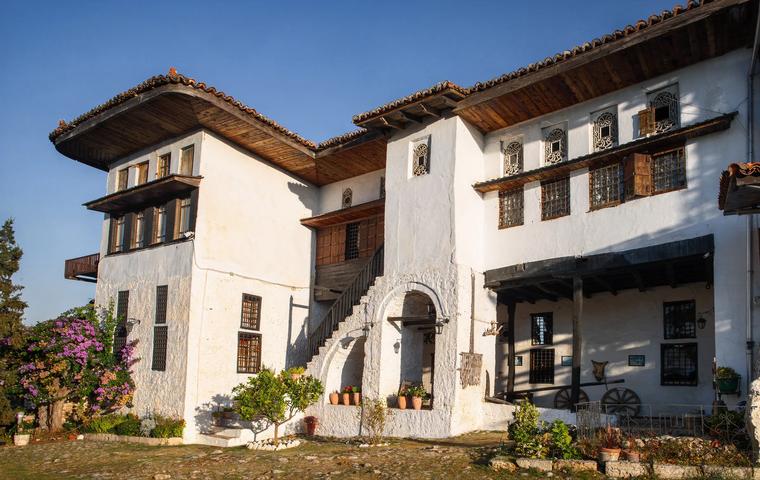
The bazaar runs along a narrow, gently ascending cobblestone lane toward the castle walls. Wooden dukan shops with wide-open fronts stand shoulder to shoulder – a layout typical of 17th–18th century Ottoman market rows. Stone-walled at the base and timber-framed above, the shops are topped with terracotta-tiled roofs. On sunny days, shadows from awnings and hanging carpets create a dim interior, while copper jugs, engraved plates, leather goods, and stacks of woollen rugs are displayed outside.

The merchandise splits roughly in two: artisan crafts (beaten copper, filigree silver, handwoven rugs, embroidery, alabaster) and mass-produced souvenirs (fridge magnets, T-shirts, ceramics). The best finds are deeper into the bazaar – antique shops with Ottoman-era objects and jewellery workshops with handmade pieces. Prices are not fixed – bargaining is expected, especially for multiple items.

Several cafés along the bazaar serve strong Albanian coffee for 100–150 ALL (≈ €1–1.5, ~$1.1–1.7) and burek (flaky pastry with meat or cheese) for 100–200 ALL. Terraces offer views across the valley and mountains. The atmosphere is relaxed – shopkeepers invite you in but don't pressure.

Why Visit

The Highlights

Age – founded in the 17th century (400+ years old), restored in 2015

Location – a ~300 m cobblestone street leading directly to the gates of Kruja Castle

Crafts – beaten copperware, filigree jewellery, handwoven rugs, embroidery, alabaster goods

Prices – among the lowest in Albania for souvenirs and handcrafted items

Architecture – wooden Ottoman-style dukan shops on stone foundations with tile roofs

History

Past & Present

The bazaar emerged in the 17th century as Kruja's commercial hub, by then two centuries under Ottoman rule. Trade had existed here since Skanderbeg's era (15th century), but the formal market with permanent shops came later. It served as a centre of free trade between city merchants and surrounding districts, and its location on the road to the fortress made it the focal point of town life. Artisan families owned shops for generations – a tradition partly preserved today.

Under Enver Hoxha's communist regime (1944–1991), the bazaar lost its commercial function and fell into disrepair. An initial restoration in the mid-1960s rebuilt the wooden shops and cobbled street to their historical appearance. A major reconstruction in 2015 renovated façades, improved paving, and restored historical elements. Today the bazaar is Kruja's main tourist attraction alongside the castle, drawing around 6,000 visitors per week during peak season.

For Visitors

Visitor Information

Tickets & Prices

Entry is free. The bazaar is open daily; shops typically open 8:00–9:00 AM and close by 6:00–7:00 PM (later in summer). Some shops may be closed off-season.

Approximate prices for goods:

- Magnets, small souvenirs: 200–500 ALL (€2–5 / $2.2–5.5)

- Copperware (coffee pot, plate): 1,000–3,000 ALL (€10–30 / $11–33)

- Small handwoven rug: 3,000–8,000 ALL (€30–80 / $33–88)

- Silver jewellery: 1,500–5,000 ALL (€15–50 / $17–55)

- Albanian coffee at a café: 100–150 ALL (€1–1.5)

- Burek: 100–200 ALL (€1–2)

Bargaining is expected – a 10–20% discount is realistic, more when buying several items.
Rules & Restrictions

No particular restrictions. The cobblestone street is uneven – wear sturdy, non-slip shoes. Stones get slippery after rain. Photography is fine outdoors; ask permission before photographing inside shops.

On-Site Facilities

On-site:

- Cafés and restaurants with terraces (valley views)

- Public toilets near the bazaar entrance (basic condition)

- No ATMs on the bazaar – nearest in lower Kruja

Parking: Paid lot near the bazaar entrance – 200–300 ALL. Fills up quickly on weekends and in summer.

Payments: Most shops accept cash only (ALL). Larger restaurants may take cards. Bring cash.

Accessibility: Uphill cobblestone street – difficult for wheelchairs and pushchairs.

Getting There

Transport & Directions

From Tirana (35–40 km, 50–60 min):

- Shared minibus (furgon) from the Regional Bus Terminal – 150–200 ALL (≈ €1.5–2 / $1.7–2.2), departures every hour 7:00 AM–6:00 PM. City bus (40 ALL) from Skanderbeg Square to the terminal

- Taxi – 2,500–3,000 ALL (€25–30 / $27–33)

- Rental car – drive via Fushë-Kruja on SH38, parking near the bazaar 200–300 ALL

From Tirana Airport (TIA, 22 km):

- Taxi – approx. 2,200 ALL (€22 / $24). Kruja is closer to the airport than central Tirana – convenient as a first or last stop

From Durrës (50 km, 1–1.5 h):

- No direct bus – transfer in Fushë-Kruja, or take a taxi / rental car

On arrival:

From the bus stop in Kruja to the bazaar – 5–10 min uphill walk. The bazaar starts at the lower gate and climbs toward the castle.

When to go

Best time to visit

Season: April–June and September–October – comfortable weather, not too hot. In July–August temperatures can exceed 35°C (95°F).

Time of day: Morning (9:00–11:00) – fewer tour groups, shops already open. It gets busy around midday.

Duration: 30–60 min for the bazaar. With the castle, museums, and lunch – 3–4 hours for all of Kruja.

Avoid: Summer weekends – coach tours arrive. Mondays off-season (November–April) – castle museums closed, some shops too.

FAQ

Common Questions

No, the bazaar is a public street with open shops – no entry fee. You only spend money on purchases and food.

About 30–60 minutes for the bazaar itself. For all of Kruja (bazaar + castle + museums + lunch) – plan 3–4 hours. It works well as a day trip from Tirana.

Yes, bargaining is expected. A 10–20% discount is realistic. Buying multiple items from one vendor gives more leverage.

Copperware (coffee pots, plates) – from 1,000 ALL. Silver filigree – from 1,500 ALL. Handwoven wool rugs – from 3,000 ALL. Mass-produced souvenirs (magnets, keychains) – from 200 ALL. Prices here are among the lowest in Albania.

Most shops are cash-only (Albanian lek). Bring small bills. No ATMs on the bazaar itself – the nearest is in the lower part of town.

Shared minibus (furgon) from Tirana's regional bus terminal – 150–200 ALL, every hour 7:00 AM–6:00 PM. Take a city bus (40 ALL) from Skanderbeg Square to the terminal first. Last minibus back to Tirana departs around 4:00–6:00 PM.

Yes, but consider the uphill cobblestone walk. Pushchairs are impractical on the uneven stones. Children enjoy watching artisans work in their workshops.

Several restaurants on the bazaar and near the castle offer terraces with valley views. A typical lunch costs 800–1,500 ALL (€8–15 / $9–17). Burek on the bazaar – 100–200 ALL. The Panorama restaurant near the bazaar entrance is a popular choice.

Distance

Travel Time

On foot from Kruja center 1-2 min.
From Tirana by car ~31 min.
From Durres by car ~52 min.
From TIA airport (Tirana Airport (TIA) ) by car ~18 min.
From VLO airport (Vlora Airport (VLO)) by car ~2 h 35 min.
Social

Share