Tickets & prices
No fixed price. Voluntary donations are accepted at the entrance – typically 100–200 ALL (€1–2 / $1.1–2.2). Open daily 9:00 AM–6:00 PM (may vary depending on the caretaker's presence).
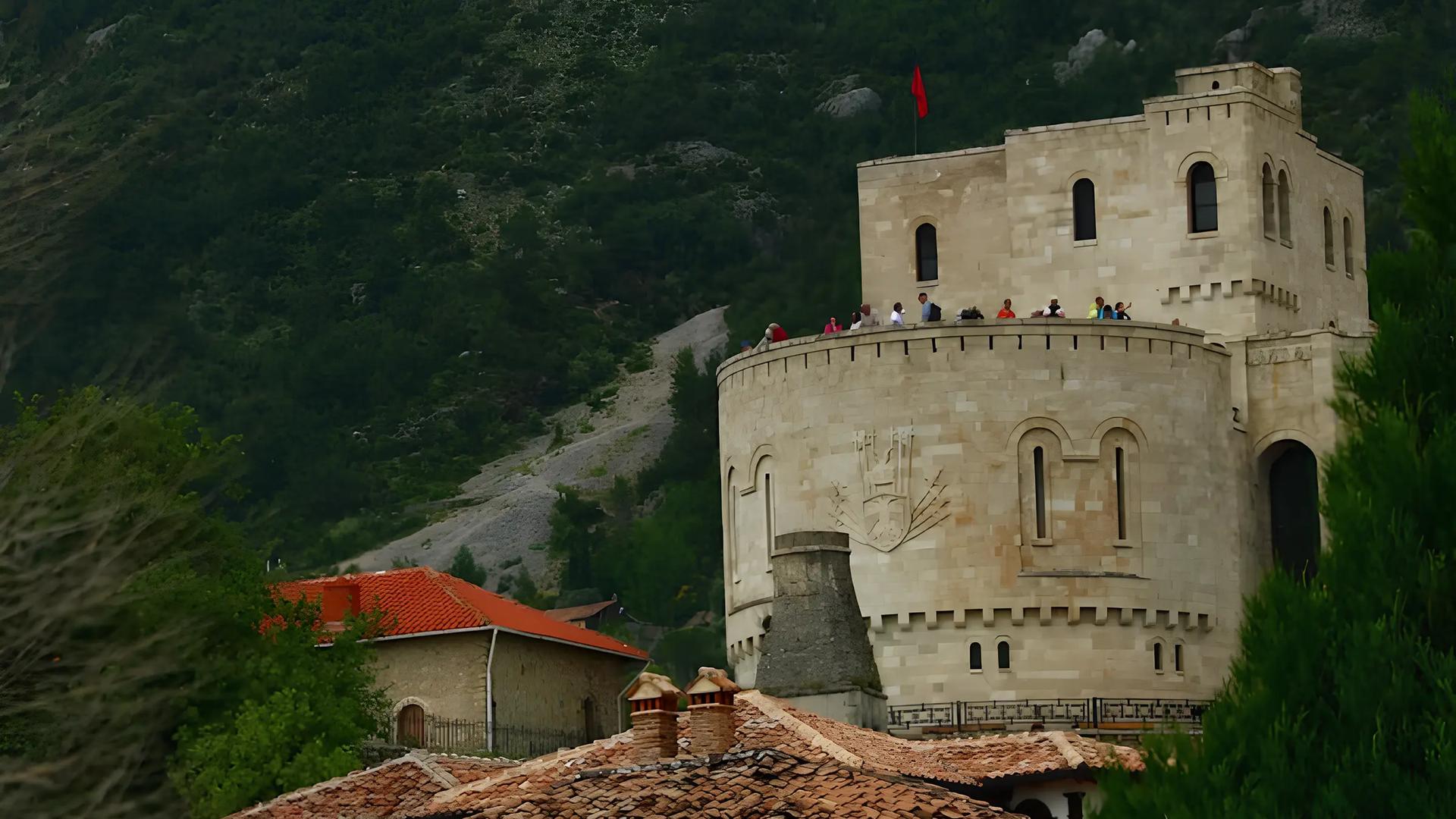
Teqja e Dollmës
A 1780 Bektashi Sufi shrine inside the fortress walls of Kruja
Dollma Tekke (Teqja e Dollmës) is an 18th-century Bektashi monastery in the southern part of Kruja Castle. The cubic stone building, measuring 7.2 × 7.2 m, is topped with a dome on an octagonal drum. Inside are three marble tombs, frescoes, and calligraphy in Arabic and Persian. The tekke holds the status of a Cultural Monument of Albania.
The shrine sits in the lower section of the castle complex, a 2–3 minute walk from the Ethnographic Museum. Access is through the castle grounds, which are open around the clock.
A visit takes 10–15 minutes. Entry is by voluntary donation. The tekke fits naturally into a walking route through the fortress alongside the Skanderbeg Museum and the Old Bazaar.
The tekke stands in the shadow of the fortress walls at the base of a rocky outcrop. In front of the entrance grows an old olive tree – legend says it was planted on the day of Skanderbeg's wedding. The building itself is a compact stone cube: dressed stonework, a dome on an octagonal drum, and windows with carved lattice screens. The architecture is austere – typical of Bektashi lodges, which rejected the grandeur of mosques.
Inside is a prayer hall with a mihrab (prayer niche), suggesting the building may originally have served as a mosque. Walls are decorated with frescoes and calligraphic inscriptions. In the centre stand three marble tombs: the founder Adem Aga Toptani (d. 1784), and two Dollma-family dervishes – father and son – buried in the 19th century. The tombs are draped in green cloth – the colour of the Bektashi order.
The atmosphere is quiet and contemplative: the tekke sits off the main tourist flow, and most visitors walk past without noticing it. The Dollma family still manages the shrine – a caretaker is sometimes present and will recount the site's history.
Founded – 1780 (1193 AH), built by Adem Aga Toptani, a Tirana notable
Architecture – stone cube 7.2 × 7.2 m with a dome on an octagonal drum
Relics – three marble türbe (tombs) inside, frescoes and calligraphy on the walls
Status – Cultural Monument of Albania; one of the oldest Bektashi tekkes in the country
Legend – the olive tree at the entrance is said to have been planted on Skanderbeg's wedding day
The tekke was built in 1780 by Adem Aga Toptani, an influential notable from Tirana who patronised the Bektashi order. Bektashism is a Sufi movement founded in the 13th century by Hajji Bektash Veli in Anatolia. Unlike orthodox Islam, Bektashis did not require mosques for worship, allowed women to attend unveiled, and did not prohibit alcohol. Before the communist destruction, Kruja's fortress held 360 holy graves and was known as 'Little Khorasan.'
In 1967, Hoxha's communist regime closed all religious sites in Albania. The tekke was converted into a warehouse, causing significant damage. The building survived, however, and in 1982 the authorities restored it as an architectural monument (not a religious one). After communism fell in 1990, the shrine was returned to the Dollma family, who have managed it since its founding. Today it functions again as a place of Sufi worship and is open to visitors.
No fixed price. Voluntary donations are accepted at the entrance – typically 100–200 ALL (€1–2 / $1.1–2.2). Open daily 9:00 AM–6:00 PM (may vary depending on the caretaker's presence).
The tekke is an active Sufi shrine. Modest dress is recommended: covered shoulders and knees. Remove shoes before entering. Photography allowed inside, but no flash. Access may be restricted during prayers or religious gatherings.
Minimal facilities – the tekke is part of the castle complex. Nearest toilets and cafés are at the Old Bazaar, 3–5 min walk. Mobile coverage (4G) is stable.
Accessibility: Approach via a stone path with several steps – difficult for people with limited mobility.
From Tirana (35–40 km, 50–60 min):
- Shared minibus (furgon) from the regional bus terminal – 150–200 ALL, every hour. Then 15 min uphill walk from the Kruja bus stop through the Old Bazaar and castle gates
- Taxi – 2,500–3,000 ALL (€25–30 / $27–33)
Inside the castle:
The tekke is in the lower (southern) part of the castle complex. From the Skanderbeg Museum – 3–5 min downhill walk. From the Ethnographic Museum – 2 min. There are signs, but the tekke is easy to miss – ask locals for directions.
Season: Year-round. The tekke is an indoor site, so weather is not critical.
Time of day: Morning (9:00–11:00) – quiet, the caretaker is most likely present. More castle visitors in the afternoon.
Duration: 10–15 minutes for the tekke. Combine with the full castle visit (2–3 hours for the entire complex).
Avoid: Mondays off-season – castle museums close, and the tekke may also be inaccessible.
Practical answers about visiting, routes and time on site.
There is no fixed fee. A voluntary donation of 100–200 ALL (€1–2 / $1.1–2.2) is customary.
A Sufi branch of Islam founded in 13th-century Anatolia. Bektashis are known for tolerance: women attend without head covering, alcohol is permitted, and elements of Islam and Christianity are blended. In Albania, Bektashism is one of four officially recognised faiths.
Yes, photography is allowed without flash. Ask the caretaker's permission if one is present.
10–15 minutes. The tekke is compact – a single hall with tombs and frescoes. Include it in your castle walking route.
Modest clothing recommended: shoulders and knees covered. Shoes are removed at the entrance. No headscarves are provided – bring your own if needed.
It's in the lower (southern) part of the castle – many tourists walk past it. Look for the olive tree in front of the entrance. Staff at the Ethnographic Museum can point you there – it's 2 minutes away.
Inside the castle: the Skanderbeg Museum (500 ALL / ≈ €5), the Ethnographic Museum (400 ALL / ≈ €4), ruins of a medieval hammam, and a 15th-century clock tower. Below the castle – the Old Bazaar.