Hero background

Kruja Castle

Kalaja e Krujës

Medieval 5th-century fortress – the main symbol of Albania's resistance against the Ottoman Empire

Kruja Castle (Kalaja e Krujës) is a fortified citadel perched on a rocky outcrop of Mount Kruja at about 600 m above sea level. Built in the 5th–6th centuries, it became the center of Albanian resistance under national hero Skanderbeg in the 15th century. The town of Kruja is located 20 km north of Tirana.

From Tirana, buses depart from the Regional Bus Terminal every 30–60 minutes; the ride takes about one hour and costs 150–200 ALL (≈ €1.5–2 / $1.5–2). By car or taxi, the drive is 35–45 minutes via the SH1 and SH38 highways.

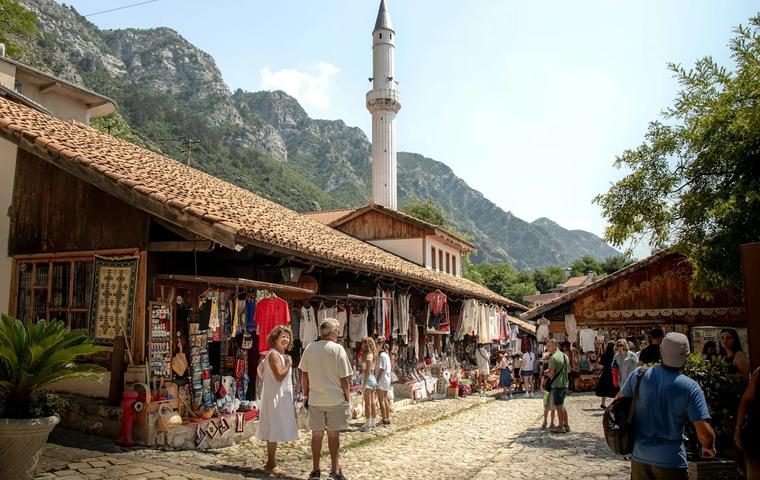
Entry to the castle grounds is free; museums charge separate admission. Allow 2–3 hours for the castle, the Skanderbeg Museum, and the Ethnographic Museum. The path to the castle passes through the Old Bazaar – one of the town's main attractions.

Location

On the Map

About

What's Here

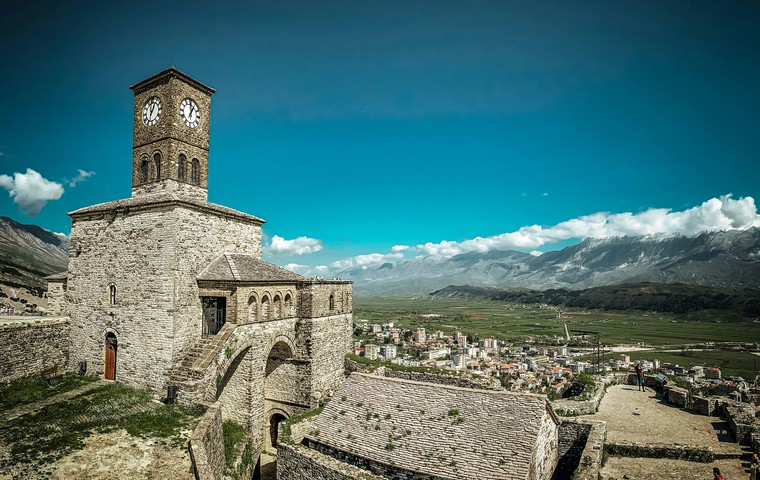
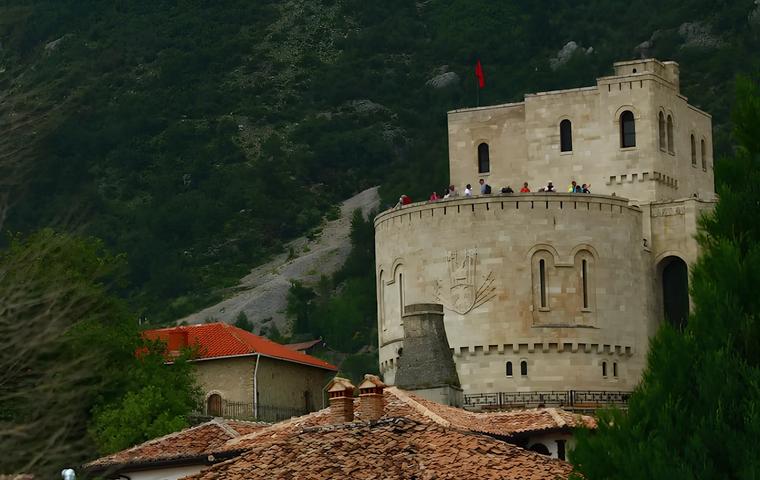
The castle walls follow the ridge of the cliff, forming a natural defensive perimeter. Inside you'll find inhabited houses (some still occupied), two museums, a Bektashi tekke, the ruins of the 15th-century Sultan Mehmed Fatih Mosque, and a clock tower. From the upper points, the panorama extends across the Ishëm valley, the coastal plain to the Adriatic, and the surrounding mountains. On clear days, the sea is visible on the horizon.

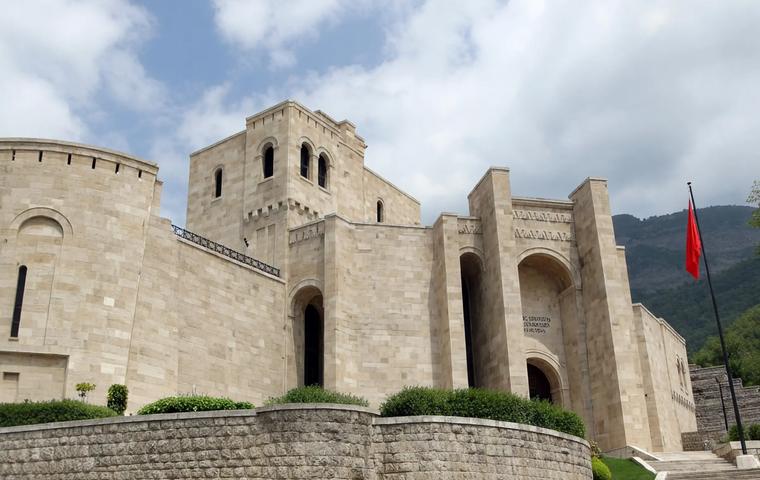
The dominant structure is the Skanderbeg Museum building, constructed in 1982 in the style of a fortified tower. Nearby, in the eastern section, the Ethnographic Museum occupies an authentic 18th-century Ottoman house belonging to the Toptani family. At the lowest level sits the Dollma Tekke – a Bektashi Sufi shrine, with a historic hammam beside it.

The grounds are compact – a full loop takes 30–40 minutes without museum visits. Stone paths and stairs are steep in places and slippery after rain. Several guesthouses and restaurants operate inside the castle walls, offering meals with valley views.

Why Visit

The Highlights

Age – fortress built in the 5th–6th centuries, rebuilt in the 13th–15th centuries

Sieges – withstood three Ottoman sieges (1450, 1466, 1467) under Skanderbeg's command

Elevation – situated on a rocky outcrop at approximately 600 m above sea level

Panorama – views of the Ishëm valley, coastal plain, and the Adriatic on clear days

Complex – two museums, Bektashi tekke, 15th-century mosque ruins, clock tower

Access – entry to the castle grounds is free and open 24/7

History

Past & Present

The fortress was built in the 5th–6th centuries as a defensive stronghold on the rocky outcrop above the plain. In the 13th century, Kruja became the capital of the Albanian principality. In 1443, Gjergj Kastrioti (Skanderbeg), raised at the Ottoman court, returned to Albania and made the castle the center of resistance. Uniting Albanian princes in the League of Lezhë, Skanderbeg repelled Ottoman attacks for 25 years – three sieges (1450, 1466, 1467) ended in failure for the Turks.

After Skanderbeg's death in 1468, the defense weakened, and the castle fell in 1478. The Ottomans rebuilt parts of the fortifications and constructed the Sultan Mehmed Fatih Mosque. Under the communist regime, the National Skanderbeg Museum opened within the castle in 1982. Following the 2019 earthquake, several structures were reinforced. Today the castle is one of Albania's most visited historical sites and is depicted on the 5,000 lek banknote.

For Visitors

Visitor Information

Tickets & Prices

Entry to the castle grounds is free.

Museums (separate tickets):

- Skanderbeg Museum: 500 ALL (≈ €5 / $5) adults

- Ethnographic Museum: 200–700 ALL (≈ €2–7 / $2–7) adults

- Students and children aged 12–18: discounted (approx. 150 ALL)

- Children under 12: free

Tickets sold at each museum's ticket office. Cash in lek only.

Rules & Restrictions

No special restrictions. Photography is freely allowed throughout the castle grounds. In museums, no-flash photography. Wear shoes with non-slip soles – stone paths are steep and slippery, especially after rain. The walk up from the bazaar to the castle takes 10–15 minutes on a cobbled road.

On-Site Facilities

On site:

- Restaurants and cafés inside the castle walls (average meal 800–1,500 ALL / €8–15 / $8–15)

- Guesthouses (overnight stays available)

- Souvenir shops

Parking: Paid lot near the Old Bazaar entrance – 200 ALL. Fills up quickly on weekends and in summer.

Connectivity: 4G coverage is stable. Wi-Fi available in restaurants.

Accessibility: Access via stone paths and stairs only. Not suitable for visitors with limited mobility – no ramps or elevators.

Getting There

Transport & Directions

From Tirana (20 km, 35–60 min):

- Bus (furgon) from the Regional Bus Terminal (Terminali i Autobusave) – 150–200 ALL (≈ €1.5–2 / $1.5–2), every 30–60 min, 7:00 AM–6:00 PM. Note: the terminal is 5 km from the city center; take a city bus (40 ALL) or taxi (500 ALL) to reach it

- Taxi – 2,500–3,000 ALL (≈ €25–30 / $25–30)

- Rental car – from €25/day, via SH1 → E762 → SH38, parking near the bazaar 200 ALL

From Tirana Airport TIA (30 km):

- Direct taxi – approx. 3,500 ALL (≈ €35 / $35)

On the ground:

From the bus stop to the Old Bazaar – 5–10 min walk. From the bazaar to the castle – 10–15 min uphill on a cobbled road.

When to go

Best time to visit

Season: April–June and September–October – comfortable temperatures for walking. Summer (July–August) is hot, up to +35°C, with little shade on the climb. Winter is cool and rainy but virtually tourist-free.

Time of day: Morning (before 11:00 AM) – fewer tour groups and cooler temperatures. Sunset offers the best light for photos.

Duration: 2–3 hours for the castle and both museums. With lunch and the bazaar – half a day.

Avoid: Summer weekends – large tour bus groups arrive. The last bus back to Tirana departs around 4:00–6:00 PM; plan your return accordingly.

FAQ

Common Questions

Entry to the castle grounds is free. Museums are separate: Skanderbeg Museum – 500 ALL (≈ €5), Ethnographic Museum – 200–700 ALL.

Allow 2–3 hours for the castle and both museums. With the Old Bazaar and lunch, budget 4–5 hours (half a day).

Bus (furgon) from Tirana's Regional Bus Terminal – 150–200 ALL, every 30–60 minutes, about 1 hour. Important: take the bus marked Krujë, not Fushë-Krujë – they are different destinations.

Yes, but the climb on cobblestone paths is steep – it may be difficult with toddlers under 4. Strollers won't work. Older children enjoy the museum's battle dioramas and weapon displays.

May–October: daily 9:00 AM–7:00 PM. November–April: 9:00 AM–4:00 PM, closed Mondays. The castle grounds are accessible 24/7.

Yes, guided tours are available in Albanian, English, and Italian. Information sheets in museums come in about 10 languages. You can also book a guided tour from Tirana.

Several restaurants inside the castle walls and near the bazaar entrance. A meal costs 800–1,500 ALL (€8–15). Try tave kosi (lamb in yogurt), fergese (peppers with curd cheese), or grilled meats.

Non-slip shoes are recommended. The path from the bazaar is cobblestone and steep in sections. Stones get slippery after rain. Heels and flip-flops are not practical.

Social

Share