Tickets & prices
Admission:
- Adults: 200–700 ALL (≈ €2–7 / $2–7). Exact price may vary following the 2024 restoration
- Students and teachers: discounted
- Children under 12: check on site
Cash payment at the museum ticket office.
Muzeu Etnografik i Krujës
Authentic 18th-century Toptani family house – Albanian noble life and crafts of the Ottoman era
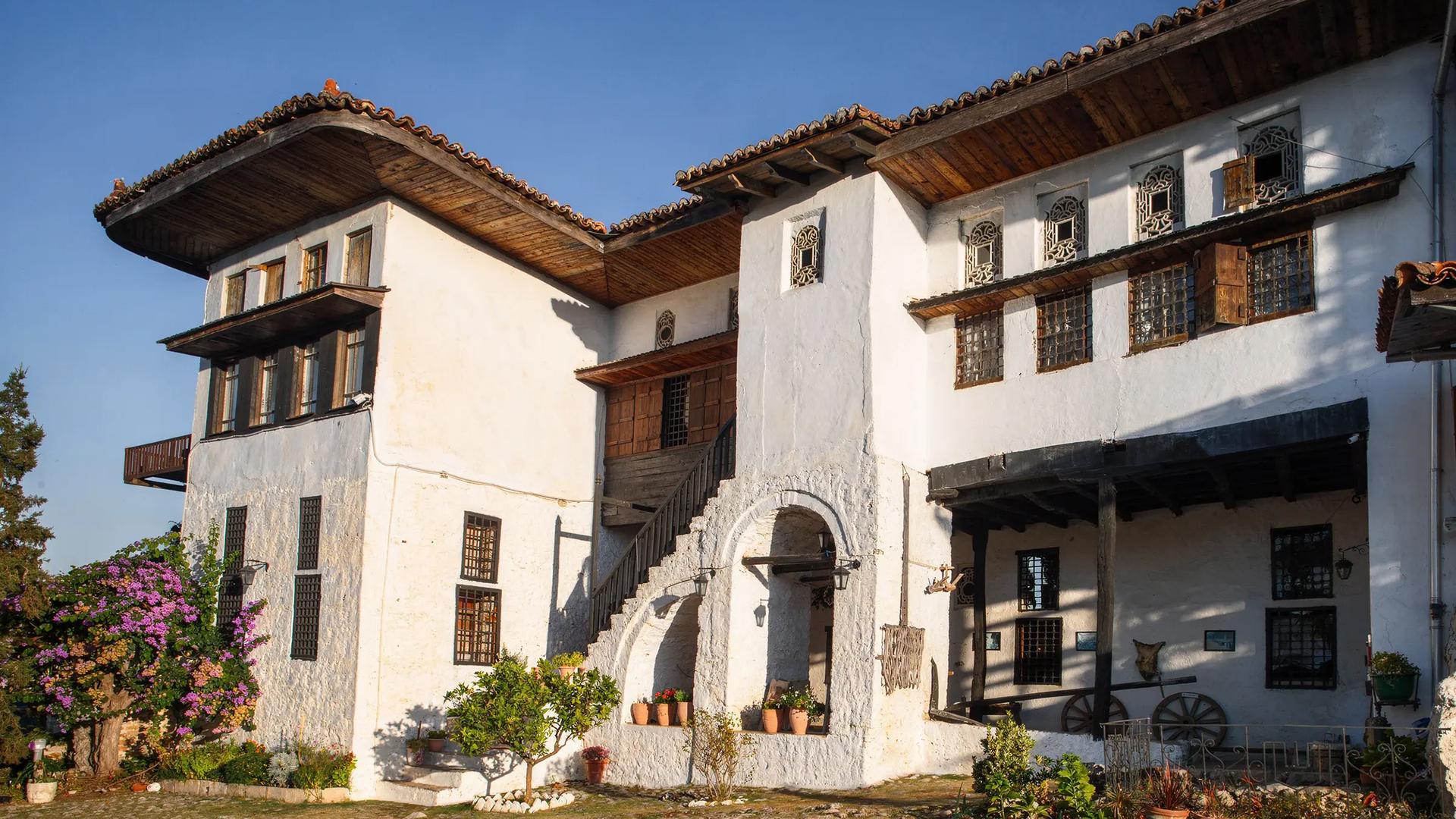
The Ethnographic Museum of Kruja (Muzeu Etnografik i Krujës) occupies the historic Toptani family house, built in 1764 within the walls of Kruja Castle. The museum spans 15 rooms across two floors, displaying the domestic life of a wealthy Albanian family during the Ottoman period – from workshops to reception rooms with original frescoes.
The museum is in Kruja, a 2-minute walk from the Skanderbeg Museum, in the eastern part of the castle complex. From the bus stop, it's 15–20 minutes on foot through the Old Bazaar.
Admission is 200–700 ALL (≈ €2–7 / $2–7). Allow 30–60 minutes for the visit. The museum reopened in 2024 after restoration, with new interactive VR elements.
The Toptani house is a classic example of 18th-century Albanian urban architecture. Stone ground-floor walls and wooden upper-floor construction are typical of Ottoman-era residential buildings in Albania's mountain towns. The overhanging second story is a regional hallmark.
The ground floor is devoted to work spaces: an olive press, wine cellar, mill, leather and wool workshop, and livestock area. The family was virtually self-sufficient. The upper floor contains living quarters: separate women's and men's sections, a guest room with original wall frescoes, fireplaces, and a private hammam (bathhouse). Rooms retain authentic furniture, kitchenware, weapons, traditional costumes, and weaving looms. Approximately 90% of the artifacts are original and functional.
Following the 2024 restoration, the museum features VR elements allowing visitors to virtually try on traditional costumes. Information sheets are available at the entrance in 10 languages.
Building – authentic 1764 house of the Toptani family, one of Albania's most prominent dynasties
Artifacts – approximately 90% of the collection comprises original 18th–19th century items
Rooms – 15 spaces across two floors: from an olive press to a private hammam
Frescoes – original 18th-century wall paintings in the living quarters
VR – interactive virtual reality elements added during the 2024 restoration
The house was built in 1764 for the Toptani family, one of the most influential dynasties in Albanian history. The Toptanis controlled extensive territories in central Albania and maintained their influence into the 20th century. The building is a typical upper-class urban residence of the Ottoman period: stone ground floor for workshops, wooden upper floor for living quarters.
During the communist era, the house was nationalized and converted into an ethnographic museum. The exhibition covers life and crafts in the Kruja region over the past 300 years. In July 2024, the museum was ceremonially reopened after major restoration with Prime Minister Edi Rama in attendance. The renovation preserved original elements while adding multimedia and VR technology.
Admission:
- Adults: 200–700 ALL (≈ €2–7 / $2–7). Exact price may vary following the 2024 restoration
- Students and teachers: discounted
- Children under 12: check on site
Cash payment at the museum ticket office.
Photography is allowed. You don't need to remove shoes, but be careful on the historic wooden floors. Do not touch exhibits (except in the VR zone).
On site:
- Information sheets in 10 languages at the entrance
- VR zone with interactive traditional costumes
- Guide available (speaks multiple languages)
Nearby:
- Skanderbeg Museum – 2 min walk
- Restaurants inside the castle
Accessibility: This is an 18th-century building with narrow staircases and low doorways. Not suitable for visitors with limited mobility.
From Tirana (20 km, 35–60 min):
- Bus (furgon) from the Regional Bus Terminal – 150–200 ALL (≈ €1.5–2 / $1.5–2), every 30–60 min, 7:00 AM–6:00 PM
- Taxi – 2,500–3,000 ALL (≈ €25–30 / $25–30)
- Rental car – parking near the bazaar 200 ALL
On the ground:
From the bus stop – 15–20 min walk through the Old Bazaar and castle grounds. The museum is in the eastern part of the castle complex, 2 minutes from the Skanderbeg Museum.
Season: April–October – extended hours (9:00 AM–7:00 PM). Winter: 9:00 AM–4:00 PM, closed Mondays.
Time of day: Morning – fewer visitors. The dim corridors and rooms are most atmospheric in morning light.
Duration: 30–60 minutes for a self-guided visit. With a guide and VR zone – up to 1.5 hours.
Avoid: Peak hours 12:00–3:00 PM in summer – group tours arrive.
Practical answers about visiting, routes and time on site.
200–700 ALL (≈ €2–7 / $2–7) for adults. Check the current price on site – rates may have changed after the 2024 restoration. Discounts for students and teachers.
30–60 minutes for a self-guided tour. With a guide and the VR zone – up to 1.5 hours.
Following the 2024 restoration, VR equipment lets visitors virtually try on traditional Albanian costumes. Multimedia displays complement the exhibition.
Yes, photography is permitted throughout the museum.
The guide speaks several languages (Albanian, English, Italian). Information sheets in 10 languages are provided at the entrance.
Yes. Dark corridors, winding staircases, and workshop rooms fascinate children. The VR costume zone is popular with all ages. The museum is compact.
Both are ethnographic museums in historic houses. Gjirokastra's focuses on southern Albania; Kruja's covers central Albania. Kruja is more compact but has newer technology (VR, multimedia) after the 2024 renovation.
Restaurants inside the castle – lunch 800–1,500 ALL (€8–15 / $8–15). Cafés along the Old Bazaar – coffee from 100 ALL.