Tickets & prices
Admission:
- Adults: 500 ALL (≈ €5 / $5)
- Students and children 12–18: 150 ALL (≈ €1.50 / $1.50)
- Children under 12: free
Ticket office operates during museum hours. Cash in lek only. The ticket desk doubles as a bookshop.
Muzeu Kombëtar Gjergj Kastrioti Skënderbeu
Albania's premier national museum from 1982 inside Kruja Castle – chronicling 25 years of resistance against the Ottomans
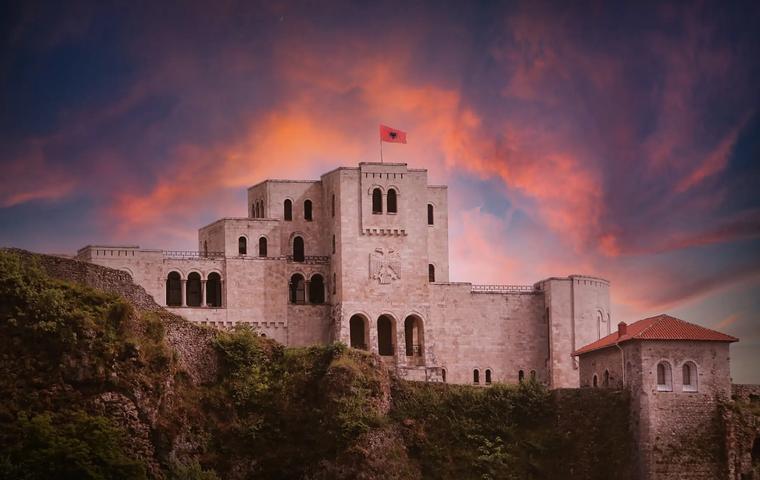
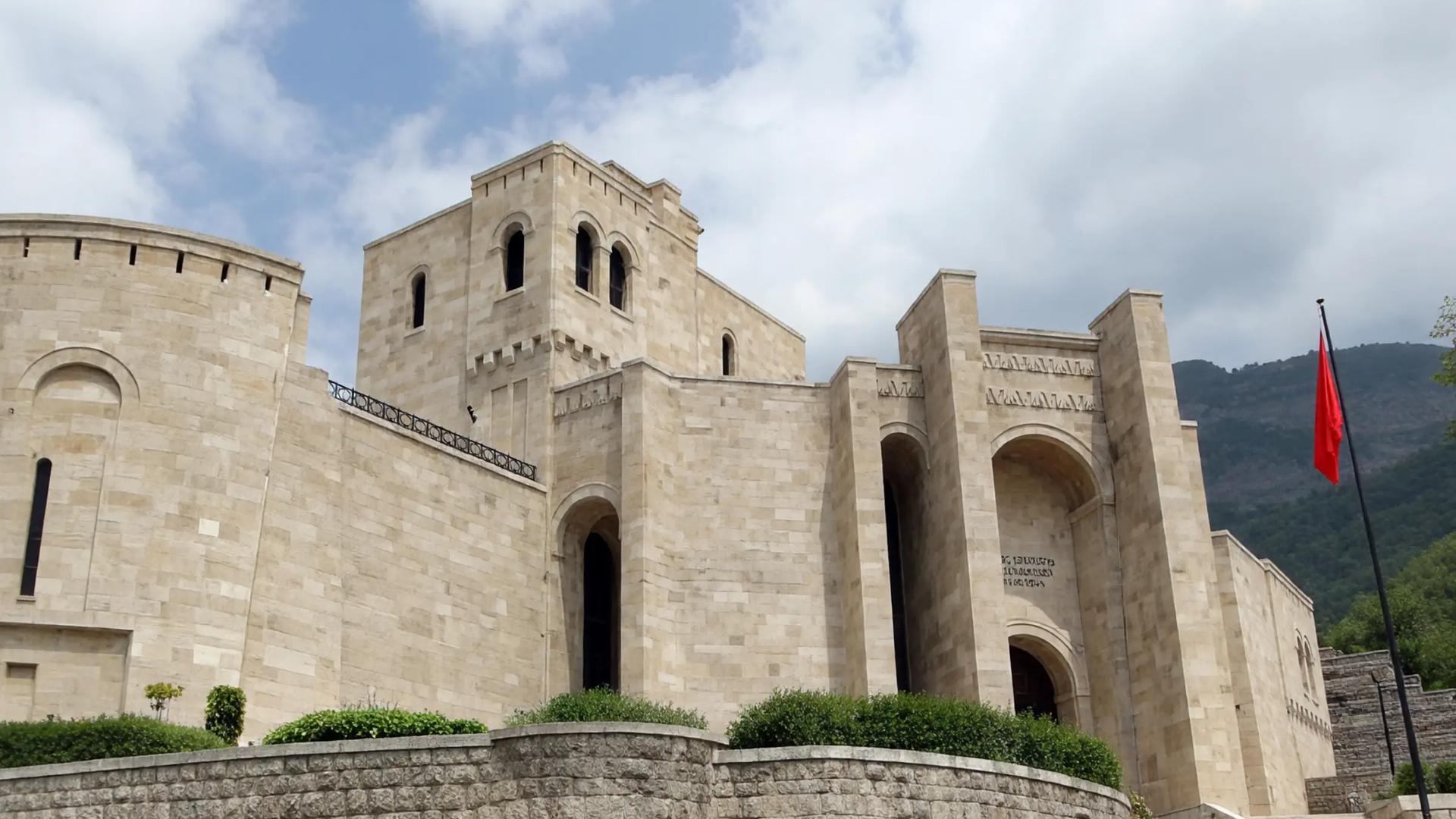
The Gjergj Kastrioti Skanderbeg National Museum is Albania's foremost historical museum, located within the walls of Kruja Castle. Opened in 1982, it was designed by architects Pirro Vaso and Pranvera Hoxha (daughter of communist leader Enver Hoxha). The building is styled as a medieval fortified tower.
The museum is in Kruja, 20 km from Tirana. From the bus stop in town, it's a 15–20 minute walk up through the Old Bazaar and the castle grounds.
Admission is 500 ALL (≈ €5 / $5). The exhibition takes 40–60 minutes to explore. The museum combines well with the Ethnographic Museum and a walk around the castle.
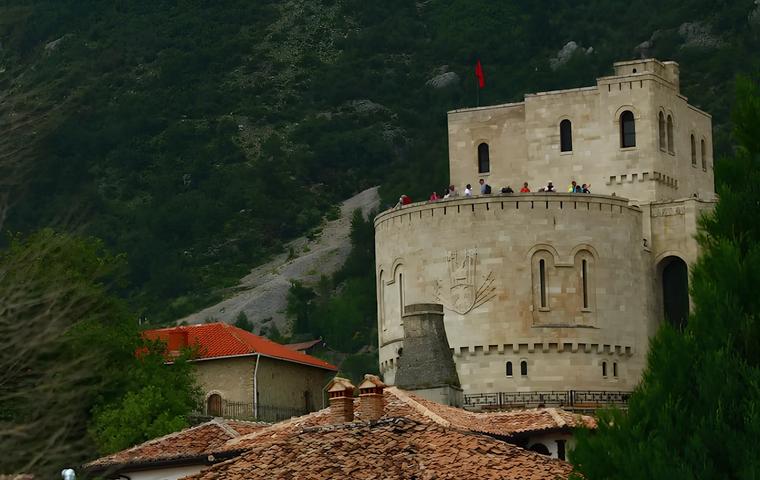
The museum building is a massive stone structure resembling a fortress within a fortress. Its architecture draws on traditional Albanian stone towers (kulas) and medieval Romanesque style. In front of the entrance, a terrace offers views of the Kruja valley.
Inside, several thematic halls are arranged across multiple levels. The centerpiece is a large diorama recreating Skanderbeg's battles against Ottoman forces. Display cases contain replicas of the hero's famous horned helmet and sword (the original helmet is in Vienna's Kunsthistorisches Museum). The walls feature frescoes and a large mural titled "Endurance," depicting 25 years of resistance. Weapons, armor, documents, maps, and period reproductions fill the galleries.
The top-floor observation deck provides a panorama of the entire Kruja valley and surrounding mountains. The ticket office doubles as a bookshop stocking Albanian history titles, some in English.
Exhibition – thematic halls with dioramas, weapons, armor, and 15th-century documents
Skanderbeg's helmet – replica of the iconic horned helmet (original in Vienna)
Architecture – 1982 building designed as a medieval fortified tower
"Endurance" mural – large fresco chronicling 25 years of Albanian resistance
Panorama – top-floor observation deck overlooking the Kruja valley
The museum concept emerged during Enver Hoxha's communist regime, which promoted Skanderbeg as a symbol of national unity. Design began in the late 1970s; architects Pirro Vaso and Pranvera Hoxha created a building combining elements of medieval Albanian stone towers and Romanesque style. Construction was carried out by a local team led by Robert Kote. The museum was inaugurated on November 1, 1982.
The exhibition covers the life and military achievements of Gjergj Kastrioti Skanderbeg (1405–1468) – an Albanian prince who broke with the Ottoman Empire in 1443 and led national resistance for 25 years. The collection spans from the ancient Illyrians to medieval Albanian principalities. The museum remains one of the country's most visited and serves as a pilgrimage site for Albanians from across the Balkans.
Admission:
- Adults: 500 ALL (≈ €5 / $5)
- Students and children 12–18: 150 ALL (≈ €1.50 / $1.50)
- Children under 12: free
Ticket office operates during museum hours. Cash in lek only. The ticket desk doubles as a bookshop.
Photography allowed without flash. Video recording permitted. Backpacks and large bags must be left at the entrance. Do not touch exhibits. The museum reports wheelchair accessibility with ramps and an elevator – confirm availability on site.
On site:
- Bookshop at the ticket desk (Albanian history books in several languages)
- Restroom
- Observation terrace on the top floor
Nearby:
- Restaurants and cafés inside Kruja Castle and near the bazaar
Accessibility: The museum reports ramps and an elevator. Confirm current availability on site.
From Tirana (20 km, 35–60 min):
- Bus (furgon) from the Regional Bus Terminal – 150–200 ALL (≈ €1.5–2 / $1.5–2), every 30–60 min, 7:00 AM–6:00 PM
- Taxi – 2,500–3,000 ALL (≈ €25–30 / $25–30)
- Rental car – parking near the bazaar 200 ALL
On the ground:
From the bus stop – 15–20 min walk uphill through the Old Bazaar and castle grounds. The museum is in the central part of the castle complex.
Season: April–October – extended museum hours (9:00 AM–7:00 PM). Winter hours are shorter, closed Mondays.
Time of day: Morning (9:00–11:00 AM) – fewest visitors. Tour groups arrive around noon.
Duration: 40–60 minutes for the museum. Combined with the Ethnographic Museum and castle – 2–3 hours.
Avoid: Summer weekends after 11:00 AM – halls are crowded with group tours.
Practical answers about visiting, routes and time on site.
Adults – 500 ALL (≈ €5 / $5), students and children 12–18 – 150 ALL, children under 12 – free. Cash payment at the museum ticket office.
40–60 minutes covers all the halls. Add 30–40 minutes if visiting the Ethnographic Museum next door.
Yes, photography is allowed without flash. Video recording is also permitted.
Guides are available in Albanian, English, and Italian. Information panels are multilingual. The bookshop at the ticket desk sometimes stocks English-language history books.
The original horned helmet and sword are kept at the Kunsthistorisches Museum in Vienna, Austria. The Kruja museum displays accurate replicas.
Yes. Battle dioramas, weapons, and armor engage children aged 6+. The museum is compact and won't exhaust younger visitors.
The museum reports having ramps and an elevator. We recommend confirming current accessibility on site or by phone: +355 511 222 25.
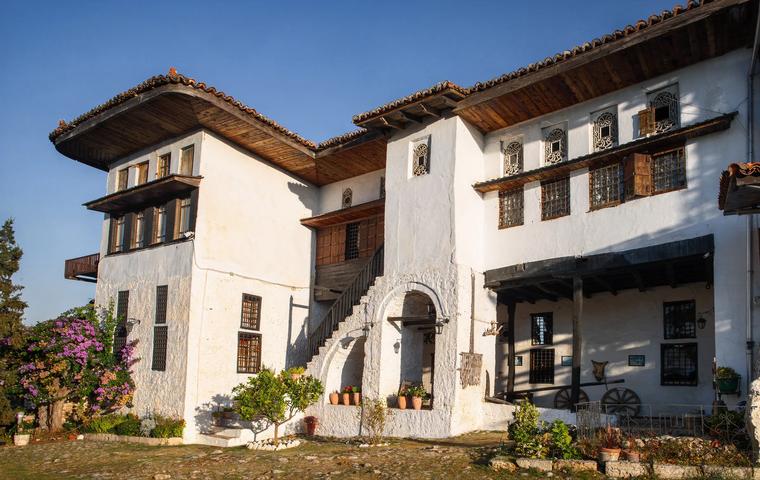
The Ethnographic Museum – a 2-minute walk, in an authentic 18th-century house. The Dollma Tekke – a Bektashi Sufi shrine. The Old Bazaar – an Ottoman-era market with souvenirs and crafts.
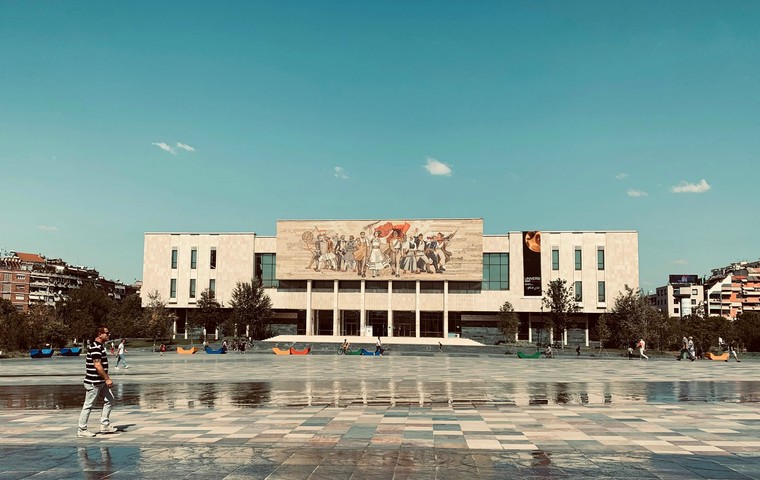
Tirana is Albania's best launch pad: UNESCO Berat from $12, Kruja Castle from $24, Gamti Mountain hikes from $12. Real prices, travel times, and what they don't tell you.
March 25, 2026
A week-long driving itinerary covering two UNESCO cities, the Albanian Riviera, Llogara Pass and real prices. Where to sleep, what to skip, and how much fuel costs.
March 15, 2026
Is April a good time to visit Albania? Weather details, sea temperature, prices, top attractions, and practical advice for traveling to Albania.
February 27, 2026