Hero background

Old Town of Gjirokastër

Qyteti i Vjetër i Gjirokastrës

Ottoman 'City of Stone' from the 17th–19th centuries – UNESCO site with 500+ stone tower houses

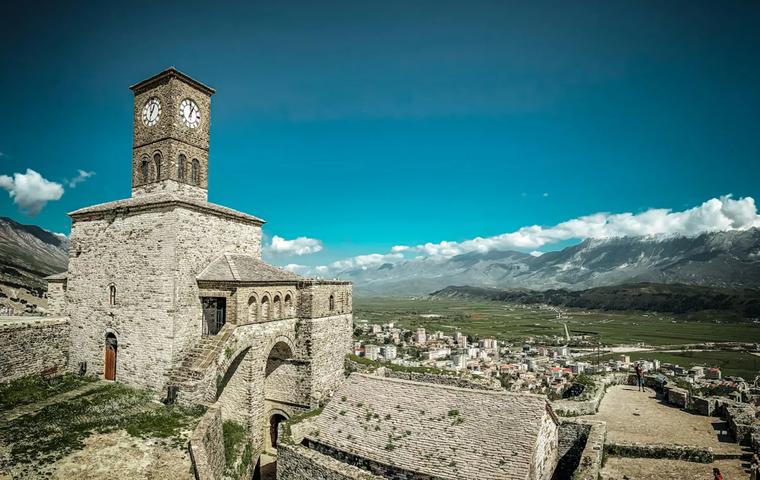
The Old Town of Gjirokastër is one of the best-preserved examples of Ottoman urban architecture in the Balkans. It clings to the steep slopes of the Gjerë Mountains above the Drino River valley, at about 300 m elevation. Over 500 historic buildings – stone tower houses (kullë) with distinctive slate roofs, narrow windows, and wooden balconies – fill the hillside. It has been a UNESCO World Heritage Site since 2005, jointly with the historic center of Berat.

Gjirokastër is 227 km from Tirana (3.5–4 hours by bus, €12) and 55 km from Sarandë. The Old Town begins at Çerçiz Topulli Square in the lower part and climbs uphill to Gjirokastër Castle at the top.

Exploring the Old Town takes 3–5 hours depending on how many museum houses you visit. The streets are free to walk at any time; individual museums and houses charge entry (100–400 ALL / €1–4). Suitable for visits year-round, but streets are steep and slippery – proper footwear is essential.

Location

On the Map

About

What's Here

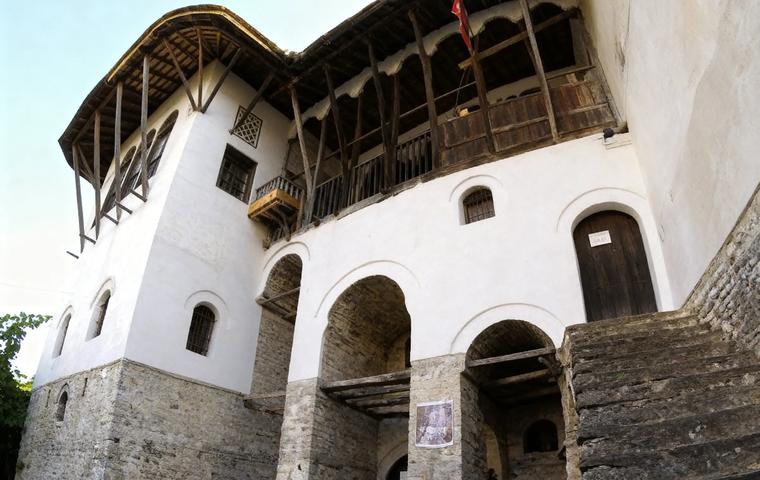
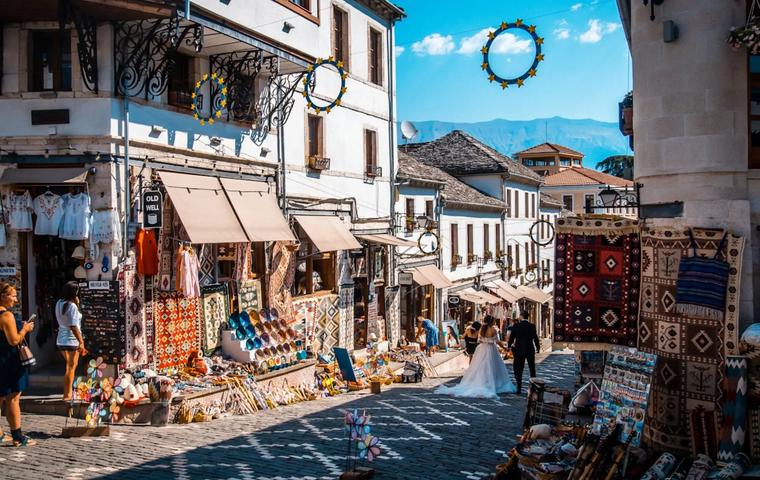
The Old Town is a maze of cobblestone streets climbing the mountainside. Gray limestone tower houses covered with heavy slate tiles create a dense settlement resembling a medieval fortress. A typical kullë is a two- to three-story building: a windowless stone ground floor (storage and livestock pens), with upper floors featuring wooden balconies and carved wooden ceilings. The first living floor was for winter; the second for summer. Ground-level walls reach up to a meter thick.

Key sites include Zekate House (1812, double-arch façade, frescoes and fireplaces across three floors), Skenduli House (18th century, 9 fireplaces, 64 windows, 4 Turkish baths – still managed by a descendant of the original owners), and the Ethnographic Museum of Gjirokastër (built in 1966 on the site of Enver Hoxha's birthplace, displaying traditional household life). The city is also the birthplace of novelist Ismail Kadare, who depicted it in "Chronicle in Stone."

In the evening, the Old Town transforms: cafés and restaurants light up along the streets, and the Old Bazaar becomes especially atmospheric. The Palorto district is the best-preserved quarter, with views over the valley and castle.

Why Visit

The Highlights

UNESCO Site – since 2005, jointly with the historic center of Berat, as a rare example of Ottoman urban planning

500+ historic buildings – stone tower houses (kullë) from the 17th–19th centuries with slate roofs and wooden balconies

Zekate House – built in 1812 for a general of Ali Pasha, double arch and frescoes, one of the city's most photographed buildings

Skenduli House – 18th century, 9 fireplaces, 64 windows, 4 baths – managed by a descendant of the original owners

Birthplace of two famous figures – novelist Ismail Kadare and communist leader Enver Hoxha were both born here

Nicknamed 'City of Stone' – everything is built from stone: houses, roofs, streets, walls

History

Past & Present

Settlement on the slopes of Mount Gjerë dates to the 4th century AD, though archaeological finds on the castle hill go back to the Bronze Age. The name "Argyrokastron" (Silver Fortress) first appears in 14th-century records. In 1417, the city came under Ottoman rule. By the 1580s, it had over 400 dwellings. The city's golden age spanned the 17th–19th centuries, when wealthy landowners and Ottoman administrators built stone tower houses that reflected their status and need for defense. Gjirokastër became an important administrative and trade center of southern Albania.

In the 19th century, the city was a center of Albanian nationalism: in 1880, the Albanian League met here and demanded autonomy from the Ottoman Empire. In the 20th century, it became the birthplace of Enver Hoxha (1908) and Ismail Kadare (1936). Under the communist regime, many religious buildings were destroyed – only the Bazaar Mosque (1757) survived out of 13 mosques. In 2005, UNESCO recognized Gjirokastër alongside Berat as an example of Ottoman urban planning. Today, restoration of historic buildings continues, with many tower houses converted into guesthouses and museums.

For Visitors

Visitor Information

Tickets & Prices

Walking the streets: free, 24/7 access

Museum houses and museums (approximate prices):

– Ethnographic Museum: 200 ALL (~€2 / $2.20)

– Zekate House: 200 ALL (~€2)

– Skenduli House: 200 ALL (~€2)

– Ismail Kadare's House: check on-site

Cash payments. Some museum houses don't have fixed hours – the owner opens the door on request.

Rules & Restrictions

Streets are steep and paved with large cobblestones – slippery after rain. Non-slip footwear is essential. Heels and flip-flops are unsuitable. Respect private property in residential quarters. Street photography is unrestricted; in museum houses, check first.

On-Site Facilities

Cafés and restaurants in the Old Bazaar area and along main streets. Restrooms in restaurants and museums. Parking in the Old Town is extremely limited, especially in summer. The Old Town is largely inaccessible for wheelchairs due to steep gradients and steps. Mobile signal is stable.

Getting There

Transport & Directions

From Tirana (227 km, 3.5–4 hours):

– Bus: 1,200 ALL (~€12 / $13), departures from 05:00 to 20:30

– Taxi: 14,000–18,000 ALL (€140–180)

From Sarandë (55 km, 1–1.5 hours):

– Bus: 2 daily departures

– Taxi: 3,000–4,000 ALL (€30–40)

On-site:

Buses arrive in the lower new town. The Old Town is a steep uphill walk from Çerçiz Topulli Square (10–15 minutes to the Bazaar, 30–40 minutes to the castle). Taxis can drive to the edge of the Old Town but not to all points – streets are too narrow.

When to go

Best time to visit

Season: April–June and September–October. Comfortable temperatures for uphill walking. Summer is hot (35°C+); winter can be raw and damp.

Time of day: Mornings for museums and the castle. Evenings (after 17:00) for strolling the bazaar and dinner. The Old Town is beautiful at sunset when stone walls turn golden.

Duration: 3–5 hours for a walk and 2–3 museum houses. A full day with the castle and bazaar. For deeper immersion, stay 1–2 nights.

Avoid: Mondays (some museums closed). July–August if you struggle with heat on steep terrain.

FAQ

Common Questions

No, walking the streets is free and accessible 24/7. Tickets are only needed for museums and individual museum houses (100–400 ALL / €1–4 each).

3–5 hours for a walk with 2–3 museum houses. A full day with Gjirokastër Castle. For a deeper experience, stay 1–2 nights.

The streets are very steep and paved with large stones. Visitors with limited mobility will find it challenging. A taxi can reach the bazaar area, and you can walk the flatter sections from there.

Restaurants cluster around the Old Bazaar. Local specialties include qifqi (fried rice balls) and tavë kosi (lamb baked with yogurt).

Yes, especially to learn about the tower houses and daily Ottoman-era life. Free walking tours run in season (ask at Çerçiz Topulli Square). Private guided tours start from €20–30.

In the Old Town itself – many kullë have been converted to guesthouses. This lets you explore in the evenings after day-trippers leave. Prices start at €20–25 per night.

Yes, Sarandë is 55 km away (1–1.5 hours). But bus options are limited and returns run only in the morning (08:00, 09:00). A taxi or rental car is more convenient.

Both are UNESCO Ottoman towns. Gjirokastër is starker – gray stone on a steep slope with a fortress feel. Berat is softer, the 'City of a Thousand Windows' with white façades along a riverbank.

Distance

Travel Time

On foot from Gjirokastra center 1-2 min.
From Saranda by car ~39 min.
From Himara by car ~49 min.
From VLO airport (Vlora Airport (VLO)) by car ~2 h 5 min.
From TIA airport (Tirana Airport (TIA) ) by car ~3 h 46 min.
Social

Share