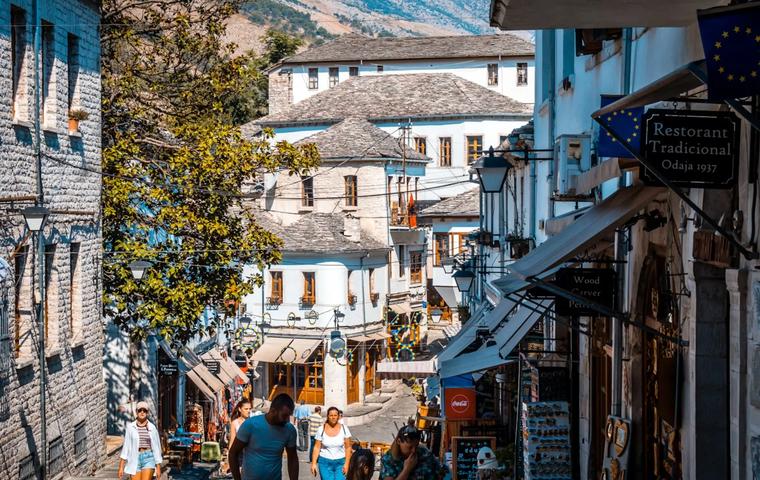
Hero background

Gjirokastër Castle

Kalaja e Gjirokastrës

12th-century fortress at 336 m elevation – one of the largest in the Balkans, UNESCO World Heritage Site

Gjirokastër Castle (Kalaja e Gjirokastrës) is one of the largest fortifications in the Balkans. It sits on a hilltop at 336 m above sea level, overlooking the Drino Valley. The earliest fortifications date to the 4th–5th century, with stone walls built in the 12th–13th centuries. Together with the Old Town of Gjirokastër, it has been a UNESCO World Heritage Site since 2005.

The castle is in the center of Gjirokastër, 227 km from Tirana (4 hours by bus) and 55 km from Sarandë (1–1.5 hours by car). From the old town center to the entrance is a 15–20 minute uphill walk on cobblestone streets. A taxi from the bus station costs 300–500 ALL (€3–5).

Allow 2–3 hours for a visit. Inside there are three museums: the Gjirokastër Museum, the Museum of Armaments, and the former political prison. Entry ticket: 400 ALL (about €4). Suitable for all ages, but the climb is steep – comfortable shoes are essential.

Location

On the Map

About

What's Here

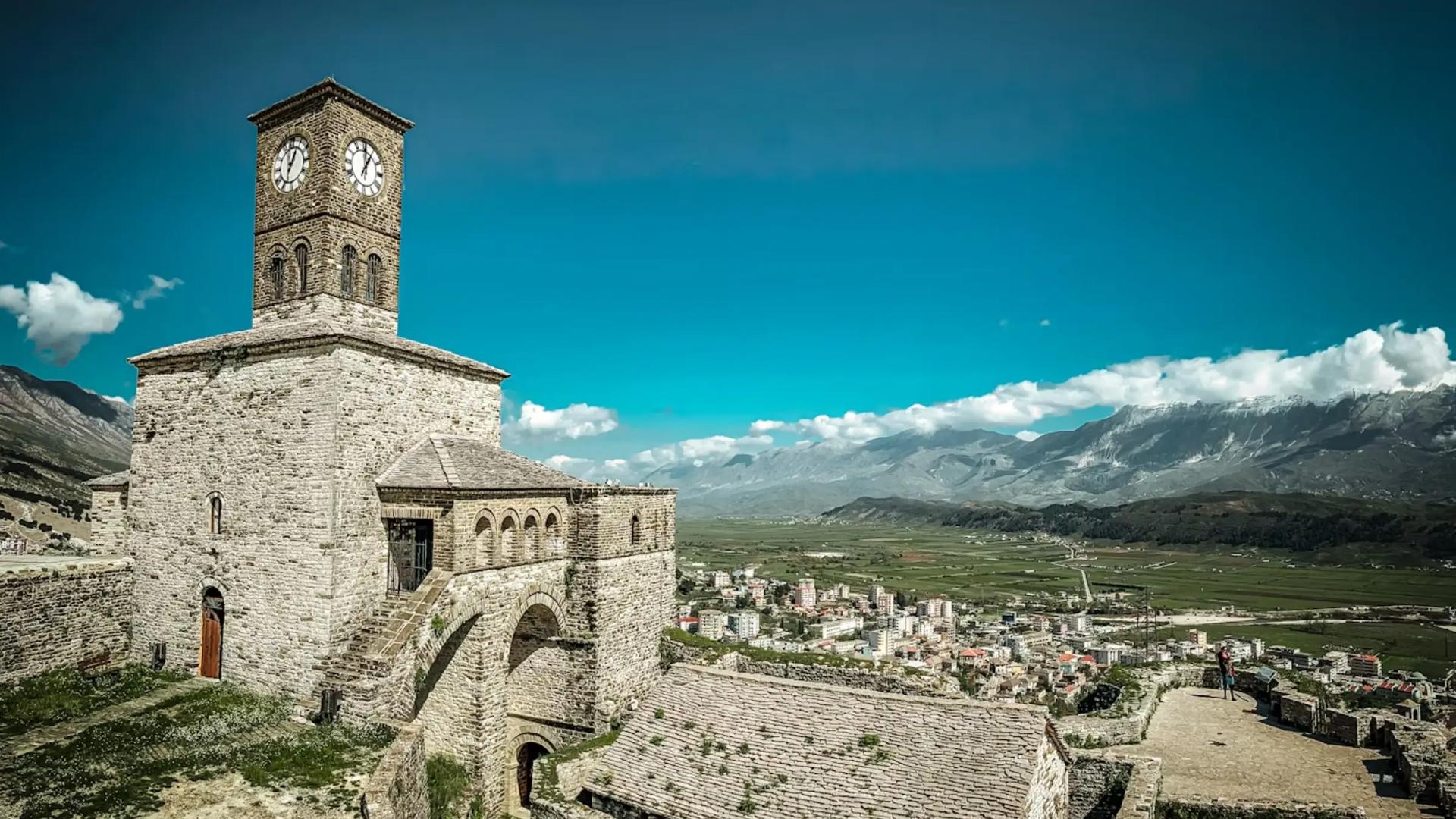
The castle stretches over 600 m along the hilltop ridge. Massive gray limestone walls encompass five towers, a clock tower, two tekke (religious structures), a water cistern, and a gunpowder magazine. The clock tower on the eastern corner is the most recognizable element of the city's skyline, visible from anywhere in the old town. The fortress walls offer panoramic views of the Drino Valley, the Gjerë Mountains, and the stone rooftops below.

Inside the castle, several zones await. The main gallery displays World War II artillery: cannons and tanks captured from Italian and German forces. At the end of the gallery is the entrance to the Gjirokastër Museum (opened 2012), housing artifacts from the Bronze Age to the present. A separate Museum of Armaments occupies the former prison wing. On the upper terrace sits an American Lockheed T-33 Shooting Star military jet that landed in Tirana in 1957 and was brought here in the 1970s as a Cold War exhibit.

The fortress terrace features a stage for the National Folk Festival, held every five years. Beneath the castle lies a network of communist-era tunnels and bunkers (separate entrance from Çerçiz Topulli Square). In warmer months, a small bar operates inside the ramparts.

Why Visit

The Highlights

Scale – over 600 m long with five defensive towers, one of the largest fortresses in the Balkans

Clock tower – built by Ali Pasha of Tepelena in 1811–1812, used to signal the five daily prayer times

Gjirokastër Museum – opened in 2012, artifacts spanning from the Bronze Age to modern times, one of Albania's most modern museums

Cold War aircraft – American Lockheed T-33 that landed in Tirana in 1957, displayed as a trophy on the upper terrace

Folk Festival – the National Folklore Festival has been held on the castle grounds every 5 years since 1968

Prison – used under King Zog I (from 1932) and during the communist regime for political prisoners

History

Past & Present

The earliest settlements on the hill date to the Stone Age, with the first fortifications built during the Hellenistic period (4th–5th century BC). The stone castle was constructed by the Despots of Epirus in the 12th–13th centuries as a defensive position above the Drino Valley. The name "Gjirokastër" first appears in a 1336 document by John Kantakouzenos. In 1417 the fortress fell to the Ottomans after a prolonged siege. Sultan Bayezid II expanded and reinforced the walls in the late 15th century. The most extensive reconstruction was carried out by Ali Pasha of Tepelena after 1812: he added the clock tower, a southwestern extension, and a 12 km aqueduct bringing water from the mountains.

In the 1930s, King Zog I converted part of the castle into a prison, which continued to hold political prisoners throughout the communist era. During both World Wars, the fortress served as a civilian shelter during air raids. The prison closed after 1968, when the first National Folk Festival was held on the grounds. A major restoration in 2008–2012 by the Gjirokastra Foundation cleared overgrowth, reinforced walls, and created the modern museum exhibition. The project was shortlisted for the Aga Khan Award for Architecture.

For Visitors

Visitor Information

Tickets & Prices

Castle entry:

– Adults: 400 ALL (~€4 / $4.50)

– Students: 120 ALL (~€1.20)

– Seniors and disabled: 200 ALL (~€2)

– Children under 12: free

Museum of Armaments – separate ticket 200 ALL (~€2)

Cold War Tunnel – separate entrance and ticket (from Çerçiz Topulli Square), check on-site

Cash only (ALL or EUR). Card payments not accepted. Free entry for Albanian citizens on the last Sunday of each month.

Rules & Restrictions

Comfortable shoes are essential – the climb is steep and surfaces are uneven stone. No safety barriers on wall edges – be cautious, especially with children. Photography is allowed throughout. The museum inside the castle is closed on Mondays. In summer, bring water and a hat – shade is limited.

On-Site Facilities

A small bar serves drinks inside the ramparts (warm season). Restrooms are available near the entrance. Limited parking at the castle – spaces fill quickly in high season. Mobile signal is stable. The castle is difficult for visitors with limited mobility: steep stairs, uneven surfaces, and significant elevation changes throughout.

Getting There

Transport & Directions

From Tirana (227 km, 3.5–4 hours):

– Bus: departures from 05:00 to 20:30, about 11 daily, 1,200 ALL (~€12 / $13) per person, cash only to the driver

– Taxi: 14,000–18,000 ALL (€140–180)

– Rental car: from €20–25/day + fuel

From Sarandë (55 km, 1–1.5 hours):

– Bus: 2 daily departures (11:30 and 13:00), return only mornings (08:00 and 09:00)

– Taxi: approximately 3,000–4,000 ALL (€30–40)

On-site:

From Gjirokastër bus station to the castle – 30–40 minutes uphill on foot through the Old Bazaar. Taxi from the bus station to the castle – 300–500 ALL (€3–5), 10 minutes. Limited parking at the castle.

When to go

Best time to visit

Season: Best time is April–June and September–October. Mild weather, fewer tourists. Summer (July–August) is hot, and the castle has little shade. The castle is open in winter but with reduced hours.

Time of day: Arrive at opening (09:00) for fewer crowds and cooler temperatures. Sunset light is beautiful but museums may close earlier.

Duration: 2–3 hours for the castle and museums. Adding the Old Bazaar and Old Town requires a full day.

Avoid: Mondays (museum closed). Peak midday heat in summer (12:00–15:00).

FAQ

Common Questions

Adult entry is 400 ALL (~€4 / $4.50), students 120 ALL, children under 12 free. The Museum of Armaments is an additional 200 ALL. Cash only.

2–3 hours for the castle and museums. If you also want to explore the Old Bazaar and Zekate House, plan a full day in Gjirokastër.

Bus from Tirana (€12, 4 hours) or from Sarandë (1–1.5 hours). From Gjirokastër bus station, it's a 30–40 minute uphill walk or a 10-minute taxi (300–500 ALL / €3–5).

Yes, children under 12 enter free. However, the climb is steep and walls lack safety barriers – constant supervision is needed. Strollers are impractical due to stone steps.

April–September: 09:00–19:00. October–March: 09:00–16:00. The museum is closed on Mondays.

A US Air Force Lockheed T-33 Shooting Star. It landed in Tirana in December 1957. Albania claimed it was a spy plane; the US said it was an emergency fuel landing. It was moved to the castle in the 1970s.

No, cash only – Albanian lek or euros accepted. The nearest ATMs are in the lower part of the city.

Comfortable closed-toe shoes with non-slip soles. The approach is on cobblestones, and inside the castle are stone steps and uneven surfaces.

Distance

Travel Time

On foot from Gjirokastra center 1-2 min.
From Saranda by car ~39 min.
From Himara by car ~49 min.
From VLO airport (Vlora Airport (VLO)) by car ~2 h 5 min.
From TIA airport (Tirana Airport (TIA) ) by car ~3 h 46 min.
Social

Share